
admin
June 17, 2020
Written By RASHMI PRATAP
A handwritten note on a piece of recycled paper plus a hand-made trinket or pen is what one receives along with every order from Gwalior-based iTokri, an online store of handcrafted fabrics, jewellery, paintings and other artworks. Just like its little free gift, all the products in iTokri’s catalogue are unique and especially crafted for the brand, which has been doubling its revenues every year since launch in 2012. The small town retailer has achieved all this without following the typical e-commerce template of being a marketplace.
iTokri online is India’s only crafts and artwork retailer with its own inventory of handmade artisanal products ranging from Punjab’s phulkari dupattas and Gujarat’s bandhani sarees to Andhra’s ikkat handloom fabrics and Odisha’s pattachitra paintings. It sources products including jewellery, dress materials and household items from nearly 500 artisans and NGOs across India. iTokri founders Jia and Nitin Pamnani believe in taking away the burden of sale from artisans and allowing them to focus on what they are best at – their craft.
The inventory model
“Artisans don’t have the financial strength to hold on to the inventory after production. If we put the onus of holding inventory on the artisan and tell them to dispatch the products as per demand, we cannot succeed. We buy from artisans in bulk, stock goods at our warehouse and courier orders from here,” says Pamnani, a documentary maker who left Delhi in 2010 to start the sustainable business in his home town Gwalior with Jia.
“Some of my friends were in the art and crafts sector. They suggested that an e-commerce platform could work from anywhere in the country. Since the availability of traditional art and craft products was still limited to government emporia and exhibitions those days, I decided to take the plunge,” he says.
Set up with an investment of Rs 50 lakh in 2012, iTokri has now expanded its reach to the nooks and corners of the country both for sourcing as well as sales in the last 8 years.
“Sometimes, artisans have ready products and we procure them. We also design our collection and send it for production, like we make our own prints for textiles and those are exclusive to us. You won’t find them anywhere else,” says Pamnani, adding that some factories make products only for iTokri.
Unlike other retailers, who follow the marketplace model and charge sellers or artisans a commission for using their platform, the inventory model is more capital intensive. “The working capital requirement in an inventory model is high as the retailer holds the inventory. Moreover, overheads like warehousing add to costs,” says Devangshu Dutta, Chief Executive at retail consultancy Third Eyesight.
In the case of Pamnani, warehousing is not a big cost as his family already owned one when he started the business.
But Dutta says an inventory model offers some advantages. “The biggest benefit is that you have the complete control over curating a product as well as its production and branding. This helps build a consistent customer experience,” Dutta adds.
Besides, when products are not generic, there are significant margin advantages to retailers. A case in point is itokri masks, the largest variety of which can be found on the online shopping site. From hand-woven handspun Eri silk natural-dyed masks to Lucknowi chikankari and ajrakh print cotton masks, the retailer has them all.
“There is a huge amount of margin play in that. If you are a marketplace, the major margin in such a case will go to the merchant and you will only receive the regular commission for usage of the platform. But if you own the inventory, you can decide the margin and selling price,” Dutta says.
Artisans love iTokri
While Pamnani has bootstrapped the venture so far and is fully in control, he has managed to keep away from increasing his margins to generate higher profits. “iTokri keeps the least margin of all the retailers we work with,” says Jaipur-based Ahmed Badhshah Miyan, award-winning master craftsman of resist tie and dye technique leheriya. He was associated with the Ministry of Textiles for many years, supporting textile traditions, and has won many national and international awards.
Award winning tie and dye craftsman Ahmed Badshah Miyan at his workshop in Jaipur. His son, Shahnawaz Alam, says during the lockdown, iTokri was the only retailer that did not stop payments to artisans.
“iTokri supported us and made payment for all orders as per schedule so that artists are not impacted.”
Alam and his father, who have been associated with Pamnani since 2012, say that iTokri trusts artisans with designs and colours, not forcing them to deviate from the tradition to meet mass requirements. “We don’t repeat the collection sent to iTokri,” says Alam, who supplies leheriya dupattas and sarees to the retailer.
iTokri also provides the name of the craftsman or organisation below every product detailed on its website, giving them due credit.
Hyderabad-based A G Govardhan, Padma Shri master weaver for ikkat, says Pamnani does not try to bring down prices by negotiating rates with craftsmen. “He wants perfect, authentic quality. Unlike others who are now mixing power loom products with handloom, iTokri’s only expectation from us is high quality genuine products. This supports traditional weavers like us,” he says.
t is this exclusivity, moderate pricing and following of the traditional craft processes that has helped iTokri gain a customer base of over 3 lakh across India and overseas.
Nearly 20 percent of these are from the UK, US and Canada and almost one lakh are regular buyers.
Despite its rapid growth, iTokri has not roped in any other investor so far. “We don’t want to go for funding as we are not yet ready for it,” Pamnani says.
It was love for sustainability that brought Pamnani to Gwalior in 2010. And it also helped him keep the business going even when the country was under total lockdown from March 25 till mid-May. During this period too, iTokri’s 8 am e-mailers announcing the collection of the day did not stop.
“There was enough in our warehouse to keep sharing with our customers. And we resumed operations in the first week of May itself after getting clearance from local administration,” says Pamnani.
The advantage: Gwalior, being away from the hustle bustle and without the population density of a metro, has reported only 150 cases of COVID-19 so far and most of them have recovered. “If we have to understand small businesses and work with them, we have to understand sustainability. And that comes from de-centralisation, not necessarily being in big towns,” says Pamnani.
At a time when most businesses are still struggling to resume operations in the COVID-19 world, iTokri’s toli (as its team is referred to) is busy writing lovely notes for putting in their customers’ orders.
And that’s the beauty of being a sustainable enterprise — it can sustain even during a crisis like COVID-19.
(Rashmi Pratap is a Mumbai-based journalist specialising in financial, business and socio-economic reporting)
Source: 30stades
Devangshu Dutta
April 7, 2020

Oil shocks, financial market crashes, localised wars and even medical emergencies like SARS pale when compared to the speed and the scale of the mayhem created by SARS-CoV-2. In recent decades the world has become far more interconnected through travel and trade, so the viral disease – medical and economic – now spreads faster than ever. Airlines carrying business and leisure-travellers have also quickly carried the virus. Businesses benefitting from lower costs and global scale are today infected deeply due to the concentration of manufacturing and trade.
A common defensive action worldwide is the lock-down of cities to slow community transmission (something that, ironically, the World Health Organization was denying as late as mid-January). The Indian government implemented a full-scale 3-week national lockdown from March 25. The suddenness of this decision took most businesses by surprise, but quick action to ensure physical distancing was critical.
Clearly consumer businesses are hit hard. If we stay home, many “needs” disappear; among them entertainment, eating out, and buying products related to socializing. Even grocery shopping drops; when you’re not strolling through the supermarket, the attention is focussed on “needs”, not “wants”. A travel ban means no sales at airport and railway kiosks, but also no commute to the airport and station which, in turn means that the businesses that support taxi drivers’ daily needs are hit.
Responses vary, but cash is king! US retailers have wrangled aid and tax breaks of potentially hundreds of billions of dollars, as part of a US$2 trillion stimulus. A British retailer is filing for administration to avoid threats of legal action, and has asked landlords for a 5-month retail holiday. Several western apparel retailers are cancelling orders, even with plaintive appeals from supplier countries such as Bangladesh and India. In India, large corporate retailers are negotiating rental waivers for the lockdown period or longer. Many retailers are bloated with excess inventory and, with lost weeks of sales, have started cancelling orders with their suppliers citing “force majeure”. Marketing spends have been hit. (As an aside, will “viral marketing” ever be the same?)
On the upside are interesting collaborations and shifts emerging. In the USA, Jo-Ann Stores is supplying fabric and materials to be made up into masks and hospital gowns at retailer Nieman Marcus’ alteration facilities. LVMH is converting its French cosmetics factories into hand sanitizer production units for hospitals, and American distilleries are giving away their alcohol-based solutions. In India, hospitality groups are providing quarantine facilities at their empty hotels. Zomato and Swiggy are partnering to deliver orders booked by both online and offline retailers, who are also partnering between themselves, in an unprecedented wave of coopetition. Ecommerce and home delivery models are getting a totally unexpected boost due to quarantine conditions.
Life-after-lockdown won’t go back to “normal”. People will remain concerned about physical exposure and are unlikely to want to spend long periods of time in crowds, so entertainment venues and restaurants will suffer for several weeks or months even after restrictions are lifted, as will malls and large-format stores where families can spend long periods of time.
The second major concern will be income-insecurity for a large portion of the consuming population. The frequency and value of discretionary purchases – offline and online – will remain subdued for months including entertainment, eating-out and ordering-in, fashion, home and lifestyle products, electronics and durables.
The saving grace is that for a large portion of India, the Dusshera-Deepavali season and weddings provide a huge boost, and that could still float some boats in the second half of this year. Health and wellness related products and services would also benefit, at least in the short term. So 2020 may not be a complete washout.
So, what now?
Retailers and suppliers both need to start seriously questioning whether they are valuable to their customer or a replaceable commodity, and crystallise the value proposition: what is it that the customer values, and why? Business expansion, rationalised in 2009-10, had also started going haywire recently. It is again time to focus on product line viability and store productivity, and be clear-minded about the units to be retained.
Someone once said, never let a good crisis be wasted.
This is a historical turning point. It should be a time of reflection, reinvention, rejuvenation. It would be a shame if we fail to use it to create new life-patterns, social constructs, business models and economic paradigms.
(This article was published in the Financial Express under the headline “As Consumer businesses take a hard hit, time for retailers to reflect and reinvent”.
admin
May 27, 2019

(The following is the video and the text of the Commencement Speech by Devangshu Dutta, chief executive of Third Eyesight, at the Convocation of the batch graduating in 2019 from the National Institute of Fashion Technology, Patna, India.)
I would like to just share a few learnings from my own career. I hope some of these learnings will provide you some food for thought, and if they stick, I hope they prove valuable to you in some way in your own career.
I think as a graduate of a professional institute, there are 5 life-skills or attributes or pieces of advice that could be useful to you.
Thank you so much for patiently hearing me out. I hope some of the advice would have resonated with you, and will prove useful. I wish you all the very best and offer you my congratulations, on behalf of all the other alumni – welcome to the industry. Thank you!
admin
February 9, 2017
This is a recording of a short, candid talk by Devangshu Dutta (chief executive, Third Eyesight) at the ASSOCHAM’s 8th Global Food Processing Summit in New Delhi, India.
He touched upon the inherent conflicts in the food supply chain we need to be aware of before formulating policies and practices, and strongly urged everyone to look at food security from the point of view of sustainability and risk-management. (Transcript below.)
TRANSCRIPT:
I’ll just take just few minutes to share a few thoughts with you on the sector.
The session was titled “Make in India: Platform for investment opportunity in food processing sector and 100 percent FDI in food retail”.
As we all know, whoever’s been following the news, there’s all this buzz around FDI into retail being allowed, not only for physical retail but also for e-commerce companies, and there are two very strong sets of drivers. On the one hand is the likes of Walmart and Tesco and people who want to actually set up food retail. and you know food is the largest consumption in our basket of consumer products, so they obviously want to tap into that demand. The second side is Amazon and the likes of it where again you know there are no barriers in terms of location, you are buying on the net, tapping into a consumer who’s looking for convenience, and there you need to actually service that demand with food and grocery which is packaged, so there is obviously a very strong push a very strong lobby for that to happen. At the same time there’s a very strong lobby against that because there are domestic retailers who invested a lot of money over the last maybe 10-15 years in setting up a lot of retail stores. In the recent years there have been a few e-commerce companies that have come up as well with domestic and foreign capital. So there is this conflict.
In this whole ecosystem of food production and supply and retail there are some fundamental conflicts that we need to be aware of, before we get into any kind of thinking about what should be done with the sector.
First of all is foreign vs. Indian; this is a conflict which is there the world over, and I think we will see that increase in Europe, in the US, and in other places. You know, “local versus foreign” is a conflict which we will keep seeing. I think we have moved a little bit away from that within, not only this government’s regime but also the earlier government’s regime, where we started to welcome foreigners back into the country and said, “let’s do trade together”. I think it’s important to keep it in mind that local interests will always always be take predominance over foreign interests. If any government comes in and says, “I will give foreign interests precedence”, it’s going to not be there in power the next time, so that’s something which is to be kept in mind.
The second is this is a conflict between large and small…large retailers versus small retailers. A Reliance had to close shops in Uttar Pradesh, had to close shops in Kerala because they were impacting small retailers. So it’s not just about Walmart impacting small retailers, it’s also about the large Indian companies impacting smaller companies.
The third conflict is between traditional and modern, and this is happening again even in farming. Indian farmers tend to follow traditional practices, there are fragmented land holdings, and then you have modern entrepreneurial farmers, you have cooperatives which are adopting different techniques, and there is a conflict which happens at that level as well. At the local level it can get hugely political and then it starts raising barriers. So if you talk about the food supply chain, it’s not a simple thing to deal with.
Fourthly, the biggest biggest conflict – and that’s not really a conflict outright because these are people who are working together – but there are differences of interests and, therefore, there are conflicts…that is between retailer, supplier and the farmer, the interests are not aligned. A retailer wants lower prices, a supplier wants even lower prices, but the farmer wants higher yield and higher prices, so that conflict, just something on account of price and commercial terms and various other things, is bound to create friction in that supply chain.
Having understood that, I think we need to also acknowledge the fact that retailers are unlikely to invest in the supply chain and in farming. Amazon is not going to set up food processing. Amazon is not going to set up farms which are contract farming. Let’s face it, even Future Group hasn’t. Future Group has set up a food park. Future Group has taken over companies which are in food production companies but Future Group has has not set up, ground-up, contract farming. They’ve tried but it’s not their core competence, it’s not even their core interest. Reliance has done a little bit, ITC has done a few things but it’s not something which is fundamentally their business. They’re retailers, that’s what drives them, so what they can do is they can create an ecosystem.
Let’s take the example of McDonald’s or a Pizza Hut or say a Domino’s. These are foreign quick service restaurants which have come into the country. A McDonald’s had to actually build its supply chain from scratch to get the potato fries, to get the burgers done, to get the patties done and they created an ecosystem, in some cases they invested or co-invested with Indian partners, but in most cases they encouraged Indian partners to talk to their partners from Europe, US etc.
When we talk about people like Future Group, it has done a lot in being a platform for Indian companies to come on board and sometimes international companies as well. They’re a platform for them to launch and grow their business. So what the retailer can do is create the ecosystem, create the demand pipeline. Beyond that it is up to the food producer, it is up to the farmer, to take that opportunity and move on. It’s not for the retailer to handhold from scratch all the way to selling on the shelves.
In terms of the practices that we need to adopt I’d like to say this, that while we keep talking about international standards, food is a very local thing. We may be going into a world where 50 years down the line all of us will be having a white-gray powder which has no flavour and that’s what the future of food…I hope not!…The fact is the food is a very local thing because of tastes, because of cultures, because of the environment that you are in. And we are actually losing a lot. People who are here from farming, if you look back not, even very far – maybe 20-25 years – certainly, if you look back 50 years, what was being farmed we’ve lost probably 30-40 percent of that produce, because there is no demand, because it is difficult to grow, because it’s seasonal, because it is difficult to process, difficult to sell. If you go to the sabziwala today versus if we went to the sabziwala 10 years ago, you will find that the variety of produce has actually diminished. So while we are talking about food processing, what is happening is…and I’d like to mention this…You know, sometimes we come to conferences like this and we run our businesses, we run with a split personality. We do what is convenient for the business, we do what is good for the business in terms of cost, in terms of ease of processing, in terms of ease of selling etc. When it comes to us as consumers, we want fresh, we want variety, we want flavor, we want colour, we want all of it. Why do we have the split personality? Why can’t we actually combine the two and do what is right for us as consumers, our children as consumers, the environment, and the future as well?
Sustainability is should be a big driver and we forget that the kind of food processing which is going on right now, by and large the kind of plants which are being put up, are based on technology which was developed in North America and Europe between 1900 and say 1960-70. That’s been the most wasteful part of the last century in terms of energy, in terms of water, in terms of labour, in terms of anything. It’s resource intensive. Now imagine even if 20% of India – over 200 million people – started to live and depend on that kind of a lifestyle and that kind of an industrial structure! This country will be finished, certainly! The world would be finished! We cannot do that, so we’ve got to do stuff which is good for us as consumers, the environment as a whole, and good for the business. It can’t just be one. We cannot be uni-dimensional in our thinking.
Last point: I think diversity is a very, very important part of the food supply chain and diversity means that there are “many”. We tend to look at large companies as being the standard and, therefore, large being good. But the fact is that if you take food which is an integral part of our lives…You cannot live without air, you can live without food and water for a few days, you can’t survive. You can live without clothes for your entire life.
If let’s say the food supply chain and even the processing, the acquisition and everything else, if it gets consolidated beyond a certain point it becomes extremely vulnerable. Anybody who’s looked at financial services risk management or any any kind of risk assessment, you would know that it is good to have a diversified basket. From the point-of-view of farming, from the point-of-view of manufacturing, from the point-of-view of retail, consolidation beyond a certain point is actually detrimental to quality and to safety. So if you’re looking at food safety, if you’re looking at sustainability, we need to actually encourage many, many, many entrepreneurs, many small businesses.
For that…I don’t know if anybody is there from the government sitting in this audience…but Make in India will only happen if we make it easier. Today all of us who are in business know that India is one of the most hostile environments to do business of any sort. It does not matter whether you are in manufacturing, whether you’re a truck driver, whether you are running a consulting business. With all the regulations…we don’t lack regulation, there’s too much regulation…we don’t have an environment where it is easy to do business. If that can happen we will find that we will have an extremely diverse and vibrant ecosystem which will grow and we can actually be the standard, the international standard which can be followed by everybody else. I think what we should do is try and get the government to work in that direction. If we can do that, if that’s one outcome we can achieve out of this conference I’ll be really, really, really happy.
Thank you so much!
admin
August 16, 2016
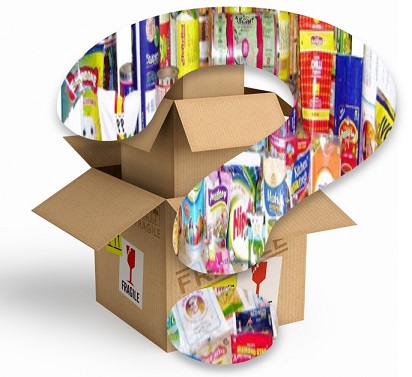
Packaging of products is, undoubtedly, an extremely strong means of conveying the essence of the brand, its ethos and its personality.
Packaging is not only a vehicle to endorse the identity of a brand in a consumer’s mind, the growing need for sophisticated packaging also results from many lifestyle needs such as ease of transportation, storage, usage and disposability sought by convenience seeking and time pressed consumers.
But, increasingly, it also reflects the brand’s responsibility and sensitivity towards Nature and its resources.
If we, as consumers, were to reduce or optimize packaging from our daily lives, especially for food and beverages, there will be a redefinition of the processes involving our purchase and usage. It will also to a larger degree alter the systems and processes of organisations whose distribution and retail is integrally dependent on packaging.
Original Unverpackt, a concept grocery store in Berlin, Germany operates without food packaging that would later turn into garbage. The idea around which it is build is to bring one’s own containers and have it weighed. The supermarket will label your containers. After one shops and gets to the till, the weight of the containers is subtracted and one has to pay for the net weight of the groceries. The label is designed to survive a few washings so one may come back and skip the weighing process for a few more times. In this way, not only do the food products shed their familiar identifiers (brand colors, packaging structures, and bold logos) but the ways they move from shelf to home becomes radically different. While shoppers are encouraged to bring their own bags and containers with them, a range of re-usable jars and containers are also available for purchase onsite. As much as possible, produce is sourced locally.
At this point of time, it may seem difficult to adopt this framework in entirety. However we should remember that just a few short decades ago we followed similar practices such as engaging biodegradable, recyclable, reusable materials for packaging, making use of one’s own containers and bags and filling them in with quantities as per the requirements from the bulk containers.
Singapore’s National Environment Agency (NEA) will be introducing mandatory requirements for companies to use sustainable resources in packaging and reduce packaging waste very soon. It is still being decided in what forms the regulations could be developed, but the preliminary ideas include requiring companies to submit annual reports on how much packaging they use, to develop waste reduction plans, or to meet recycling targets. Belgium on the other hand has been championing the cause of waste management by maximizing recycling and reusage.
The global trends are moving towards sustainable packaging given the ecological resource wastage it creates, the garbage the packaging material produces and the air and the ground water pollution the landfills create. Earth Overshoot Day, which marks the date when humanity’s demand for ecological resources and services in a given year exceeds what Earth can regenerate in that year, is arriving progressively earlier and earlier, indicating that the humanity’s resource consumption for the year is exceeding the earth’s capacity to regenerate those resources in that year.
Another very grim consequence that was witnessed is the frightening and highly visible impact on marine life – since the start of this year more than 30 sperm whales have been found beached around the North Sea in the United Kingdom, the Netherlands, France, Denmark, and Germany. After a necropsy of the whales in Germany, researchers found that four of the giant marine animals had large amounts of plastic waste in their stomachs. Although the marine litter may not have been the only cause of them being beached, it had a horrifying consequence on the health of these animals.
Given the serious consequences and the growing sensitivity towards these consequences, it is imperative for product manufacturers, raw material manufacturers and equipment and technology providers to design packaging with solemn intent to address sustainability.
The best time to reduce the use of packaging was 50 years ago. The next best time is now.
