
admin
August 30, 2024

In a startup world, founders are typically creators first while investors see themselves as the monitors. Therefore, conflicts between the two are almost a default feature of a relationship that in effect funds a dream. From ‘off’ chemistry to differences of opinion to what some founders see as shackles on entrepreneurial freedom, the reasons could be any or a mix of all. Watch this discussion, with a mega-panel of intense start-up founders on the one hand and investors with VC funds on the other, addressing the pain points on Cash, Control, Creativity, Chemistry and Culture in a supercharged encounter. Session Anchor, Devangshu Dutta (Founder, Third Eyesight) reflected, “Those who have heard classical music jugalbandi or witnessed jazz musicians jamming will appreciate the creative tension, the give and take that was the thread throughout this discussion, reflecting the reality of the relationship between entrepreneurs and VCs.”
Watch the video
INVESTORS:
Ankita Balotia, VP, Fireside Ventures
Aashish Vanigota, Principal – Investments, IvyCap Ventures Advisors Private Limited
Bhawna Bhatnagar, Co-founder, We Founder Circle
Nitya Agarwal, VP-Investments, 3one4 Capital
Harmanpreet Singh, Founder & Managing Partner, Prath Ventures
Vamshi Reddy, Partner, Kalaari Capital
Zoeb Ali Khan, Vice President, Sauce.vc
D2C FOUNDERS:
Abdus Samad, Founder, Sam & Marshall Eyewear
Akshay Mahendru, Co-Founder & CEO, The Pet Point & Nootie
Malvika Jain, Founder, SEREKO
Nitin Jain, Founder, Indigifts
Puneet Tyagi, Egoss Shoes
Radhika Dang, CEO & Founder, The Good Karma Company
Rahul Aggarwal, Coffeeza
Udit Toshniwal, Founder & Director, The Pant Project
Vaani Chugh, Co-founder & Director, D’chica
Yash Kotak, Co-founder, Bombay Hemp Co.
Yashesh Mukhi, Co-founder, Chupps
admin
August 24, 2024

Writankar Mukherjee & Navneeta Nandan, Economic Times
24 August 2024
Quick-commerce operators such as Blinkit, Swiggy Instamart and Zepto are aggressively trying to lure away consumers from large ecommerce platforms like Amazon and Flipkart by matching their prices across groceries and fast-selling general merchandise, triggering a price war in the home delivery space.
This is a departure from the earlier pricing strategy of quick-commerce players who typically charged 10-15% premium over average ecommerce marketplace prices for instant deliveries, industry executives said.
The strategy now is to win consumers from large ecommerce at a time when urban shoppers increasingly prefer faster and scheduled deliveries, they said.
An ET study of prices of 30 commonly used products in daily necessities, discretionary groceries and other categories, including electronics and toys, in both ecommerce and quick-commerce platforms reveal the pricing disparity has been bridged. “The pricing premium which quick commerce used to charge for instant deliveries is gone with these platforms now joining a race with large ecommerce to offer competitive pricing to shift consumer loyalties,” said B Krishna Rao, senior category head at biscuits major Parle Products.
It seems to be working. Quick commerce is the fastest growing channel for all leading fast-moving consumer goods companies, accounting for 30-40% of their total online retail sales, according to company disclosures in earning calls.
These platforms are also expanding their basket with larger FMCG packs to cater to monthly shopping needs but also non-groceries such as electronic products, home improvement, kitchen appliances, basic apparel, shoes and toys amongst others.
“Consumers have all the apps on their phones and all they want is quick deliveries at the best price,” said Rao of Parle Products.
The increasing competition is putting pressure on ecommerce majors to reduce delivery time.
‘Market acquisition cost’
Flipkart is even eyeing a quick-commerce foray by piloting a 10-minute delivery service called Minutes in some parts of Bengaluru.
Jayen Mehta, managing director of Gujarat Cooperative Milk Marketing Federation that owns the Amul brand, said now that people are buying regularly from quick commerce with an increase in their assortment, legacy ecommerce platforms like Big Basket and Amazon are trying to deliver faster and same day, which has increased competition pressure.
“At the end of the day, consumers compare across channels before buying. So, pricing equality has become important,” Mehta said. “But then, quick commerce has a delivery charge if the order is below a certain value,” he added.
But does their business model allow quick-commerce players to wage a sustained price war against ecommerce platforms?
Quick commerce model requires multiple dark stores to be set up in close vicinity in each market, while ecommerce players mostly make deliveries from centralised warehouses.
But then, quick commerce platforms right now are at a phase where ecommerce was 7-8 years back, said Devangshu Dutta, CEO of consulting firm Third Eyesight.
“Price matching by quick commerce is to acquire market share and is part of market acquisition cost even when it might not be profitable at a per unit transaction level,” he told ET. “They may have to sacrifice margins in the short term to get customers shopping more frequently.”
Blinkit chief executive Albinder Singh Dhindsa earlier this month said the advent of quick commerce has made people want things faster than they would have otherwise got from ecommerce.
“This has led to a direct share shift of a number of non-grocery use cases to quick commerce where customers were primarily reliant on ecommerce for buying these products,” he said in the Zomato-owned quick-commerce platform’s June quarter earnings release.
Dhindsa said quick-commerce platforms are gaining sales by incremental growth in consumption, shift in purchases from next day ecommerce deliveries and mid-premium retail chains.
Citing an example, he claimed the demand Blinkit has generated for online-first oral care brand Perfora is a testament that such brands’ growth and adoption on quick commerce is much faster than on ecommerce.
(Published in Economic Times)
admin
August 19, 2024

Ratna Bhushan, Economic Times
New Delhi, 19 August 2024
Close to a dozen small to mid-sized global cafes and restaurant brands have either entered India in the past two quarters or are in talks with local players at a time when large global chains are seeing sharp decline in same store sales and growth.
Mid-sized global chains are making investments even in a modest range of Rs. 20-30 crore to tap select cities and intend to keep store counts under about 30 to stay profitable on each store. This is in contrast to earlier times when cafes and chains entered India with mega deals and investment plans, executives said.
Belgian bakery Le Pain Quotidien, French patisserie chain Laduree, UK’s JD Wetherspoon and Frank HotDogs are among those to have inked collaborations with Indian partners, while newer homegrown ones such as Harley’s, Paper & Pie, abCoffee and First Coffee are expanding with first-time investors and mid-rung store rollouts.
“A combination of factors is driving this change of newer, smaller launches,” said Devangshu Dutta, chief executive of retail consultancy Third Eyesight. “There are niches the newer chains are addressing as consumers’ choices evolve and get more specific. Also, there’s a broadening of a wealth base in India leading to mid-sized business houses having capability to invest and willingness to try out newer segments,” he said.
With the big-bang launches in food services drying up, there’s been a mushrooming of small deals that is expected to surge.
Bake & Brew, which has inked a master franchise agreement with Belgian bakery chain Le Pain Quotidien to re-enter India, is investing Rs 35 crore in the first year. “We’ll start in metros and may expand to smaller towns later. We also see potential in travel retail, airports and larger train stations,” Annick Van Overstraeten, chief executive of Le Pain Quotidien, told ET. Bake & Brew is backed by the Nalanda group with core business interests in automotive metal parts.
Earlier this month, the French patisserie chain Laduree said it was launching its cafe at Ritz-Carlton, Pune, in collaboration with CK Israni Group which has business interests in home decor and construction. Its Managing Director Chandni Nath Israni said in a statement that the CK Israni group planned to expand Laduree’s presence across other Indian cities.
Experimenting in newer cuisines is also driving the change. “Our decision to expand in India stems from a deep appreciation for variety and a passion for bold flavours. We see great potential in the Indian market,” said Benjamin Attal, founder of US chain Franks Hot Dog.
Smaller and newer homegrown chains, in contrast, are expanding, backed by mid-ticket investors and business houses, many of whom are foraying into food services for the first time.
Last week Brigade Group, a realtor, announced a partnership with specialty coffee chain abCoffee to set up six outlets within Brigade properties.
“We partnered with abCoffee to enhance the F&B offerings at our office parks. abCoffee is able to retrofit into operational buildings without requiring additional water or gas points,” Arvind Rao, vice president – commercial business, Brigade Group, said.
Specialty coffee startup First Coffee plans to open 35 stores by 2024-end “focused on delivery and minimalist store aesthetic,” according to a company statement, to sell flavoured coffees, cold brews and bubble teas.
(Published in Economic Times)
admin
August 19, 2024

Sagar Malviya & Faizan Haidar, Economic Times
19 August 2024, Mumbai/New Delhi
About a dozen listed lifestyle, grocery retailers and quick-service restaurants (QSRs) reduced their employee count by nearly 26,000 in FY24, retreating from the hiring spree of the past two financial years after they slowed down store expansion rate amid weakening demand.
According to their latest annual reports, the reduction was completely led by five retailers – Reliance Industries’ retail arm, Titan, Raymond, Page and Spencers – which saw their combined workforce decline 17% or by 52,000 people. The staff count was across permanent and contractual employees and adjusted for attrition in the retail segment, the second largest employer after agriculture. These retailers had a combined workforce of 429,000 people in FY24 compared to 455,000 employees a year ago.
“There is a shortage of talent and we are trying to tie up with universities so that the industry has the option to hire. Some companies might have reduced staff due to shutting of some business, but companies like Shoppers Stop and Trent continue to expand and will require staff,” said Kumar Rajagopalan, CEO of Retailers Association of India that represents organised retailers in the country.
Consumers had started reducing non-essential spending such as that on apparel, lifestyle products, electronics and dining out since Diwali 2022 due to inflation, increase in interest rates, job losses in sectors like startups and IT, and an overall slowdown in the economy. India’s retail sales expansion slowed to 4% last year after a surge in spending across segments-from clothes to cars-in the post-pandemic period, triggered by revenge shopping.
RIL in its annual report said the overall voluntary separations in FY24 were lower than FY23 and the retail industry typically has a high employee turnover rate, especially in store operations.
“Store productivity usually happens in cycles and we have seen consumers unleash their spending post pandemic, which led to retailers expanding their network or square footage. However, if some of the stores are unviable, then management teams are now highly objective, even ruthless, and will shut stores,” said Devangshu Dutta, founder of retail consulting firm Third Eyesight. “In addition, any company planning to list would like to have healthy and lean operations, although we cannot pin-point it to Reliance in this case.”
Weak sales saw these retailers having the slowest pace of store expansions in at least five years at 9%. The retail sector took 7.1 million square feet of space across top eight cities in 2023, which is expected to dip to 6-6.5 million sq ft in 2024, according to commercial real estate services firm CBRE.
“There’s an enormous management bandwidth requirement to just get this entire ship running in the right trajectory, right direction, and with the relevant speed. We are thinking about what this company will be 10 years from now. And hence, if you want to reach there in a nice way without too much damage or bruises, then what is the kind of talent we need to have today in the next 2 years, in the next 3 years?” Avenue Supermarts CEO & MD Neville Noronha asked investors.
(Published in Economic Times)
admin
August 9, 2024
Sagar Malviya and Rica Bhattacharyya, Economic Times
9 August 2024, Mumbai
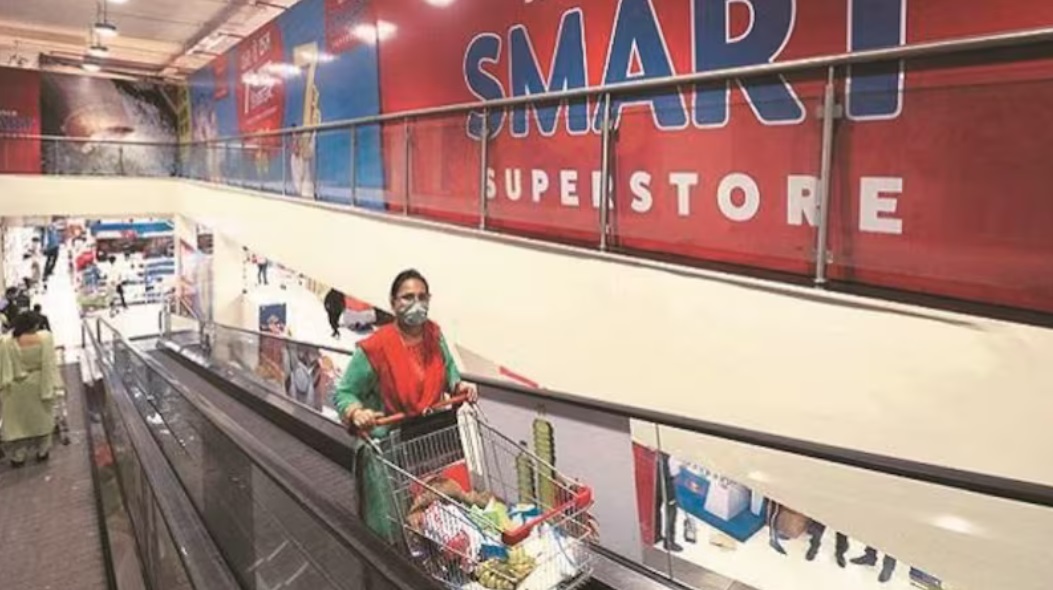
Reliance Industries Ltd. reduced its workforce by 42,000, or nearly 11%, in FY24, in what is being seen as an outcome of a cost-efficiency drive and reduced hiring, especially in its retail segment which also saw store closures and slower expansion.
The employee strength at the country’s largest company by market value, stood at 347,362 in FY24 compared with 389,414 a year ago. The intake of new recruits was slashed by more than a third to 171,116, according to its latest annual report.
“The new lines of businesses (at Reliance) have matured now and have significant support from digital initiatives. Now they are at a stage to better manage the operations with optimum strength,” said an analyst with a leading broking firm, requesting not to be named. “It doesn’t mean that the numbers (of headcount) won’t increase when new business opportunities emerge and strategy changes. They understand very well how to drive cost management and efficiency.”
Most of the job cuts were in its retail business, whose 207,552 employees last fiscal accounted for about 60% of RIL’s total employee strength. The number was 245,581 in FY23.
“Overall voluntary separations in FY24 are lower than FY23. The retail industry typically has a high employee turnover rate, especially in store operations,” RIL said in the report, adding that its employee benefits expense increased by 3% year-on-year to Rs 25,699 crore. In FY23, it had gone up by 33%.
In FY23, Reliance Retail expanded its physical store network, adding more than 3,300 new stores to take the total store count at the end of the year to 18,040. In FY24, the store count stood at 18,836–a net addition of some 800 after factoring in unviable store closures.
Last year, RIL’s online wholesale format JioMart aligned its operations with Metro Cash and Carry, which it acquired. With the addition of Metro’s permanent workforce of 3,500 employees, there was an overlap of roles, both in the backend and online sales operations.
Experts said many of the large conglomerates are rebadging some of the front-end service functions to third-party rolls.
“Many companies in the retail sector have been getting people off their own roles and appointing staffing companies for a leaner structure and efficient management. This may reflect as a drop in headcount (on the company reports) but need not necessarily be loss of jobs,” said Lohit Bhatia, president of workforce management at Quess Corp. “This could include functions such as security guards at the store level, facility management, logistics, picking and packing, etc. That apart, digitisation and tech advancement is also leading to some job roles being redundant across sectors.”
India’s retail sales expansion slowed to 4% last year after a surge in spending across segments—from clothes to cars—in the post-pandemic period, triggered by revenge shopping. Reliance’s retail division, however, grew 18% in sales to Rs 3,06,848 crore.
“Focus on store productivity usually happens in cycles; we have seen consumers unleash their spending post pandemic, which led to retailers expanding their network or square footage. However, if some of the stores are unviable, then management teams are now highly objective, even ruthless, and will shut stores,” said Devangshu Dutta, founder of retail consulting firm Third Eyesight. “In addition, any company planning to list would like to have healthy and lean operations, although we cannot pin-point it to Reliance in this case.”
Another analyst, who did not wish to be named, said, “Reliance’s annual report reveals that the group, spanning petrochemicals, telecom, and retail, has moved beyond its core investment phase and is now poised to reap substantial benefits from operating leverage, efficiency gains, and investments in technology and talent.”
(Published in Economic Times)
