
admin
November 4, 2022

Christina Moniz, Financial Express / BrandWagon
November 4, 2022
Direct-to-consumer (D2C) lingerie brands, often credited with transforming the category and the way women shop for innerwear, are expanding their offline footprint in response to growing demand from tier-II markets and beyond. Zivame, whose journey began online just over a decade ago in 2011, has grown its offline presence to over 120 stores and also sells through over 4,000 partner outlets. In its recently concluded Grand Lingerie Festival, Zivame saw its sales grow three times,with a 120% increase in new customer acquisition. “Tier-II markets are showing massive potential and though tier-1 remains our highest revenue contributor, we are seeing significant revenue baseline shifts in tier-II locations,” says Khatija Lokhandwala, head of marketing at Zivame. The company has announced that its focus will be retail expansion in the second half of this fiscal, going beyond metros and tier-I markets.
Another decade-old D2C player in the innerwear segment, Cloviais eyeing the immense opportunity presented by smaller markets with aggressive expansion plans in place. “Clovia currently has 45 exclusive brand outlets in the country and has been diversifying its product range, with plans to open 130 outlets by the end of this fiscal. Ours has always been a mass- market brand, and most of the repeat customers come from tier-II and tier-III markets,” explains Pankaj Vermani, founder and CEO, Clovia. He notes that over 65% of its customer base is from the non- metro markets, and average order values are 20% higher in these cities compared to the metros. Earlier this year, Reliance Retail Ventures acquired an 89% stake in Clovia’s parent company (Purple Panda Fashions) for Rs. 950 crore. Vermani adds that Clovia will ben- efit from the conglomerate’s scale and retail expertise, driving up growth and love for the brand. Reliance Retail had picked up 15% stake in Zivame back in 2020.
Shaping the market
The women’s innerwear market in India is set to double to reach $11-12 billion by 2025, according to a report by RedSeer. Aside from the key segments of bras and panties, ancillary products like athleisure, sleepwear, swimwear and lounge wear are also boosting the lingerie category’s growth in the country, as is evident from the widening portfolios of leading brands. The online segment for women’s innerwear is expected to become a $1 billion market by 2025.
Experts believe there is a large opportunity for companies to grow since 60% of the $6-billion women’s intimate wear market in India is unorganised, and the category is still largely underserved.
“The lingerie market is an example of improving supply feeding into a growing demand, and the increasing demand expanding the opportunity for more brands to step in. Larger cities, with their higher income profiles and demand concentration, are the logical first-choice market for companies such as Zivame,” points out Devangshu Dutta, CEO, Third Eyesight.
The competition in the large cities is greater, with a plethora of Indian and global brands, which is why Dutta recommends that e-commerce led companies should push aggressively in smaller markets to drive sustained growth.
The fact that D2C brands have better data sets at their disposal to glean insights about Indian women and their concerns when buying innerwear has also worked in their favour.
“Intimate wear shopping can be overwhelming for a lot of women. Finding the right size and choosing styles for their specific needs requires an environment free of embarrassment and judgement. At Zivame, we help women choose the right size and perfect fit, ensuring a private, comfortable and discreet shopping experience,” says Lokhandwala.
While lingerie can sometimes be prohibitively expensive, Vermani points out that Clovia’s feedback-led design approach helps it keep pricing competitive.
The brand creates each product in small quantities, and uses technology to predict future sales based on customer feedback, thereby determining the right quantities for production. He states, “With this approach, we have created a fashion brand that is low on cost, high on consumer appeal and efficient in inventory, leading to better margins and cash flows.”
(Published in Brandwagon, Financial Express)
admin
September 16, 2022
Over the past five years, legacy players have made a slew of investments in D2C startups.
Marico has acquired men’s grooming brand Beardo, beauty brand Just Herbs and breakfast brand True Elements. Similarly, Emami acquired vegan cosmetics brand Brillare Science and grooming brand The Man Company. It recently picked up a minority stake in nutrition company TruNativ. Colgate-Palmolive and Reckitt both hold minority stakes in Bombay Shaving Company, whereas Wipro Consumer Care has invested in The Ayurveda Company. ITC has invested in baby and mother care brands Mother Sparsh and Mylo.
Devangshu Dutta explained the reasons behind the trend of larger FMCG companies acquiring D2C brands.
admin
July 24, 2022
By Aishwarya Ramesh

Tata Consumer Products has rolled out ready-to-cook mock meat products under the brand name Simply Better.
Tata Consumer Products (TCPL) is the latest company to enter the plant-based meat segment in India. TCPL has launched a brand called Simply Better – which includes range of ready-to-cook (RTC) products, made of plant-based meat.
The RTC range is a mix of snacking dishes and traditional Indian dishes. It includes plant-based chicken nuggets, chicken fingers, chicken burger patties and Awadhi seekh kebabs. All these plant-based products are currently available on Amazon Prime and Flipkart.

TCPL’s Simply Better products as seen on Amazon.
When it comes to multinational companies, ITC has a play in this (RTC) category. Its Master Chef range includes a plant-based burger patty, priced at Rs 630 for 300 grams. The range has both vegetarian and non-vegetarian frozen snacks and kebabs. The Incredible range also has plant-based chicken nuggets, priced at Rs 475 for 300 grams.

ITC’s IncrEdible plant-based RTC range
Compared to ITC’s offering, Tata’s Simply Better line is priced slightly differently. 270 grams of plant-based chicken nuggets costs Rs 390 and the plant-based burger patty is priced at Rs 450 for 300 grams.
According to a report by Research and Markets, the Indian meat substitutes and mock meat market is estimated to reach over USD47.57 million in value terms by the end of FY2026 and is forecast to grow at CAGR of 7.48% during FY2021E-FY2026.
Devangshu Dutta, chief executive and founder at Third Eyesight, a specialist consulting firm, mentions that the presence of Tata Consumer Products and ITC could help in increasing adoption of the category over time, since both are large players intending to scale with mainstream customers.
“However, both companies will be advertising and targeting the same cohort of customers. Additionally, the two will also be competing against the multiple D2C brands in the category,” he added.
The plant-based meat market, or smart protein market, includes D2C brands. Some of these brands are also backed and endorsed by celebrities and athletes. The Good Dot is endorsed by Olympic athlete Neeraj Chopra, cricketer Virat Kohli and his wife and actress Anushka Sharma have invested in Blue Tribe and actor-couple Riteish Deshmukh and his wife Genelia Deshmukh have invested in plant-based meat startup Imagine Meats.
Anchit Chauhan, AVP – planning, Wunderman Thompson, mentions that the plant-based industry has been built by a set of startups, and now Tata has decided to enter the segment – somewhat late.
“If you look at the e-commerce segment too, Tata entered late with Tata CLiQ, almost 10-12 years after the e-commerce category had been built by the likes of Amazon and Flipkart. But the advantage Tata has is that the trust factor will always be associated with it. It will be able to leverage that brand equity and create success out of it.”
Dutta points out that for years, the most popular plant-based meat product had been Ruchi Soya’s product – Nutrela’s soya chunks and granules (soya chunks available at Rs 499 for 200 grams and granules at Rs 250 for a kilogram). Soya chunks have been available in India since the 1980s and Dutta calls it the ‘poor man’s meat replacement’.
He says that Indians already get protein in their diet through lentils, pulses and beans, and even those who consume non-vegetarian food don’t do so on a regular basis.
“They may eat it once or twice a week. Some people who convert from non-vegetarian to vegetarian, don’t miss the taste at all. Protein isn’t a huge selling point for these products either. So, this specific faux meat segment in India is a niche market.”
Both analysts (Dutta and Chauhan) opined that Tata’s entry into the segment would not have significant impact on the way the products are priced in this category.
According to Chauhan, India is mostly a vegetarian country and the consumers who may opt for plant-based products are ones who may do so out of concern for the environment, love for animals or an overall healthier diet.

Reasons for turning to plant-based meat
“Plant-based products are essentially for non-vegetarians, who have a certain taste but are willing to give it up because they feel for the environment or animals. But that’s a very urban niche right now. If you’re a ‘woke’ urban consumer, the price point of the products may not matter,” says Chauhan.
“One of the factors for this segment to grow in India is availability. Whether it is a startup or a company as big as Tata or ITC, it has to have financial muscle to sustain growth and must be easily available to consumers. Visibility and user trials are important, especially to attract consumers who wish to make a lifestyle switch in their diet. That’s why modern retail is an important channel for these products,” Dutta adds.

Different brands in the segment right now
Dutta explains fundamental consumer behaviour and calls expansion in this market ‘tricky’, since it is difficult to get people to change their behaviour.
“This is even more the case in smaller cities and towns, where people may have a more traditional mindset. Take the example of Kelloggs – it has been in the country for almost 30 years and there hasn’t been a mass behaviour switch as far as breakfast meals are concerned.”
Chauhan adds that it is not just plant-based meat, there is now demand for alcohol-free products – which taste the same as alcohol but do not have any of the side effects that come with drinking alcohol.
Dutta mentions that people in Tier-II and III cities may not be aware of plant-based meats. This is a tricky category that requires a lot more development. “It’s possible that plant-based meats will remain an urban phenomenon for a long time.”
Source : afaqs.com
admin
July 24, 2022
Written By Akanksha Nagar
Urban Company aims to bring quality, innovation and affordability to the unorganised beauty services market

As the pandemic started hammering the business, a sizeable number of beauty professionals who worked at salons jumped onto the up and coming tech-enabled home services marketplaces.
The bulk of the Indian beauty services industry remains unorganised and fragmented, dominated by expensive salon brands or small players that offer dubious products, inconsistent service and unsolicited advice. With a push from the pandemic-led restrictions, there has been a sudden rise of a clutch of organised, on-demand players that offer professional beauty care services in situ. Urban Company, for one, has witnessed a big rise in service calls in recent months, driven by rising aspiration levels and disposable income, and the growing demand for standardised and safe in-home services. The segment contributes over 40% of the total revenue for the company already. As per published documents, the firm posted a 13.8% increase in revenue from operations to `239 crore in FY21 compared to `210 crore in FY20.
According to Expert Market Research report, the Indian beauty and personal care industry attained a value of `54,558 crore in 2020, and is set to grow at a CAGR of 11% in the 2022-27 period. Of this, the Indian salon market, which stood at `55,000 crore in FY20, is expected to touch a whopping `2 trillion in FY25, at a CAGR of 28%.
Numbers aside, the spread of the Covid pandemic forced the industry to switch to reverse gear as many salons shut down permanently or closed down unviable outlets just to stay afloat. Enrich Beauty which had salons in cities like Mumbai, Delhi, Bangalore and Ahmedabad, for instance, shut down five salons since 2020, bringing the total count down to 83.
As the pandemic started hammering the business, a sizeable number of beauty professionals who worked at salons jumped onto the up and coming tech-enabled home services marketplaces. Says Anand Ramanathan, partner, Deloitte India, “Service aggregator marketplaces have helped increase organisation and bring standardisation in delivery.” It was a win-win for both the customer and the brand. Brands could directly engage with the end consumers and the customer was assured quality—of both the products used and the services rendered.
Mukund Kulashekaran, chief business officer, Urban Company, says the fundamental shift in the beauty service market has been in terms of improved quality. As long as the market remained fragmented, there was zero investment in training or upgradation of services, or in product innovation. None of the small regional players really had the wherewithal to take that leap.
Focus on quality
Urban Company devoted a lot of time and attention to training the service providers while also pursuing innovations to raise the standard of the products on offer. While it uses a number of high-end brands, it has also begun to develop its own to make its services more accessible and compete on a larger scale. It operates three levels of salons: the luxury (average ticket size `2,500), the mid-mass premium (`1,200), and the classic, which is at the economy end of the spectrum (`750) and uses proprietary products for the classic and mid-mass premium segments.
Quality is assured by continuous testing and keeping a sharp eye on customer feedback. There is also significant investment in training and automation. It currently has an in-house team of over 200 full-time trainers across 50 cities. It is stepping up investments in technology to both improve product quality and to act promptly on feedback.
The firm had introduced in-home hair and nail services for women amid the pandemic, which, Kulashekaran says, has scaled quite well. Demand for men’s salon services, launched right before the pandemic, has increased from 20,000 transactions pre-pandemic to as high as 150,000 transactions per month. It launched a Skin Clinic for laser and advanced facials in seven cities and has signed on more than two million clients already.
In terms of geographical spread, while the top ten cities account for more than 80% of its revenue, non-metros are rising fast in terms of revenue share.
Long haul
The company prioritises brand-related communication rather than performance-related. The focus is more on the video medium than the click-through media. So the focus area is TV, but YouTube in case of a targeted campaign.
In the next stage of expansion its communication strategy will be key. Jagdeep Kapoor, founder, chairman and MD, Samsika Marketing Consultants, says that while expanding beyond metros the brand has to be less urban in terms of perception and imagery and take into account the culture and taboos, and the differing definition of beauty.
Samit Sinha, managing partner, Alchemist Brand Consulting, says to keep up the pace of growth the brand has to invest in its service providers, and not just its customers. This is a business model that will not be difficult to replicate. The trick will be to incentivise the beauty care technicians so that they are able to offer high-quality services to the customer and have little reason to join a rival brand. The thing to remember: Like most other service businesses, beauticians too can bypass the company and establish direct relationships with customers — a phenomenon that has plagued the ride hailing and ride share services in India.
BOX: Staying on track (Insights from Devangshu Dutta, CEO, Third Eyesight)
Three factors that will determine success
• The customer sees the aggregation platform as the “provider” of service, rather than a listing agency. So the company needs to totally own the customer experience, end-to-end.
• Ensuring quality of service consistently is the biggest enabler for growth.
• Over time, UC has moved to this “ownership” of the experience, which does mean additional investment, but also pays off in the end.
Three factors that might undo the good work:
• If it doesn’t keep working on customer experience ownership, it could slip
• Margins/commissions need to be reasonable, otherwise, service professionals may abandon the platform
• Given the high customer acquisition costs, it has to drive repeats rather than one-time or low-frequency purchases.
Source: financialexpress
admin
July 8, 2022
Akash Podishetty & Krishna Veera Vanamali, Business Standard
New Delhi, 8 July 2022
India’s $900 billion retail market has emerged as one of the most dynamic industries and is expected to reach anywhere between $1.3-$1.5 trillion by 2025. The organized retail is seen gaining 15% market share in the overall retail space, while food & grocery and apparel and lifestyle may account for 80% of India’s retail market by 2025.
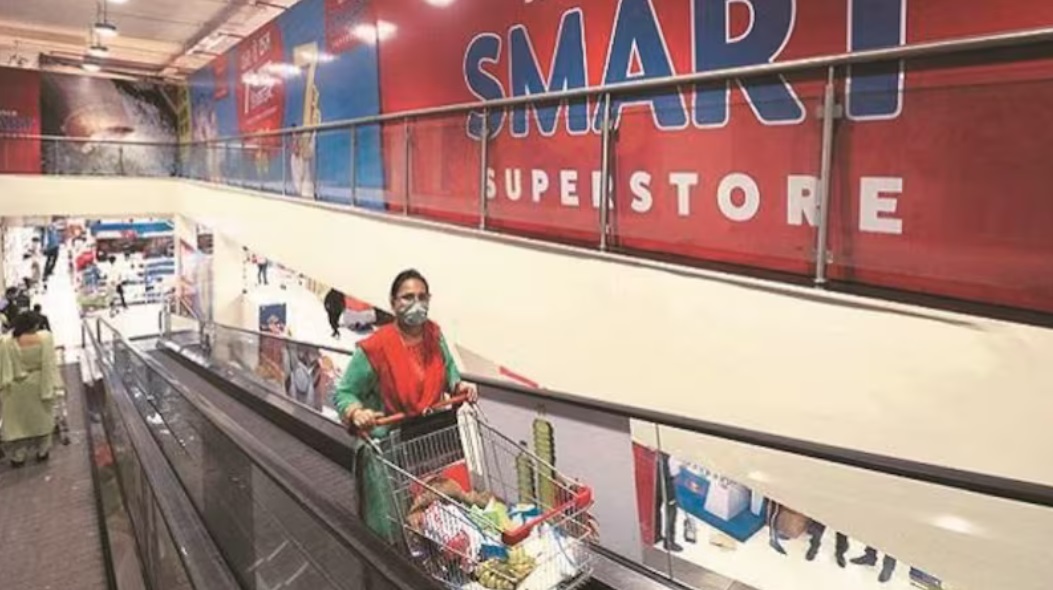
Large market offers big opportunities. And it looks like Reliance Retail has seized it, with its massive omni-channel retail play of physical stores, B2B with kiranas and e-commerce.
The company went on an acquisition spree and partnerships in the last three years, adding to its portfolio some of the biggest names, including Hamleys, Dunzo, Zivame etc.
It has also partnered with famous global retail chain 7-Eleven. Catering to India’s affluent consumers, Reliance, meanwhile, houses some of the most iconic brands such as Versace, Armani Exchange, GAP, GAS, Jimmy Choo, Michael Kors among others. The premium segment has become one of the fastest growing categories.
Also firming up its inorganic play, the company is planning to acquire dozens of niche local consumer brands to build a formidable consumer goods business.
Arvind Singhal, Chairman and Managing Director, Technopak Advisors says, there’s focus on physical retail expansion. Reliance is looking to cater to both price conscious and brand conscious customers, while trying to capture as much of the private consumption market as possible, he says.
Reliance Retail’s competitors are nowhere close to even put up a fight. The company has over 15,000 offline stores across categories, compared with DMart’s 294 stores or Aditya Birla Fashion’s 3,468 outlets.
Reliance retail’s revenue has grown five times in the last five years and the core retail revenue of $18 billion is greater than competitors combined, according to a Bernstein report.
Speaking to Business Standard, Devangshu Dutta, CEO, Third Eyesight, says, Reliance wants a decent share of Indian consumers’ wallet. From that perspective, Reliance still has a long way to go, he says. As consumer preferences evolve, Reliance too should adapt.
An undisputed leader in the domestic market, the aim of Reliance, according to Mukesh Ambani, is to become one of the top 10 retailers globally. Part of this bet is based on the premise that incomes and consumption power of Indians will increase across the board in coming years. However, could the uneven recovery that different segments of the population have seen stop the pie from growing larger and prove to be a dampener for Ambani’s ambitions?
(Published in Business Standard)
