
Devangshu Dutta
December 17, 2019
Remember the year 2000? After Y2K passed safely, that year some optimistic analysts predicted that India’s modern retail chains would reach 20 per cent market share by 2015. Two years after that supposed watershed, another firm declared that modern retail will be at around that level in 2020 – but wait! – only in the top 9 cities in the country. Don’t hold your breath: India surprises; constantly. As many have noted, “predictions are tough, especially about the future!” What we can do is reflect on some of this year’s developments that could play out over the coming year.
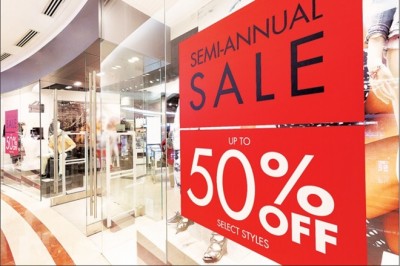
In many minds 2019 may be the Year of the Recession, plagued by discounting, but that demand slowdown has brewing for some time now. However, there’s another under-appreciated factor that has been playing out: while small, independent retailers can flex their business investments with variations in demand, modern retail chains need to spread the business throughout the year in order to meet fixed expenses and to manage margins more consistently.
To reduce dependence on festive demand, retailers like Big Bazaar and Reliance have been inventing shopping events like Sabse Sasta Din (Cheapest Day), Sabse Sachi Sale (Most Authentic Sale), Republic Day / 3-Day sale, Independence Day shopping and more for the last few years. In ecommerce, there’s the Amazon’s Freedom Sale, Prime Day, and Great India Festival, and Flipkart’s Big Billion Day Sale. This year retailers and brands went overboard with Black Friday sale, a shopping-event concept from the 1950s in the USA linked to a harvest celebration marked by European colonisers of North America. (The fact that Black Friday has a totally different connotation in India since the terrorist bombings in Bombay in 1993 seems to have completely escaped the attention of brands, retailers and advertising agencies.) Be that as it may, we can only expect more such invented and imported events to pepper the retail calendar, to drive footfall and sales. The consumer has been successfully converted to a value-seeking man-eater fed on a diet of deals and discounts. With no big-bang economic stimuli domestically and a sputtering global economy, we should just get used to the idea of not fireworks but slow-burning oil lamps and sprinklings of flowers and colour through the year. Retailers will just have to work that much harder to keep the lamps from sputtering.
Ecommerce companies have been in operating for 20 years now, but the Indian consumer still mostly prefers a hands-on experience. The lack of trust is a huge factor, built on the back of inconsistency of products and services. The one segment that has been receiving a lot of love, attention and money this year (and will grow in 2020) is food and grocery, since it is the largest chunk of the consumption basket. Beyond the incumbents – Grofers, Big Basket, MilkBasket and the likes – now Walmart-Flipkart and Amazon are going hard at it, and Reliance has also jumped in. Remember, though, that selling groceries online is as old as the first dot-com boom in India. E-grocers still struggle to create a habit among their customers that would give them regular and remunerative transactions, and they also need to tackle supply-side challenges. Average transactions remain small, demand remains fragmented, and supply chain issues continue to be troublesome. Most e-grocers are ending up depending on a relatively narrow band of consumers in a handful of cities. The generation that is comfortable with an ever-present screen is not yet large enough to tilt the scales towards non-store shopping and convenience isn’t the biggest driver for the rest, so, for a while it’ll remain a bumpy, painful, unprofitable road.
Where we will see rapid pick-up is social commerce, both in terms of referral networks as well as using social networks to create niche entrepreneurial businesses – 2020 should be a good year for social commerce, including a mix of online platforms, social media apps as well as offline community markets. However, western or East Asia models won’t be replicated as the Indian market is significantly lower in average incomes, and way more fragmented.
As a closing thought, I’ll mention a sector that I’ve been involved with (for far too long): fashion. In the last 8-10 decades, globally fashion has become an industry living off artificially-generated expiry dates. A challenge that I have extended to many in the industry, and this year publicly at a conference: if consumption falls to half in the next five years, and you still have to run a profitable business (obviously!), how would you do it? Plenty of clues lie in India – we epitomise the future consumers; frugal, value-seeking, wanting the latest and the best but not fearful about missing out the newest design, because it will just be there a few weeks later at a discount. If you can crack that customer base and turn a profit, you would be well set for the next decade or so.
(Published as a year-end perspective in the Financial Express.)
admin
November 19, 2019
Written By Rasul Bailay

NEW DELHI: Jeff Bezos, the founder of Amazon, will visit India in January when he is likely to meet Prime Minister Narendra Modi. During his visit he will kick off the US retailer’s annual event around small and medium enterprises, which are perceived to be hurt by deep-pocketed ecommerce companies.
The world’s largest online retailer is said to be worried about the changing ecommerce rules in India, where the Seattle-based company has invested more than $5 billion and created one of its largest foreign subsidiaries.
Bezos comes calling amid protests by a group of small traders against foreign-funded ecommerce companies. The Amazon founder is expected to highlight that it is generating jobs in India and empowering SMEs and other small businesses, according to two people familiar with the matter. He will also raise aspects such as stable business environment and policy continuity for foreign companies, they said.
“We do not have any plans to share at present for this,” an Amazon spokesperson said in an emailed response to a questionnaire regarding Bezos’ upcoming visit.
The outcry against ecommerce companies escalated after the Diwali festive season, when small traders accused Flipkart and Amazon of “unfair business practices” and violation of foreign direct investment rules. They blamed the predatory pricing strategies of the two foreign-owned marketplaces for a slump in traditional retail business during Diwali.
Flipkart and Amazon generated combined sales of Rs. 31,000 crore ($4.3 billion) during the 15-day festival period in October, according to a report by Red Seer Consulting.
The government has been stepping up its scrutiny of Amazon and its India rival Flipkart over their compliance with India’s foreign direct investment laws for ecommerce marketplaces.
The commerce ministry had asked Amazon and Flipkart to furnish details including their shareholding, subsidiaries, business structure and information on their top sellers and their tax details.
Amazon and Flipkart have responded to the questions raised by the government and maintain that they are in full compliance with FDI legislation.
“It is a huge distraction for us,” a senior ecommerce executive said, asking not to be identified. Amazon has reasons to be nervous. The US giant considers India its fastest-growing market with a potential to reach $10 billion in gross merchandise value and outpace the UK, Germany and Japan as its largest overseas subsidiary. In October, Amazon pumped in Rs. 2,800 crore into the flagship Amazon, in marketplace after injecting Rs. 9,450 crore in the unit last year.
So far, Amazon has invested more than $5 billion in India. “The various twists and turns in policies and caveats over the years have created ambiguity and room for interpretation as to what is allowed under the ambit of foreign investment,” said Devangshu Dutta, CEO of retail consultancy Third Eyesight.
“If any foreign-owned or foreigninvested entity is operating in the fuzzy zones of policy and law, there is bound to be concern. ‘Interpretation’ is a double-edged sword — on the plus-side it can give businesses strategy flexibility, but the downside is that government officials can also interpret it strictly.”
In October, Walmart CEO Doug McMillon had written to Modi, seeking certainty and a predictable business environment in India.
Last year, Walmart had purchased Flipkart, India’s largest ecommerce entity, for $16 billion, bringing the US adversaries to a direct fight over market share in the nation’s burgeoning online retailing market.
Following Walmart’s acquisition of Flipkart, India amended the FDI rules for online marketplaces in December, plugging many holes that Amazon and Flipkart are alleged to have misused. Opponents of foreign-funded ecommerce accuse both the global titans of virtually running inventory-led ecommerce, which India bars.
The legislation called Press Note 2 restricted bulk purchases by any vendor from any entity or group company of marketplace to 25%. The rules banned any financial affiliate of the marketplace operator from selling on such platforms. These changes came as blows to Amazon and Flipkart as they either sold through partner entities or through independent vendors that sourced directly from wholesale units related to the FDI-funded
Source: economictimes
admin
May 21, 2019
Written By Sangeeta Tanwar

Two of India’s leading retail chains are currently preparing the ground for their full-fledged e-commerce forays, albeit in totally different ways.
While the Kishore Biyani-led Future Group, which operates the popular Big Bazaar hypermarket chain, is busy listing its labels on Amazon, rival Reliance Retail is withdrawing its products from all e-commerce platforms, as parent Reliance Industries (RIL) gears up to launch its own online marketplace.
For both the traditional players, cracking online sales is important as they prepare for a future beyond high street retail.
Online sales in India will balloon from last year’s $18 billion (Rs1.25 lakh crore) to $170 billion by 2030, Jefferies India predicted recently. This potential aside, Indian e-commerce is still nascent and retailers are still perfecting their strategies.
“E-commerce is now a game of two dimensions, one of scale and the other of last-mile ubiquity. Whoever gets this right, will manage growth, revenue, and customer acquisition,” said Anil V Pillai, director of the independent marketing firm Terragni Consulting.
As for the Future Group, it thinks the best way to achieve this is by riding piggyback on Amazon’s proven capabilities in scale and last-mile delivery.
How the plan evolved
In 2016, the Future Group had made its first e-commerce acquisition by buying out the struggling furniture retailer FabFurnish from its German incubator Rocket Internet. Biyani had hoped to find synergies between the startup and his group’s furniture brand Hometown.
A year later, hit by heavy losses, FabFurnish was shuttered. Biyani downplayed the move saying his losses were “compensated” as the company had learnt “enough” from the episode.
The move now to partner Amazon seems to have stemmed from that learning.
Over the past month, the two have been trying to make joint plans, including in distribution, warehousing, and creating products for Amazon and its grocery format, Pantry. Also, Future group brands, including Big Bazaar, are being aligned with Amazon Now, which promises delivery of everyday essentials within two hours, suggest media reports.
A more serious handicap will be Amazon controlling Future Group’s data and customer relationships in the partnership. “In e-commerce, ownership of customer relationship and data, which offers consumer insights, is the real asset,” points out Devangshu Dutta, CEO of Third Eyesight, a consulting firm focussed on retail and consumer products.
Vianello agrees: “When you have your own e-commerce venture, as Reliance Retail plans, you are the owner of the data and you can slice and dice it to come up with exciting product offerings and improved service experience.”
This is one of the advantages that RIL might have seen in going it alone.
Going solo
“Reliance Retail has taken a more integrated approach towards e-commerce,” observed Dutta. “The company is set to leverage its pan-India retail presence and Reliance Jio’s (RIL’s telecom business) data capabilities to roll out an e-commerce platform,” explained Dutta.
The synergy between Reliance Jio and Reliance Retail is a big advantage. The retailer has about 10,000 stores across 6,500 towns in India, while Jio has a subscriber base of 306 million. After bringing many Indians online with Jio’s affordable data offerings, Reliance now hopes to get most of them to start shopping online as well.
The challenge, though, would be in getting the last-mile delivery right. “Reliance Retail could be at a disadvantage here compared to the Future Group, which has its delivery mechanism in place courtesy its partnership with Amazon,” suggested Vianello.
Moreover, like with Jio, consumers will expect heavy discounts from Reliance’s e-commerce venture as well, which may be difficult to sustain given the initial investments. “Biyani’s (online) launch involves lower upfront costs, while Reliance Retail’s will be resource hungry since it’s an almost greenfield project,” pointed out Pillai, adding, “Reliance’s challenge is the overwhelming perception about the group being a price warrior and disrupter.”
So, which strategy will triumph? Everything comes down to execution. “Success in retail, including e-commerce, is about more and more customers choosing to transact with you repeatedly. Achieving this is a difficult and ongoing process. There are no guaranteed or permanent winners,” says Dutta.
Source: qz
Devangshu Dutta
July 30, 2015
Much has been written recently, with more than a touch of surprise, about ecommerce companies opening physical retail stores. Whether it is Amazon, Birchbox and Bonobos in the US, Spartoo in France, Astley Clarke in the UK or FirstCry and Flipkart in India, young tech-based ecommerce businesses are adopting the ways of the dinosaur retailers that they were apparently going to drive into extinction.
Perhaps, the seeds of the surprise lie in the perception that the ecommerce companies themselves built for their investors, the media and the public, that it was only a matter of time that the traditional retail model would be dead.
Or perhaps we should pin it on their investors for keeping the companies on the “pure-play” path so far – venture funds that have invested in ecommerce have largely taken the view that the more “asset-light” the business, the better it is; so they’re far happier spending on technology development, marketing, salaries, and even rent, than on stores and inventory.
After a bloody discounting and marketing battle, in a few short years, there are now a handful of ecommerce businesses left standing in a field littered with dead ecommerce bodies, surrounded by many seriously wounded physical retailers who are trying to pick up unfamiliar technology weapons. And their worlds are merging.
Which is a Stronger Building Material – Bricks or Clicks?
Online business models offer some clear strengths. Etailers have a reach that is unlimited by time and geography – the web store is always up and available wherever the etailer chooses to deliver its products.
An ecommerce brand’s inventory is potentially more optimised, because it is held in one location or a few locations, rather than being spread out in retail stores all across the market including in those stores where it may not be needed.
However, we forget that consumers don’t really care to have their choices and shopping behaviour dictated by the business plans of ecommerce companies or their investors. The fact is that physical retail environments do have distinct advantages, as etailers are now discovering.

Firstly, shopping is as much an experiential occasion as it is a transaction comprising of products and money. In fact, the word “theatre” has been used often in the retail business. For products that have a touch-feel element, the physical retail environment continues to be preferred by the customer. Of course, there are products that could be picked off a website with little consideration to the retail environment. For standard products such as diapers or a pair of basic headphones, online convenience may win over the need for a physical experience. However, non-standard products such as apparel or jewellery lend themselves to experiential buying, where a physical retail store definitely has an edge.
Shopping in a physical retail environment is also a social and participative activity. We take our friends or family along, we ask for their opinion and get it real-time. The physical retail environment lends itself to the consumer being immersed in multiple sensory experiences at the same time. These aspects are not replicable even remotely to the same degree by online social sharing of browsed products, wish-lists and purchases, nor by virtual smell and touch (at least not yet!).
In a market that is dominated by advertising noise, a physical store also helps to create a more direct and stronger connect for the consumer with the brand than any website or app can. An offline presence creates credibility for a brand, especially in an environment where online sales are dominated by discounts and deals, and many brands have risen and fallen online in the customer’s eyes during the last 3-4 years.
As a matter of fact, every store acts as a powerful walk-in billboard for the brand. If used well, the store conveys brand messages more powerfully than pure advertisements in any form. This reality has been embraced by retailers for decades, as they have created concept stores and flagship stores in locations with rents and operating costs that are otherwise unviable, except when you see it as a marketing investment.
Showrooming vs. Webrooming
As ecommerce has grown and brands have become available across channels, offline and online, the retail sector has been faced with a new challenge: customers browsing through products in the store, but placing orders with ecommerce sites that offered them the best deal. This obviously meant that retailers were, in a sense, running expensive showrooms (without compensation) on behalf of the ecommerce companies! The industry adopted the term “showrooming” to describe the phenomenon.
However, ecommerce businesses are now getting a taste of their own medicine as retailers are benefitting from a reverse traffic.
Consumers have now started using websites to conveniently do comparative shopping without leaving the comfort of their homes, and collect information on product features and prices but, once the product choice has been narrowed down, the final decision and the actual purchase takes place in a physical store.
This is described with a slightly unwieldy term, “webrooming”. This is one among the reasons that lead to consumers abandoning browsing sessions and carts when they’re online.
Bricks AND Clicks
The wide split between offline and online channels is mainly because traditional offline retailers have been slow to adopt online and mobile shopping environments.
Most physical retailers around the world have approached ecommerce as an after-thought, with a “we also do this” kind of an approach. Ecommerce has typically been a small part of their business, and not typically a focus area for top management. So, in most cases the consumer’s attitude has also reflected these retailers’ own indifference to their ecommerce presence. However, due to the accelerating penetration of mobiles, tablets and other digital devices, a serious online transactional presence is now vital for any retailer that wants to remain top of the consumer’s list.
On the other hand, ecommerce companies, as mentioned earlier, have so far mainly stuck to “pure-play” online presence due to their own reasons. However, with passage of time there is bound to be a convergence and eventually a fusion between channels.
The Journey to Omnichannel
Omnichannel today, in my opinion, is still more a buzzword today than a reality. Being truly omnichannel requires the brand or retailer to offer a seamless experience to the customer where the customer never feels disconnected from the brand, regardless of the channel being used during the information seeking, purchase and delivery process. For instance, a customer might seek initial comparative information online, step into a department store to try a product, pay for it online, have the product delivered at home, and be provided after-sales support by a service franchisee of the brand.
Very few companies can claim to offer a true omnichannel experience, due to internal informational and management barriers. However, having an effective multi-channel presence is the first step to creating this, since operating across different channels needs a completely different management mind-set from the original single-channel business. Having a presence across different channel means that a retailer will need to juggle the diverse needs. Capabilities, processes and systems that are fine-tuned for one channel, may not be fully optimal for another channel. This requires the retailer to restructure its organisation, systems and processes to handle the different service requirements of the various channels.
For instance, brick-and-mortar retailers moving online need to rethink in terms of the service (“always open”), speed (“right now”), and scale (“everywhere”). A traditional retail organisation is seldom agile enough to work well with the new technology-enabled channels as well.
An etailer opening physical stores, on the other hand, needs to embrace product ranging and merchandising skills to allocate appropriate inventory to various locations, as well as the ability to create and maintain a credible, distinctive store environment – in essence, inculcating old-world skills and overheads that they thought they would never need.
The retail business is not divided black-or-white between old-world physical retailers and the upstart online kids – at least the consumer doesn’t think so.
Retailers need to and will see themselves logically serving customers across multiple channels that are appropriate for their product mix. They need to mould their business models until they achieve balance, proficiency and excellence across channels, and eventually become truly omnichannel businesses. It doesn’t matter from which side of the digital divide they began.
Devangshu Dutta
February 3, 2012
 Amazon has beta-launched a consumer-facing business in India with its comparison shopping site Junglee.com.
The company has been engaged with India as a support and development centre for several years now, and its traffic and business from India has also grown steadily ever since it started shipping products to the country.
Given the critical mass that is now becoming visible in the Indian e-commerce market, it is logical for Amazon to look at a more direct customer-facing presence here. Its recent moves to set up a fulfillment centre and now the Junglee.com launch certainly look like precursors to a retail launch, whenever the government allows foreign investment multi-brand retail businesses.
Junglee’s current business model is technically not a retail business since the actual transaction would happen on Amazon and websites of other retailers whose product listings it is aggregating.
In the short term, Junglee could be a beneficial partner to existing e-commerce retailers, since Amazon’s robust technology and know-how would become available as a platform, and it would also provide an additional channel for customer traffic. However, with time, Junglee could well become a sizeable competitor for primary traffic which otherwise would have landed directly on the retailers’ own websites. Smaller e-tailers who sign up with Junglee may also find it harder to break away into an independent presence.
The benefit to Amazon, of course, is developing the customer base for a future Amazon-India site, and achieving much deeper insights on customer shopping behavior in India than it possibly gets from the Indian customers transacting on Amazon’s non-Indian websites.
With time, and as Amazon takes a deeper plunge into the market, Indian customers who have enjoyed the Amazon experience remotely can certainly look forward to a wider choice of products at lower costs and with quicker deliveries.
