
Devangshu Dutta
April 11, 2009
RetailWire’s Al McLain has asked, “What changes in consumer spending habits do you see as providing retailers and manufacturers with the most opportunity? Which habits do you think will stick around once the economy improves, and which won’t?”
Well, “the only thing certain (and permanent) in life is death…”
Economic changes – including recessions – are not permanent (unless the society itself collapses), so the market mood will shift towards spending again.
Consumer sentiment may not lead the recovery but is likely to follow it. Given that, value-consciousness will stick, even after the market turns upwards. So my reading is that private label will continue to grow, people will continue to think harder about spending on big-ticket items, deals & coupons will continue to work.
Carol Spieckerman, a RetailWire panelist, made a comment about consumer spending not returning to where it was. To that I would add this thought and question: even in these recessionary days, the average American and European household consumes more (and is more wasteful) than even the wealthier households in the so-called developing or less developed economies. What if the average American consumer begins to find out that s/he can cut back even more than s/he already has? What would that do to the traditional business and economic model?
And once that consumer role model is demolished, what would that mean for the world at large and the developing economies that have been following the “consumption-led growth model”?
Obviously, this is not a foregone conclusion, but it’s a scenario worth pondering and preparing for. And some might say, perhaps a scenario even worth encouraging.
(Here are more thoughts and commentary from the RetailWire Braintrust and others readers on Lessons from the IRI Retail-CPG Summit.)
Devangshu Dutta
April 2, 2009
(Based on the special address By Devangshu Dutta, Chief Executive, Third Eyesight opening the second day of Prime Source Forum 2009, Hong Kong)
I’d like to thank the organizing team at Prime Source Forum for this opportunity to address this distinguished group of top management from the global apparel and textile industry.
I’ll take you through a brief presentation that’s slightly different in flavour. it’s a little bit of a step back from what we discussed yesterday and will continue to discuss during the day today. It’s looking at the world as we’re seeing it evolve and unfold – discuss things are possibly being seen, heard but not really understood.
I’ve titled my presentation “Itches, Cuts and Fractures” and I’ll explain that seemingly strange title shortly.
First of all, as all of us were discussing yesterday and you must have felt it – there’s a sense of uncertainty; nobody seems to have the answers. Certainly not the experts; the experts got us here. The experts had all the answers till about six months ago and all the answers turned out to be wrong.
Instead, I’d like to take a step back and look beyond numbers, beyond rationales. All explanations and analysis seem to ignore one of the strongest drivers of humankind – emotion. Underneath all the thinking, reasoning, logical layers, it is emotions that actually drive many of our decisions.
When it comes to uncertainty – when it gets to an extreme – we tend to get into a fearful situation. When we don’t know what’s happening, or what’s going to happen, fear is actually the emotion that drives a lot of the decisions. We’re beginning to see a lot of that in the world, around the world in different countries. You might think that this might happen in the more developed economies, others might think that this is likely to happen in the less developed economies, but it is actually happening around the world.
And when it comes to another step further, fear actually causes friction.
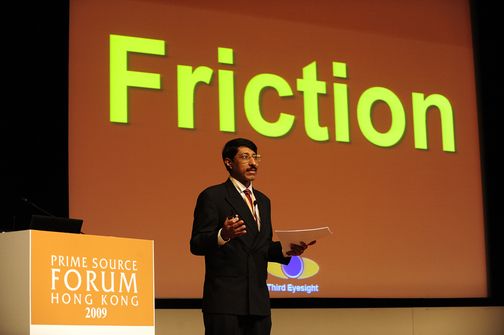
As students of Zoology, we learn about how animals respond when they are threatened. In a shifting environment with many potential threats, fear and survival instincts trigger the “fight or flight response”. The animal can either try to fight the threat or to escape.
It is no wonder, then, that ‘friction’ is the first reaction in a world where there is a lot of uncertainty and lots of fear.
And we’re beginning to see the signs of that…if you caught the news yesterday about what’s happened in London while the G-20 leaders get together for the Summit. There’s clearly a lot of anger, a lot of resentment which is bubbling over. You might remember a small news item from a few weeks ago, about somebody’s expensive car being torched by a group of youngsters in western Europe, some of whom had recently lost their jobs.
In uncertain times, not only do we stand up to fight potential threats, we even see many more things as threats than we did earlier.
Let me ask you this question – how many of you remember how the 1930s Great Depression ended? It didn’t end in a “Great Revival”, it actually ended in a World War. I don’t mean to sound alarmist, but people do stupid things when they are under pressure. We all do. That is something that nobody wants, but sometimes your hand is forced and you end up taking actions that you regret later.
This is one of the issues that I think should concern all of us, and I’d like to talk a little later about how to deal with that.
If you look at some of the actions that have happened in the political domain, it’ll be clear how this is affecting what we have discussed in this area – the global trade in apparel and textile products.
Well, we’ve already seen in the last 2-3 months the push-backs coming from different political parties in various countries, raising barriers, taking actions that are essentially “warlike”.
In fact, not very far from here [Hong Kong] American and Chinese ships actually got into aggressive posturing on the high seas. This may have been a political statement from either side. We don’t know what was going on or who was right, but clearly there is conflict arising out of friction.
This could go on to its logical conclusion, or we have the choice of a step back.
When you look at the textile and apparel business, and I mentioned this yesterday, is one of the most international around the world, this becomes critical whether you are looking at sourcing or exploring new markets. How do I know which countries are safe to go to?
A few weeks ago The Economist very helpfully published a table rating 165 countries. I could say it is surprising but it is not. Of the 165 countries rated in 2007 and 2008, only 2 countries showed an improvement from the previous year’s score, 12 showed no change (of which 7 were anyway in the very high risk or high risk category), and the rest all showed an increased vulnerability to economic, social and political unrest.
There is no surprise in the list of the countries at the top of the table or at the bottom of the table. What is surprising is the change in the rating, or the risk outlook. Countries like New Zealand, Austria, Australia, Mauritius, Norway…look at the change…as a percentage the change is very high. These are countries which you would think are fairly stable. So it is not just the already unstable becoming more so, but the potential of friction and conflict rising in relatively stable countries as well. The map looks redder – indicating higher risk – than it did last year.
So there is clearly a lot of uncertainty – we don’t know when it’s going to end, we don’t know when this recession will bottom out and we’ll see the light at the end of the tunnel. The situation looks fairly grim and the question is, what do we do?
We talked about the fight response, let’s talk about the flight response. One of the responses we have available is to not fight but to retreat, to protect ourselves.
That leads me to the other form of dealing with a threat – flight or escape. In individual terms this may literally mean running away from a location, in other cases this can mean deploying protection measures to cocoon oneself: a tortoise retracts within its shell, a squid squirts ink, while a hedgehog deploys its prickly quills.
What you’re trying to do is to protect yourself, your mind and emotions included, from all the uncertainty outside the boundaries you define.
Since countries can’t physically run away, governments build walls and engage in protectionism in the form of tariff barriers as well as non-tariff barriers such as procedural hassles in the way of imports, and get into trade fights which are essentially delaying tactics. You don’t really project too much aggression so as to get into a conflict but enough so as to present a barrier.
But – the good news is that there is hope! I believe that, fortunately for us, as Homo sapiens – “thinking humans” – we are not locked into our biological response systems alone. We have a third choice: to discuss and debate, to open a dialogue.
Partners who have turned opponents seem to be talking – there seems to be willingness to sit down at the table and talk things through. How quickly and what result will emerge remains to be seen. It is encouraging to see in this morning’s South China Morning Post a quote from the White House that the USA and China in their meeting yesterday “also agreed to work together and address the economic crisis, resist protectionism and to resume discussion about human rights as soon as possible.”
So, should we wait to see what emerges from these talks in London, and from the policy measures being announced by governments around the world? What do we do, as businesses, as individuals?
Well, I don’t think that freezing into indecision is an option. I don’t think inaction is an option. We have no way of knowing how the market will shape up, how the supply base will emerge, but we need to take steps to address our business concerns. Proactively or reactively we need to take action.
All the companies represented here in this room clearly need to respond to an economic situation that most of its management has never faced and most may never face again.
I have found as I have talked to people in the US in January, in the UK, in Europe, in India that many, many companies are postponing decisions, and the postponement is not rational. It is not to say that something will happen, and I know the window of time in which that event will happen, therefore I am postponing my decision to that future. They’re just postponing – it’s just “I’ll look into this later”, it’s procrastination – it’s not even postponement of a decision. And that is not an option. I don’t think we can sit tight and wait for this to blow over.
So what should we do? How should we respond – on the sourcing side and on the market side?
I’ll talk about the sourcing side first.
The first thing we need to do, is to break from what one author called “the Tyranny of Or”. For instance, in discussions with colleagues from the industry I’m struck by how much we think along bipolar lines of growth. We prefer things to settle either one way or the other way, for them to be conveniently predictable for us.
I would suggest that rather than debate between extremes, we need to accept that different markets and supply bases will evolve differently. It is not a choice between consolidation or fragmentation, globalization or localization (“could manufacturing move back to Europe, or to the US?”). Should we be strategic or be reactive? There has been discussion about partnership, long-term relationships, but that partnership was shaped in a world very different, many months or years ago when the world was very different. Shouldn’t we react to that change?
Should we look at getting the lowest cost or should we look at speed? Clearly when you look at speed, you would be looking at supply bases that are more capable and potentially more expensive. Should there be a trade-off?
That leads me to a second issue: eggs. That is, risk. There are two philosophies.
One philosophy says: put all your eggs in one basket and watch it very very carefully. The other more common saying advises that we should spread your risk around a little bit and spread the eggs in different baskets.
That’s the thing about risk – you can try and minimize risk, but you also need to try and mitigate risk , diversify risk.
Well, if there is just one thing we need to learn about risk, it is to “diversify, diversify, diversify”. Minimizing risk is only possible to a certain extent. So I would tend to go along with common wisdom here. And even if you believe in the first philosophy, it only works even partially if you have multiple eggs.
Yesterday we talked about a few other things – consolidating the business, conserving cash flows and being careful with our resources, and so on. But it also leads to conservatism. If you look around the room and see the number of black suits around, including the one on the stage, you’ll get a flavor of what I mean. These things are not divorced from each other. We deal with our business and rational decisions through the lens of our emotions. And when things are looking uncertain, we tend to contract, whether to regroup our energies or to protect ourselves – fight or flight which is a very instinctive, natural response.
The thing that we need to remember is that when you look at the fashion and the retail businesses, both of these businesses are fundamentally entrepreneurial in nature. Of course there are corporate businesses as well, but the successful ones promote entrepreneurship within the corporate.
And the thing about entrepreneurs is that there is a certain quality…you could call them mavericks. The night before last there was a conversation about how the average size of manufacturers and brands in this industry is much smaller than in other sectors. The reason for that is that the entrepreneurial drive actually takes precedence over any corporate diktat. The industry actually allows and encourages entrepreneurs to break off, and go and do their own thing. And that causes fragmentation.
Standing here today, after all that discussion on the sourcing panel yesterday about supply base consolidation, I have to say this: fragmentation, to my mind, in the current scenario is a good thing. You might call me crazy, but let me give you my reasoning for saying that.
Think about a beanbag – there is a lot of air in between the small pieces of foam, and the bean bag is a lot softer than one single solid piece of foam. The cushioning effect comes from the fact that there is a lot of air in between.
We need the cushion of diversity in the industry at the moment because there is no way – no way – we can predict who will succeed.
Some of the best known names in the industry have disappeared in the last six months. Twelve months ago nobody could have said, with any certainty, that they will disappear. So how do we decide what’s good, who should consolidate with whom, who will survive? We can’t! Nobody has a crystal ball, nobody can identify certain survivors. I would urge you to allow fragmentation to exist rather than just travelling on the consolidation route.
I think supply base consolidation and market consolidation has gone beyond strategic considerations, and almost become a fad. Consolidation does have some logic, but when it comes to risk, diversification is certainly preferable.
The recent crisis in global financial systems dramatically demonstrated not just how risky it is to depend solely on a few large institutions but also how the risk gets multiplied manifold due to these institutions might be interconnected.
In the textile and apparel business, instances such as SARS and the temporary re-introduction of quotas have demonstrated, again and again, the fallacy of over-depending on consolidated supply chains.
Also, too many people believe that the industry worldwide has no choice but to consolidate, that mergers and acquisitions are inevitable, and that large companies will dominate the business from retail to fibre. We forget that we are talking about the fashion industry, not the automotive or aerospace industry. Entrepreneurship here doesn’t cost billions or even millions of dollars.
We also need to look at balancing our approach – everyone has been looking at efficiency, which is a great driver: you strip out extra cost, extra time etc. but what I said about the risk is also true of innovation. You want different sources of innovation. There is not a single company in this room, or around the world in this sector, has the prerogative of being the only innovative company in the world.
As I said, this sector is entrepreneurial, and there is innovation coming from all kinds of people, from all kinds and sizes of companies. There is the need to allow that to happen and we would miss out tremendous innovation opportunities if we consolidate all our eggs into one or a few baskets.
So when you next look at dropping suppliers, think about what capabilities you might be losing or what risks you might be multiplying.
When you look at what that means for the sourcing approach, obviously you do want to reduce costs, when you are dealing with a predictable product, but the share of unpredictable is growing with every passing month.
In uncertain times such as now, and with unpredictable products, the prime driver is to “Catch the Trend” and the focus must be on “Response”. So you need to look at making the buying decision closer to the season and closer to the market. Development lead times must be shrunk and the lead time heavy decisions (such as fabric commitments, lab-dip approvals etc.) must be taken out of the critical path. This may even drive more sourcing from supply bases that are close to the market.
The panel on sourcing talked about lead-time yesterday. A lot of lead time is spent just going back and forth in the supply chain. The only way to handle this is for suppliers to not only become more capable, but to stand up and say “we are more capable”. They need to be able to say, “We don’t just convert fabric into garments, we can also do a lot of other stuff – we can design and develop new product, we can actually look at your sales trends and tell you what products we should be developing together.” This is an art, or a science, that seems to have disappeared (or is disappearing) over the last 15-20 years, as we’ve gone into this, dare I say, management consulting-led ‘strategic sourcing’ drive. The art of being a merchant is not only a retailer’s prerogative, but also something for a supplier to do. You need to be able to read the market, not just respond to a tech-pack, and I think that’s a skill set that needs to be emphasized and encouraged in the current market.
What should buyers do? Certainly, speed to market strategy is at the top of the agenda. Another response to this is to look at sourcing closer to home.
In this environment suppliers in global hubs should certainly be more concerned about reducing their “sketch-to-shop” lead times.
In fact, today buyers may look to proximity for more than just speed-to-market and the concern for clothing miles (“proximity sourcing is environmentally friendly”). Underlying that is the sense of security – that it is closer to home, more in the known territory than unknown, more “predictable”, it’s familiar – “I can manage it better”.
We’re going to see more of that – I don’t think we have a choice. Buyers are human beings, despite what several suppliers sitting in this room might think. Emotions do drive buyers’ decisions as well, and that is one of the emotions that will be driving some of the decisions.
Just a quick word on the market side: both factories and their buyers need to define the value that they bring to the market,
There is a lot of talk about partnership in this sector but, let’s be honest, there isn’t much partnership in this sector around the world. Companies do need to question what is the value they are bringing to their customers, and whether that value is greater than last year.
You can’t take it for granted that the consumer will trade down, or even trade up to a better product that will last longer. Why should they buy your product?
One of the kneejerk reactions in this kind of a market is to cut down on marketing. There is a need to sustain investment in branding (as targeted to the consumer or within the trade). In fact, if you are a supplier and have not invested in this area so far, I would suggest that the time to sow the seeds is now. Whether it is developing markets, new segments in a developed market, a country that is new to you, it takes a few years to develop a credible market presence. It’s cheaper right now – marketing costs are lower now, people are available, advertising is cheaper; the time to plant the seed is now.
On a different note, I would like to reiterate a particularly significant concern.
The fashion industry has one driving principle – that everything becomes unfashionable. We have what is called planned obsolescence. Without planned obsolescence how do you make next year’s sales? Any consumer business is built on the same principle, but the fashion industry is particularly important because it is very visible and raises the aspirational level very high.
Imagine the population as a cylinder, and imagine aspirations being pulled upwards like a piston. This upward aspirational pull affects not just those who can afford to indulge their aspirations, but also those who can’t. The stress is felt most at the bottom end.

I have to confess, this slide is about 3-years old, when I used it at a conference organized by the Confederation of Indian Industry. I used it again today because the signs that were just becoming visible at the end of 2006 are now on the news every day. The crime and the conflict arising out of this stress is apparent around the world. [Edit.: Articles referencing the original presentation are in the Business Standard of 30 November 2006, and on ]
What if the fashion industry’s consumers decided to opt-out? What if they said, we don’t want to buy more, we want to buy less? What would the business look like in that environment?
I think we need to start thinking about that now, because many companies will face that in their market. I think there are certain companies and segments in the US market that are already facing that pressure, and we will find that happening across the world.
Our business models are geared towards outdating merchandise in a matter of weeks or days or hours, and selling more to replace stuff that is still fairly serviceable. What if consumers got into the mode of conservation that many people in this room are already getting into: that “I need to conserve my resources”. Let’s not forget, we’re all consumers. Let’s looking at our spending behaviour; is it the same as last year? I would guarantee you, 80-90% of the people here would say that they have made some cutback since last year.
So how do we get out of this situation? Well, the situation is out there in the market and we can’t just get out of it, so we need to deal with it.
The manufacturing of apparel products has been and remains a great vehicle to spread income and wealth to the financially less well-off people. Also, the textile and apparel industry has such low barriers to entry that I believe it is also one of the greatest vehicles to promote entrepreneurship and self-reliance.
Finally, a word on the pain that many of us are feeling. I would like to share a very short video from Ted.com that might help to put things in perspective. [Transcript of talk continues below the video frame.]
The reason I shared that video is to explain the strange title of my talk.
I believe that many of us are experiencing the equivalent of an itch or maybe a scratch. Some have a cuts and bruises, and a few have fractures. But the fact is that we’re not dead yet. Most of us have lost much less than David Hoffman, whose presentation you just saw on the Ted.com video.
Let’s not forget: this industry has faced downturns before and has come out of them; it will again. Meanwhile we need to get our heads down and go through with doing whatever we are supposed to be doing.
Someone said: this crisis is too good to waste. There is too much opportunity in this crisis to not use. We can make changes that would be difficult in the best of the times. In the best of the times you’re going strong, everything is going well, there is no motivation to change.
The kind of transitions that look tough at other times, those investments that you can’t make at other times – this is the time to make them.
Mark Twain said, “If you feel like you’re going through hell, just keep going.” And I think that’s what we need to do.
Thank you.
Devangshu Dutta
December 24, 2008
At the outset let me mention the fact that in the title of this post lies a Freudian slip. The intended title was “Corporate Responsibility – Beyond Labels”. But the new – unintended – title captures the thought perfectly. (And I’ll come back to that in closing.)
Third Eyesight was recently asked by a multi-billion dollar global consumer brand to facilitate a round-table discussion focussing on the issue of how to drive ethical behaviour and sustainable business models into their sector. This company has a well documented strategy and action plan until 2020, and their team was travelling together in India visiting other corporate and non-corporate initiatives, to learn from them.
For the round table, we brought together brands, retailers, manufacturers, compliance audit and certification agencies, craft and community oriented organisations and non-government organisations (NGOs working on environment stewardship. Some were intrinsically linked to the consumer goods / retail sector, others were not. Among those present was Ramon Magsaysay award winner Mr. Rajendra Singh of the Tarun Bharat Sangh, an organisation that has, over the last several years, worked in recharging thousands of water reservoirs leading to the rebirth of several rivers.
The diversity (and sometimes total divergence) in views among the participants was a powerful driver for the debate during the day, which was the main intention behind having a really mixed group.
(Try this experiment yourself. Get a bunch of people together who define their work as being in the “corporate responsibility” stream. Then ask them the meaning of that phrase, and watch the entirely different tracks people move on. You might be left wondering, whether they are really working towards a common goal.)
At the end, though, the result was productive, since the divergent perspectives opened avenues that may have previously not been visible.
In the case of our discussion, the topics that were covered included labour standards and compliance, reduction of the product development footprint, closed-loop supply chains, water management, organic raw materials, energy conservation and community involvement in business. Some of the issues raised were:
My view is that these diverse areas and views can be aligned most effectively if we look at responsibility and sustainability in all its dimensions. These dimensions, to my mind, are:
– The Environment
– The Community
– The Organisation
– The Individual

Here is a suggested list to start with, which we can use to try out thought-experiments, viewing each issue in different dimensions and from different points of view (for example, buyer based in a developed market, supplier based in a developing country, an individual working in the supply chain, his family and broader community):
In closing, let me come back to “Babel”. According to the Book of Genesis, a huge tower was built “to the heavens” to demonstrate the achievement of the people of Babylon who all spoke a single language, and to bind them together into a common identity. God apparently was not particularly happy with this self-glorifying attitude, and gave the people different languages and scattered them across the earth.
Whatever your religious (or non-religious) affiliation, this story holds a gem of a lesson.
No matter how noble the cause of the corporate responsibility warrior, it is good to be humble and allow diversity rather than trying to capture everyone under one monolith with an apparently common goal. The diversity may be a lot more productive and help to spread the benefits wider than one single initiative.
The day that we spent on the sustainability round-table certainly demonstrated that very well.
Devangshu Dutta
November 13, 2008
For all those who have admired the consistency and presentability of produce in western supermarkets, here’s proof that tough times really focus us on substance and force us to look beyond skin-deep beauty.
Even in fruits and vegetables.
British supermarket Sainsbury has challenged European Union guidelines that restrict the sales of fruits by certain physical standards. Sainsbury’s is questioning EU regulations that prevent selling “ugly” fruit and vegetables. Due to EU regulations such as size of cauliflower (minimum 11 cm diameter) and the shape of carrots (requirement that there should be a single root, not multiple), Sainsbury estimates that up to one-fifth of what is produced in British farms cannot be sold in the supermarket. According to Sainsbury’s estimate, not following these regulations can help to reduce prices by up to 40%, and reduce wastage by up to 20%. The retailer is also trying to drum up customer support by running an online poll (94% responses were in favour of Sainsbury’s move, at the time this column was being written).
So less beauty could mean more veggies in the supermarket, and more money in everyone’s pocket including, hopefully, the farmer.
And this may also vindicate anyone who has complained that the beautiful veggies and fruits in western supermarkets taste inferior to their “ugly” counterparts sold on Asian hand-carts. Give us more substance and less style, any day.
Let’s look at some other substantial issues that merchants should consider.
Remember “I can’t get no satisfaction”? That’s what Mick Jagger and his mates in the Rolling Stones hit the world in the face with in 1965, allegedly in response to the rampant commercialism they had seen in the US.
After 43 years – at least judging by the modern supermarket shelves – apparently we still ain’t getting no satisfaction. In fact, the array of choice tends towards “overload”.
A typical developed country supermarket is estimated to carry over 40,000 SKU’s. Can you think of 40,000 types of items (or even 10,000) that you would need from the supermarket for your home?
So here’s the result. During my travels, if I’m in a store that is unfamiliar I could spend over an hour wheeling a trolley around before reaching the checkout. The first 5-10 minutes are focussed on figuring out the aisles based on my list. The next 10 minutes are spent picking what is actually on my list. And the rest of the time before the checkout is usually spent browsing through the thousands of SKU’s and picking stuff that we never knew we needed when the family made the shopping list.
Now, the guys who run the supermarkets are generally a smart bunch – they’ve figured that the more options you put in front of consumers, the more they buy. My cash receipts are proof of that. But, as American professor and author Barry Schwartz (“The Paradox of Choice”) says, the point where the choice becomes counter-productive is already well-past in developed markets.
With such overwhelming choice, consumers get into analysis-paralysis. And even after they finally purchase something out of the enormous range, you get shades of post-purchase dissonance. Only, in this case the dissonance, the dissatisfaction is not related to a bad product, but: “What if there I had made another choice? What if there was a better product than this? What if there was something available for less?”
During these times, it is pertinent to also put this in the context of business costs. There is surely a cost of providing that humongous choice in supermarkets. Have we considered what the saving could be, if the variety was reduced, if the product range was consolidated?
Consider the time (and therefore cost) spent on product mix and pricing decisions – surely merchandising teams have to be larger if you have a larger product mix, since each person can only handle a finite workload. Consider the cost of logistics of handling a widely diversified range. Consider the efficiencies lost in diverse production mix. So, does the consumer really need, really even want all that choice?
Retailers like the German chain Aldi raise precisely those questions. Aldi sells about 1,100 SKUs compared to the usual 40,000. And it claims that the typical shopping basket in Aldi’s UK stores is 25% less than competing supermarkets.
Indian retailers, of course, are possibly yet to reach that pain threshold of choice. There are possibly some potentially useful choices that are still missing. But even here, it is well worth taking a hard look at the product offering. With availability levels that can dip as low as 50-60%, it is probably worth asking – what if we dropped XYZ product from our range? Would it really hurt our sales or even our image; or would it help us to focus better on the products that really matter?
If we took our attention away from building such false choices, could the business become more profitable and therefore more sustainable?
The US and European markets are often the source of many a management thought and business model related to consumer products and retail, and of “best practices”.
So, in closing, I should share this question someone asked me recently: “when do you think consumer spending will bounce back in the US?” My first response was, “If only I had a crystal ball”. But the next thought in my mind was what if US consumers actually came to a decision that they had “enough”? What if their excessive consumption was no longer the role model for consumers in emerging economies? What if, instead, the frugal consumers of India and China became the global role model?
What would your business model look like then? Would your corporate be more socially responsible? And would it have a better chance of lasting longer?
For those who are interested in taking this inquiry even further, I can recommend John Naish (“Enough: Breaking Free from the World of More”, 2008), John Lane, Satish Kumar, M. K. Gandhi, Alan Durning (“How Much is Enough?”), or any number of ancient Indian, Chinese, Greek or Roman schools of thought, many of them pigeonholed into “religious” or spiritual categories.
You might also like this video of a talk by Barry Schwartz on Ted.com (below).
Do please share the results of your inquiry with us, too.
Devangshu Dutta
October 15, 2008
(Written in September 2008)
Over the last few years India has had one of the highest GDP growth rates, across the world, and consistently. In the last two years GDP growth is estimated to have been 9.6 per cent (2006-07) and 9 per cent (2007-08).
A combination of private and public investments in recent years, as well as steady liberalisation of regulations, has created a situation that is unique in India’s history as an independent country, where business growth has lead to individual prosperity which is, in turn, leading to explosive growth of further business opportunities. Although India’s per capita income still places it in the list of “developing countries”, a significant population has emerged that is truly middle-class.
Rising incomes have created visible shifts in consumption patterns. Certainly, more Indians regularly consume cereal flakes, processed cheese and fruit-based drinks for breakfast than did ten years ago. A generation has grown to adulthood wrapped in ready-to-wear clothing (with visits to the tailor mainly for wedding trousseaux). And, yes, Indian consumers are increasingly welcoming modern retail environments over the traditional
These economic developments have attracted the attention of both domestic and international consumer-goods companies and retailers, and several of these companies have seen annual growth rates 20-50 per cent in the current decade. Many of the new entrants into the retail sector are large business groups that have set up modern retail chains whose share, although still small, is growing year-upon-year.
This growth of modern retailing is also having an impact on the processes and the infrastructure deployed for the retail sector. These businesses are run as true chains which require processes and systems similar to any chain-store business anywhere else in the world including merchandising, sourcing, human resource management, logistics and store operations. These modern retail stores demand Grade-A buildings for shopping centres, with associated infrastructure and services within them.
Therefore this, in turn, has created a growing opportunity for companies that are manufacturers or vendors of consumer products, suppliers of other goods that are used within a retail business or companies providing services to the retail sector.
In the rush to grow, while challenges have been acknowledged, none of them have appeared seriously debilitating in the long term, until possibly now.
During the years 2003 through 2007, news headlines mainly focussed on joint-ventures or strategic alliances, new store openings, new format launches, and mega-investment plans. If human resources were mentioned, it was about the apparent domestic shortage, about the expatriate talent being pulled in, and about incredible salaries. If shopping centres and retail space was studied, it was the phenomenal growth in square footage and the increasing scale of the new malls that was the focus.
Suddenly, however, the tide in the press seems to have turned. There’s mention of “slow” growth plans of major retail joint ventures. There’s whisperings and denials about lay-offs, accompanied by some high-visibility exits.
It would be tempting to read the signs as evidence that the previous growth was based on hype, which has run out of steam. It would be tempting, and it would also be too simplistic.
The fact is that macroeconomic factors are also acting as dampeners in 2008, and the year may be marked in the recent history of India’s modern retail sector for the dawn of realism. Just as the growth of the retail sector was reaching into the not so profitable geographies and beginning to ride on not very efficient structures, economic growth has begun to slow down dramatically. From a 9 per cent-plus growth rate in previous years, a variety of agencies expect GDP to grow between 7.5 and 7.9 per cent in 2008-09. Further, the Prime Minister’s Economic Advisory Council forecasts a GDP growth rate of 6.8 per cent in 2009-10.
What’s more, 2006 and 2007 have brought about phenomenal increases in two critical cost heads: real estate and human resource.
So on the one hand, retailers are facing dramatically higher operating costs, and on the other hand demand seems to be weaker than they have expected. For businesses that have been launched in the last 5-7 years, such a situation is completely new.
Estimating the Demand – Still an Art?
Since the early years in the decade, most retail chains have grown quickly by identifying new sites and replicating existing successful business models and formats. Typically, the growth was limited in its geographic spread, and the underlying consumption pattern differences between the existing markets and the new locations were not stark enough to be immediately visible. Much of the growth, in fact, came from new stores in the larger cities, including the metros, mini-metros and the next tier markets.
This high replicability has allowed the businesses to rapidly scale up into becoming truly national chains, and the presence of modern retail formats has become visible among the larger cities and towns.
As the companies have begun to feel “saturated” in the larger cities, they have gradually moved towards the smaller towns, with their existing product-price-format offer tweaked slightly.
However, the ethnic, linguistic and cultural diversity of India’s 28 states and 7 Union Territories makes it less like any other single nation-state and more like a collection of countries such as the European Union. The result is sharp differences in income, tastes, habits, and culture, all of which present a challenge for consumer products and retail companies in terms of product and pricing mix.
Most European brands do not approach different markets within the EU with identical strategies. So why should we believe that the business formula that works in one part of India will work in exactly the same way in other parts?
A bigger issue is the realistic estimation of the target population. There are cases where the demand has been grossly overestimated, and the business infrastructure and investment plans are over-weighted by these expectations.
Estimates of 200-300 million middle class (50-60 million households) sound very attractive, but by what measure of income and spending standards?
Going by the pricing of many of the brands in the market today, it would be logical to use developed market income standards. If we use global income standards the middle class numbers are much smaller. The number of households earning truly middle class annual household incomes (not adjusted for Purchasing Power Parity), is less than 5 million.
Of course, the upside is that the growth rate in this income class is estimated to have been over 20% a year during the current decade and this group is forecast to comprise of over 3.7 million households or about 20 million individuals by the end of the decade. There are few other markets in the world where the target population displays a growth of over 20% a year! Moreover, the annual growth rate of the incomes earned among this population is also the highest in the country. Further, a large proportion of this population is concentrated among the metropolises, as mentioned earlier.
So it is a nice market to be in, if the business plan is sized appropriately. You can expect some homogeneity based on the socio-economic classification, and the geographical reach is also limited, allowing for organic growth.
A specific challenge for companies wishing to enter with a “western” business model or product mix is that, even through its most controlled years, India has been a market economy (unlike China’s decades of a completely centrally controlled economy). Therefore, in most consumer products there are several domestic brands and Indian avatars of foreign brands available, even if the choice is narrower than on the shelves of western supermarkets. Competing offers are available, whether from Indian companies or Indian subsidiaries of global consumer products companies. In that sense, India is not a virgin market. There is already some (or significant) amount of marketing noise and clutter, created by the existing competition.
It is vital, therefore, for any company to identify the true overlap between its offering and the most appropriate consumer segment(s) in India to assess the real short-term and mid-term potential for its retail business.
The Urban Retail Opportunity and Challenge
While we are on the subject of the cities, it is very pertinent to look at the spread of the urban population.
As India’s population moves increasingly into cities, it is the larger cities (Class 1, with a population of over 100,000) that are growing the most. From 308 Class 1 towns, the number of Class 1 towns and cities in India had grown to 643 in the 2001 census, and are estimated to hold about three-quarters of the urban population.
These cities are also economic magnets. No matter how attractive the new boomtowns may sound, the larger cities still pull in huge numbers of immigrants from the smaller cities, towns and villages, keeping the ecosystem vibrant.
Within these, in terms of economic potential for retail businesses, it is the Tier 1 cities (metros and mini-metros) that are the still unmatched. In 2001, the top-8 cities were estimated to have 40 per cent of the urban disposable income, and despite rising costs and rising competition these remain the most attractive market for a company looking to establish a new retail business. In socio-economic terms there is more homogeneity available to a brand wishing to tap into a critical mass of customers, discretionary incomes are higher (in absolute not just percentage terms), and the infrastructure available to service the consumer is better.
Of course, the side effects of the population overloading are now visible, ever more, on the cities’ infrastructure and governance. And some of the overloading is contributed by the development of shopping centre space.
The growth of modern retail has brought with it a rapid expansion in shopping centre space. This is both an opportunity and a challenge.
While the extraordinary growth of shopping centres has provided more space for brands and modern retailers to grow their business, much of the growth has been concentrated in the metropolises.
Almost half the shopping centre space by the end of 2007 is estimated to have come up in the conurbations of Mumbai and Delhi. This “over-shopping” could potentially lead to the failure of a significant number of these malls. The failure may not result in outright closure – the better sites may change ownership, while others might get repurposed as office blocks or other commercial projects – but it will be painful, nevertheless.
Paradoxically, despite the proliferation of malls, for retailers and brands high real estate rental costs are the possibly the biggest headache. In many instances, brands have signed-on high-rent shops with the aim of balancing their portfolio over time, and fully expect these shops not to make money in the foreseeable future.
Further, the intensive development of malls, without adequate zoning and planning of support infrastructure such as roads and public transportation is now stressing not just the city, but the malls themselves. Even if there is adequate parking space within the mall (as compared to a few years ago), what good is it if a two kilometre stretch of road before the mall is choked with traffic moving at 2-3 kilometres an hour? The convenience of shopping under one roof is totally outweighed by the inconvenience of spending thrice the amount of time on the road, and is a critical deterrent to a serious shopper who is being targeted by the tenants of the shopping mall.
Tier 2 and 3 Cities – A Work in Progress
A recent study by NCAER and Future Capital Research compared 20 cities, and classified them into the Megacities (metros and mini-metros), Boomtowns and Niche Cities. The naming of these groups is quite telling.
Megacities on this list include Mumbai, Delhi, Kolkata, Chennai, Bangalore, Hyderabad, Ahmedabad and Pune, and have approximately 50% of their income as surplus after household expenses (other than Kolkata and Pune which show surpluses in the 30s). They have large populations, and combined with the surpluses, this up to a massive economic opportunity.
However, the smaller cities have been developing into economic hubs in their own right. If population is a key factor, then Surat would be classified as a metro. It has a high average household income, as well as a high surplus. Similarly, Nagpur, with its logistically important location is also developing into an important market. Along with Lucknow and Jaipur, households in these cities have seen double-digit booms in terms of income growth since 2005, a trend also seen in the Megacities.
This trend of income growth, infrastructure development, trickling of business hubs into the 2nd and 3rd tier cities, will continue to broaden the base of modern retail and distribution further outside of the major cities. On the other hand, while households in cities such as Chandigarh and Ludhiana have high surplus incomes comparable to the Megacities, the much smaller base of population would force marketers to treat them as niche markets until a critical mass develops over the next few years.
Thus, while much has been made about the boom in the smaller cities and towns, the formulaic approach of rolling out the same business model will certainly not work.
The signs of overestimation of demand in Tier-3 and Tier-4 cities is visible in instances of downsizing of store-space by prominent retailers, as well as relocation or closure of some of the new stores which have not performed to expectation.
The Tug of War to Modernise Retail
In my opinion retail is fundamentally an organic business.
Countries that have displayed inorganic growth of modern retail through large-scale corporatisation tend to be economies that have developed rapidly in the last 20-25 years. Among these are the East Asian economies and the former communist Eastern European countries. Three critical factors that have enabled the disproportionate and rapid growth of corporate retail in these countries are: financial muscle, a bank of real estate and strong political linkages. In other countries the high share of modern retail has grown over many more decades.
In other countries such as those in western Europe and North America, retail consolidation has happened over many more decades, boosted occasionally by phases of economic boom (such as the 1920s, the 1950s and 1960s, and then the 1980s).
Many observers have imagined that India’s retail growth would follow the East Asian and Eastern European countries’ pattern, and have projected that India will reach a state of significant consolidation through corporate retail businesses by 2015.
If that were to happen it would be a rather sad “monoculturisation” of the business. Fortunately, I believe, that it is not likely to happen easily.
Firstly, the modernisation of retail trade has typically moved in step with broader economic and infrastructural development. If we use per capita retail sales as a surrogate measure for the overall economic development of a country in conventional terms, the share of modern retail is closely correlated with that (see the accompanying table). Viewed through that lens, the Indian retail sector is still very far down on the list, and is likely to remain fairly fragmented for some time to come.
Secondly, India has a strong entrepreneurial and organic retail ecosystem (not just retailers, but also suppliers and support organisations). Given the diversity of the market, and the sustained fragmentation of consumer needs, I believe the growth of India’s retail sector will not be driven by large companies alone, although they are helping to accelerate the process of sophistication – indigenous, non-corporate retailers and their suppliers have a strong role to play in the ongoing development.
I believe the Indian retail sector will evolve along a path that may be a hybrid, and in fact, may be closer to the European and American model, with a significant amount of entrepreneurial competition dominating the landscape.
Therefore, it is important for the executives in corporate retail organisations to think innovatively, as an entrepreneur would – think truly like a “dukaandaar” (shopkeeper).
Would a dukaandaar open a store in a place where he has no hopes ever of making money? Would he consistently follow this strategy for years? Would he believe that he is building brand equity and goodwill by doing so, that will sustain him in the future? The honest answer to all those questions would be an unqualified “no”.
Any long-term strategy can only be built on the premise that the business will be sustained into that term. If the short-term cashflows are not available to keep the business alive, no amount of long-term thinking will help, as some retailers have recently acknowledged while shutting stores or entire businesses.
It is also important for the corporate dukaandaars to continue to evolve relationships with the fragmented supply base, and support the growth of indigenous national-scale suppliers.
Models for Inclusion
Inclusive growth has become a buzzword in recent years. However, I believe India is one of the few major economies where it is more than just a buzzword.
In 2006, at the National Retail Summit organised by the Confederation of Indian Industry I expressed the concern that we were getting too preoccupied with the western model of urban economic development and consumption and we were ignoring the gap that was creating in India (the text based on that presentation is available on Third Eyesight’s website). To my surprise, I had no fewer than 60 conversations during the day about the subject, many of them with senior managers in large consumer goods and retail companies.
Clearly, the thought of sharing the growth and prosperity more widely does strike a chord with many more Indian urbanites than one would realise. What’s more, quite a few companies are actually taking a direct approach into bridging the gap.
There is no one single model that is applicable to creating these bridges.
Some – large companies such as ITC and Mahindra or smaller ventures such as Drishtee – have created retail businesses that also act as local exchanges of services and goods in the villages. Many of them include villagers as co-entrepreneurs through franchise structures, thus helping to generate and retain wealth within the locality.
Others – such as Fabindia among the visible, or Khamir and Dastkaar – are channels for rural artisans to participate in the economic growth as suppliers to the burgeoning urban demand.
Food retailers have started co-opting farmers into supplying to them directly, where possible. The attempt is to bypass middlemen who act as aggregators, thus making more margins available to both retailer and farmer. Many farmers are indeed happy to put in some extra investment in minor equipment and some effort, to help grade, sort and clean the produce, so as to get a still better price.
Yet, certainly, more could be done. For instance, how about if the largest modern retailers in the country created a permanent display for regional crafts in all their stores, and took these along as they grow their chains in the coming years?
And how about retailers growing businesses through demand generated by economic growth in the much smaller towns? By encouraging regional suppliers and local buying (as opposed to the central purchase mindset), not only would retail chains be better merchandised for local needs, but also be plugged more into the local economy.
Let us not ignore the possibility of local retailers who are right now “flying under the radar” to become important factors in the growth of these smaller towns.
Demand generation in Tier III towns and semi-urban areas will accelerate as the logistical connectivity improves and shipping costs decline through multi-modal transport. There is significant investment happening in both road and rail connectivity, and the newly well-connected dots on India’s map are visibly more prosperous than earlier.
As these developments continue, we should fully expect strong retail chains to begin building up, first locally and then regionally.
When we speculate about who India’s Wal-Mart might be, we shouldn’t forget that the world’s largest company emerged from sleepy, semi-rural locations in the US, and similar developments might happen in India as well.
Facing the Challenges
The Indian retail sector also has some distinct environmental challenges that are bigger than the specific economic blip it is facing right now.
For instance, to my mind retail is an integral part of urban infrastructure, but in most cities retail is a sideshow for urban planners. Either the space provided is too little, or laid out in such a manner that no sensible retailer can expect to have a sustainable and profitable store in that location. Or, if a large space is provided for the private development of shopping centres, the public transportation connections are next to nil, while the car-carrying capacity of the connecting roads is usually poor.
Some of the other challenges are related to the Indian government regulations controlling the sector. As an example, in the area of fresh produce, some states still have regulations that restrict the wholesale trading of the commodities to the mandis, or controlled market yards. This means that the consolidation and processing of farm produce is more difficult and expensive.
Real estate costs are an ongoing challenge for retailers, especially those that wish to develop mall-based businesses. Some mall owners have begun evolving from being “builders” to mall managers with a long-term view on creating a business of shopping centre management, and have begun linking their rentals to the revenues actually generated by their retail tenants. However, in several cases, the real estate costs are still in the double digits.
Reacting to the high real estate costs, brands have begun looking at the possibility of generating higher gross margins to compensate. In most cases, this has meant that selling prices are pushed up, rather than sourcing costs being reduced. While the consumer has been largely transparent to these increases in the last couple of years, I don’t believe this to be a sustainable margin strategy. The cracks are already showing, in the steadily increasing volumes sold under discounts, and the emergence of discount retailers who sell off-season and surplus branded merchandise. The message, clearly, is: the real, sustainable, price is at least 25-40% lower than the MRP. The market looks ripe for the emergence of every-day-low-price business models.
If I were to list out my top priorities for retailers in India, these would be:
1. Realistic demand estimation
Many chains are grappling with too much square footage in a certain geography in the form of very large stores or too many stores. While allowing for the fact that the market is significantly different from what it was 10-20 years ago, let us not expect entire populations to have increased their consumption multi-fold. Sales expectations need to be realistic.
2. Store productivity
For an entrepreneurial business, each store needs to produce results. Sure, there will always be some superstar stores and other locations that are a drag on the bottom-line. The performance needs to be analysed on an ongoing basis, and fairly dispassionately. Store productivity is a function of merchandise availability, store operations, advertising to build customer traffic and a host of other factors. However, unless the store is a marquee location (which very few are), there is no excuse for sustained losses. Fortunately, Indian management teams are today less scared of damage to their reputations, and more business-like when it comes to taking hard decisions on resizing, relocating or simply shutting doors.
3. Pace your growth
Think of a teenager who gets into a growth spurt, and suddenly adds length to his legs. The gait becomes ungainly and he doesn’t really know what to do with the extra inches. Many Indian retailers have gone through a similar disproportionate growth spurt. While stores have grown, the sophistication of the business has not. Let’s remember, the race for retail market leadership is a marathon, not a sprint. The appropriate rate of growth should be determined by organisational capabilities, rather than what others are doing in the market.
4. People
There is no shortage of people in India, as one of the leaders of the industry pointed out a few months ago. Let’s stop creating an artificial scarcity. There are people around who have been in modern retail trade in India for decades and are committed to it – they have the experience. There are others who have only recently entered but need direction and training. The investment in these two sets of people will possibly provide longer lasting returns than artificially inflated compensations for round-robin resumes.
A major “macro” risk to my mind is that retail is seen through narrow lens both by itself as well by as the government and its various arms.
In most cases, the governments various departments continue to treat retail as an incidental trading activity, or as a milking cow through indirect and direct taxes. The outlook towards retailing needs to change beyond the few government luminaries who can be identified as the retail sector’s friends. Whether it is provided “industry status” or not, the fact is that retailing is an industry in India, and needs to be treated with more respect. Even the local kiranawala adds significantly to the community and even the fragmented the market association keeps a vital part of the local ecosystem alive and ticking.
The other side of the story, the retail sector’s perspective of itself also needs to change. Retailers need to look beyond promoting short term consumption. As they grow larger, they are beginning to have a disproportionate impact on society, lifestyles, income distribution and the broader economic fabric of the country. In most developed markets retailers realise how much change they can drive, and many are using this power to benefit themselves and their societies at large. As Indian retailers grow in scale, I think it would be wise to build the “corporate social responsibility” gene into the DNA at this very early stage.
Looking to the Future
Given recent developments, some people may feel that the retail boom is over and it may already be too late to enter the Indian market. I beg to differ: I believe there is still a lot of steam, a lot of energy in the Indian market.
In fact, it would be most appropriate to quote Shah Rukh Khan from Om Shanti Om, “Picture abhi baaki hai, mere dost!” (“The movie isn’t over yet, my friend!”)
The road to modernising the retail sector in India is long, and we have only taken the first few steps yet. Economically difficult times are wonderful opportunities for shedding flab, challenging existing business models and assumptions, and also provide great frameworks for building efficient and lasting companies.
In closing, I would like to borrow a theme from the two great growth sectors in Indian retail: food, and fashion. Both thrive on change. Both thrive on freshness. And that could be the winning theme across the Indian retail sector.
Here’s to a fresh start in 2009!
