
admin
May 30, 2022
Written By Akanksha Nagar
Having acquired Patanjali Ayurved’s food retail business, the company has ambitious plans

While its edible oil business has been its mainstay, Ruchi Soya’s CEO Sanjeev Asthana is confident that the share of FMCG revenue could touch 20% this fiscal.
Ruchi Soya has its sights set on clocking `20,000 crore- `22,000 crore in revenue over the next five years from its FMCG business, after recently having acquired Patanjali Ayurved’s food retail business worth `690 crore. The Patanjali food portfolio comprises 21 major products, including top-selling items such as ghee, honey and juices, besides staples such as atta and spices.
To achieve its target, Ruchi Soya plans to launch a D2C (direct-to-consumer) channel in the next two months for its nutraceuticals business, with more categories to follow, while also increasing its investment on e-commerce and expanding its offline footprint. It is quite active across all key online marketplaces including Flipkart, Amazon and JioMart.
According to the latest Statista report, India’s FMCG market was valued at $110 billion in 2020, and by 2025, it is expected to touch $220 billion, as more brands adopt the D2C route. Several top FMCG makers, including Hindustan Unilever, Dabur and Emami, have launched D2C brands in the past two years.
Oiling other products
While its edible oil business has been its mainstay, Ruchi Soya’s CEO Sanjeev Asthana is confident that the share of FMCG revenue could touch 20% this fiscal. It is targeting `7000 crore in revenue from FMCG and `25,000 crore from commodity sales by the end of FY23. “Over the next five years, the revenue split between FMCG and commodities will be equal,” he says.
Furthermore, Ruchi Soya plans on consolidating and rationalising the Patanjali food portfolio, while simultaneously revamping some of its existing products. “The aim is to reposition the entire company towards being a food FMCG major,” says Asthana.
Following the acquisition, Ruchi Soya will be renamed Patanjali Foods (after regulatory approvals). Asthana says that brands such as Nutrela, Mahakosh, Ruchi Gold and Sunrich will continue to be marketed under their existing names, while all the businesses that are coming in from Patanjali will use the Patanjali brand in exchange for a brand licensing fee
evangshu Dutta, chief executive, Third Eyesight, says the company name change may work in its favour, since there is a large audience aligned with the image and values of Patanjali Group and its founder Baba Ramdev.
Casting a wide net
But not all is smooth-sailing. Alagu Balaraman, CEO, Augmented SCM, suggests for the company to scale up, it needs to build a robust traditional distribution network, since a bulk of sales still happens through these channels. “The cost of doing e-commerce delivery is significantly high,” he notes.
Ruchi Soya is working on those lines. Asthana says besides utilising Patanjali’s existing distribution muscle, it is expanding its offline retail footprint by adding 10,500 non-exclusive modern grocery stores and 4,500 exclusive ones every month.
Source: financialexpress
admin
January 24, 2022
Written By Devika Singh
The entry of Jubilant FoodWorks will intensify competition in the fried chicken segment, where KFC so far has maintained its stronghold.

Popeyes, founded in 1972 in New Orleans, Louisiana, has over 3,400 restaurants in over 25 countries around the world. Popeyes (Wikimedia Commons)
Jubilant FoodWorks, the franchisee for Domino’s Pizza, will launch the iconic US-based fried chicken brand Popeyes, known for spicy New Orleans-style fried chicken and chicken sandwiches, in India on January 19 with the unveiling of the first outlet in Bengaluru.
“Popeyes was founded in 1972 and has been one of America’s most popular and fastest-growing chicken brands. Popeyes aims to delight Indian guests with the bold and delicious flavours of its Louisiana-style chicken,” the company said in a filing to stock exchanges.
“The success of the brand lies in its traditional and unique technique of hand breading, battering, and marinating its fresh chicken for 12 hours in bold Cajun seasonings,” the company added.
Popeyes runs over 3,400 restaurants in 25 countries.
With the entry of Jubilant FoodWorks, the competition is set to intensify in the fried chicken segment, where KFC has maintained leadership in the country so far.
“KFC has enjoyed a free run in the fried chicken market. There are some local players in this segment but no large QSR (quick service restaurant) player had a presence in it until now. With Popeyes as a competitor, now Jubilant FoodWorks is stepping into that opportunity,” said Devangshu Dutta, chief executive at consulting firm Third Eyesight.
While launching its initial public offering (IPO) last year, Devyani International, the largest franchisee of Yum! Brands (which owns KFC), had stressed the advantage it has over other QSRs in the country.
“We have no competition for KFC in India,” Ravi Kant Jaipuria, chairman, Devyani International, had said at the time. Devyani International runs 284 KFC India stores across 107 cities and the brand contributes more than half of its revenues. Sapphire Foods, which too launched its IPO last year, is another major franchise for KFC in India.
Both the companies already compete with Jubilant FoodWorks in the pizza segment as they also operate Yum! Brands-owned Pizza Hut in India. Jubilant FoodWorks with Domino’s Pizza, however, has clear leadership in the pizza market. Sample this: Pizza Hut currently has 500 stores in India, of which 317 are run by Devyani International; Jubilant FoodWorks, on the other hand, already has 1,335 outlets of Domino’s Pizza in India.
Now with the launch of Popeyes, Jubilant FoodWorks, it seems, wants a chunk of the fried chicken pie too.
Westlife Development, which holds the master franchise for McDonald’s in southern and western India, also has set its sight on the fried chicken segment in India. In an interview with Moneycontrol in September last year, Smita Jatia, managing director of Westlife Development, shared an ambitious plan to become a market leader in the segment. The company has already introduced fried chicken in its 125 stores in South India and plans to soon launch the food item in the western region too.
Clearly, the fried chicken market is certainly headed for interesting times as several new QSR players vie for a share of it. According to experts, the segment also offers the next avenue for growth for QSR players. “While fried chicken was the first to take off in Southeast Asia, in India, pizza and burgers found takers given the preference towards wheat-based cuisine in some parts of the country,” said Rajat Tuli, partner at global management consulting firm Kearney.
“However, as Indians become more experimental with food and trying out different cuisines, the fried chicken segment offers the next arena for growth to QSR companies,” he added.
Tuli also believes that the segment has enough space for a couple of players. “The QSR space is poised for over 20 percent growth in the next five-six years and hence there is enough headroom for multiple players to grow in it,” he said.
‘Veg options and no MSG’
The Popeyes India menu will feature the signature Cajun-flavoured Chicken Sandwich and Popeyes signature Chicken in Classic and Spicy flavours. The Indian menu will also feature an array of vegetarian options and will also have rice bowls and wraps. The entire India menu has no flavour enhancer monosodium glutamate (MSG), and the chicken is antibiotic-free, said Jubilant FoodWorks.
In a statement, Shyam S. Bhartia, chairman, and Hari S. Bhartia, co-chairman, Jubilant FoodWorks, said, “We are excited to introduce the Popeyes Louisiana Kitchen brand to chicken-loving Indian consumers. We are confident that Popeyes will not only delight guests but also strategically complement our portfolio and fortify JFL’s leadership in the QSR domain.”
Popeyes will start with its flagship store in Bengaluru’s Koramangala on January 19, followed by stores in New BEL Road and Kammanahalli soon thereafter. The brand will have its own app (Android and iOS) and mobile website.
To ensure a smooth and seamless delivery experience, Jubilant FoodWorks has built its in-house delivery fleet with e-bikes to enable zero-emission delivery. The company is also taking precautions given the pandemic situation.
“Safety protocols like daily temperature screening for all employees and frequent sanitisation of the restaurant are being implemented and frequent sanitisation of bikes will be conducted. All delivery riders will be compulsorily wearing face masks and gloves while following the frequent hand sanitisation protocol,” it added.
Source: moneycontrol
Devangshu Dutta
September 28, 2017
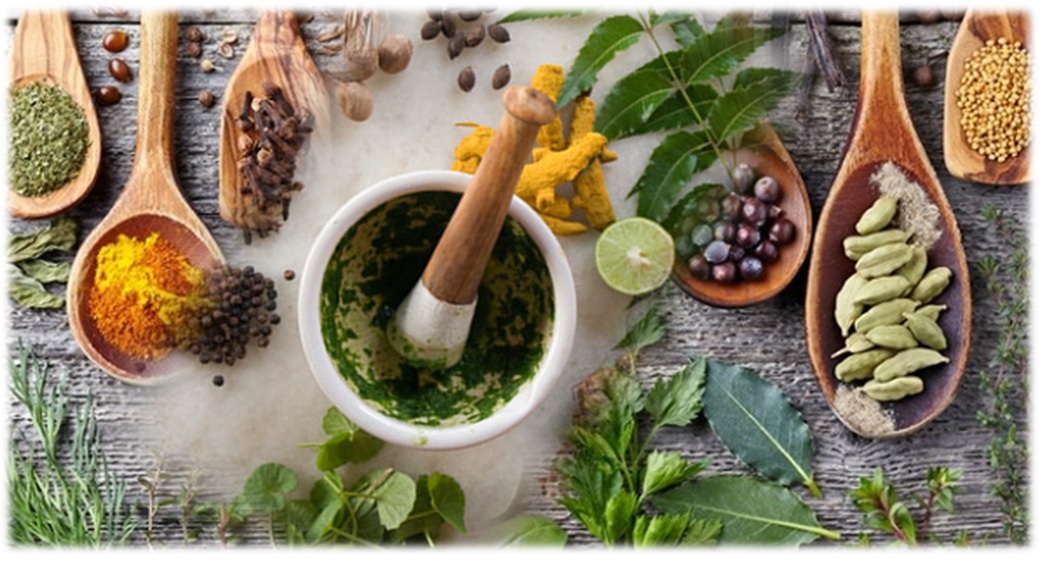
In recent decades, the dependence on established medical disciplines has begun to be challenged. There is the oft-quoted dictum that healthcare sector tends to illness rather than health. Another saying goes that some of the food you eat keeps you in good health, but most of what you eat keeps your doctor in good health. With a gap emerging between wellness-seekers and the healthcare sector, so-called “alternative” options are stepping in.
Some of these alternatives actually existed as well-structured and well-documented traditional medical practices for thousands of years before the introduction of more recent Western medical disciplines. This includes India’s Siddha system and Ayurved (literally, “science of life”), which certainly don’t deserve being relegated to an “alternative” footnote. Ayurved is also said to have influenced medicine in China over a millennium ago, through the translation of Indian medical texts into Chinese.
Other than these, there are also more recent inventions riding the “wellness” buzzword. These may draw from the traditional systems and texts, or be built upon new pharmaceutical or nutraceutical formulations. Broader wellness regimens – much like Ayurved and Siddha – blend two or more elements from the following basket: food choices and restrictions, minerals, extracts and supplements, physical exercise and perhaps some form of meditative practices. Wellness, thus, is often characterised by a mix-and-match based on individual choices and conveniences, spiked with celebrity influences.
A key premise driving the wellness sector is that modern medicine depends too heavily on attacking specific issues with single chemicals (drugs) or combinations of single chemicals that are either isolated or synthesised in laboratories, and that it ignores the diversity and complexity of factors contributing to health and well-being. The second major premise for many wellness practitioners (though not all!) is that, provided the right conditions, the body can heal itself. For the consumer the reasons for the surge in demand for traditional wellness solutions include escalating costs of conventional health care, the adverse effects of allopathic drugs, and increasing lifestyle disorders.
After food, wellness has turned into possibly one of the largest consumer industries on the planet. Global pharmaceutical sales are estimated at over US$ 1.1 trillion. In contrast, according to the Global Wellness Institute, the wellness market dwarfs this, estimated at US$ 3.7 trillion (2015). This figure includes a vast range of services such as beauty and anti-ageing, nutrition and weight loss, wellness tourism, fitness and mind-body, preventative and personalized medicine, wellness lifestyle real estate, spa industry, thermal/mineral springs, and workplace wellness. Within this, the so-called “Complementary and Alternative Medicine” is estimated to be about US$200 billion.
There are several reasons why “complementary and alternative medicine” sales are not yet larger. Rooted in economically backward countries such as India, these have been seen as outdated, less effective and even unscientific. In India, the home of Siddha and Ayurved, apart from individual practitioners, several companies such as Baidyanath, Dabur, Himalaya and others were active in the market for decades, but were usually seen as stodgy and products of need, and usually limited to people of the older generations and rural populations. In the West they typically attracted a fringe customer base, or were a last resort for patients who did not find a solution for their specific problem in modern allopathy and hospitals.
However, through the 1970s Ayurved gained in prominence in the West, riding on the New Age movement. Gradually, in recent decades proponents turned to modern production techniques, slick packaging and up-to-date marketing, and even local cultivation in the West of medicinal plants taken from India.
As wellness demonstrated an increasingly profitable vector in the West, Indian entrepreneurs, too, have taken note of this opportunity. Perhaps Shahnaz Husain was one of the earliest movers in the beauty segment, followed by Biotique in the early-1990s that developed a brand driven not just by a specific need but by desire and an approach that was distinctly anti-commodity, the characteristics of any successful brand. Others followed, including FMCG companies such as the multinational giant Unilever. The last decade-and-a-half has also brought the phenomenon called Patanjali, a brand that began with Ayurvedic products and grew into an FMCG and packaged food-empire faster than any other brand before! While a few giants have emerged, the market is still evolving, allowing other brands to develop, whether as standalone names or as extensions of spiritual and holistic healing foundations, such as Sri Sri Tattva, Isha Arogya and others.
An absolutely critical driver of this growth in the Indian market now is the generation that has grown up during the last 25-30 years. It is a class that is driven by choice and modern consumerism, but that also wishes to reconnect with its spiritual and cultural roots. This group is aware of global trends but takes pride in home-grown successes. It is comfortable blending global branded sportswear with yoga or using an Indian ayurvedic treatment alongside an international beauty product.
Of course, there is a faddish dimension to the wellness phenomenon, and it is open to exploitation by poor or ineffective products, non-standard and unscientific treatments, entirely outrageous efficacy claims, and price-gouging.
To remain on course and strengthen, the wellness movement will need structured scientific assessment and development at a larger scale, a move that will need both industry and government to work closely together. Traditional texts would need to be recast in modern scientific frameworks, supported by robust testing and validation. Education needs to be strengthened, as does the use of technology.
However the industry and the government move, from the consumer’s point-of-view the juggernaut is now rolling.
(An edited version of this piece was published in Brand Wagon, Financial Express.)
admin
February 9, 2017
This is a recording of a short, candid talk by Devangshu Dutta (chief executive, Third Eyesight) at the ASSOCHAM’s 8th Global Food Processing Summit in New Delhi, India.
He touched upon the inherent conflicts in the food supply chain we need to be aware of before formulating policies and practices, and strongly urged everyone to look at food security from the point of view of sustainability and risk-management. (Transcript below.)
TRANSCRIPT:
I’ll just take just few minutes to share a few thoughts with you on the sector.
The session was titled “Make in India: Platform for investment opportunity in food processing sector and 100 percent FDI in food retail”.
As we all know, whoever’s been following the news, there’s all this buzz around FDI into retail being allowed, not only for physical retail but also for e-commerce companies, and there are two very strong sets of drivers. On the one hand is the likes of Walmart and Tesco and people who want to actually set up food retail. and you know food is the largest consumption in our basket of consumer products, so they obviously want to tap into that demand. The second side is Amazon and the likes of it where again you know there are no barriers in terms of location, you are buying on the net, tapping into a consumer who’s looking for convenience, and there you need to actually service that demand with food and grocery which is packaged, so there is obviously a very strong push a very strong lobby for that to happen. At the same time there’s a very strong lobby against that because there are domestic retailers who invested a lot of money over the last maybe 10-15 years in setting up a lot of retail stores. In the recent years there have been a few e-commerce companies that have come up as well with domestic and foreign capital. So there is this conflict.
In this whole ecosystem of food production and supply and retail there are some fundamental conflicts that we need to be aware of, before we get into any kind of thinking about what should be done with the sector.
First of all is foreign vs. Indian; this is a conflict which is there the world over, and I think we will see that increase in Europe, in the US, and in other places. You know, “local versus foreign” is a conflict which we will keep seeing. I think we have moved a little bit away from that within, not only this government’s regime but also the earlier government’s regime, where we started to welcome foreigners back into the country and said, “let’s do trade together”. I think it’s important to keep it in mind that local interests will always always be take predominance over foreign interests. If any government comes in and says, “I will give foreign interests precedence”, it’s going to not be there in power the next time, so that’s something which is to be kept in mind.
The second is this is a conflict between large and small…large retailers versus small retailers. A Reliance had to close shops in Uttar Pradesh, had to close shops in Kerala because they were impacting small retailers. So it’s not just about Walmart impacting small retailers, it’s also about the large Indian companies impacting smaller companies.
The third conflict is between traditional and modern, and this is happening again even in farming. Indian farmers tend to follow traditional practices, there are fragmented land holdings, and then you have modern entrepreneurial farmers, you have cooperatives which are adopting different techniques, and there is a conflict which happens at that level as well. At the local level it can get hugely political and then it starts raising barriers. So if you talk about the food supply chain, it’s not a simple thing to deal with.
Fourthly, the biggest biggest conflict – and that’s not really a conflict outright because these are people who are working together – but there are differences of interests and, therefore, there are conflicts…that is between retailer, supplier and the farmer, the interests are not aligned. A retailer wants lower prices, a supplier wants even lower prices, but the farmer wants higher yield and higher prices, so that conflict, just something on account of price and commercial terms and various other things, is bound to create friction in that supply chain.
Having understood that, I think we need to also acknowledge the fact that retailers are unlikely to invest in the supply chain and in farming. Amazon is not going to set up food processing. Amazon is not going to set up farms which are contract farming. Let’s face it, even Future Group hasn’t. Future Group has set up a food park. Future Group has taken over companies which are in food production companies but Future Group has has not set up, ground-up, contract farming. They’ve tried but it’s not their core competence, it’s not even their core interest. Reliance has done a little bit, ITC has done a few things but it’s not something which is fundamentally their business. They’re retailers, that’s what drives them, so what they can do is they can create an ecosystem.
Let’s take the example of McDonald’s or a Pizza Hut or say a Domino’s. These are foreign quick service restaurants which have come into the country. A McDonald’s had to actually build its supply chain from scratch to get the potato fries, to get the burgers done, to get the patties done and they created an ecosystem, in some cases they invested or co-invested with Indian partners, but in most cases they encouraged Indian partners to talk to their partners from Europe, US etc.
When we talk about people like Future Group, it has done a lot in being a platform for Indian companies to come on board and sometimes international companies as well. They’re a platform for them to launch and grow their business. So what the retailer can do is create the ecosystem, create the demand pipeline. Beyond that it is up to the food producer, it is up to the farmer, to take that opportunity and move on. It’s not for the retailer to handhold from scratch all the way to selling on the shelves.
In terms of the practices that we need to adopt I’d like to say this, that while we keep talking about international standards, food is a very local thing. We may be going into a world where 50 years down the line all of us will be having a white-gray powder which has no flavour and that’s what the future of food…I hope not!…The fact is the food is a very local thing because of tastes, because of cultures, because of the environment that you are in. And we are actually losing a lot. People who are here from farming, if you look back not, even very far – maybe 20-25 years – certainly, if you look back 50 years, what was being farmed we’ve lost probably 30-40 percent of that produce, because there is no demand, because it is difficult to grow, because it’s seasonal, because it is difficult to process, difficult to sell. If you go to the sabziwala today versus if we went to the sabziwala 10 years ago, you will find that the variety of produce has actually diminished. So while we are talking about food processing, what is happening is…and I’d like to mention this…You know, sometimes we come to conferences like this and we run our businesses, we run with a split personality. We do what is convenient for the business, we do what is good for the business in terms of cost, in terms of ease of processing, in terms of ease of selling etc. When it comes to us as consumers, we want fresh, we want variety, we want flavor, we want colour, we want all of it. Why do we have the split personality? Why can’t we actually combine the two and do what is right for us as consumers, our children as consumers, the environment, and the future as well?
Sustainability is should be a big driver and we forget that the kind of food processing which is going on right now, by and large the kind of plants which are being put up, are based on technology which was developed in North America and Europe between 1900 and say 1960-70. That’s been the most wasteful part of the last century in terms of energy, in terms of water, in terms of labour, in terms of anything. It’s resource intensive. Now imagine even if 20% of India – over 200 million people – started to live and depend on that kind of a lifestyle and that kind of an industrial structure! This country will be finished, certainly! The world would be finished! We cannot do that, so we’ve got to do stuff which is good for us as consumers, the environment as a whole, and good for the business. It can’t just be one. We cannot be uni-dimensional in our thinking.
Last point: I think diversity is a very, very important part of the food supply chain and diversity means that there are “many”. We tend to look at large companies as being the standard and, therefore, large being good. But the fact is that if you take food which is an integral part of our lives…You cannot live without air, you can live without food and water for a few days, you can’t survive. You can live without clothes for your entire life.
If let’s say the food supply chain and even the processing, the acquisition and everything else, if it gets consolidated beyond a certain point it becomes extremely vulnerable. Anybody who’s looked at financial services risk management or any any kind of risk assessment, you would know that it is good to have a diversified basket. From the point-of-view of farming, from the point-of-view of manufacturing, from the point-of-view of retail, consolidation beyond a certain point is actually detrimental to quality and to safety. So if you’re looking at food safety, if you’re looking at sustainability, we need to actually encourage many, many, many entrepreneurs, many small businesses.
For that…I don’t know if anybody is there from the government sitting in this audience…but Make in India will only happen if we make it easier. Today all of us who are in business know that India is one of the most hostile environments to do business of any sort. It does not matter whether you are in manufacturing, whether you’re a truck driver, whether you are running a consulting business. With all the regulations…we don’t lack regulation, there’s too much regulation…we don’t have an environment where it is easy to do business. If that can happen we will find that we will have an extremely diverse and vibrant ecosystem which will grow and we can actually be the standard, the international standard which can be followed by everybody else. I think what we should do is try and get the government to work in that direction. If we can do that, if that’s one outcome we can achieve out of this conference I’ll be really, really, really happy.
Thank you so much!
Devangshu Dutta
December 27, 2016
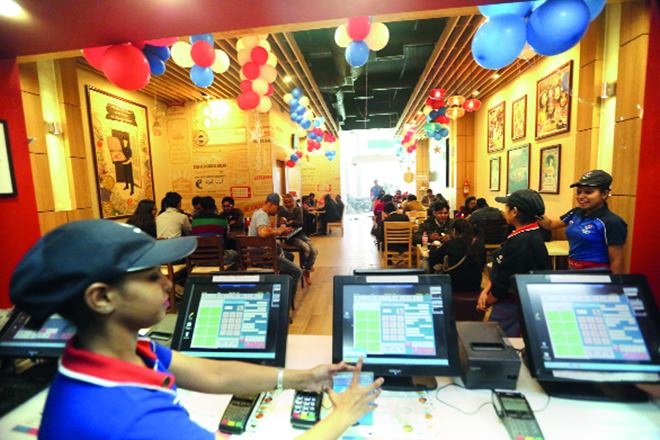
When American fast food standard bearers McDonald’s and Domino’s Pizza stepped into India in the mid-1990s, the market was just ripe enough for take-off.
McDonald’s and later Domino’s Pizza can be credited with not just growing the consumer appetite for fast food but also for fostering an entire food service ecosystem, including fresh produce, baked goods, sauces and condiments, and cold chain technology.
India has been typically difficult for business models driven by scale, replicability and predictability. The customer is price sensitive, operating costs are high and non-compliance of business standards is a frequent occurrence. In this environment, these brands have reinvented the meaning of meals, snacks and treats.
Their growth has set the stage for other international players and also set business aspirational standards for Indian food entrepreneurs and conglomerates alike.
Product experimentation has also been an important part of their success; it keeps excitement in the brand alive and help improve footfall. However, how far a product sustains and whether it becomes a menu staple can’t be predicted accurately. New products also need significant investment in both supply chain and front-of-house changes in standardisation-oriented QSRs, so the new product launch cannot be undertaken lightly. This is one reason these successful QSR formats don’t overhaul their menus drastically but make changes incrementally.
For these market leaders, future scale and deeper penetration is only feasible with higher visit frequency. For growth in middle-income India, they need to become a significantly cost-competitive option to be seen as more than a ‘treat’ or celebration destination.
So, while both McDonald’s and Domino’s Pizza have invested significantly in Indian flavours and menu offerings, perhaps it’s also best for them to reconcile with the fact that there will be a significant part of the consumer’s heart, stomach and wallet that will remain dedicated to indigenous offerings.
In a global environment that’s turning hostile to fast food, India isn’t a quick-fix growth market, but it’s certainly one to stay invested in, for the longer term.
And I have no doubt that as much as these companies aim to change India, over time India will also change them.
(Also published in Brand Wagon, The Financial Express)
