
admin
June 19, 2020

“The industry has no reserves. And now with all the constraints from the curfew to the liquor ban to the reduction in the capacity we are all going to lose money for a few months. On top of the losses during the lockdown, this is very hard to recover from and hence many are closing,” said AD Singh, the founder and Managing Director of the Olive Group of Restaurants.
New Delhi: The restaurant industry fears 30-40% eateries (from the organized sector) will shut down shutters soon out of the half a million present in the larger cities. Popular restaurants in Khan Market, New Delhi have already announced closure and many to follow suit, as shared by industry sources.
Some ground realities
“The industry has no reserves. And now with all the constraints from the curfew to the liquor ban to the reduction in the capacity we are all going to lose money for a few months. On top of the losses during the lockdown, this is very hard to recover from and hence many are closing,” said AD Singh, the founder and Managing Director of the Olive Group of Restaurants.
It takes no science to understand why the restaurant industry is the worst hit as opined by the industry experts. The industry which thrives on socializing and creating good times with family and friends is surely the worst hit where maintaining social distancing now is the norm. Besides, one of the primary reasons for the closing of restaurants is that it’s a capital intensive business wherein the daily churn is required to get going.
National Restaurants Association of India (NRAI) President Anurag Katriar said the sustainability cost is very high in the restaurant industry. There is no working capital and there is uncertainty in business volumes going forward. The volume is expected to be subdued as will need cash to fund losses that restaurants are unlikely to get. Further, the operational cost including the rentals is very high to afford.
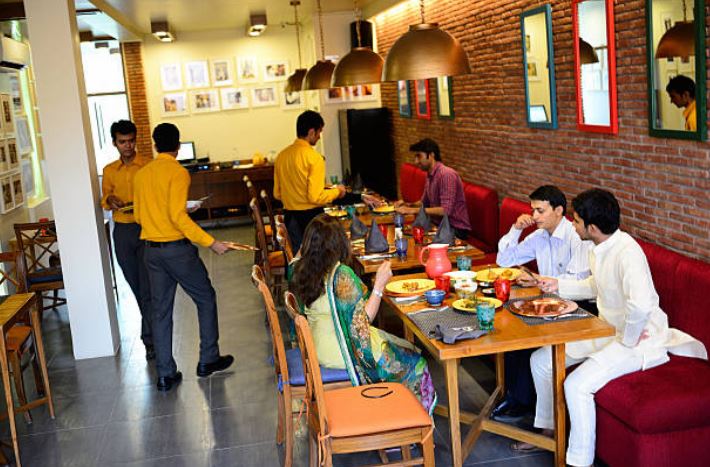
Even if the restrictions are not there, customers at this time will not be in that state of mind to dine out. Economic factors as well as the fear of spending some good amount of time (40 minutes to one hour) in a closed environment where many strangers will come and go does not look feasible for consumers.
Also, high rental is another cascading factor in the operating cost. Moreover, with the kind of guidelines to operate a restaurant business these days, many would not have the capability to follow such guidelines of social distancing and fewer footfalls, no liquor, etc.
“Eating out at restaurants is not a necessity, by and large; it’s a part of discretionary spending when you go out, socialize ― it’s all part of that. If you are not in a secure mind-frame about your future income, you will be as conservative as possible, and these are the kinds of expenditures that get knocked out first,” said Devangshu Dutta, founder, Third Eyesight.
“The restaurant industry was always a high mortality rate industry but the effects of the pandemic has been devastating. Some estimates say that 25-40% of restaurants may never open and even those that open will have to deal with low sales for a few months,” said Zorawar Kalra, founder of Massive Restaurants.
“I see the cost to sustain closure is very high. Many don’t have any resources which will impact the industry in such a way that 30-40% of restaurants will not reopen,” Katriar said.
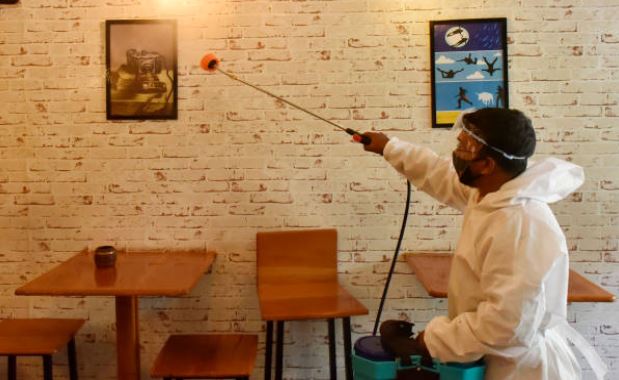
Maintaining the utmost care in health and hygiene measures may prove a double whammy for restaurateurs. Firstly, it will add to their operating costs but they won’t be able to do away with this measure-as this is the only way to bring back consumer confidence. Adopting digital menus and digital payment solutions is another area they will have to travel around.
What’s in the offing?
Maintaining the utmost care in health and hygiene measures may prove a double whammy for restaurateurs. Firstly, it will add to their operating costs but they won’t be able to do away with this measure-as this is the only way to bring back consumer confidence. Adopting digital menus and digital payment solutions is another area they will have to travel around.
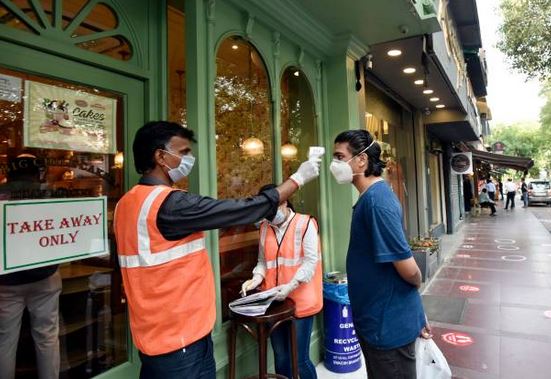
Besides, working with 50 percent or less of total capacity to ensure social distancing, the restaurants will probably have to get on the apps that provide online reservations, pre-ordering, and waitlist management to help minimize the queue of people waiting to be served. Popular restaurants have already started with thermal scanning for employees as well as consumers.
So, in the post COVID era, thermal scanning will be the new metal detection initiative that the restaurants will have to partake.
“Restaurants will have to opt for digital menus, contactless food, and sanitization among others. And with 50 percent occupancy, no alcohol and reduced working hours-restaurants will not make any money,” said Riyaaz Amlani, MD of Impresario Handmade Restaurants and the former President of NRAI.
Source: etvbharat
admin
February 22, 2019
Written By Aditi Shrivastava & Samidha Sharma, ET Bureau

High Cash Burn
“It is prudent to be invested in Swiggy than burn capital competing for the same set of restaurants and consumers,” said a source in the know of the deal. “This should bring some rationality to the cashguzzling food-delivery market,” this person added, hinting that discounts are likely to significantly reduce post integration.
In the past year or so, both Swiggy and Gurgaon-based Zomato have been raising capital as they have gone on a tear to acquire new customers. Along with these two, the market has seen heightened discounting by Uber Eats and Ola’s Foodpanda which has led to high cash burn by these companies.
Sources said that Uber Eats had also held discussions with Zomato, but those talks fell through. In an emailed statement to ET, spokespersons for Uber and Swiggy said, “We do not comment on rumour or speculation.”
Uber Eats India racked up a cash burn of around $25 million on an average 9 million orders a month, a top executive at the firm told ET. Swiggy burns about $40-45 million a month on its food business, according to industry estimates.
The deal talks come at a time when Uber’s India rival Ola has put its food business under Foodpanda in the slow lane, and cut marketing and customer acquisition costs by two-thirds. The company is now focusing on its own private labels and cloud kitchens which include The Great Khichdi Experiment, Lovemade and FLRT brands.
“Last-mile logistics is an operations-heavy, low-margin business. In the long run, I don’t see how the market can sustain so many parallel micro-logistics networks,” said Kartik Hosanagar, professor of technology & digital business at The Wharton School.
Over the last couple of months, Uber Eats has grown in markets such as Hyderabad, Chennai and Pune. Experts say consolidation has been on the cards in the food-delivery business. “Consolidation will happen due to the thin operating margins and market acquisition costs, which will place enormous pressure on the companies to raise capital,” said Devangshu Dutta, chief executive of Third Eyesight, a specialist retail consulting firm.
In India, Uber Eats was launched in May 2017 and is currently present in 37 cities across the country. Swiggy’s largest investor, South African media and internet conglomerate Naspers, has been particularly bullish on the market potential in the Indian food delivery space.
“Food delivery is a perfect example of our strategy in action with online platform capabilities that address a large offline societal need in a high-growth market. It’s still early days, but if you look at the growth in revenue and the underlying operating metrics, it gives us real confidence in the potential here,” said Naspers CEO Bob van Dijk in a recent investor call.
Source: economictimes
Devangshu Dutta
December 27, 2016
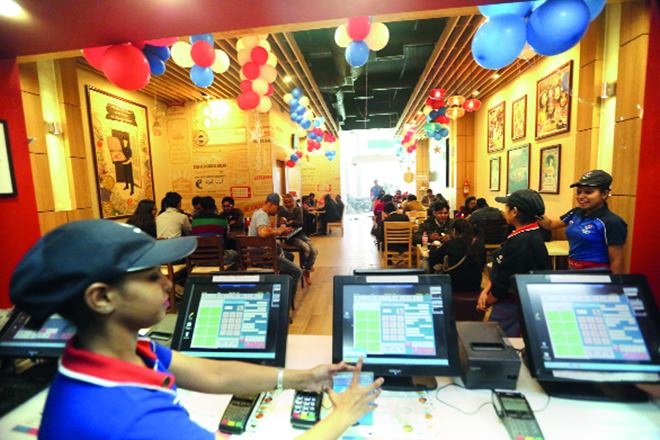
When American fast food standard bearers McDonald’s and Domino’s Pizza stepped into India in the mid-1990s, the market was just ripe enough for take-off.
McDonald’s and later Domino’s Pizza can be credited with not just growing the consumer appetite for fast food but also for fostering an entire food service ecosystem, including fresh produce, baked goods, sauces and condiments, and cold chain technology.
India has been typically difficult for business models driven by scale, replicability and predictability. The customer is price sensitive, operating costs are high and non-compliance of business standards is a frequent occurrence. In this environment, these brands have reinvented the meaning of meals, snacks and treats.
Their growth has set the stage for other international players and also set business aspirational standards for Indian food entrepreneurs and conglomerates alike.
Product experimentation has also been an important part of their success; it keeps excitement in the brand alive and help improve footfall. However, how far a product sustains and whether it becomes a menu staple can’t be predicted accurately. New products also need significant investment in both supply chain and front-of-house changes in standardisation-oriented QSRs, so the new product launch cannot be undertaken lightly. This is one reason these successful QSR formats don’t overhaul their menus drastically but make changes incrementally.
For these market leaders, future scale and deeper penetration is only feasible with higher visit frequency. For growth in middle-income India, they need to become a significantly cost-competitive option to be seen as more than a ‘treat’ or celebration destination.
So, while both McDonald’s and Domino’s Pizza have invested significantly in Indian flavours and menu offerings, perhaps it’s also best for them to reconcile with the fact that there will be a significant part of the consumer’s heart, stomach and wallet that will remain dedicated to indigenous offerings.
In a global environment that’s turning hostile to fast food, India isn’t a quick-fix growth market, but it’s certainly one to stay invested in, for the longer term.
And I have no doubt that as much as these companies aim to change India, over time India will also change them.
(Also published in Brand Wagon, The Financial Express)
admin
August 16, 2016
Packaging of products is, undoubtedly, an extremely strong means of conveying the essence of the brand, its ethos and its personality.
Packaging is not only a vehicle to endorse the identity of a brand in a consumer’s mind, the growing need for sophisticated packaging also results from many lifestyle needs such as ease of transportation, storage, usage and disposability sought by convenience seeking and time pressed consumers.
But, increasingly, it also reflects the brand’s responsibility and sensitivity towards Nature and its resources.
If we, as consumers, were to reduce or optimize packaging from our daily lives, especially for food and beverages, there will be a redefinition of the processes involving our purchase and usage. It will also to a larger degree alter the systems and processes of organisations whose distribution and retail is integrally dependent on packaging.
Original Unverpackt, a concept grocery store in Berlin, Germany operates without food packaging that would later turn into garbage. The idea around which it is build is to bring one’s own containers and have it weighed. The supermarket will label your containers. After one shops and gets to the till, the weight of the containers is subtracted and one has to pay for the net weight of the groceries. The label is designed to survive a few washings so one may come back and skip the weighing process for a few more times. In this way, not only do the food products shed their familiar identifiers (brand colors, packaging structures, and bold logos) but the ways they move from shelf to home becomes radically different. While shoppers are encouraged to bring their own bags and containers with them, a range of re-usable jars and containers are also available for purchase onsite. As much as possible, produce is sourced locally.
At this point of time, it may seem difficult to adopt this framework in entirety. However we should remember that just a few short decades ago we followed similar practices such as engaging biodegradable, recyclable, reusable materials for packaging, making use of one’s own containers and bags and filling them in with quantities as per the requirements from the bulk containers.
Singapore’s National Environment Agency (NEA) will be introducing mandatory requirements for companies to use sustainable resources in packaging and reduce packaging waste very soon. It is still being decided in what forms the regulations could be developed, but the preliminary ideas include requiring companies to submit annual reports on how much packaging they use, to develop waste reduction plans, or to meet recycling targets. Belgium on the other hand has been championing the cause of waste management by maximizing recycling and reusage.
The global trends are moving towards sustainable packaging given the ecological resource wastage it creates, the garbage the packaging material produces and the air and the ground water pollution the landfills create. Earth Overshoot Day, which marks the date when humanity’s demand for ecological resources and services in a given year exceeds what Earth can regenerate in that year, is arriving progressively earlier and earlier, indicating that the humanity’s resource consumption for the year is exceeding the earth’s capacity to regenerate those resources in that year.
Another very grim consequence that was witnessed is the frightening and highly visible impact on marine life – since the start of this year more than 30 sperm whales have been found beached around the North Sea in the United Kingdom, the Netherlands, France, Denmark, and Germany. After a necropsy of the whales in Germany, researchers found that four of the giant marine animals had large amounts of plastic waste in their stomachs. Although the marine litter may not have been the only cause of them being beached, it had a horrifying consequence on the health of these animals.
Given the serious consequences and the growing sensitivity towards these consequences, it is imperative for product manufacturers, raw material manufacturers and equipment and technology providers to design packaging with solemn intent to address sustainability.
The best time to reduce the use of packaging was 50 years ago. The next best time is now.
Devangshu Dutta
April 24, 2016

(Published in the Financial Express, 10 May 2016)
In about 20 years, Café Coffee Day (CCD) has grown from one ‘cyber café’ in Bengaluru to the leading chain of cafés in the country by far.
In its early years, it was a conservative, almost sleepy, business. The launch of Barista in the late 1990s and its rapid growth was the wake-up call for CCD — and wake up it did!
CCD then expanded aggressively. It focussed on the young and more affluent customers. Affordability was a keystone in its strategy and it largely remains the most competitively priced among the national chains.
Its outlets ranged widely in size — and while this caused inconsistency in the brand’s image — it left competitors far behind in terms of market coverage. However, the market hasn’t stayed the same over the years and CCD now has tough competition.
CCD competes today with not only domestic cafés such as Barista or imports such as Costa and Starbucks, but also quick-service restaurants (QSRs) such as McDonald’s and Dunkin’ Donuts. In the last couple of years, in large cities, even the positioning of being a ‘hang-out place’ is threatened by a competitor as unlikely as the alcoholic beverage-focussed chain Beer Café.
CCD is certainly way ahead of other cafés in outlet numbers and visibility in over 200 cities. It has an advantage over QSRs with the focus on beverage and meetings, rather than meals. Food in CCD is mostly pre-prepared rather than in-store (unlike McD’s and Dunkin’) resulting in lower capex and training costs, as well as greater control since it’s not depending on store staff to prepare everything. However, rapid expansion stretches product and service delivery and high attrition of front-end staff is a major operational stress point. Upmarket initiatives Lounge and Square, which could improve its average billing, are still a small part of its business.
Delivery (begun in December 2015) and app-orders seem logical to capture busy consumers, and to sweat the assets invested in outlets. However, for now, I’m questioning the incremental value both for the consumer and the company’s ROI once all costs (including management time and effort) are accounted for. The delivery partner is another variable (and risk) in the customer’s experience of the brand. Increasing the density through kiosks and improving the quality of beverage dispensed could possibly do more for the brand across the board.
The biggest advantage for CCD is that India is a nascent market for cafés. The café culture has not even scratched the surface in the smaller markets and in travel-related locations. The challenge for CCD is to act as an aggressive leader in newer locations, while becoming more sophisticated in its positioning in large cities. It certainly needs to allocate capex on both fronts but larger cities need more frequent refreshment of the menu and retraining of staff.
An anonymous Turkish poet wrote: “Not the coffee, nor the coffeehouse is the longing of the soul. A friend is what the soul longs for, coffee is just the excuse.” There are still many millions of friends in India for whom the coffee-house remains unexplored territory, whom CCD could bring together.
