
admin
August 23, 2023

New Delhi, 23 August 2023
Bindu D. Menon, Financial Express
Tata Group’s Titan Company is not the only one to be bullish on the fine jewellery segment by recently raising its stake in CaratLane from 71.09% to 98.28% for a consideration of Rs 4,621 crore. Other corporate groups as well as private equity firms who have entered this segment are making investments and scaling up.
For instance, recently, Aditya Birla Group entered the gold jewellery market with the launch of Novel Jewels with an estimated investment of Rs 5,000 crore. It also plans to launch large-format jewellery formats and in-house brands.
“The younger generation’s changing style preferences and shopping habits have favoured the growth of jewellery chains and a shift in jewellery designs to lighter, more contemporary styles. This has also facilitated the delinking of the cost and the product price to some extent,” said Devangshu Dutta, Founder, Third Eyesight.
Analysts following the sector said that lighter weight jewellery have been a game changer for the industry. Moving away from the traditional 22 carats jewellery line, younger consumers are opting for 12, 14 and 18 carat jewellery in minimalist designs; a trend largely mimicked from the western markets.
From the companies’ perspective gross margins are invariably higher in design enhanced jewellery as compared to traditional designs.
Leading silver jewellery brand Giva jewellery too had recently bagged a Rs 200 crore funding led by Premji Invest to expand its product line. The round also saw participation from existing investors such as Aditya Birla Ventures, Alteria Capital and A91 Partners. Giva reportedly launches 250 new designs every month, as per the company’s disclosure.
“We look forward to leveraging Premji Invest’s playbook on omnichannel across several consumer brands and retail businesses to strengthen our leadership position and establish our pan India presence,” said Ishendra Agarwal, founder and CEO, Giva.
Giva plans to use the capital for inventory management and expanding its offline presence in India. The company has secured Rs 130 crore funding till date, excluding the current funding.
Fine jewellery in India are priced between Rs 5,000 to Rs 50,000. Major players in the segment include Caratlane, Tanishq, Bluestone among others.
(Published in Financial Express)
admin
August 18, 2023

Viveat Susan Pinto, Financial Express
August 18, 2023
Retail activity in the country is set to increase with some 20 foreign brands likely to enter India in the next 6-8 months, according to retail consultants and experts. This is double the number of about 10 foreign brands that would enter India annually in the pre-pandemic period.
An attractive retail market and growing affluence and consumer tastes are among the key reasons for the interest shown by foreign brands in India, said experts. Also, large groups such as Reliance and Aditya Birla are open to partnerships with foreign brands, with Reliance Brands, part of Reliance Retail, in particular, being the most aggressive of the lot.
“Global markets are witnessing slowdown and recessionary concerns, which is hurting retail sentiment. In contrast, retail sentiment in India is upbeat despite food inflationary pressures. Spending across non-essential categories will also grow as the festive season nears,” said Abhinav Joshi, head of research, India, Middle East & North Africa at consultancy CBRE.
The consultancy on Thursday released a report which said that retail leasing activity in India had grown 24% year-on-year in the first half of CY2023, led by foreign and domestic brands. The second half of the year was also expected to see a strong double-digit rate of growth in terms of leasing activity, with overall retail leasing likely to touch 5.5-6 million sq. ft. at the end of the CY2023, second only to the peak of 6.8 million sq. ft. seen in CY2019.
Of the names eyeing an India-entry in the next few quarters include labels such as Italian luxury fashion brand Roberto Cavalli, American sportswear and footwear brand Foot Locker, Armani Caffe, the luxury cafe brand of Armani, British luxury brand Dunhill, Dubai’s Brands for Less, Old Navy and Banana Republic from Gap, Chinese brand Shein, Maison De Couture from Valentino, Spanish luxury brand Balenciaga, EL&N, a UK-based boutique cafe, Galleries Lafayette from Paris, Kiabi, Mavi, Damat, Dufy, Tudba Deri, Avva, Boohooman and Miss Poem, all apparel brands from Turkey and Europe, say industry sources.
Barring Galleries Lafayette which has tied up with Aditya Birla Fashion and Retail for its India entry, most other names are either talking to Reliance Brands (part of Reliance Retail) or have tied up with the company, persons in the know said. For instance, Balenciaga, EL&N, Shein, Gap’s Old Navy and Banana Republic, Armani Caffe, Maison de Couture from Valentino have tied up with Reliance Brands for their India entry. Executives at Reliance Brands were not immediately available for comment.
Most of these brands are eyeing a presence in cities such as Mumbai, Delhi-NCR, Bengaluru and Hyderabad in the first phase of launch, before expanding their presence to other cities such as Pune, Ahmedabad, Chennai and Kolkata.
“The India retail opportunity is a compelling one, which most foreign retailers don’t want to miss,” says Devangshu Dutta, chief executive officer at Gurugram-based consultancy Third Eyesight.
“Some of the brands who’ve come earlier have also tasted success especially in the fast fashion category. This is an indication that brand awareness is growing and that people are ready to spend on global products as discretionary incomes grow,” he says.
On Wednesday, Japanese fast fashion retailer Uniqlo said that it was setting up two new stores in Mumbai in October, after launching 10 stores in the north over the last four years. The company’s chief executive officer Tomohiko Sei indicated that the retailer was open to new markets and store openings, but would focus on Mumbai for now.
CBRE says that Mumbai has seen retail leasing grow by 14.6% year-on-year in the first half of CY2023 on the back of a push by foreign brands to acquire space in the city. Delhi-NCR, meanwhile, reported a higher 65% year-on-year growth in retail leasing in the first half of the year, led by retail activity by both foreign and domestic brands.
(Published in Financial Express)
admin
June 29, 2023

Dia Rekhi & Faizan Haidar, Economic Times
New Delhi, June 29, 2023
Fast Retailing, the parent company of Uniqlo, is looking to set up a significant manufacturing presence in India through about 20 ‘production partners’, multiple people aware of the development told ET.
One of the world’s most valuable clothing retailers, Uniqlo already has a cluster of production partners in India and is looking to expand this network through a significantly large investment, they said without sharing any estimated amount.
“The investment amount will be significant because Uniqlo is serious about India and views it as an important market,” one of the persons said. “Unlike the existing facilities in India, which cater more towards exports, the production partners that Uniqlo will bring to India will be specifically meant for the domestic market.”
One of the company’s production partners that ET spoke to confirmed that their current mandate is to produce only for exports.
Uniqlo, which is Asia’s biggest clothing brand, had said India is one of the top priority markets for them where consumers are increasingly shifting from ‘fast-fashion’ to long-lasting essentials and functional wear.
The company’s ambitions for India are considerable with its CEO Tadashi Yanai indicating that he wants Uniqlo to become the “best-selling retailer in India”.
The Japanese brand opened its first door in September 2019, but stringent lockdown measures announced to contain the outbreak of the pandemic in March 2020 delayed the expansion plan.
The brand is now planning to enter Mumbai and Bangalore. It has already opened stores in Lucknow and Chandigarh after Delhi.
Uniqlo does not own any factories. Instead, it outsources production of almost all its products to factories outside Japan.
As per a report titled ‘The Uniqlo case: fast retailing recipe for attaining market leadership position in casual clothing’, this model allows Uniqlo to keep its breakeven point low and improve return on investment.
“As we expand our global sales, we continue to grow our partner factory network in countries like Vietnam, Bangladesh, Indonesia, and India,” the company has stated on its website.
As per its list of garment factories, as on March 1, 2023, Uniqlo has 227 factories in China, 54 in Vietnam, 33 in Bangladesh, 13 in Indonesia, and 16 factories in India and Japan among several other locations.
As the world’s second most-populated country, India is an attractive market for apparel brands, especially with youngsters increasingly embracing western-style clothing.
Over the past decade, global brands Zara and H&M became market leaders in the fast fashion segment in India.
“For global brands, India should be one of the most logical sourcing hubs given its large vertically integrated manufacturing sector on the one hand and the large, growing domestic market driving demand on the other hand,” Devangshu Dutta, founder of retail consulting firm Third Eyesight, told ET. “However, its weight in the sourcing baskets has historically been low due to several reasons, in spite of China being visible for decades to the management teams of brands and retailers as a concentrated sourcing risk,” he said.
Uniqlo’s existing production partners in the country include Shahi Exports, Brandix Lanka, Tangerine Design, Maral Overseas, Shingora Textiles, Silver Spark Apparel, SM Lulla Industries Worldwide and Penguin Apparels.
As per Fast Retailing’s first-half results, the company said its revenue was 1.4672 trillion yen, or around $10.2 billion, and that its operating profit had risen to 220.2 billion yen ($1.53 billion), bolstered by strong performances from operations in several regions, including India where it said it generated significant increases in both revenue and profit.
With regard to Uniqlo International, in particular, it said revenue stood at 755.2 billion yen ($5.25 billion), while operating profit was 122.6 billion yen ($852.93 million).
The company said regions like India “reported significant revenue and profit gains as they enter a full-fledged growth phase”.
(Published in Economic Times)
admin
June 9, 2023

By Pavan Lall, Fortune India
Jun 9, 2023
For fashion designer Tarun Tahiliani, getting funding from a corporate house was incidental. It happened through a high-profile customer, none other than Aditya Birla Group chairman Kumar Mangalam Birla. Birla had been a customer of Tahiliani’s Ensemble some three decades ago when he was getting engaged. They stayed in touch over the years and at one stage discussed the need for an Indian fashion brand focused on scale and accessibility. “It came out of a conversation and was a two-year ambling route. I had asked if they were expanding their designer brand footprint, and he (Birla) told me to meet the Aditya Birla Fashion and Retail (ABFRL) CEO for a deeper chat,” recalls Tahiliani.

The result was Tasva, a sub-brand that Tahiliani has a minority stake in. The focus was to zero in on the ethnic space, not lose out on the homegrown touch, yet keep user-friendly clothes in traditional silhouettes at accessible price points that were not haute couture. Launched in December 2021, Tasva primarily caters to the premium occasion-wear segment, and has been growing at a fast pace.
Raising Cash
Tahiliani, who got ₹67 crore funding for a third of his company with an option to further offload up to 20%, isn’t the only one to see corporate finance push capital into his designs and stores. Sabyasachi Mukherjee of Kolkata, who opened a large multi-level store in a heritage-style building early this year in Mumbai, sold a little over half his company to Birla, reportedly for around ₹398 crore. ABFRL has also bought a 51% stake in House of Masaba Lifestyle, the entity that houses apparel, personal care, and accessories businesses under brand ‘Masaba’ owned by designer Masaba Gupta. Besides the Aditya Birla Group, Mukesh Ambani-led Reliance Brands has bought a 52% stake in Ritu Kumar, 51% in Abu Jani Sandeep Khosla, and 40% in Manish Malhotra. Earlier, in 2008, Kishore Biyani’s Future Group took a 23% stake in Anita Dongre, which was later sold to private equity player General Atlantic for ₹150 crore.
“While we are reaching a sense of critical mass in terms of consumer base, luxury is not new to India. Designers have been flogging their wares for decades,” says Devangshu Dutta, founder of Third Eyesight, a consultancy firm focused on consumer goods and modern retail. “What has changed is the size of the target audience.”
According to a recent Knight Frank wealth report, India is set to see a projected 58.4% increase in ultra-high-net-worth individuals, those with a net worth over $30 million, from 12,069 in 2022 to 19,119 in 2027. The domestic apparel market, too, was pegged at $60 billion last year, not far behind the developed world, a McKinsey’s FashionScope report has said.


“Earlier, India was a country that just produced for the world. Today India is also becoming the largest consumer market. International brands are keen to invest in business relationships with India. India will change the game for luxury. Where else will you get a billion people who are of a young age, and will be the future luxury buyers of brands?” says Sabyasachi.
“The economy has expanded beyond bigger cities, which has raised the consumption size” adds Dutta of Third Eyesight.
Corporate Handholding
“Corporate involvement helps scale faster than organically, and a lot of designers are tying up with companies with technical expertise and go-to-market for smaller towns and cities,” says Anita Dongre. “For a designer, having a corporate brings in processes, technical expertise and management know-how, and helps her focus on designing,” she adds. In Sabyasachi’s case, too, a new CEO — Sumati Mattu, as well as a new HR head and COO, were brought on board to prepare for the brand’s expansion.
For Sabyasachi though, it has helped in creating a safety net, especially for his employees, more than anything else. “Right now we have two investors — me and Birla together, so it makes me feel protected. Nothing else has changed. The only thing that has changed is that we have a great HR policy with the Birlas; they will be able to look after my people better, as I have created a beautiful safety net for all my employees.”
Dutta, on the other hand, says that “for large companies in the fashion space such as Aditya Birla, it is a natural step to buy into an established brand with scale since brand recognition combined with capital and organisational structure make for a win-win. The platform of fashion is currently at the right juncture to replicate networks and create scale,” he adds.
Other designers, including Manish Malhotra, who has also received funding from Reliance, say, “corporatisation of fashion houses in India has brought about a safety net for luxury brands, making us push for larger creative forces and expansion in terms of scale, branding and customers.”
Growing Into India
Tahiliani says we have opened 55 Tasva stores and will reach 90 in this financial year. Tasva crossed around ₹60 crore in annual revenue in 2022, and is set to hit ₹200 crore this year, he adds.


Similarly, Dongre, widely regarded as the largest designer and fashion house by revenue, has around 150 stores across brands, and Global Desi, a substantial increase from the 10-15 stores she ran before receiving her first funding. “The added benefit is that such funding helps push into international markets.” While Dongre launched her stores in Dubai and New York a few years ago, Sabyasachi launched a New York-located store in West Village last year.
So, what’s the road ahead?
“Corporate India has successfully built large-scale fashion businesses and acquired international brands, but has not been able to create a homegrown luxury brand of cultural or social significance. That will change now,” says Sabyasachi. Jewellery is set to be his focus, along with sunglasses, beauty, shoes, and other categories. “Jewellery is a very important category in the country, a great revenue earner,” he says.
“The film industry was corporatised because its potential was discovered, now it is fashion’s time,” adds Manish Malhotra. “Corporatisation lets designers look beyond bridal-wear, occasion-wear, and focus on newer creative strategies as there’s more space and potential for experimentation.”
Tahiliani agrees that compared to overseas, the trend is an expected one. “Most of the brands abroad have seen stellar growth because they have been aligned with corporate houses.” He points to the famous Alexander McQueen, who started in 1992, and was discovered by Isabella “Issie” Blow. The tie-up allowed him to expand his label, open boutiques around the world, and push into the categories of perfume, eyewear, accessories trainer and clothes for men.
Globally, France-based Kering group owns designer labels Gucci, Alexander McQueen, and Balenciaga, among others. LVMH Moët Hennessy Louis Vuitton, commonly known as LVMH, owns Loro Piana, Fendi, Christian Dior, Kenzo and Marc Jacobs.
The question then is, with all the global exposure and corporatisation, will there be a shift in Indian design sensibilities?
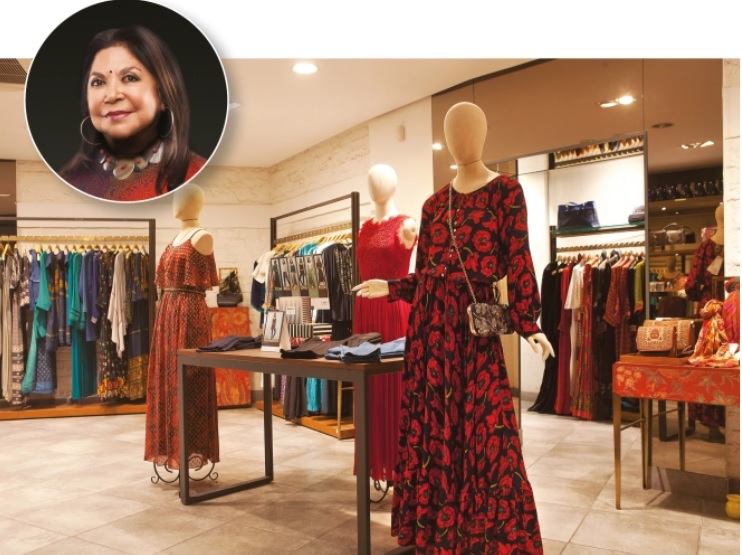

“Now you see people wearing bold gowns or black ties for one or two events, but Indians have kept a unique spirit of celebration and culture unlike anywhere else in the world. Bollywood has played a huge part in amplifying this because of the song and dance and colours and events such as Holi and Sangeet,” feels Tahiliani.
The bottomline: Luxury fashion is now more inclusive, and regional customers are the next big target area for brands.
(With inputs from Priya Kumari Rana)
(Published in Fortune India)
admin
May 26, 2023

Chloe Cornish in Mumbai and Eleanor Olcott in Hong Kong, Financial Times
May 26 2023
India’s biggest company Reliance Industries is seeking to dominate the country’s $10bn online domestic fashion market, striking a deal with Shein that will allow the rapidly growing Chinese retailer to return to the world’s most populous nation.
The retail unit of billionaire Mukesh Ambani’s petrol-to-telecoms conglomerate will tie up with Shein three years after India banned the online retailer’s app in its attempt to freeze Chinese companies out of the local market in retaliation for border clashes that had left at least 20 Indian soldiers dead.
“We can confirm Shein’s partnership with Reliance Retail and have no additional comment at this time,” said Shein, declining to answer questions about the structure of the deal. Reliance did not respond to queries about the partnership, which was first reported by the Wall Street Journal.
The addition of a low-priced offering gives India’s biggest listed company by market capitalisation an important boost in its battle to dominate the country’s growing online fashion retail market, which was worth $10bn in 2022, according to analyst estimates.
As part of the licence agreement, which was recently approved by the government, Shein will receive a percentage of profits generated from its fast fashion sales in India, people familiar with the deal said, while Reliance will help Shein build a supply chain with India’s garment industry for global exports.
The move into Indian sourcing comes as Shein diversifies its supply chain outside the coastal province of Guangdong in southern China, where it has 8,000 suppliers, mostly located in the garment hub of Panyu. Pandemic-era supply chain bottlenecks, rising labour costs in China and geopolitical tensions between Beijing and Washington have propelled multinational companies, including Apple and clothing retailer Mango, to migrate parts of their supply chains out of the country.
Shein, which does not sell in China, has been seeking to distance itself from its home country. Last year, it made its Singapore arm the de facto holding company, rapidly expanding its workforce there and shifting some of its operations from its China headquarters in Nanjing.
Shein will seek to minimise delivery times by having more manufacturing centres around the world. India, meanwhile, hopes to benefit from multinationals’ “China plus one” movement, a strategy that seeks to avoid investing only in China and aims to diversify supply chains to other countries.
Reliance has signed agreements with international luxury brands ranging from Balenciaga to Burberry, catering to India’s small but growing demographic of super-rich consumers. In addition, it has nearly 13,000 bricks-and-mortar stores across the country selling affordable apparel.
“Reliance’s other international brand partnerships are more premium, being luxury or designer brands,” said Devangshu Dutta, chief executive of consultant Third Eyesight. “India is still a relatively low per capita income economy. The bigger opportunity is in brands which are euphemistically called value brands, and that’s where Shein is positioned.”
For Shein, access to the Indian market will allow the company to boost sales as the pace of its expansion in Europe and the US begins to lose steam, according to people briefed on its growth figures.
The Financial Times reported that in a recent presentation to investors, Shein forecast that gross merchandise value — the total value of merchandise sold on its platform — will almost triple by 2025 to $80.6bn compared with the figure last year.
The lofty revenue projections come ahead of a much anticipated initial public offering, which promises to be one of the largest listings of a Chinese-founded company in years.
In fashion ecommerce, Reliance lags behind Myntra, one of India’s oldest ecommerce players, which merged with Walmart-backed Flipkart in 2014. Myntra accounts for around half of the online fashion market in India, according to Satish Meena, an independent ecommerce analyst based in Gurgaon.
“Myntra is the nucleus” for online fashion, said Ankur Bisen, senior partner at retail consultancy Technopak Advisors, adding that its “cohort” of shoppers is primarily young and urban. “With the Reliance and Shein partnership, they would like to get into this cohort and break the monopoly of Myntra,” Bisen said.
Meena estimates that Reliance’s ecommerce fashion business Ajio has about 4 per cent of market share, while Bisen put Ajio among the “long tail” of ecommerce fashion ventures behind Myntra. Reliance’s JioMart online shop also sells clothes, alongside groceries and electronics.
“If you look at Reliance as a company, it’s about dominance and it’s about long term,” Dutta said.
(Published in the Financial Times)
