
Devangshu Dutta
November 13, 2008
For all those who have admired the consistency and presentability of produce in western supermarkets, here’s proof that tough times really focus us on substance and force us to look beyond skin-deep beauty.
Even in fruits and vegetables.
British supermarket Sainsbury has challenged European Union guidelines that restrict the sales of fruits by certain physical standards. Sainsbury’s is questioning EU regulations that prevent selling “ugly” fruit and vegetables. Due to EU regulations such as size of cauliflower (minimum 11 cm diameter) and the shape of carrots (requirement that there should be a single root, not multiple), Sainsbury estimates that up to one-fifth of what is produced in British farms cannot be sold in the supermarket. According to Sainsbury’s estimate, not following these regulations can help to reduce prices by up to 40%, and reduce wastage by up to 20%. The retailer is also trying to drum up customer support by running an online poll (94% responses were in favour of Sainsbury’s move, at the time this column was being written).
So less beauty could mean more veggies in the supermarket, and more money in everyone’s pocket including, hopefully, the farmer.
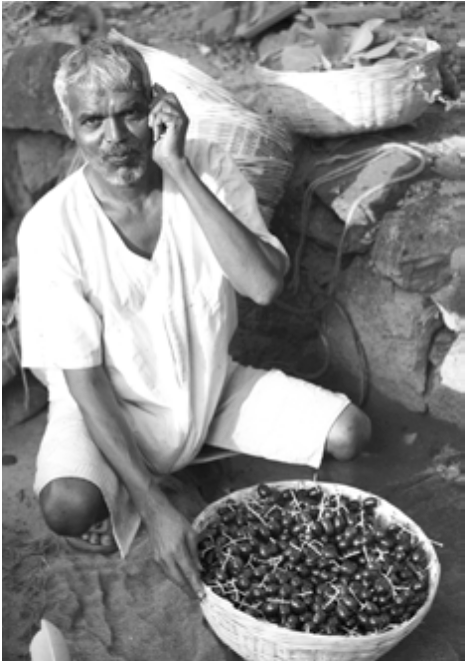
And this may also vindicate anyone who has complained that the beautiful veggies and fruits in western supermarkets taste inferior to their “ugly” counterparts sold on Asian hand-carts. Give us more substance and less style, any day.
Let’s look at some other substantial issues that merchants should consider.
Remember “I can’t get no satisfaction”? That’s what Mick Jagger and his mates in the Rolling Stones hit the world in the face with in 1965, allegedly in response to the rampant commercialism they had seen in the US.
After 43 years – at least judging by the modern supermarket shelves – apparently we still ain’t getting no satisfaction. In fact, the array of choice tends towards “overload”.
A typical developed country supermarket is estimated to carry over 40,000 SKU’s. Can you think of 40,000 types of items (or even 10,000) that you would need from the supermarket for your home?
So here’s the result. During my travels, if I’m in a store that is unfamiliar I could spend over an hour wheeling a trolley around before reaching the checkout. The first 5-10 minutes are focussed on figuring out the aisles based on my list. The next 10 minutes are spent picking what is actually on my list. And the rest of the time before the checkout is usually spent browsing through the thousands of SKU’s and picking stuff that we never knew we needed when the family made the shopping list.
Now, the guys who run the supermarkets are generally a smart bunch – they’ve figured that the more options you put in front of consumers, the more they buy. My cash receipts are proof of that. But, as American professor and author Barry Schwartz (“The Paradox of Choice”) says, the point where the choice becomes counter-productive is already well-past in developed markets.
With such overwhelming choice, consumers get into analysis-paralysis. And even after they finally purchase something out of the enormous range, you get shades of post-purchase dissonance. Only, in this case the dissonance, the dissatisfaction is not related to a bad product, but: “What if there I had made another choice? What if there was a better product than this? What if there was something available for less?”
During these times, it is pertinent to also put this in the context of business costs. There is surely a cost of providing that humongous choice in supermarkets. Have we considered what the saving could be, if the variety was reduced, if the product range was consolidated?
Consider the time (and therefore cost) spent on product mix and pricing decisions – surely merchandising teams have to be larger if you have a larger product mix, since each person can only handle a finite workload. Consider the cost of logistics of handling a widely diversified range. Consider the efficiencies lost in diverse production mix. So, does the consumer really need, really even want all that choice?
Retailers like the German chain Aldi raise precisely those questions. Aldi sells about 1,100 SKUs compared to the usual 40,000. And it claims that the typical shopping basket in Aldi’s UK stores is 25% less than competing supermarkets.
Indian retailers, of course, are possibly yet to reach that pain threshold of choice. There are possibly some potentially useful choices that are still missing. But even here, it is well worth taking a hard look at the product offering. With availability levels that can dip as low as 50-60%, it is probably worth asking – what if we dropped XYZ product from our range? Would it really hurt our sales or even our image; or would it help us to focus better on the products that really matter?
If we took our attention away from building such false choices, could the business become more profitable and therefore more sustainable?
The US and European markets are often the source of many a management thought and business model related to consumer products and retail, and of “best practices”.
So, in closing, I should share this question someone asked me recently: “when do you think consumer spending will bounce back in the US?” My first response was, “If only I had a crystal ball”. But the next thought in my mind was what if US consumers actually came to a decision that they had “enough”? What if their excessive consumption was no longer the role model for consumers in emerging economies? What if, instead, the frugal consumers of India and China became the global role model?
What would your business model look like then? Would your corporate be more socially responsible? And would it have a better chance of lasting longer?
For those who are interested in taking this inquiry even further, I can recommend John Naish (“Enough: Breaking Free from the World of More”, 2008), John Lane, Satish Kumar, M. K. Gandhi, Alan Durning (“How Much is Enough?”), or any number of ancient Indian, Chinese, Greek or Roman schools of thought, many of them pigeonholed into “religious” or spiritual categories.
You might also like this video of a talk by Barry Schwartz on Ted.com (below).
Do please share the results of your inquiry with us, too.
Devangshu Dutta
October 15, 2008
(Written in September 2008)
Over the last few years India has had one of the highest GDP growth rates, across the world, and consistently. In the last two years GDP growth is estimated to have been 9.6 per cent (2006-07) and 9 per cent (2007-08).
A combination of private and public investments in recent years, as well as steady liberalisation of regulations, has created a situation that is unique in India’s history as an independent country, where business growth has lead to individual prosperity which is, in turn, leading to explosive growth of further business opportunities. Although India’s per capita income still places it in the list of “developing countries”, a significant population has emerged that is truly middle-class.
Rising incomes have created visible shifts in consumption patterns. Certainly, more Indians regularly consume cereal flakes, processed cheese and fruit-based drinks for breakfast than did ten years ago. A generation has grown to adulthood wrapped in ready-to-wear clothing (with visits to the tailor mainly for wedding trousseaux). And, yes, Indian consumers are increasingly welcoming modern retail environments over the traditional
These economic developments have attracted the attention of both domestic and international consumer-goods companies and retailers, and several of these companies have seen annual growth rates 20-50 per cent in the current decade. Many of the new entrants into the retail sector are large business groups that have set up modern retail chains whose share, although still small, is growing year-upon-year.
This growth of modern retailing is also having an impact on the processes and the infrastructure deployed for the retail sector. These businesses are run as true chains which require processes and systems similar to any chain-store business anywhere else in the world including merchandising, sourcing, human resource management, logistics and store operations. These modern retail stores demand Grade-A buildings for shopping centres, with associated infrastructure and services within them.
Therefore this, in turn, has created a growing opportunity for companies that are manufacturers or vendors of consumer products, suppliers of other goods that are used within a retail business or companies providing services to the retail sector.
In the rush to grow, while challenges have been acknowledged, none of them have appeared seriously debilitating in the long term, until possibly now.
During the years 2003 through 2007, news headlines mainly focussed on joint-ventures or strategic alliances, new store openings, new format launches, and mega-investment plans. If human resources were mentioned, it was about the apparent domestic shortage, about the expatriate talent being pulled in, and about incredible salaries. If shopping centres and retail space was studied, it was the phenomenal growth in square footage and the increasing scale of the new malls that was the focus.
Suddenly, however, the tide in the press seems to have turned. There’s mention of “slow” growth plans of major retail joint ventures. There’s whisperings and denials about lay-offs, accompanied by some high-visibility exits.
It would be tempting to read the signs as evidence that the previous growth was based on hype, which has run out of steam. It would be tempting, and it would also be too simplistic.
The fact is that macroeconomic factors are also acting as dampeners in 2008, and the year may be marked in the recent history of India’s modern retail sector for the dawn of realism. Just as the growth of the retail sector was reaching into the not so profitable geographies and beginning to ride on not very efficient structures, economic growth has begun to slow down dramatically. From a 9 per cent-plus growth rate in previous years, a variety of agencies expect GDP to grow between 7.5 and 7.9 per cent in 2008-09. Further, the Prime Minister’s Economic Advisory Council forecasts a GDP growth rate of 6.8 per cent in 2009-10.
What’s more, 2006 and 2007 have brought about phenomenal increases in two critical cost heads: real estate and human resource.
So on the one hand, retailers are facing dramatically higher operating costs, and on the other hand demand seems to be weaker than they have expected. For businesses that have been launched in the last 5-7 years, such a situation is completely new.
Estimating the Demand – Still an Art?
Since the early years in the decade, most retail chains have grown quickly by identifying new sites and replicating existing successful business models and formats. Typically, the growth was limited in its geographic spread, and the underlying consumption pattern differences between the existing markets and the new locations were not stark enough to be immediately visible. Much of the growth, in fact, came from new stores in the larger cities, including the metros, mini-metros and the next tier markets.
This high replicability has allowed the businesses to rapidly scale up into becoming truly national chains, and the presence of modern retail formats has become visible among the larger cities and towns.
As the companies have begun to feel “saturated” in the larger cities, they have gradually moved towards the smaller towns, with their existing product-price-format offer tweaked slightly.
However, the ethnic, linguistic and cultural diversity of India’s 28 states and 7 Union Territories makes it less like any other single nation-state and more like a collection of countries such as the European Union. The result is sharp differences in income, tastes, habits, and culture, all of which present a challenge for consumer products and retail companies in terms of product and pricing mix.
Most European brands do not approach different markets within the EU with identical strategies. So why should we believe that the business formula that works in one part of India will work in exactly the same way in other parts?
A bigger issue is the realistic estimation of the target population. There are cases where the demand has been grossly overestimated, and the business infrastructure and investment plans are over-weighted by these expectations.
Estimates of 200-300 million middle class (50-60 million households) sound very attractive, but by what measure of income and spending standards?
Going by the pricing of many of the brands in the market today, it would be logical to use developed market income standards. If we use global income standards the middle class numbers are much smaller. The number of households earning truly middle class annual household incomes (not adjusted for Purchasing Power Parity), is less than 5 million.
Of course, the upside is that the growth rate in this income class is estimated to have been over 20% a year during the current decade and this group is forecast to comprise of over 3.7 million households or about 20 million individuals by the end of the decade. There are few other markets in the world where the target population displays a growth of over 20% a year! Moreover, the annual growth rate of the incomes earned among this population is also the highest in the country. Further, a large proportion of this population is concentrated among the metropolises, as mentioned earlier.
So it is a nice market to be in, if the business plan is sized appropriately. You can expect some homogeneity based on the socio-economic classification, and the geographical reach is also limited, allowing for organic growth.
A specific challenge for companies wishing to enter with a “western” business model or product mix is that, even through its most controlled years, India has been a market economy (unlike China’s decades of a completely centrally controlled economy). Therefore, in most consumer products there are several domestic brands and Indian avatars of foreign brands available, even if the choice is narrower than on the shelves of western supermarkets. Competing offers are available, whether from Indian companies or Indian subsidiaries of global consumer products companies. In that sense, India is not a virgin market. There is already some (or significant) amount of marketing noise and clutter, created by the existing competition.
It is vital, therefore, for any company to identify the true overlap between its offering and the most appropriate consumer segment(s) in India to assess the real short-term and mid-term potential for its retail business.
The Urban Retail Opportunity and Challenge
While we are on the subject of the cities, it is very pertinent to look at the spread of the urban population.
As India’s population moves increasingly into cities, it is the larger cities (Class 1, with a population of over 100,000) that are growing the most. From 308 Class 1 towns, the number of Class 1 towns and cities in India had grown to 643 in the 2001 census, and are estimated to hold about three-quarters of the urban population.
These cities are also economic magnets. No matter how attractive the new boomtowns may sound, the larger cities still pull in huge numbers of immigrants from the smaller cities, towns and villages, keeping the ecosystem vibrant.
Within these, in terms of economic potential for retail businesses, it is the Tier 1 cities (metros and mini-metros) that are the still unmatched. In 2001, the top-8 cities were estimated to have 40 per cent of the urban disposable income, and despite rising costs and rising competition these remain the most attractive market for a company looking to establish a new retail business. In socio-economic terms there is more homogeneity available to a brand wishing to tap into a critical mass of customers, discretionary incomes are higher (in absolute not just percentage terms), and the infrastructure available to service the consumer is better.
Of course, the side effects of the population overloading are now visible, ever more, on the cities’ infrastructure and governance. And some of the overloading is contributed by the development of shopping centre space.
The growth of modern retail has brought with it a rapid expansion in shopping centre space. This is both an opportunity and a challenge.
While the extraordinary growth of shopping centres has provided more space for brands and modern retailers to grow their business, much of the growth has been concentrated in the metropolises.
Almost half the shopping centre space by the end of 2007 is estimated to have come up in the conurbations of Mumbai and Delhi. This “over-shopping” could potentially lead to the failure of a significant number of these malls. The failure may not result in outright closure – the better sites may change ownership, while others might get repurposed as office blocks or other commercial projects – but it will be painful, nevertheless.
Paradoxically, despite the proliferation of malls, for retailers and brands high real estate rental costs are the possibly the biggest headache. In many instances, brands have signed-on high-rent shops with the aim of balancing their portfolio over time, and fully expect these shops not to make money in the foreseeable future.
Further, the intensive development of malls, without adequate zoning and planning of support infrastructure such as roads and public transportation is now stressing not just the city, but the malls themselves. Even if there is adequate parking space within the mall (as compared to a few years ago), what good is it if a two kilometre stretch of road before the mall is choked with traffic moving at 2-3 kilometres an hour? The convenience of shopping under one roof is totally outweighed by the inconvenience of spending thrice the amount of time on the road, and is a critical deterrent to a serious shopper who is being targeted by the tenants of the shopping mall.
Tier 2 and 3 Cities – A Work in Progress
A recent study by NCAER and Future Capital Research compared 20 cities, and classified them into the Megacities (metros and mini-metros), Boomtowns and Niche Cities. The naming of these groups is quite telling.
Megacities on this list include Mumbai, Delhi, Kolkata, Chennai, Bangalore, Hyderabad, Ahmedabad and Pune, and have approximately 50% of their income as surplus after household expenses (other than Kolkata and Pune which show surpluses in the 30s). They have large populations, and combined with the surpluses, this up to a massive economic opportunity.
However, the smaller cities have been developing into economic hubs in their own right. If population is a key factor, then Surat would be classified as a metro. It has a high average household income, as well as a high surplus. Similarly, Nagpur, with its logistically important location is also developing into an important market. Along with Lucknow and Jaipur, households in these cities have seen double-digit booms in terms of income growth since 2005, a trend also seen in the Megacities.
This trend of income growth, infrastructure development, trickling of business hubs into the 2nd and 3rd tier cities, will continue to broaden the base of modern retail and distribution further outside of the major cities. On the other hand, while households in cities such as Chandigarh and Ludhiana have high surplus incomes comparable to the Megacities, the much smaller base of population would force marketers to treat them as niche markets until a critical mass develops over the next few years.
Thus, while much has been made about the boom in the smaller cities and towns, the formulaic approach of rolling out the same business model will certainly not work.
The signs of overestimation of demand in Tier-3 and Tier-4 cities is visible in instances of downsizing of store-space by prominent retailers, as well as relocation or closure of some of the new stores which have not performed to expectation.
The Tug of War to Modernise Retail
In my opinion retail is fundamentally an organic business.
Countries that have displayed inorganic growth of modern retail through large-scale corporatisation tend to be economies that have developed rapidly in the last 20-25 years. Among these are the East Asian economies and the former communist Eastern European countries. Three critical factors that have enabled the disproportionate and rapid growth of corporate retail in these countries are: financial muscle, a bank of real estate and strong political linkages. In other countries the high share of modern retail has grown over many more decades.
In other countries such as those in western Europe and North America, retail consolidation has happened over many more decades, boosted occasionally by phases of economic boom (such as the 1920s, the 1950s and 1960s, and then the 1980s).
Many observers have imagined that India’s retail growth would follow the East Asian and Eastern European countries’ pattern, and have projected that India will reach a state of significant consolidation through corporate retail businesses by 2015.
If that were to happen it would be a rather sad “monoculturisation” of the business. Fortunately, I believe, that it is not likely to happen easily.
Firstly, the modernisation of retail trade has typically moved in step with broader economic and infrastructural development. If we use per capita retail sales as a surrogate measure for the overall economic development of a country in conventional terms, the share of modern retail is closely correlated with that (see the accompanying table). Viewed through that lens, the Indian retail sector is still very far down on the list, and is likely to remain fairly fragmented for some time to come.
Secondly, India has a strong entrepreneurial and organic retail ecosystem (not just retailers, but also suppliers and support organisations). Given the diversity of the market, and the sustained fragmentation of consumer needs, I believe the growth of India’s retail sector will not be driven by large companies alone, although they are helping to accelerate the process of sophistication – indigenous, non-corporate retailers and their suppliers have a strong role to play in the ongoing development.
I believe the Indian retail sector will evolve along a path that may be a hybrid, and in fact, may be closer to the European and American model, with a significant amount of entrepreneurial competition dominating the landscape.
Therefore, it is important for the executives in corporate retail organisations to think innovatively, as an entrepreneur would – think truly like a “dukaandaar” (shopkeeper).
Would a dukaandaar open a store in a place where he has no hopes ever of making money? Would he consistently follow this strategy for years? Would he believe that he is building brand equity and goodwill by doing so, that will sustain him in the future? The honest answer to all those questions would be an unqualified “no”.
Any long-term strategy can only be built on the premise that the business will be sustained into that term. If the short-term cashflows are not available to keep the business alive, no amount of long-term thinking will help, as some retailers have recently acknowledged while shutting stores or entire businesses.
It is also important for the corporate dukaandaars to continue to evolve relationships with the fragmented supply base, and support the growth of indigenous national-scale suppliers.
Models for Inclusion
Inclusive growth has become a buzzword in recent years. However, I believe India is one of the few major economies where it is more than just a buzzword.
In 2006, at the National Retail Summit organised by the Confederation of Indian Industry I expressed the concern that we were getting too preoccupied with the western model of urban economic development and consumption and we were ignoring the gap that was creating in India (the text based on that presentation is available on Third Eyesight’s website). To my surprise, I had no fewer than 60 conversations during the day about the subject, many of them with senior managers in large consumer goods and retail companies.
Clearly, the thought of sharing the growth and prosperity more widely does strike a chord with many more Indian urbanites than one would realise. What’s more, quite a few companies are actually taking a direct approach into bridging the gap.
There is no one single model that is applicable to creating these bridges.
Some – large companies such as ITC and Mahindra or smaller ventures such as Drishtee – have created retail businesses that also act as local exchanges of services and goods in the villages. Many of them include villagers as co-entrepreneurs through franchise structures, thus helping to generate and retain wealth within the locality.
Others – such as Fabindia among the visible, or Khamir and Dastkaar – are channels for rural artisans to participate in the economic growth as suppliers to the burgeoning urban demand.
Food retailers have started co-opting farmers into supplying to them directly, where possible. The attempt is to bypass middlemen who act as aggregators, thus making more margins available to both retailer and farmer. Many farmers are indeed happy to put in some extra investment in minor equipment and some effort, to help grade, sort and clean the produce, so as to get a still better price.
Yet, certainly, more could be done. For instance, how about if the largest modern retailers in the country created a permanent display for regional crafts in all their stores, and took these along as they grow their chains in the coming years?
And how about retailers growing businesses through demand generated by economic growth in the much smaller towns? By encouraging regional suppliers and local buying (as opposed to the central purchase mindset), not only would retail chains be better merchandised for local needs, but also be plugged more into the local economy.
Let us not ignore the possibility of local retailers who are right now “flying under the radar” to become important factors in the growth of these smaller towns.
Demand generation in Tier III towns and semi-urban areas will accelerate as the logistical connectivity improves and shipping costs decline through multi-modal transport. There is significant investment happening in both road and rail connectivity, and the newly well-connected dots on India’s map are visibly more prosperous than earlier.
As these developments continue, we should fully expect strong retail chains to begin building up, first locally and then regionally.
When we speculate about who India’s Wal-Mart might be, we shouldn’t forget that the world’s largest company emerged from sleepy, semi-rural locations in the US, and similar developments might happen in India as well.
Facing the Challenges
The Indian retail sector also has some distinct environmental challenges that are bigger than the specific economic blip it is facing right now.
For instance, to my mind retail is an integral part of urban infrastructure, but in most cities retail is a sideshow for urban planners. Either the space provided is too little, or laid out in such a manner that no sensible retailer can expect to have a sustainable and profitable store in that location. Or, if a large space is provided for the private development of shopping centres, the public transportation connections are next to nil, while the car-carrying capacity of the connecting roads is usually poor.
Some of the other challenges are related to the Indian government regulations controlling the sector. As an example, in the area of fresh produce, some states still have regulations that restrict the wholesale trading of the commodities to the mandis, or controlled market yards. This means that the consolidation and processing of farm produce is more difficult and expensive.
Real estate costs are an ongoing challenge for retailers, especially those that wish to develop mall-based businesses. Some mall owners have begun evolving from being “builders” to mall managers with a long-term view on creating a business of shopping centre management, and have begun linking their rentals to the revenues actually generated by their retail tenants. However, in several cases, the real estate costs are still in the double digits.
Reacting to the high real estate costs, brands have begun looking at the possibility of generating higher gross margins to compensate. In most cases, this has meant that selling prices are pushed up, rather than sourcing costs being reduced. While the consumer has been largely transparent to these increases in the last couple of years, I don’t believe this to be a sustainable margin strategy. The cracks are already showing, in the steadily increasing volumes sold under discounts, and the emergence of discount retailers who sell off-season and surplus branded merchandise. The message, clearly, is: the real, sustainable, price is at least 25-40% lower than the MRP. The market looks ripe for the emergence of every-day-low-price business models.
If I were to list out my top priorities for retailers in India, these would be:
1. Realistic demand estimation
Many chains are grappling with too much square footage in a certain geography in the form of very large stores or too many stores. While allowing for the fact that the market is significantly different from what it was 10-20 years ago, let us not expect entire populations to have increased their consumption multi-fold. Sales expectations need to be realistic.
2. Store productivity
For an entrepreneurial business, each store needs to produce results. Sure, there will always be some superstar stores and other locations that are a drag on the bottom-line. The performance needs to be analysed on an ongoing basis, and fairly dispassionately. Store productivity is a function of merchandise availability, store operations, advertising to build customer traffic and a host of other factors. However, unless the store is a marquee location (which very few are), there is no excuse for sustained losses. Fortunately, Indian management teams are today less scared of damage to their reputations, and more business-like when it comes to taking hard decisions on resizing, relocating or simply shutting doors.
3. Pace your growth
Think of a teenager who gets into a growth spurt, and suddenly adds length to his legs. The gait becomes ungainly and he doesn’t really know what to do with the extra inches. Many Indian retailers have gone through a similar disproportionate growth spurt. While stores have grown, the sophistication of the business has not. Let’s remember, the race for retail market leadership is a marathon, not a sprint. The appropriate rate of growth should be determined by organisational capabilities, rather than what others are doing in the market.
4. People
There is no shortage of people in India, as one of the leaders of the industry pointed out a few months ago. Let’s stop creating an artificial scarcity. There are people around who have been in modern retail trade in India for decades and are committed to it – they have the experience. There are others who have only recently entered but need direction and training. The investment in these two sets of people will possibly provide longer lasting returns than artificially inflated compensations for round-robin resumes.
A major “macro” risk to my mind is that retail is seen through narrow lens both by itself as well by as the government and its various arms.
In most cases, the governments various departments continue to treat retail as an incidental trading activity, or as a milking cow through indirect and direct taxes. The outlook towards retailing needs to change beyond the few government luminaries who can be identified as the retail sector’s friends. Whether it is provided “industry status” or not, the fact is that retailing is an industry in India, and needs to be treated with more respect. Even the local kiranawala adds significantly to the community and even the fragmented the market association keeps a vital part of the local ecosystem alive and ticking.
The other side of the story, the retail sector’s perspective of itself also needs to change. Retailers need to look beyond promoting short term consumption. As they grow larger, they are beginning to have a disproportionate impact on society, lifestyles, income distribution and the broader economic fabric of the country. In most developed markets retailers realise how much change they can drive, and many are using this power to benefit themselves and their societies at large. As Indian retailers grow in scale, I think it would be wise to build the “corporate social responsibility” gene into the DNA at this very early stage.
Looking to the Future
Given recent developments, some people may feel that the retail boom is over and it may already be too late to enter the Indian market. I beg to differ: I believe there is still a lot of steam, a lot of energy in the Indian market.
In fact, it would be most appropriate to quote Shah Rukh Khan from Om Shanti Om, “Picture abhi baaki hai, mere dost!” (“The movie isn’t over yet, my friend!”)
The road to modernising the retail sector in India is long, and we have only taken the first few steps yet. Economically difficult times are wonderful opportunities for shedding flab, challenging existing business models and assumptions, and also provide great frameworks for building efficient and lasting companies.
In closing, I would like to borrow a theme from the two great growth sectors in Indian retail: food, and fashion. Both thrive on change. Both thrive on freshness. And that could be the winning theme across the Indian retail sector.
Here’s to a fresh start in 2009!
Devangshu Dutta
October 14, 2008
If you’re like me, then at any given point of time you have a vague idea about what is in your refrigerator, but not quite. That must why we end up buying stuff that duplicates what is already in the fridge.
Here’s an example of what that translates into for me:
At other times, it is the semi-consumed half-loaf of bread that gets trashed half-way through its fossilization process. Or the new flavour of cheese spread, where the price offer may have been tastier than the spread itself.
I sure there will be at least some among you who would have similar stories. (I would be shattered if I’m told that I am the only one with these tales of inadvertent consumption!)
In the normal course, we would not call ourselves excessive consumers. For the most part, we believe we display rational shopping behaviour. We make our lists before leaving for the market and we generally know which shop or shops we want to stop in at. So, why do we end up doubling or trebling our purchases, when we aren’t actively “consuming” double or triple the amount of food?
Well, the lords of marketing spin have mapped their way into our minds. In a strategy that has been proven over centuries, we are offered things ‘free’ or at a significant discount. The very thought of getting something for free, or for less than what it is worth, is so seductive and irresistible.
(As an aside, just look at what has happened during the last few years in the real estate market and the stock market – everyone thought that they were getting a good deal because the stuff was “worth actually more” than the amount they were paying. Not!)
We believe we are being rational in buying the three packs of juice at the price of two – never mind the fact that juice wasn’t on the shopping list in the first place. The danglers and end-caps jump out and ambush us, as we walk through the aisles. The samplers entice in their small voices: “try me”.
You might say that the really traditional kiranawala is the customer’s greatest friend and also a barrier against uncontrolled consumption.
By keeping the merchandise behind the counter or in the back-room, he maintains a healthy distance between the addiction source and all us potential shopaholics. In fact, he goes beyond the call of duty, and even prevents us from stepping anywhere near the merchandise by delivering to our homes.
The enticing deals and offers that you can’t see won’t hurt you. You won’t call to get that new, exciting BOGO (buy one-get one) offer, because you don’t know that it’s there in the store.
Unless, of course, the sneaky brand with its accomplice – the advertising agency – sidesteps him, and puts out the temptation in your morning newspaper.
By now, surely, you’re wondering whose side I am on.
Well, as a consumer and a customer, I am only on one side – mine!
As someone who is intensively involved with the retail sector, I’m also on the side of the brands and the retailers.
And believe me, we are all actually sitting on the same side of the table.
The years in this decade, after the recovery from the minor blip of dot-com busts, have been like one mega party and most people have forgotten that parties seldom last forever. And the morning after the wild party can start with quite a headache.
Retailers and brands have recently acted as if there is no end to multiplier annual growth rates, and consumers have been only to happy to prove them right. Until now.
Currently, we are passing through a fairly serious global economic correction which started in 2007. But it has only really hit hard in the last couple of months, as the headlines have increasingly started talking about recessions and depressions. Naturally, there are some people who have really lost money, others may be looking at the possibility of lower income. But even those people who sustain their current incomes are “feeling poor”, just as they were “feeling wealthy” when the markets were booming.
Of course, superfluous or discretionary expenditure such as movies in multiplexes, eating out etc. are the first to get hit. But should grocery retailers rest easy – after all, people still have to eat, right?
And how about deals, and multi-buy discounts – isn’t this the scenario where “more for less” will be the strategy which will work?
Well, I don’t believe it is quite so cut-and-dried, or quite so simple. The grocery shopping lists will not only become tighter, but will also be more tightly adhered to. Anything that looks like it may be a wasteful expense will be unlikely.
Remember the deals in the fridge? What you are throwing away now starts looking like money being put into the trash.
Pardon the seemingly sexist remark, but men: your wives will not let you get away with driving your trolleys irresponsibly into aisles where you are not supposed to be!
So how should retailers and brands respond?
Well, a good starting point would be to understand what the real market is. Let us not infinitely extrapolate growth figures on a excel spreadsheet on the basis of the early-years of new businesses. Let us not extrapolate national demand numbers from the consumption patterns of select suburbs of Delhi and Mumbai.
When we have the numbers right, let’s look at the business fundamentals at those basic levels of consumption. Is there a viable business model?
Is the business full of productive resources, or are we overstaffed with “cheap Indian labour”?
Is your modern retail business or your food / FMCG brand really providing value to the Indian consumer? For instance, two very senior people from large retail companies were very vocal this last weekend in stating that the value provided by local business to the value-conscious consumer was grossly underestimated by the industry.
I believe that best filter for business plans is the filter of business sustainability. How sustainable is the business over the next few years? What is the real demand? What are the true cost structures, and can these be supported on an inflationary basis year-on-year, or will you be squeezing the vendors for more margin at every stage until the relationship goes into a death spiral?
Let’s look at macro-economics. Are you actively looking at generating and spreading wealth and income around, or is your focus only on stuffing that third pack of juice into the fridge for it to go stale? If your strategy is the latter one then, to my mind, that is neither a sustainable economic model nor a sustainable business.
There’s more about the current and developing economic scenario, “realistic retailing” and other such issues, elsewhere on the Third Eyesight website and blog, including a presentation made at the CII National Retail Summit in November 2006 (download or read as a PDF). (The article based on that presentation is here.)
I really look forward to your thoughts and would welcome a dialogue on how you believe retailers and brands should work through the next few years as we unravel the excesses of the recent past.
Amit Singh
October 1, 2008
“The Indian consumer is a damn tough customer”, said a senior manager a large retailer in India.
But is it really so?
Are we trying to open a simple combination lock (the Indian consumer’s mind) with a complex cryptographic fingerprinting algorithm?
Retailers need to invest in understanding, gauging and benchmarking the local preferences. They need to be able to react to those preferences in a highly local manner. And they need to acknowledge that the consumer is an intelligent value-conscious buyer, not a cost-focussed idiot.
That is the magic 3-number combination to the riches of the Indian consuming market.
admin
September 22, 2008
Devangshu Dutta
In a departure from popular retail philosophy, Devangshu Dutta calls for a new model of food supply based on multiplicity and diversity. Modern retail must, he says, take into account the changing environment and be sensitive to evolving consumer preferences and to the failures and obsolescence of traditional mass retail models adopted by western developed markets.
Devangshu Dutta is chief executive of Third Eyesight, a management consulting firm focused on consumer products and retail, whose clients include brand leaders and some of the largest companies in their respective markets.
Food price inflation it is still hogging the headlines. It is, after all, an emotive topic. We are terribly concerned not just as food and grocery professionals, but also as consumers and the general public. After all, food and grocery typically account for half of our monthly spend, give or take a few percentage points.
Most students of management, economics, and human behaviour are aware of Abraham Maslow’s classification of human needs into a hierarchy construct. Other economists and psychologists prefer to use other models. Whichever model you consider, the need to eat and the need for security are invariably at the bottom or base level which must be fulfilled the earliest.
The interesting fact is that well after you would imagine these basic concerns have been taken care of, they are actually never far from the surface. This is true not just of the poorest of the poor, but of the wealthy and the well-off as well—whether individuals, communities, or nations.
Increasingly, the agricultural supply chain is dependent on non-renewable petroleum and its products, rather than by the natural energy of the sun being converted into food by the plants.
Is it any wonder that “food security”—the combination of these two—is such a charged subject, especially in these times?
However, a significant set of questions is not really touched in the question of costs and in the question about the continuing security of food supplies: how the food supply chain is structured, how it is driving consumption, what impact that might have on food prices and several broader cost implications.
INDUSTRIALISING AGRICULTURE—FARMING PETROLEUM
Thousands of years ago, when hunter-gatherer human beings stumbled upon agriculture, it was a breakthrough similar to the discovery of controlled fire. Hunter-gatherers were dependent on the natural availability of food, while agriculture created the opportunity to have some control over food supplies and reduce the natural feast-famine cycle. Thereafter, farming, processing and storage techniques kept evolving incrementally to ensure that more food could be produced for each unit of land and effort, and stored for longer – all moving towards ensuring “food security”. This led to the age of empire-building, where monarchs grew their wealth (essentially food territory) with the help of military- imperial complexes, and the greater wealth in turn supported the military-imperial complex.
This remained the trend for a few thousand years, until the age of industrialisation and the age of petroleum. Through the industrialisation and the world wars, the military- imperial complex gave way to a military-industrial complex, which essentially became the military-industrial-petroleum- agricultural complex. Suddenly, there were not just machines to plant, reap, thresh, sort, clean and process, but also petroleum-based and synthetic substances to dramatically increase output and to keep the produce fresher for longer.
As farms industrialised, the parameters that began to be applied were the same as in any factory—how to produce more while spending less—and every year the target was to grow more for less. Underlying this was the principle of “efficiency from larger scale”. The same philosophy played out further down in the supply chain – from processing aimed at extending the shelf-life of the product as it was (chilling, cleaning, sorting) to processing and packing in order to change the nature of the product itself and gain additional value (such as turning tomatoes into puree and potatoes into chips).
Standardisation became a vital link in industrialisation — if you can standardise produce, you can cut down human handling — while you may lose product variety (including flavour and colour) you gain through lower production costs. By reducing unpredictability, you can also concentrate on building the scale of business, because it becomes more repetitive.
The interesting side-effect of this is that, gradually, we are converting ourselves (and people in many industrialised economies already have) into petroleum-burning machines rather than those running on solar energy, because increasingly, the agricultural supply chain is dependent on non-renewable petroleum and its products, rather than by the natural energy of the sun being converted into food by the plants.
The important thing to keep in mind is that, in this switch- over, energy efficiency is actually going down rather than up
Energy efficiency is actually going down rather than up – we are using more calories of fuel source to produce each calorie of food energy.
—we are using more calories of fuel source to produce each calorie of food energy.
So it is worth asking the question: can lower costs actually be costing us more?
THE DEMAND-SIDE STORY
The growth of industrial agriculture has not happened alone, but has been accompanied by the growth of modern or “organised” retail.
On the one hand, large retailers such as Wal-Mart, Carrefour, Tesco, Metro and others, have been widely credited for achieving cost-efficiencies from scale, and then passing on these efficiencies to the consumer in the form of lower prices (and, apparently, higher standards of living). That is a good thing and definitely of benefit to the population at large, especially in inflationary times such as these. Surely, it is good to push for lower costs rather than keeping prices high as a result of inefficient sourcing, wasteful and expensive handling, and non-value-adding costs in the supply chain.
On the other hand, these organisations are driven to standardise their own product offerings, reduce the number of supplier touch-points and increase the volume per supply source.
There is not just a reduction in diversity of suppliers, but also a reduction in the number of product variants. (I’m not referring to the number of “types” of potato chips or packaged meals, but to the actual core food product—the natural species or sub-species that are the basic source.) Of course, agriculture itself is a process of consciously selecting and encouraging species that are more useful to us humans, but industrial
Lower costs can be delivered by reducing the variation of products
Higher sales can come from either having consumers buy more of the same product (which in food does tend to taper off after a while), or by turning the basic product into a “value-added” product (e.g. potatoes into wafers, mash, fries; corn into syrup and food additives, and so on).
THE NEED FOR A DIFFERENT MODEL
We don’t have to look too far into the future to realise that this is not a sustainable model. (Or, as someone pithily said: “Only fools and economists believe in infinitely compounding growth.”) So far, this model has impacted less than a fifth of the world’s human population, but now the growth markets of choice for industrial agriculture companies are China and India. If these two countries move through the exactly same path as have the western economies in terms of agriculture and food processing, given the population base itself the impact may be 5-7 times (or more) on the demand for petroleum as well as the fall-out on the ecosystem.
You may ask: why should retailers and their suppliers worry about this?
Firstly, pure cost considerations – clearly, the costs of petroleum are ranging at the highest levels ever, and explosive demand through industrialised agriculture will only serve to push them up. How far can you push the food bill every month, before people start buying less? What impact would that have on large retail supply chains and farmers whose processes are increasingly built around products of industrial agriculture?
Secondly, what consumers are already beginning to express in western markets will possibly happen in India in the next few years as well: concern about where and how the product has been produced, what has been the fall-out on the environment and on the overall health of people involved with that supply chain as well as the health of consumers. Carbon footprint, food miles and locavores (people who only consume food that is produced within 100 miles of where they live) are terms that companies are increasingly becoming familiar with.
agriculture takes it to a completely different level. Carbon footprint, food miles
The industrial-agricultural-retail economic model can be paraphrased as follows:
Businesses (especially those that are publicly held) need to show growth in profits each year
Growth in profits can come from higher sales at the same cost base or lower costs
Carbon footprint, food miles and locavores (people who only consume food that is produced within 100 miles of where they live) are terms that companies are increasingly becoming familiar with

And an alternative set of questions is also being raised. Is it ok to burn non-sustainable fossil fuel if you get “carbon credits” by planting trees somewhere else—have all the carbon costs been accounted for from the start to the finish of the production process? Is it better to reduce the food miles and have food produced locally in a high-cost economy’s industrial agricultural model, or to have naturally grown foods from a more primitive farm in Africa or Asia where the environmental impact is only the “carbon debit” of the air-freight. And, even if the produce is carbon-friendly, what about the nitrogen footprint (from the fixation of nitrogen into fertilisers) and the methane footprint (from large scale animal farming)?
THE POWER OF THE SMALL AND THE MANY
And finally the question of maintaining diversity must be top- of-mind. For all its so-called inefficiency, diversity is actually a great shock-absorber. Imagine a bean bag or a piece of foam — what gives them their cushioning ability is the space and air between the little balls, or the material. Now imagine a cropland that is attacked by a pest—if there is diversity in the plant population, there is a good chance that certain varieties will survive even if others don’t; unlike a cropland with limited variety which may be totally wiped out (and possibly the farmer with it). Further imagine a supply chain that has multiple suppliers with the same or similar product versus one where the supply base is highly concentrated. Which ecosystem do you think will survive better during times of trouble, even if some of the suppliers—a part of the ecosystem—do not? (One doesn’t have to think too far: the example of the former Soviet Union with its mega manufacturing plants supplying the whole country are a case in point.)
To really find long-term solutions for food security issues, retailers, suppliers, economists and governments need to acknowledge that sustainable safety lies in numbers and diversity. A dispersed economic system with a lot of variety has resilience built in. And the solutions may actually be very close at hand, in the updating of traditional techniques.
It is high time to start figuring out how India (and China) can take the lead in creating an alternative and more sustainable model for food security for large populations, rather than blindly push development models borrowed from the 19th and 20th century western economic history.
Source: FLY ON THE WALL
Send download link to:
