
admin
April 13, 2023

Economic Times / ETRetail
April 13, 2023
There will be blood!
An all-out war has started in India’s FMCG space. At one end are the behemoths – HUL, P&G, Dabur, Marico, Tata Consumer, ITC, and others – and on the other side is the master disruptor, Reliance.
Known to change the market dynamics by venturing into new segments, Mukesh Ambani-owned Reliance Retail Ventures, a part of Reliance Retail, has now set its eyes on India’s over USD500 billion grocery retail market, as estimated by Euromonitor International. And the company is depending on its distribution channel and kirana partners to conquer this feat.
The strategy
In the last couple of years, Reliance Retail has been slowly and steadily developing a distributor ecosystem to take on the FMCG giants. However, its strategy is different from the incumbents.
Helmed by Isha Ambani, Reliance Retail has announced its plans to go big on FMCG with the help of local brands and manufacturers. During its AGM last year, the company mentioned that it intends on launching affordable products.
To carve a niche in the sector, it is using four primary moves:

What can we expect from each of these moves taken by Reliance to take over the FMCG market?
Reliance Retail has been a few years behind in entering the retail space. It entered the e-commerce market as well in 2016. But the delayed entry did not stop it from giving a tough competition to its competitors. Reliance is perhaps planning to repeat the success with its delayed foray into FMCG business as well.
Out of the INR50,000 crore grocery retail market of India, more than 75% is still dominated by kirana stores. And Reliance is not just eyeing the 25%, it is working with kiranas, and hence, targeting the whole market and not just the organised sector.
Let’s deep dive.
Reliance’s ‘selling ecosystem’
The grocery retail market of India constitutes nearly 67% of the country’s total retail market, according to Euromonitor International. Within the grocery retail, the channels are further divided by modern and traditional retailers. The former covers hypermarkets, supermarkets, and convenience stores, while the latter consists of kirana stores.


Kirana stores are the lifeline of grocery retail in India — 75% of all grocery sales happen via this channel. A presence across this channel is imperative for any FMCG brand.
The biggest FMCG conglomerates are available pan-India across majority of kirana stores with their cheapest SKUs as well – this could be the smallest SKU, for example sachets for shampoos, or the largest to make it cost efficient and allow consumers to buy in bulk; read products like detergents.
In India, the grocery retailing is always driven by value and availability, and not just cost.
Reliance Retail Ventures started interacting with the kiranas during the pandemic the way no one had done before. The company decided to become distributors. It sold both its own products, and competitive brands.

Conquering distribution
Distributors form the backbone of FMCG sales in India. While manufacturers sell with no credit timeline to distributors, the latter allows discounts to wholesalers, who then extend a 30-day period of credit line to retailers. Retailers then finally sell the product to consumers.
Reliance is now on its way to becoming one of the most aggressive distributors in the country.
Abhijit Kundu, senior vice-president-research, Antique Stock Broking Ltd, says, “Reliance’s focus on the FMCG industry started with the distribution business. They are essentially creating an entire ecosystem of their own. They are now distributors of their own brands, their acquired brands, and competitor brands, all. And here’s the best part, they are providing one of the deepest discounts to wholesalers as well.”
Almost three years ago Reliance started its distribution business. The company is now developing that and calls it the “selling ecosystem” in its annual report.

According to Reliance Retail’s FY22 annual report, “The company has expanded its physical footprint into tier-II and tier-III markets, bringing the benefits of modern trade to consumers in smaller towns.”
“Extending its reach even further to reach India’s 200 million households, the company is building one of the world’s largest distribution platforms under its ‘new commerce’ initiative by leveraging its extensive supply chain and sourcing capabilities, as well as New Age technologies, to support and enable millions of kirana and merchant partners across the country, assisting them to modernise, provide easy access to a diverse product portfolio, become more efficient and generate revenue,” the report states.
The MCA filing of Reliance Retail Venture’s FY21 report says, “In the lockdown period, Reliance Retail established itself as the ‘preferred’ partner to kiranas by ensuring uninterrupted supply of essential items. JioMart kirana service, now active in 33 cities, launched self-onboarding application, aiding rapid merchant additions.”
Speaking of the developing distribution network of its own by Reliance, Devangshu Dutta, founder, Third Eyesight, says, “Disintermediation, that is removal of middlemen, is a natural outcome of consolidation of the market. However, even in the most developed and some of the most consolidated consumer markets, intermediaries continue to exist because they provide value in terms of aggregation of demand from smaller markets or segments, as well as providing some financial buffer for both buyers and sellers.”
Working with kiranas
What is interesting is how Reliance Retail is engaging with the kirana stores and using their strength to its advantage. The company launched JioMart in December 2019, in phases.
“Reliance is working very smartly as a distributor. Instead of giving deep discounts on all brands, across SKUs, the company is providing deep discounts on the fastest-moving SKUs. Imagine you run a kirana store, technically no one has loyalty only to one distributor or wholesaler. Now, if as a kirana store owner you know you need 10 packets of let’s say Surf Excel, 1 Kg SKU, chances are that kirana will order the same from Reliance, as RRL knows that is the fastest-moving SKU, and hence will give the deepest discount on that. The discounts offered by RRL are almost 15%-20% higher than what any other distributor is providing right now,” says Kundu.
“The same kirana store owner will probably order other things from other distributors, depending on discounts again. What Reliance is doing is focusing on the volume game, and on the fastest-moving SKUs and brands, cause as a distributor they know these will move, no matter what,” he adds.
According to a Kotak Securities report in March 2021, the average number of distributors that a retailer works with is 10-15. And foods, which include staples, dairy, packaged foods, beverages and such contribute 75% of average daily sales.
The same report surveyed at the time of freshly launched JioMart selling ecosystem kirana partners in Mumbai, the count of which was 60, and majority of these kirana store retailers surveyed mentioned that JioMart has lower pricing than other distributors and offers better profit margins. Around 37% respondents also mentioned that Reliance pushed its own private labels while having all brands in stock.
Isha Ambani during the 45th Annual General Meeting of Reliance Industries Ltd mentioned that the company now has a merchant partner base of 20 lakh partners and is adding 150,000 partners every month. The company has five-year plans to cover 7,500 towns and 3 lakh villages.
“JioMart, delivering in over 260 towns, was rated India’s No. 1 trusted brand for online grocery. JioMart works on a hyperlocal delivery model and is India’s largest deployment of omni-channel capabilities,” she said.
“The FMCG and grocery business of Reliance, back in 2021-2022, was nearly INR55,000 crore – INR60,000 crore already. And this was even before the company was involved in brand sales of its own. This was primarily driven by its distributor business,” says Kundu of Antique Stock Broking.
Acquisitions and private labels
Dutta of Third Eyesight says, “Regarding the FMCG and food/beverage brand acquisitions by Reliance Retail, while they are relatively small, they feed into a strategy that side-steps the need to create brands from scratch – both, as private labels for its retail formats and other acquisitions for its broader expansion into other retail channels.”
“Creating new brands takes time and success is not guaranteed, no matter who is behind the brand. Riding on the goodwill and awareness of existing brands provides a shortcut, and further growth can be fuelled by additional resources,” adds Dutta.
Clearly, something Reliance Retail seems to believe as well. Or maybe it just wants to shorten the process of establishing its retail brands’ presence amongst consumers.
One of the biggest acquisitions of the company was Metro Cash & Carry, the German B2B wholesale company. Reliance acquired the latter in a 100% stake sale for INR2,850 crore. This would give a huge leg-up to Reliance’s already burgeoning “selling ecosystem” business.
Speaking about this acquisition Isha Ambani said in the press release, “We believe that Metro India’s healthy assets combined with our deep understanding of Indian merchant / kirana ecosystem will help offer a differentiated value proposition to small businesses in India.”
Metro India, which entered in 2003, was operating 31 stores across 21 cities. The company was servicing nearly 3 million customers via its B2B channel, of whom 1 million (customers) were frequent buyers. As of FY22, Metro Cash & Carry generated revenues worth INR7,000 crore and losses of INR49.7 crore, as reported by Tofler.
In 2021, Reliance Retail also acquired online milk and dairy products delivery platform, Milkbasket. As per its FY22 annual report, the company integrated Milkbasket with JioMart, and there were double the number of subscriptions on the Milkbasket platform. The company seems to have dairy leadership plans as well. Reliance Retail has recently got RS Sodhi, ex-managing director of Gujarat Cooperative Milk Marketing Federation (GCMMF), the parent company of Amul, onboard. Sodhi was associated with GCMMF for 40 years, out of which 12 years he held the position of managing director.
Besides, the company is also targeting the FMCG market with the help of private labels and acquiring brands. Over the last few years, Reliance Retail has spent nearly USD1.1 billion on brand acquisitions – this is across grocery and non-grocery segments.
Reliance Retail acquired Chaudhary brothers’-owned Campa Cola for INR22 crore, and relaunched the brand in March 2023. Moreover, the company has also announced its plans to acquire 50% of the 100-year-old Gujarat-based beverage company, Sosyo Hajoori Beverages.
Prior to that, it acquired 51% stake in Lotus Chocolate Company for INR74 crore and plans to take over an additional 26% of the latter eventually.
In the non-grocery FMCG category, the company has acquired lingerie brand Zivame for INR1,200 crore in 2020, 89% stake in Clovia — another more affordable brand compared to Zivame — for INR950 crore, offline lingerie brand Amante (owned by MAS Holdings) for an undisclosed amount, British toy retailer Hamleys for INR620 crore in an all-cash deal, majority stake in online furniture company Urban Ladder for INR182 crore, majority stake in online pharmacy retailer Nedmed for INR620 crore, and 26% stake of task-runner and quick-commerce app Dunzo for INR1,488 crore.
While not fast moving, but consumer goods nonetheless, Reliance Retail acquired couture fashion brands namely, 52% of Ritu Kumar for an undisclosed amount, 51% of Abu Jani and Sandeep Khosla, 40% of Manish Malhotra’s couture brand, and the company has joint ventures with Anamika Khanna and Rahul Mishra.
In terms of private label, the company recently launched Independence, which will have an array of staples such as edible oil, packaged atta, and packaged pulses, under its umbrella, along with biscuits. Reliance Retail also has private label brands such as Good Life, Snac Tac, Pure It, and Enzo. These brands cut across almost all grocery FMCG categories such as packaged foods inclusive of noodles, home cleaning, beauty and personal care including hand wash brands, dishwash, and floor cleaners.
The company is not limiting itself to only Indian brands – national or regional when it comes to its acquisition strategy. Reliance Retail in February 2023 acquired Sri Lanka-based Maliban biscuits, and plans to bring the brand to India, and clearly will now be targeting the biscuits category as well. Biscuits in India is nearly INR38,000 crore market, with leaders such as Parle Products, Britannia, and ITC.
The bottom line
Reliance Retail is targeting the FMCG market of India from all angles namely retail outlets, national and regional brands, private labels, and distribution.
However, it doesn’t end there. The company is also providing financial services with the help of Jio PoS terminals, which is used by kiranas for both transactions and supply chain management. Jio Financial Services is expected to become the fifth-largest fintech company in the country soon.
The company is not just foraying into the FMCG market, it is on its way to create an entire ecosystem in the FMCG market. While acquiring a consumer is obviously the end goal, it is targeting the spine of the FMCG retail of the country first – the kiranas.
The company has added 2,500 stores in FY22, taking the total count of retail stores to 15,000, covering 42 million square feet. It has also doubled its warehousing fulfilment area to 670 million cubic feet. Warehousing and distribution are at the core of its retail plans, clearly.
“Most retailers in India are small, family-run operations that operate at a subsistence level, and that receive the financial and operational support of the distributors and wholesalers. So, removing intermediaries from the distribution chain in India will take time, unless deep-pocketed players like Reliance decide to explicitly price them out of the market while also providing credit to retailers,” concludes Dutta.
(Published in Economic Times)
admin
February 23, 2023

India’s economy is in focus globally, and is also at an inflection point.
Join Devangshu Dutta at the Asia-Pacific conference of UFI, The Global Association of the Exhibition Industry. Registration Link: https://lnkd.in/dq89_rY3
See you at UFI Asia-Pacific Conference in Kuala Lumpur!
admin
December 23, 2022
ET Bureau, Dec 23, 2022
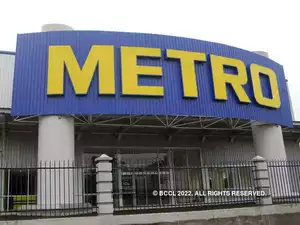
Reliance Retail Ventures, a subsidiary of Reliance Industries and the holding company of the group’s retail businesses, signed definitive agreements to acquire German wholesaler Metro AG’s India business – Metro Cash & Carry India-for a total cash consideration of ₹2,850 crore.
As part of the deal, Reliance will get 31 large format stores in 21 cities as well as the realty portfolio that includes six store-occupied properties, 3,500 staff and Metro’s 3 million B2B customers, of which 1 million are frequent buyers. The deal is subject to regulatory and other conditions and is expected to be completed by March 2023, the companies said on Thursday. ET had first reported in its edition dated Oct 15 that Reliance is the frontrunner to acquire Metro’s India business.
Metro AG said in a release that the India business valuation implies a sales multiple of 0.6x based on sales in the year ended September and takes into account lease rental and other related liabilities of e150 million (₹1,320 crore). Metro India generated sales of ₹7,700 crore (926 million euros), its best ever, in the year ended September.
Metro expects a transaction gain of about 150 million euros and an earnings per share (EPS) gain, once the deal closes.
The move will help Reliance consolidate its presence in the B2B trade segment, which it calls new commerce and is among its next big growth drivers, intensifying competition with Udaan, Amazon and Walmart-owned Flipkart. Reliance owns and runs the country’s largest retail business. All Metro India stores will continue to operate under the Metro brand during an agreed transition period.
Reliance Retail Ventures director Isha Ambani said the acquisition of Metro India aligns with its new commerce strategy of building a unique model of shared prosperity through active collaboration with small merchants and enterprises.
“We believe that Metro India’s healthy assets combined with our deep understanding of the Indian merchant and kirana ecosystem will help offer a differentiated value proposition to small businesses in India,” she said.
Metro AG chief executive officer Steffen Greubel said it is selling a growing and profitable wholesale business at the right time. “Indian trade industry is currently experiencing strong consolidation and disproportionate growth in ecommerce, including the B2B segment,” he said. “Due to the market dynamics, a sizable investment would be required to further grow the business. Therefore, now is the right time to use the momentum and open a new chapter for Metro India.”
Metro said it aims for a leading market position in wholesale. Due to increasing market consolidation, accelerated digitalisation and intense competition, Metro India’s operations don’t fit Metro’s core growth strategy, it said. Abneesh Roy, executive director, institutional equities at Nuvama, said the price to sales ratio is 0.37, which seems fair, given the B2B segment is a low-margin business.
Reliance will gain a significant jump in revenue and established locations that it can expand or optimise under its own branding and formats, said Devangshu Dutta, founder of retail consulting firm Third Eyesight. “The additional shelf space will also be very welcome for its own FMCG brands,” he said.
(Published in The Economic Times)
admin
September 20, 2022

New Delhi: The launch of online shopping experience by WhatsApp, along with Jio platforms, the holding company for the digital services businesses of Reliance Industries (RIL), will help these companies to take on e-commerce behemoths such as Jeff Bezos-controlled Amazon and Walmart-owned Flipkart.
Experts are of the view that the partnership will give JioMart, the e-commerce platform of RIL, around 48.7 crore WhatsApp users in India. At present, the total annualised active e-commerce users in the country are only 20 crore.
Rohan Agarwal, partner at research firm Redseer, told Business Standard: “WhatsApp is the primary messaging app for most Indians and the partnership shows the level of access JioMart would have to reach out to them.”
He went on add that it would help in expanding the reach of the e-commerce to users who might not be accessing online retail platforms.
To recap, speaking at the 45th AGM of RIL on Monday (August 29), Isha Ambani, director, Reliance Retail Ventures Ltd (RRVL), gave a presentation on placing online grocery orders using Meta-owned WhatsApp and making payments.
In a global first, JioMart on WhatsApp will aid users in India, including first-time online shoppers, to have a new shopping experience in ordering a wide range of groceries on WhatsApp. They will be able to shop via JioMart’s entire grocery catalogue by easily selecting their favourite items. Also, they will be able to add these products to the cart and pay without leaving the WhatsApp chat.
Mark Zuckerberg, founder and chief executive officer (CEO), Meta, said the association with JioMart would enable people to buy groceries from JioMart in a single chat.
Agarwal highlighted that most of the online grocery businesses generate from big cities and this alliance will be an opportunity for small cities and towns.
The financial daily quoted Devangshu Dutta, CEO, Third Eyesight, as saying that the partnership will have a big impact on the entire e-commerce industry.
He told the publication: “Reliance is the largest retailer in the country and with deep pockets. It wants to (tap) not just the big cities but small cities and towns as well. Given the fact that WhatApp is something consumers are comfortable with, and grocery is related to high-frequency purchases, they are firing on all cylinders.”
Dutta added that the crucial thing for both companies to be successful is to create a delivery process that is quick and cost-effective.
Source: timesnownews
admin
April 24, 2022
Written By Devika Singh
The Enforcement Directorate (ED) on April 19 accused Amway India of running a “multi-level marketing (MLM) scam” and attached its assets worth Rs 757.77 crore. This is not the first time that Amway India has been accused of running a ‘pyramid scheme’. Read on to understand how direct selling is different from pyramid schemes and why has the ED attached Amway India’s assets?

The direct selling industry is again under the regulatory scanner in India with the Enforcement Directorate’s (ED) move to attach the assets of the Indian unit of US-based direct selling company, Amway. The ED has accused the company of running a “multi-level marketing (MLM) scam” and attached its assets worth Rs 757.77 crore.
According to an ED statement, the attached property includes Amway India’s land and factory building at Dindigul district in Tamil Nadu, plant and machinery vehicles, bank accounts and fixed deposits.
“Immovable and movable properties worth Rs 411.83 crore and bank balances of Rs 345.94 crore from 36 different accounts belonging to Amway attached,” the ED said. The seizures, the ED said, have been made under the Prevention of Money Laundering Act (PMLA).
This is not the first time that Amway India has been accused of running a ‘pyramid scheme’. The company faced accusations on similar lines in the US in the 1970s and has been under government scrutiny in Karnataka and Kerala in the past. In fact, in 2013, Kerala police arrested then Amway India chief William Scott Pinckney and its directors, accusing them of running a pyramid scheme.
Direct selling has come under scrutiny time and again, as over the years, consumers have been duped by fake sellers hawking defective products and services in the garb of direct selling. To discourage such schemes, the government had proposed a draft policy last year, which aims at regulating the direct selling market segment.
Read on to understand what is direct selling, why the ED attached Amway India’s assets, what is Amway’s stand on the issue, how is direct selling different from pyramid schemes, and what are government regulations around direct selling in India?
What is direct selling?
Direct selling firms deploy agents who buy products from the company and then directly reach out and sell to consumers at their homes or other places instead of through a retail format like a store. The direct selling entity and the agent share the profits made through the sale of products. According to industry estimates, there are about 60 lakh agents in the country, who pursue direct selling as a means of earning additional income.
The direct selling industry, as per estimates, is pegged at Rs 10,000 crore in India, and has been growing at 12-13 percent per annum over the last five years. Experts say multi-vitamins, and home care and personal care products are the top-selling categories through this channel.
Beside Amway, companies such as Avon, Oriflame, Modicare and Tupperware operate in the direct selling segment. Some of these companies have been in India for decades now.
What is pyramid scheme and how is it different from direct selling?
Pyramid schemes are defined as a form of investment in which a paying participant recruits further participants and gets rewarded for it. Over the years, consumers have been duped by fake sellers hawking defective products and services in the garb of direct selling, often bringing the direct selling industry too, under scrutiny.
“Pyramid scheme is a scam to make money for a few people and it is based on selling an empty promise, multiplying it through recruiting people,” said Devangshu Dutta, CEO of retail consultancy Third Eyesight.
However, he added, it has to collapse somewhere because you are selling a product or service that does not exist.
“As opposed to that, in direct selling, the companies are selling products and at the end of it there is a tangible exchange of goods or services. So, even if you have downline distributors, as long as at the end of it the customer is getting something of value, then it’s not really a pyramid scheme,” he added.
Why has ED attached Amway India’s assets?
According to the ED’s press statement, Amway India runs a multi-level-marketing scheme or pyramid scheme, which “induces the common gullible public to join as members of the company and purchase products at exorbitant prices.”
The ED said the prices of most Amway products are “exorbitant as compared to the alternative popular products of reputed manufacturers available in the open market”. The new members, who are asked by the company to join it, are not buying the products to be used by themselves, but to become rich by becoming members as showcased by the upline members, said ED.
“The reality is that the commissions received by the upline members contribute enormously to the hike in prices of the products,” the ED said.
And this, indicated the ED, makes Amway’s operations similar to a pyramid scheme, where new members are recruited by existing members with claims of amassing wealth and becoming rich.
The agency claimed that between FY2003 and FY2022, Amway collected Rs 27,562 crore, of which it paid commissions worth Rs 7,588 crore to affiliate members and distributors in the United States and India.
What is Amway’s stand on the issue?
Amway, however, claims that it does not offer any incentives to new members to join the company and the members are only paid once they make a transaction or sell the product, and hence they are not operating a pyramid scheme.
The company has released a statement saying that the action of the authorities is with regard to the investigation dating back to 2011 and since then Amway has been co-operating with the department and has shared all information as sought from Amway from time to time. Amway said it will continue to cooperate with the government authorities for a fair, legal, and logical conclusion of the outstanding issues.
“As the matter is sub judice, we do not wish to comment further. We request you to exercise caution, considering a misleading impression about our business also affects the livelihood of over 5.5 lakh direct sellers in the country,” it said in a statement to media.
In an conversation last year with Moneycontrol, Amway India CEO Anshu Budhraja had said that Amway India does not charge any registration fee to its agents.
“There are no charges for joining Amway business. Further, to ensure that the customers have a satisfying experience with Amway, our products are backed by a money-back guarantee for 100 percent satisfaction of use,” Budhraja had said.
What are the regulations around direct selling?
The government last year included Direct Selling under the Consumer Protection Act (Direct Selling) Rules, 2021. These new rules prohibit direct selling companies from charging registration fees from their agents, and bars them from charging their agents for the cost of demonstration to prospective buyers.
The rules also forbid direct sellers from engaging in pyramid and money circulation schemes. The rules mandate that the companies operating in the segment would have to appoint a Chief Compliance Officer, a Grievance Redressal Officer, and a Nodal Contact Person. The companies would also need to be registered with the Department for Promotion of Industry and Internal Trade and must have an office in India.
They would also be mandated to maintain a website with all relevant information.
“Every direct selling entity shall establish a mechanism for filing of complaints by consumers through its offices, branches and direct sellers through a person, post, telephone, e-mail, and website,” as per the regulation.
“Every direct selling entity shall establish a mechanism for filing of complaints by consumers through its offices, branches and direct sellers through a person, post, telephone, e-mail, and website,” as per the regulation.
It adds: “Every direct selling entity shall ensure that such registration number is displayed prominently to its users in a clear and accessible manner on its website and each invoice issued for each transaction.”
In addition, such companies would have to maintain a record of direct sellers working with them, including their ID proof, address proof, email ID, and other contact information.
Source: moneycontrol
