
admin
August 18, 2023

Viveat Susan Pinto, Financial Express
August 18, 2023
Retail activity in the country is set to increase with some 20 foreign brands likely to enter India in the next 6-8 months, according to retail consultants and experts. This is double the number of about 10 foreign brands that would enter India annually in the pre-pandemic period.
An attractive retail market and growing affluence and consumer tastes are among the key reasons for the interest shown by foreign brands in India, said experts. Also, large groups such as Reliance and Aditya Birla are open to partnerships with foreign brands, with Reliance Brands, part of Reliance Retail, in particular, being the most aggressive of the lot.
“Global markets are witnessing slowdown and recessionary concerns, which is hurting retail sentiment. In contrast, retail sentiment in India is upbeat despite food inflationary pressures. Spending across non-essential categories will also grow as the festive season nears,” said Abhinav Joshi, head of research, India, Middle East & North Africa at consultancy CBRE.
The consultancy on Thursday released a report which said that retail leasing activity in India had grown 24% year-on-year in the first half of CY2023, led by foreign and domestic brands. The second half of the year was also expected to see a strong double-digit rate of growth in terms of leasing activity, with overall retail leasing likely to touch 5.5-6 million sq. ft. at the end of the CY2023, second only to the peak of 6.8 million sq. ft. seen in CY2019.
Of the names eyeing an India-entry in the next few quarters include labels such as Italian luxury fashion brand Roberto Cavalli, American sportswear and footwear brand Foot Locker, Armani Caffe, the luxury cafe brand of Armani, British luxury brand Dunhill, Dubai’s Brands for Less, Old Navy and Banana Republic from Gap, Chinese brand Shein, Maison De Couture from Valentino, Spanish luxury brand Balenciaga, EL&N, a UK-based boutique cafe, Galleries Lafayette from Paris, Kiabi, Mavi, Damat, Dufy, Tudba Deri, Avva, Boohooman and Miss Poem, all apparel brands from Turkey and Europe, say industry sources.
Barring Galleries Lafayette which has tied up with Aditya Birla Fashion and Retail for its India entry, most other names are either talking to Reliance Brands (part of Reliance Retail) or have tied up with the company, persons in the know said. For instance, Balenciaga, EL&N, Shein, Gap’s Old Navy and Banana Republic, Armani Caffe, Maison de Couture from Valentino have tied up with Reliance Brands for their India entry. Executives at Reliance Brands were not immediately available for comment.
Most of these brands are eyeing a presence in cities such as Mumbai, Delhi-NCR, Bengaluru and Hyderabad in the first phase of launch, before expanding their presence to other cities such as Pune, Ahmedabad, Chennai and Kolkata.
“The India retail opportunity is a compelling one, which most foreign retailers don’t want to miss,” says Devangshu Dutta, chief executive officer at Gurugram-based consultancy Third Eyesight.
“Some of the brands who’ve come earlier have also tasted success especially in the fast fashion category. This is an indication that brand awareness is growing and that people are ready to spend on global products as discretionary incomes grow,” he says.
On Wednesday, Japanese fast fashion retailer Uniqlo said that it was setting up two new stores in Mumbai in October, after launching 10 stores in the north over the last four years. The company’s chief executive officer Tomohiko Sei indicated that the retailer was open to new markets and store openings, but would focus on Mumbai for now.
CBRE says that Mumbai has seen retail leasing grow by 14.6% year-on-year in the first half of CY2023 on the back of a push by foreign brands to acquire space in the city. Delhi-NCR, meanwhile, reported a higher 65% year-on-year growth in retail leasing in the first half of the year, led by retail activity by both foreign and domestic brands.
(Published in Financial Express)
admin
June 29, 2023

Dia Rekhi & Faizan Haidar, Economic Times
New Delhi, June 29, 2023
Fast Retailing, the parent company of Uniqlo, is looking to set up a significant manufacturing presence in India through about 20 ‘production partners’, multiple people aware of the development told ET.
One of the world’s most valuable clothing retailers, Uniqlo already has a cluster of production partners in India and is looking to expand this network through a significantly large investment, they said without sharing any estimated amount.
“The investment amount will be significant because Uniqlo is serious about India and views it as an important market,” one of the persons said. “Unlike the existing facilities in India, which cater more towards exports, the production partners that Uniqlo will bring to India will be specifically meant for the domestic market.”
One of the company’s production partners that ET spoke to confirmed that their current mandate is to produce only for exports.
Uniqlo, which is Asia’s biggest clothing brand, had said India is one of the top priority markets for them where consumers are increasingly shifting from ‘fast-fashion’ to long-lasting essentials and functional wear.
The company’s ambitions for India are considerable with its CEO Tadashi Yanai indicating that he wants Uniqlo to become the “best-selling retailer in India”.
The Japanese brand opened its first door in September 2019, but stringent lockdown measures announced to contain the outbreak of the pandemic in March 2020 delayed the expansion plan.
The brand is now planning to enter Mumbai and Bangalore. It has already opened stores in Lucknow and Chandigarh after Delhi.
Uniqlo does not own any factories. Instead, it outsources production of almost all its products to factories outside Japan.
As per a report titled ‘The Uniqlo case: fast retailing recipe for attaining market leadership position in casual clothing’, this model allows Uniqlo to keep its breakeven point low and improve return on investment.
“As we expand our global sales, we continue to grow our partner factory network in countries like Vietnam, Bangladesh, Indonesia, and India,” the company has stated on its website.
As per its list of garment factories, as on March 1, 2023, Uniqlo has 227 factories in China, 54 in Vietnam, 33 in Bangladesh, 13 in Indonesia, and 16 factories in India and Japan among several other locations.
As the world’s second most-populated country, India is an attractive market for apparel brands, especially with youngsters increasingly embracing western-style clothing.
Over the past decade, global brands Zara and H&M became market leaders in the fast fashion segment in India.
“For global brands, India should be one of the most logical sourcing hubs given its large vertically integrated manufacturing sector on the one hand and the large, growing domestic market driving demand on the other hand,” Devangshu Dutta, founder of retail consulting firm Third Eyesight, told ET. “However, its weight in the sourcing baskets has historically been low due to several reasons, in spite of China being visible for decades to the management teams of brands and retailers as a concentrated sourcing risk,” he said.
Uniqlo’s existing production partners in the country include Shahi Exports, Brandix Lanka, Tangerine Design, Maral Overseas, Shingora Textiles, Silver Spark Apparel, SM Lulla Industries Worldwide and Penguin Apparels.
As per Fast Retailing’s first-half results, the company said its revenue was 1.4672 trillion yen, or around $10.2 billion, and that its operating profit had risen to 220.2 billion yen ($1.53 billion), bolstered by strong performances from operations in several regions, including India where it said it generated significant increases in both revenue and profit.
With regard to Uniqlo International, in particular, it said revenue stood at 755.2 billion yen ($5.25 billion), while operating profit was 122.6 billion yen ($852.93 million).
The company said regions like India “reported significant revenue and profit gains as they enter a full-fledged growth phase”.
(Published in Economic Times)
admin
June 29, 2023

Raghavendra Kamath, Financial Express
June 29, 2023
Zara, touted as “Fast Fashion Queen”, has achieved a unique feat in India. The Spanish brand has been growing its revenues without opening any new stores.
The fashion brand, run by a joint venture between Tata-owned Trent and Spain’s retail group Inditex, posted a 40.7% growth in its revenues to Rs 2553.8 crore in FY23. The catch is that while many retailers/brands garner sales from opening new stores, Zara did not open any store but closed one during FY23.
In FY21 and FY22, its store count remained constant at 21 but its revenue grew 61.2% in FY22. Zara’s revenues grew at a 15.5 % CAGR in the last five years.
“Zara did not foray into any new city and closed one store. That said, it saw an exceptional performance on store productivity (83% higher than FY19). The increase in revenues lead to highest ever Ebitda margins at 16.3%,” said Nuvama Institutional Equities in a recent report.
The contribution in productivity includes contribution from online and also increase in store sizes, the brokerage said.
A mail sent to Inditex did not elicit any response. Trent executives could not be contacted.
Experts attribute Zara’s success to increase in customer spends and improved offerings by the brand.
“The customer base they are targeting has grown and their merchandise mix has become sharper,” said Devangshu Dutta, chief executive officer at Third Eyesight, a retail consultant.
Dutta said when a retailer opens stores, it would immediately boost sales, but to maintain sales momentum, one has to have “right merchandise at right price and have stores at right locations”.
Zara is known to churn its designs and styles very fast, and target young customers. In its Indian venture also, its parent Inditex controls merchandise mix and so on.
“The said entities (Zara and Massimo Dutti) are obliged to source merchandise only from the Inditex Group. Also, the choice of product & related specifications are at the latter’s discretion. Further, the entities are dependent on Inditex for permissions to use the said brands in India subject to its terms & specifications,” Trent said in its FY23 annual report.
Zara is also focusing on opening in select locations, a reason it could not open more stores in the country, experts said.
“The incremental store openings for Zara continue to be calibrated with focus on presence only in very high-quality retail spaces,” Trent said.
Susil Dungarwal, founder at Beyond Squarefeet, a mall management firm, said that propensity to spend has gone up among Indian shoppers after the pandemic and Zara being a renowned global brand with its stylish merchandise seems to be have been the beneficiary of the trend.
“They understand customers very well and brought products which are liked by Indian shoppers in terms of looks, styles and so on,” Dungarwal said.
Zara is a case study for Indian brands as to how to run a retail business successfully, he said.
(Published in Financial Express)
admin
September 23, 2022
Sagar Malviya, The Economic Times
September 13, 2022
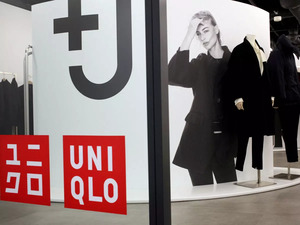
Uniqlo, Asia’s biggest clothing brand, has turned profitable in India in less than three years after it opened its first store in the country despite operating in a period marked by Covid-led lockdowns and restrictions.
The Japanese brand posted a net profit of ₹21.4 crore for 2021-22 compared to a loss of ₹36.1 crore in the previous year, according to business intelligence firm AltInfo. Its sales rose 63% year on year to ₹391.7 crore for the year to March 2022, a slower pace compared to FY21 when it clocked 86% sales growth on a low base.
Experts feel Uniqlo’s strategy of pricing its merchandise at least 20% higher than rivals Zara and H&M has helped it earn better margins despite inflationary pressures in terms of raw materials.
“The market is not easy and turning profitable at a time when most rivals are spending aggressively is a good indication of success. As an international brand, they (Uniqlo) are able to get good locations and are preferred tenants, which helps in generating sales, especially in top cities,” said Devangshu Dutta, founder of Third Eyesight, a strategy consulting firm. “However, the pricing is a bit premium and until they are able to source locally, selling products at a right value for the market will remain challenging.”
The Japanese brand opened its first door in the country in September 2019, but stringent lockdown measures announced in March 2020 to contain the Covid-19 outbreak delayed its store expansion plans, restricting its store count to about seven outlets so far.
Uniqlo has said India is one of the most priority markets where consumers are increasingly shifting from ‘fast-fashion’ to long-lasting essentials and functional wear. “India is an important and very big priority market,” Tomohiko Sei, CEO of Uniqlo India told ET in June.
(Published in The Economic Times)
admin
April 17, 2015
Panel Discussion moderated by Mr. Devangshu Dutta, Chief Executive, Third Eyesight at the Indian Retail Congress 2015 (17-18 April 2015). The panel included Mr. Manish Mandhana (Managing Director of Mandhana Industries with the brand Being Human), Mr. Sanjay Warke (Country Head of Toshiba India), Mr. Tanmay Kumar (Chief Financial Officer of Burger King India), Mr. Kinjal Shah (Chief Executive Officer of Crossword Bookstores) and Mr. Ranjan Sharma (Chief Information Officer of Bestseller India, with the brands Vero Moda, Only, Jack & Jones).

