
admin
June 9, 2023

By Pavan Lall, Fortune India
Jun 9, 2023
For fashion designer Tarun Tahiliani, getting funding from a corporate house was incidental. It happened through a high-profile customer, none other than Aditya Birla Group chairman Kumar Mangalam Birla. Birla had been a customer of Tahiliani’s Ensemble some three decades ago when he was getting engaged. They stayed in touch over the years and at one stage discussed the need for an Indian fashion brand focused on scale and accessibility. “It came out of a conversation and was a two-year ambling route. I had asked if they were expanding their designer brand footprint, and he (Birla) told me to meet the Aditya Birla Fashion and Retail (ABFRL) CEO for a deeper chat,” recalls Tahiliani.

The result was Tasva, a sub-brand that Tahiliani has a minority stake in. The focus was to zero in on the ethnic space, not lose out on the homegrown touch, yet keep user-friendly clothes in traditional silhouettes at accessible price points that were not haute couture. Launched in December 2021, Tasva primarily caters to the premium occasion-wear segment, and has been growing at a fast pace.
Raising Cash
Tahiliani, who got ₹67 crore funding for a third of his company with an option to further offload up to 20%, isn’t the only one to see corporate finance push capital into his designs and stores. Sabyasachi Mukherjee of Kolkata, who opened a large multi-level store in a heritage-style building early this year in Mumbai, sold a little over half his company to Birla, reportedly for around ₹398 crore. ABFRL has also bought a 51% stake in House of Masaba Lifestyle, the entity that houses apparel, personal care, and accessories businesses under brand ‘Masaba’ owned by designer Masaba Gupta. Besides the Aditya Birla Group, Mukesh Ambani-led Reliance Brands has bought a 52% stake in Ritu Kumar, 51% in Abu Jani Sandeep Khosla, and 40% in Manish Malhotra. Earlier, in 2008, Kishore Biyani’s Future Group took a 23% stake in Anita Dongre, which was later sold to private equity player General Atlantic for ₹150 crore.
“While we are reaching a sense of critical mass in terms of consumer base, luxury is not new to India. Designers have been flogging their wares for decades,” says Devangshu Dutta, founder of Third Eyesight, a consultancy firm focused on consumer goods and modern retail. “What has changed is the size of the target audience.”
According to a recent Knight Frank wealth report, India is set to see a projected 58.4% increase in ultra-high-net-worth individuals, those with a net worth over $30 million, from 12,069 in 2022 to 19,119 in 2027. The domestic apparel market, too, was pegged at $60 billion last year, not far behind the developed world, a McKinsey’s FashionScope report has said.


“Earlier, India was a country that just produced for the world. Today India is also becoming the largest consumer market. International brands are keen to invest in business relationships with India. India will change the game for luxury. Where else will you get a billion people who are of a young age, and will be the future luxury buyers of brands?” says Sabyasachi.
“The economy has expanded beyond bigger cities, which has raised the consumption size” adds Dutta of Third Eyesight.
Corporate Handholding
“Corporate involvement helps scale faster than organically, and a lot of designers are tying up with companies with technical expertise and go-to-market for smaller towns and cities,” says Anita Dongre. “For a designer, having a corporate brings in processes, technical expertise and management know-how, and helps her focus on designing,” she adds. In Sabyasachi’s case, too, a new CEO — Sumati Mattu, as well as a new HR head and COO, were brought on board to prepare for the brand’s expansion.
For Sabyasachi though, it has helped in creating a safety net, especially for his employees, more than anything else. “Right now we have two investors — me and Birla together, so it makes me feel protected. Nothing else has changed. The only thing that has changed is that we have a great HR policy with the Birlas; they will be able to look after my people better, as I have created a beautiful safety net for all my employees.”
Dutta, on the other hand, says that “for large companies in the fashion space such as Aditya Birla, it is a natural step to buy into an established brand with scale since brand recognition combined with capital and organisational structure make for a win-win. The platform of fashion is currently at the right juncture to replicate networks and create scale,” he adds.
Other designers, including Manish Malhotra, who has also received funding from Reliance, say, “corporatisation of fashion houses in India has brought about a safety net for luxury brands, making us push for larger creative forces and expansion in terms of scale, branding and customers.”
Growing Into India
Tahiliani says we have opened 55 Tasva stores and will reach 90 in this financial year. Tasva crossed around ₹60 crore in annual revenue in 2022, and is set to hit ₹200 crore this year, he adds.


Similarly, Dongre, widely regarded as the largest designer and fashion house by revenue, has around 150 stores across brands, and Global Desi, a substantial increase from the 10-15 stores she ran before receiving her first funding. “The added benefit is that such funding helps push into international markets.” While Dongre launched her stores in Dubai and New York a few years ago, Sabyasachi launched a New York-located store in West Village last year.
So, what’s the road ahead?
“Corporate India has successfully built large-scale fashion businesses and acquired international brands, but has not been able to create a homegrown luxury brand of cultural or social significance. That will change now,” says Sabyasachi. Jewellery is set to be his focus, along with sunglasses, beauty, shoes, and other categories. “Jewellery is a very important category in the country, a great revenue earner,” he says.
“The film industry was corporatised because its potential was discovered, now it is fashion’s time,” adds Manish Malhotra. “Corporatisation lets designers look beyond bridal-wear, occasion-wear, and focus on newer creative strategies as there’s more space and potential for experimentation.”
Tahiliani agrees that compared to overseas, the trend is an expected one. “Most of the brands abroad have seen stellar growth because they have been aligned with corporate houses.” He points to the famous Alexander McQueen, who started in 1992, and was discovered by Isabella “Issie” Blow. The tie-up allowed him to expand his label, open boutiques around the world, and push into the categories of perfume, eyewear, accessories trainer and clothes for men.
Globally, France-based Kering group owns designer labels Gucci, Alexander McQueen, and Balenciaga, among others. LVMH Moët Hennessy Louis Vuitton, commonly known as LVMH, owns Loro Piana, Fendi, Christian Dior, Kenzo and Marc Jacobs.
The question then is, with all the global exposure and corporatisation, will there be a shift in Indian design sensibilities?
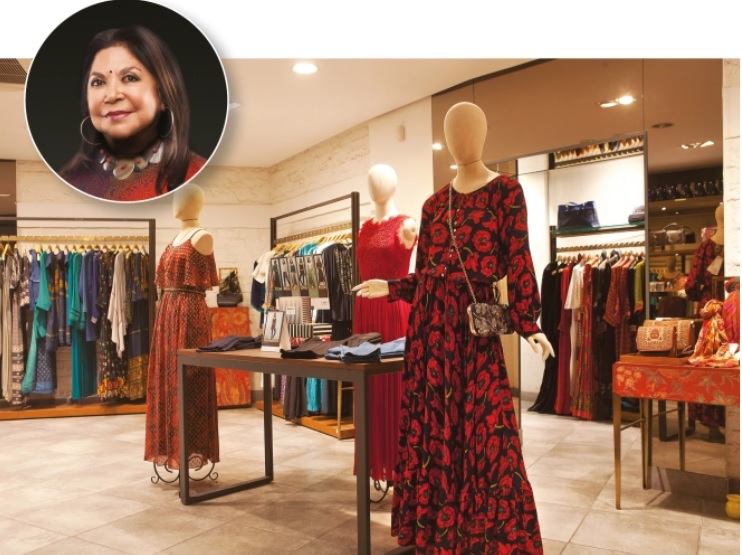

“Now you see people wearing bold gowns or black ties for one or two events, but Indians have kept a unique spirit of celebration and culture unlike anywhere else in the world. Bollywood has played a huge part in amplifying this because of the song and dance and colours and events such as Holi and Sangeet,” feels Tahiliani.
The bottomline: Luxury fashion is now more inclusive, and regional customers are the next big target area for brands.
(With inputs from Priya Kumari Rana)
(Published in Fortune India)
admin
April 24, 2023

Samar Srivastava, Forbes India
April 24, 2023
A board meeting scheduled for May 2 promises to be the start of the value unlocking process for Reliance Industries [Disclaimer: Reliance Industries is the owner of the Network18 group, which publishes Forbes India]. Shareholders of India’s largest company, which has a presence in industries as diverse as petrochemicals, retail and telecom, will each receive shares in its financial services unit—Jio Financial Services.
User data—what consumers search for, their demographic profile as well as their likes as dislikes—are available to India’s largest telecom company with 426 million users. If it can use that data to underwrite credit for consumers, it has a winner. Jio Financial is in a unique position.
Loans to India’s middle class have grown at three percent in the last year. Compare that with credit to industry that has grown at a mere seven percent and it becomes clear why the company is keen to spin this off an independent entity and list it separately on the bourses. A successful listing could result in telecom and retail being eventually listed separately.
An analysis by Jefferies, a brokerage, shows that loans to India’s consuming class present a large market opportunity. Home loans account for about ₹25,00,000 crore, auto loans for ₹471,400 crore, consumer durable loans for ₹37,000 crore, and microfinance for ₹280,000 crore. And there is the rapidly growing personal loan segment at ₹79,000 crore. These all present a large whitespace for the company to tap into. Jeffries also points out that a key advantage of the business would be their access to low-cost capital due to the high credit rating to Reliance Industries.
The step also marks an important milestone in Chairman Mukesh Ambani’s aim to cement his position in the world’s list of billionaires. At $83.4 billion, Ambani is rank 9 on the 2023 Forbes list of world billionaires. Since the pandemic in March 2020, the second-generation entrepreneur has started work on a new energy business, strengthened his retail operations with the acquisition of Metro Cash and Carry, and broadened Jio’s subscriber base with the launch of 5G services.
As he sets out to independently grow his businesses, Ambani finds himself occupying the largest retailer spot by revenue. In the last year, store count is up 52 percent to 17,225 stores while revenues are up 17 percent to ₹67,000 crore and profit up six percent to ₹2,400 crore.
Reliance Retail has adopted a multi-format approach. There is Ajio.com and JioMart that make up its online offering. Digital plus new commerce accounts for 18 percent of sales, according to CLSA, a brokerage. Reliance Trends is its cut price fashion format. There is the soon-to-be-launched Azorte to compete against the likes of Mango and Zara, as well as Reliance Brands that houses global names like Burberry, Armani Exchange, Canali and Jimmy Choo, among others. Add to that its private label business with brands like Campa Cola and Independence and the growth drivers for the next decade are in place.
“Reliance has been clear about dominating the landscape in any sector it has entered in the last 30 years, whether it is petrochemicals, telecom or retail,” says Devangshu Dutta, founder and CEO of Third Eyesight, a retail consultancy. He believes the company is getting into many sectors or formats to capture a larger share of the consumer wallet.

At Jio, its strategy to add subscribers (mainly from Vodafone Idea), increase average revenue per user as well as spread the 5G network has paid off. At 426 million users, it is now the largest telecom operator in the country with an average revenue per user (ARPU) of ₹177. The business has delivered a topline of ₹29,195 crore and profit after tax of ₹4,881 crore. CLSA expects the launch of its portable 5G device, Jio AirFiber, as well as an affordable 5G smartphone to drive growth.
Add to this the synergies that could play out with Jio Financial Services. The business starts with a net worth of ₹1,07,200 crore, giving its balance sheet the strength to leverage and make loans. Even a conservative gearing of five times net worth would make its loan capacity ₹6,00,000 crore—or twice the size of Bajaj Finance—today.
In the new energy business, the company is working on plans to commence production at its new gigafactory in Jamnagar. The company is yet to share updates on progress on this front.
These developments have prompted upgrades by brokerages who believe Reliance Industries offers a favourable risk reward as the downside is capped on account of strong profit growth. In a recent report, CLSA termed Reliance Industries a ‘bargain buy’. In the last 12 months, sales were up 36 percent to ₹2,17,164 crore, while profits were up 16 percent to ₹70,782 crore. Still, the stock price is down eight percent to ₹2,346 per share, and its market capitalisation stands at ₹15,87,500 crore, making it the most valuable company in India.
They point to key monitorables being the rollout of its green energy ventures as well as the execution in its 5G rollout. For now, the company has a comfortable position with regard to leverage. In the quarter ended September 2022, Reliance Industries had reserves of ₹7,83,283 crore and borrowings of ₹3,16,030 crore, leaving it with scope to borrow if new business opportunities come its way. Ambani usually uses the Reliance AGM to announce new plans. Expect the next meeting in a few months to possibly come up with some.
(With inputs from Varsha Meghani)
(Published in Forbes India)
admin
April 21, 2023

Viveat Susan Pinto, Financial Express
April 21, 2023
Retailers of Apple products in Mumbai and Delhi, which account for around 20-21% of the brand’s annual sales in the country, fear the launch of stores by the US giant within these cities may dent their business.
In particular, retailers in the vicinity of these outlets, at Bandra-Kurla Complex (BKC) in Mumbai and Saket in Delhi, say consumers will prefer to go to these company-owned stores rather than make it to their outlets to purchase Apple products.
“That is a visible danger for those Apple retailers who are located near these outlets,” a senior executive at Unicorn Infosolutions, an Apple premium reseller in Delhi and Mumbai, said. Unicorn has 37 outlets in the west and north of India and is looking to its increase its footprint to 75 stores in the next three years.
“You have to keep in mind that the base of consumers for Apple is growing, both in Mumbai and Delhi as well as other cities. It will not be feasible for all the consumers to make it to these outlets. Yes, some high-end consumers may choose to shop at these Apple stores in the two cities, but for those staying away from these stores, it will be difficult to make it to these outlets,” the Unicorn executive said, declining to be quoted.
Nilesh Gupta, managing director of Vijay Sales, an electronics retailer, which has stores in the west and north of India, had reiterated a similar point on Tuesday (April 18), the day the Apple BKC store was launched in Mumbai. He said that he saw the store launches in Mumbai and Delhi as an opportunity for brand-building and further growth in sales.
“Apple is launching just two stores in India, one in Mumbai and the other in Delhi, for now. Even if they launch more outlets, not everyone will be able to make it to these stores, given the size of India and the aspirations of people wanting to own an Apple. The word-of-mouth and excitement going around following the launch will positively impact all of us who stock and sell Apple products in the country. I see more consumers wanting to buy Apple products in the future,” Gupta said.
While Apple has been in India for more than 25 years, it has had no direct retail presence in the country until now. An Apple online store in India was launched around three years ago. In other words, say experts, the Cupertino-based tech giant has depended largely on a network of online and offline retailers, including premium resellers, multi-brand operators and e-commerce channels, for sales in India.
“And Apple will want to ensure that its retail partners are not impacted because of its direct retail foray into India,” says Devangshu Dutta, founder and chief executive officer, Third Eyesight, a Gurugram-based retail consultancy.
“The Apple premium resellers, for instance, may choose to upgrade their retail experience at their outlets to ensure that there is no loss of business, especially in Mumbai and Delhi,” Dutta said.
Apart from Unicorn, some of the other Apple premium resellers in India include Maple in Mumbai and Ample Technologies, which runs the Imagine brand of stores in cities such as Bengaluru and Chennai.
Both the Apple stores in Mumbai and Delhi are high on experience, visitors to these outlets have said, coming at a time when the brand, amongst the most valuable in the world, has clocked a record revenue in India.
A Bloomberg report this week said that Apple had reported a turnover of $6 billion in India in FY23, up from $4.1 billion in FY22.
The Apple craze has drawn huge crowds both to the Mumbai and Delhi stores this week. The retail push will come as the company looks to expand manufacturing in India, experts said.
While Apple has been manufacturing older iPhone models in India since 2017, it began assembling the most recent smartphone models in 2022, with the iPhone 14.
According to the International Data Corporation (IDC), Apple’s iPhone shipments in India stood at 6.7 million units in 2022 against 4.8 million in 2021 and 2.7 million in 2020.
Apple also captured 25% of the ‘Made in India’ smartphone shipments in terms of value in 2022, compared to 12% in 2021, according to Counterpoint Research.
Among cities, Mumbai accounted for 10% of iPhone sales in India, trailing only Delhi, which accounted for 11% of sales, Counterpoint Research said.
(Published in Financial Express)
admin
April 13, 2023

Economic Times / ETRetail
April 13, 2023
There will be blood!
An all-out war has started in India’s FMCG space. At one end are the behemoths – HUL, P&G, Dabur, Marico, Tata Consumer, ITC, and others – and on the other side is the master disruptor, Reliance.
Known to change the market dynamics by venturing into new segments, Mukesh Ambani-owned Reliance Retail Ventures, a part of Reliance Retail, has now set its eyes on India’s over USD500 billion grocery retail market, as estimated by Euromonitor International. And the company is depending on its distribution channel and kirana partners to conquer this feat.
The strategy
In the last couple of years, Reliance Retail has been slowly and steadily developing a distributor ecosystem to take on the FMCG giants. However, its strategy is different from the incumbents.
Helmed by Isha Ambani, Reliance Retail has announced its plans to go big on FMCG with the help of local brands and manufacturers. During its AGM last year, the company mentioned that it intends on launching affordable products.
To carve a niche in the sector, it is using four primary moves:

What can we expect from each of these moves taken by Reliance to take over the FMCG market?
Reliance Retail has been a few years behind in entering the retail space. It entered the e-commerce market as well in 2016. But the delayed entry did not stop it from giving a tough competition to its competitors. Reliance is perhaps planning to repeat the success with its delayed foray into FMCG business as well.
Out of the INR50,000 crore grocery retail market of India, more than 75% is still dominated by kirana stores. And Reliance is not just eyeing the 25%, it is working with kiranas, and hence, targeting the whole market and not just the organised sector.
Let’s deep dive.
Reliance’s ‘selling ecosystem’
The grocery retail market of India constitutes nearly 67% of the country’s total retail market, according to Euromonitor International. Within the grocery retail, the channels are further divided by modern and traditional retailers. The former covers hypermarkets, supermarkets, and convenience stores, while the latter consists of kirana stores.


Kirana stores are the lifeline of grocery retail in India — 75% of all grocery sales happen via this channel. A presence across this channel is imperative for any FMCG brand.
The biggest FMCG conglomerates are available pan-India across majority of kirana stores with their cheapest SKUs as well – this could be the smallest SKU, for example sachets for shampoos, or the largest to make it cost efficient and allow consumers to buy in bulk; read products like detergents.
In India, the grocery retailing is always driven by value and availability, and not just cost.
Reliance Retail Ventures started interacting with the kiranas during the pandemic the way no one had done before. The company decided to become distributors. It sold both its own products, and competitive brands.

Conquering distribution
Distributors form the backbone of FMCG sales in India. While manufacturers sell with no credit timeline to distributors, the latter allows discounts to wholesalers, who then extend a 30-day period of credit line to retailers. Retailers then finally sell the product to consumers.
Reliance is now on its way to becoming one of the most aggressive distributors in the country.
Abhijit Kundu, senior vice-president-research, Antique Stock Broking Ltd, says, “Reliance’s focus on the FMCG industry started with the distribution business. They are essentially creating an entire ecosystem of their own. They are now distributors of their own brands, their acquired brands, and competitor brands, all. And here’s the best part, they are providing one of the deepest discounts to wholesalers as well.”
Almost three years ago Reliance started its distribution business. The company is now developing that and calls it the “selling ecosystem” in its annual report.

According to Reliance Retail’s FY22 annual report, “The company has expanded its physical footprint into tier-II and tier-III markets, bringing the benefits of modern trade to consumers in smaller towns.”
“Extending its reach even further to reach India’s 200 million households, the company is building one of the world’s largest distribution platforms under its ‘new commerce’ initiative by leveraging its extensive supply chain and sourcing capabilities, as well as New Age technologies, to support and enable millions of kirana and merchant partners across the country, assisting them to modernise, provide easy access to a diverse product portfolio, become more efficient and generate revenue,” the report states.
The MCA filing of Reliance Retail Venture’s FY21 report says, “In the lockdown period, Reliance Retail established itself as the ‘preferred’ partner to kiranas by ensuring uninterrupted supply of essential items. JioMart kirana service, now active in 33 cities, launched self-onboarding application, aiding rapid merchant additions.”
Speaking of the developing distribution network of its own by Reliance, Devangshu Dutta, founder, Third Eyesight, says, “Disintermediation, that is removal of middlemen, is a natural outcome of consolidation of the market. However, even in the most developed and some of the most consolidated consumer markets, intermediaries continue to exist because they provide value in terms of aggregation of demand from smaller markets or segments, as well as providing some financial buffer for both buyers and sellers.”
Working with kiranas
What is interesting is how Reliance Retail is engaging with the kirana stores and using their strength to its advantage. The company launched JioMart in December 2019, in phases.
“Reliance is working very smartly as a distributor. Instead of giving deep discounts on all brands, across SKUs, the company is providing deep discounts on the fastest-moving SKUs. Imagine you run a kirana store, technically no one has loyalty only to one distributor or wholesaler. Now, if as a kirana store owner you know you need 10 packets of let’s say Surf Excel, 1 Kg SKU, chances are that kirana will order the same from Reliance, as RRL knows that is the fastest-moving SKU, and hence will give the deepest discount on that. The discounts offered by RRL are almost 15%-20% higher than what any other distributor is providing right now,” says Kundu.
“The same kirana store owner will probably order other things from other distributors, depending on discounts again. What Reliance is doing is focusing on the volume game, and on the fastest-moving SKUs and brands, cause as a distributor they know these will move, no matter what,” he adds.
According to a Kotak Securities report in March 2021, the average number of distributors that a retailer works with is 10-15. And foods, which include staples, dairy, packaged foods, beverages and such contribute 75% of average daily sales.
The same report surveyed at the time of freshly launched JioMart selling ecosystem kirana partners in Mumbai, the count of which was 60, and majority of these kirana store retailers surveyed mentioned that JioMart has lower pricing than other distributors and offers better profit margins. Around 37% respondents also mentioned that Reliance pushed its own private labels while having all brands in stock.
Isha Ambani during the 45th Annual General Meeting of Reliance Industries Ltd mentioned that the company now has a merchant partner base of 20 lakh partners and is adding 150,000 partners every month. The company has five-year plans to cover 7,500 towns and 3 lakh villages.
“JioMart, delivering in over 260 towns, was rated India’s No. 1 trusted brand for online grocery. JioMart works on a hyperlocal delivery model and is India’s largest deployment of omni-channel capabilities,” she said.
“The FMCG and grocery business of Reliance, back in 2021-2022, was nearly INR55,000 crore – INR60,000 crore already. And this was even before the company was involved in brand sales of its own. This was primarily driven by its distributor business,” says Kundu of Antique Stock Broking.
Acquisitions and private labels
Dutta of Third Eyesight says, “Regarding the FMCG and food/beverage brand acquisitions by Reliance Retail, while they are relatively small, they feed into a strategy that side-steps the need to create brands from scratch – both, as private labels for its retail formats and other acquisitions for its broader expansion into other retail channels.”
“Creating new brands takes time and success is not guaranteed, no matter who is behind the brand. Riding on the goodwill and awareness of existing brands provides a shortcut, and further growth can be fuelled by additional resources,” adds Dutta.
Clearly, something Reliance Retail seems to believe as well. Or maybe it just wants to shorten the process of establishing its retail brands’ presence amongst consumers.
One of the biggest acquisitions of the company was Metro Cash & Carry, the German B2B wholesale company. Reliance acquired the latter in a 100% stake sale for INR2,850 crore. This would give a huge leg-up to Reliance’s already burgeoning “selling ecosystem” business.
Speaking about this acquisition Isha Ambani said in the press release, “We believe that Metro India’s healthy assets combined with our deep understanding of Indian merchant / kirana ecosystem will help offer a differentiated value proposition to small businesses in India.”
Metro India, which entered in 2003, was operating 31 stores across 21 cities. The company was servicing nearly 3 million customers via its B2B channel, of whom 1 million (customers) were frequent buyers. As of FY22, Metro Cash & Carry generated revenues worth INR7,000 crore and losses of INR49.7 crore, as reported by Tofler.
In 2021, Reliance Retail also acquired online milk and dairy products delivery platform, Milkbasket. As per its FY22 annual report, the company integrated Milkbasket with JioMart, and there were double the number of subscriptions on the Milkbasket platform. The company seems to have dairy leadership plans as well. Reliance Retail has recently got RS Sodhi, ex-managing director of Gujarat Cooperative Milk Marketing Federation (GCMMF), the parent company of Amul, onboard. Sodhi was associated with GCMMF for 40 years, out of which 12 years he held the position of managing director.
Besides, the company is also targeting the FMCG market with the help of private labels and acquiring brands. Over the last few years, Reliance Retail has spent nearly USD1.1 billion on brand acquisitions – this is across grocery and non-grocery segments.
Reliance Retail acquired Chaudhary brothers’-owned Campa Cola for INR22 crore, and relaunched the brand in March 2023. Moreover, the company has also announced its plans to acquire 50% of the 100-year-old Gujarat-based beverage company, Sosyo Hajoori Beverages.
Prior to that, it acquired 51% stake in Lotus Chocolate Company for INR74 crore and plans to take over an additional 26% of the latter eventually.
In the non-grocery FMCG category, the company has acquired lingerie brand Zivame for INR1,200 crore in 2020, 89% stake in Clovia — another more affordable brand compared to Zivame — for INR950 crore, offline lingerie brand Amante (owned by MAS Holdings) for an undisclosed amount, British toy retailer Hamleys for INR620 crore in an all-cash deal, majority stake in online furniture company Urban Ladder for INR182 crore, majority stake in online pharmacy retailer Nedmed for INR620 crore, and 26% stake of task-runner and quick-commerce app Dunzo for INR1,488 crore.
While not fast moving, but consumer goods nonetheless, Reliance Retail acquired couture fashion brands namely, 52% of Ritu Kumar for an undisclosed amount, 51% of Abu Jani and Sandeep Khosla, 40% of Manish Malhotra’s couture brand, and the company has joint ventures with Anamika Khanna and Rahul Mishra.
In terms of private label, the company recently launched Independence, which will have an array of staples such as edible oil, packaged atta, and packaged pulses, under its umbrella, along with biscuits. Reliance Retail also has private label brands such as Good Life, Snac Tac, Pure It, and Enzo. These brands cut across almost all grocery FMCG categories such as packaged foods inclusive of noodles, home cleaning, beauty and personal care including hand wash brands, dishwash, and floor cleaners.
The company is not limiting itself to only Indian brands – national or regional when it comes to its acquisition strategy. Reliance Retail in February 2023 acquired Sri Lanka-based Maliban biscuits, and plans to bring the brand to India, and clearly will now be targeting the biscuits category as well. Biscuits in India is nearly INR38,000 crore market, with leaders such as Parle Products, Britannia, and ITC.
The bottom line
Reliance Retail is targeting the FMCG market of India from all angles namely retail outlets, national and regional brands, private labels, and distribution.
However, it doesn’t end there. The company is also providing financial services with the help of Jio PoS terminals, which is used by kiranas for both transactions and supply chain management. Jio Financial Services is expected to become the fifth-largest fintech company in the country soon.
The company is not just foraying into the FMCG market, it is on its way to create an entire ecosystem in the FMCG market. While acquiring a consumer is obviously the end goal, it is targeting the spine of the FMCG retail of the country first – the kiranas.
The company has added 2,500 stores in FY22, taking the total count of retail stores to 15,000, covering 42 million square feet. It has also doubled its warehousing fulfilment area to 670 million cubic feet. Warehousing and distribution are at the core of its retail plans, clearly.
“Most retailers in India are small, family-run operations that operate at a subsistence level, and that receive the financial and operational support of the distributors and wholesalers. So, removing intermediaries from the distribution chain in India will take time, unless deep-pocketed players like Reliance decide to explicitly price them out of the market while also providing credit to retailers,” concludes Dutta.
(Published in Economic Times)
admin
April 7, 2023

Akanksha Nagar, Christina Moniz; Financial Express
April 7, 2023
Reliance Retail’s (RR) launch of an omnichannel beauty and personal care (BPC) retail platform Tira this week brought the fight in the $27-billion market right to the doorstep of entrenched brands such as Nykaa, Sephora, Shoppers Stop, Tata Cliq, Myntra et al. Along with the app and website, the Isha Ambani-led company unveiled a 4,300 sq ft flagship store at Jio World Drive at BKC, Mumbai, and is working to set up stores in at least 100 locations across the country over the next few months.
RR already sells BPC products via its large network of department store chains and on its JioMart platform and last year, acquired a controlling stake in makeup and personal care brand Insight Cosmetics. RR was also in talks with Arvind Fashions to acquire Sephora, but media reports suggest the deal was called off earlier this year.
Clearly, RR has been working hard to capture the lion’s share of the fast-growing market.
According to Statista, revenue in the market will amount to $27.23 bn in 2023 and is expected to grow annually by 3.38% (CAGR 2023-27). Calling it a bottomless market, Samit Sinha, managing partner, Alchemist Brand Consulting, says, “There is definitely a huge untapped opportunity for beauty. Though we have seen a fair bit of growth in India over the past few years, we have barely scratched the surface. Its consumers are no longer just women, but also men. Additionally, differences between young female consumers in small cities and those in metro markets are reducing.”
Taking on competition
No doubt Tira has a lot going for it.
Reliance Retail Ventures Ltd, through its subsidiaries and affiliates, operates an omnichannel network of 17,225 stores and digital commerce platforms across categories including grocery, consumer electronics, fashion and lifestyle, etc.
Sinha points out that RR has a huge advantage in terms of its distribution reach and suggests it look at tapping the huge, pent-up demand in the smaller markets more than the metros, as consumers in these markets today have similar aspirations as metro consumers.
When it comes to categories like colour cosmetics or fragrances, consumers still will opt for offline retail than online, especially in smaller cities since they have limited retail outlets for product trials. That is what Reliance should be focussing on – creating a large offline footprint for its brand and if there is any company that can meet that need, it is the large corporates like Reliance, he adds.
Distribution apart, RR also needs to have a very clear positioning for the brand, notes Devangshu Dutta, chief executive, Third Eyesight. “Differentiation is the key and for that, it has to be clear about what segment of the market it is targeting and its offering. RR formats and the online presence provides a certain possible viable size of distribution, but beyond that, it has to create its own distinctive position in the market.”
Of course, competition hasn’t been sitting tight. Online market leader Nykaa, for instance, has 141 stores and plans to add another 50 in 2023; Tata Group too has announced the launch of over 20 beauty tech stores in the country.
While it has opened multiple outlets, experts say, Nykaa is still primarily an online brand. And this marketing is getting increasingly cluttered.
The online BPC market is roughly around Rs 10,000 crore in India (which is $1.2 billion) and could double in the next 3-4 years, points out Karan Taurani, senior VP, Elara Capital. That means the category could grow to reach $2.5 billion in 3 to 4 years with a CAGR of 25%.
Also, the BPC market requires a differentiated approach compared to other categories, with a lot of influencer-led campaigns and other marketing efforts to build consumer recall. “Other companies have struggled to acquire the kind of success and growth that Nykaa has seen,” he says.
That said, we have all seen how Reliance’s Ajio has given Myntra a run for its money in the fashion category with heavy discounting; so it is quite possible RR will play spoilsport in the online BPC marketplace and give Nykaa tough competition in the medium to long-term.
Tira is leaving no stone unturned. Its online platform has shoppable videos, blogs, tutorials, trend-setting tips, personal recommendations, and a virtual try-on feature, while its brick-and-mortar store offers beauty tech tools such as virtual try-on, skin analyser, fragrance finder and gifting stations to personalise purchases, along with trained beauty advisors.
Even as Tira is looking to differentiate itself via technology or by offering personalised services, Nisha Sampath, managing partner, Bright Angles Consulting, believes the only way Tira can truly stand out will be through the experience it offers. The proof will lie in how seamlessly it guides the customer through the purchase experience, she sums up.
(Published in Financial Express)
