
admin
March 23, 2023

Sharleen D’Souza, Business Standard
Mumbai, March 23, 2023
After sparking a price war in the carbonated beverages market through Campa Cola, Reliance Consumer Products has taken the pricing battle to the other segments in the fast-moving consumer goods market.
For instance, in soaps, it has priced its product lower than the market leader in the segment at Rs. 25 for 100 gms across its three brands – Glimmer, Get Real and Puric.
With Glimmer, Reliance Consumer competes with Lux, which sells a 100-gm soap bar at Rs. 36, while Get Real is similar to Hindustan Unilever’s Pears soap bar, which is priced at Rs. 54 for 100 gms. In the hygiene space, Reliance has taken on Reckitt Benckiser’s Dettol, priced at Rs. 40 for 75 gms. Godrej Consumer Products, one of the leaders in soaps sells its Godrej No 1 45 gms (each) pack of 4 for Rs. 40.
In the dish wash category, it captured the main price points of Rs. 5 for 75 gms, Rs. 10 for 145 gms, and Rs. 15 for 200 gms in bars, and Rs. 10 for 65 ml pouch, Rs. 20 for around 140 ml pouch, and Rs. 30 for 200 ml pouch in liquids. HUL’s Vim bar is priced at Rs. 5 for a 60-gm pack and Rs. 10 for a 125-gm pack, while a 300-gm pack retails at Rs. 30.
But Reliance has also moved a step further into the sachet space and is retailing a 5 ml sachet of dish wash liquid at Rs. 1. Other brands do not sell sachets.
On JioMart, the price of RCPL’s Enzo two-litre front-load liquid detergent is Rs. 250, a 43 per cent discount to the maximum retail price (MRP) of Rs. 440; the topload two-litre liquid detergent is available at a 35 per cent discount and now priced at Rs. 250. Its compact detergent powder one kg pack is priced at Rs. 149, after a 12 per cent discount on its MRP of Rs. 170. HUL’s Surf Excel Easy Wash detergent powder is priced at Rs. 150 and Quick Wash at Rs. 240 for a kilogram. But Rin detergent powder is priced for Rs. 103 and Wheel detergent powder at Rs. 73 for 1 kg. Surf Excel’s front load two-litre pack is priced at Rs. 390 and top load at Rs. 370. Tide’s 1.5 kg detergent powder sells for Rs. 225.
In detergents, Reliance has not disclosed which segment it intends to cater to and what price points it will offer in general trade.
Reliance is following the challenger strategy like in the telecom space, said Devangshu Dutta, founder at Third Eyesight. He said this is the fastest way to acquire market share, and since Reliance has deep pockets, it can easily fund market share acquisition by launching its products at a significant price difference compared to rivals.
“Customers will move at least to try the product and if they end up liking the product they will stick to it. This strategy is best suited for market share acquisition,” Dutta explained.
An executive from a top FMCG firm said on the condition of anonymity that there will eventually be a price war in whichever segment Reliance enters. He explained that while Reliance was still setting up its distribution network, over time due to its B2B supply chain, it will be able to push its products into retail
stores.
Some distributors who spoke on the condition of anonymity said it would not be easy to move the leaders in the segment as these companies have a fixed customer base and it might be difficult to topple brands that have been in the market for a while.
Reliance followed the same strategy with its carbonated beverage, Campa Cola. It relaunched Campa at a price point of Rs. 10 for 200 ml, Rs. 20 for 500 ml, Rs. 30 for 600 ml, Rs. 40 for one litre, and Rs. 80 for two
litres.

(Published in Business Standard)
admin
December 23, 2022
ET Bureau, Dec 23, 2022
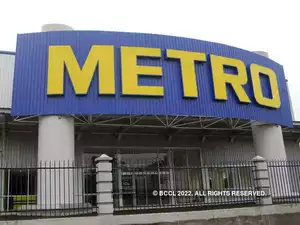
Reliance Retail Ventures, a subsidiary of Reliance Industries and the holding company of the group’s retail businesses, signed definitive agreements to acquire German wholesaler Metro AG’s India business – Metro Cash & Carry India-for a total cash consideration of ₹2,850 crore.
As part of the deal, Reliance will get 31 large format stores in 21 cities as well as the realty portfolio that includes six store-occupied properties, 3,500 staff and Metro’s 3 million B2B customers, of which 1 million are frequent buyers. The deal is subject to regulatory and other conditions and is expected to be completed by March 2023, the companies said on Thursday. ET had first reported in its edition dated Oct 15 that Reliance is the frontrunner to acquire Metro’s India business.
Metro AG said in a release that the India business valuation implies a sales multiple of 0.6x based on sales in the year ended September and takes into account lease rental and other related liabilities of e150 million (₹1,320 crore). Metro India generated sales of ₹7,700 crore (926 million euros), its best ever, in the year ended September.
Metro expects a transaction gain of about 150 million euros and an earnings per share (EPS) gain, once the deal closes.
The move will help Reliance consolidate its presence in the B2B trade segment, which it calls new commerce and is among its next big growth drivers, intensifying competition with Udaan, Amazon and Walmart-owned Flipkart. Reliance owns and runs the country’s largest retail business. All Metro India stores will continue to operate under the Metro brand during an agreed transition period.
Reliance Retail Ventures director Isha Ambani said the acquisition of Metro India aligns with its new commerce strategy of building a unique model of shared prosperity through active collaboration with small merchants and enterprises.
“We believe that Metro India’s healthy assets combined with our deep understanding of the Indian merchant and kirana ecosystem will help offer a differentiated value proposition to small businesses in India,” she said.
Metro AG chief executive officer Steffen Greubel said it is selling a growing and profitable wholesale business at the right time. “Indian trade industry is currently experiencing strong consolidation and disproportionate growth in ecommerce, including the B2B segment,” he said. “Due to the market dynamics, a sizable investment would be required to further grow the business. Therefore, now is the right time to use the momentum and open a new chapter for Metro India.”
Metro said it aims for a leading market position in wholesale. Due to increasing market consolidation, accelerated digitalisation and intense competition, Metro India’s operations don’t fit Metro’s core growth strategy, it said. Abneesh Roy, executive director, institutional equities at Nuvama, said the price to sales ratio is 0.37, which seems fair, given the B2B segment is a low-margin business.
Reliance will gain a significant jump in revenue and established locations that it can expand or optimise under its own branding and formats, said Devangshu Dutta, founder of retail consulting firm Third Eyesight. “The additional shelf space will also be very welcome for its own FMCG brands,” he said.
(Published in The Economic Times)
admin
December 20, 2022
Metro AG global chief executive officer Steffen Greubel said the company is at a “very advanced” level of discussions on its India business, suggesting for the first time that it could be looking at an exit from the country soon.
“We are very advanced in the process regarding India and are at a certain maturity level in the process. It’s too early to share any information, but we have discussed it greatly,” Greubel told analysts when asked if he is looking at a possible withdrawal from India and the status of talks. “We are very deep in the (sale) process in India,” he said last week while announcing annual earnings.
The German wholesaler grew its Indian business by 21% to $982 million during the year ended September, as per its latest annual report.
Last month, ET reported that Reliance had agreed in principle to buy Metro AG’s cash-and-carry wholesale India business for ₹4,000-4,500 crore.
Its unit Reliance Retail is already the biggest grocery retailer in the country with over 2,400 stores across formats while Metro operates 31 wholesale stores in India with seven of them on company owned land in prime locations. The company hasn’t publicly stated that it’s looking to leave India. Metro would be the second big international wholesaler retailer to exit India, if this happens. French retailer Carrefour wound up its India business in 2014 after struggling with sales for four years.
Globally, Metro is the world’s fourth-largest retailer by revenue. In India, it doesn’t sell directly to consumers and is an organised wholesaler or cash-and-carry operator that sells merchandise to local kirana stores, hotels and catering firms.
It decided to put the India business on the block as part of a global decision to exit the country due to heightened competition, a tougher regulatory environment and the lack of a level playing field between local and foreign retail companies, industry executives said.
Experts said the difficult European and global economic environment, regulatory restrictions in India, tough competition from domestic Indian groups and thin margins in the B2B business in India may have led Metro to focus on growing its core markets in Europe.
“Though India is, indeed, a long-term strategic market for companies looking at global growth, whether retail or B2B, not every business model from other geographies can be successfully transplanted or rapidly scaled in India, and Metro’s business footprint in India may be far smaller than they may have expected in the two decades of presence here,” said Devangshu Dutta, founder of retail consulting firm Third Eyesight. The choice to be present in different countries is always a dynamic one for global retailers and entry or withdrawal is driven by individual strategies, rather than solely on the merit of the market itself, he said.
“In September, the management board reported on the current status of the audit of strategic options for Metro India,” according to the annual report.
Overseas investment in offline trade has been a tricky issue, despite India allowing 100% foreign direct investment (FDI) in wholesale trade on a cash-and-carry basis. Metro was one of the first companies to enter the segment in India in 2003. Lobby groups representing small Indian retailers have accused overseas retailers of violating FDI rules, which the foreign companies have consistently denied. Some trade lobbies have complained to the government that a few global wholesalers have been flouting FDI rules by selling to consumers directly, which is not allowed as per current regulations.
(Published in The Economic Times)
admin
November 19, 2022

Chloe Cornish, Financial Times (select extracts)
Mumbai, November 19, 2022
Billionaire Mukesh Ambani’s oil-to-data conglomerate Reliance Industries, India’s biggest single listed company by market capitalisation, profits most from its refinery, the world’s largest. But Reliance wants to embed itself in India’s towns and cities by dominating the $800bn retail market as well, from partnerships with luxury fashion houses like Balenciaga to acquiring a Coca-Cola copycat.
Despite being India’s biggest retailer by revenues, Reliance’s 16-year-old shopping unit has often been overlooked, as Ambani’s Jio mobile network stole the limelight in transforming India’s data landscape.
Taking advantage of restrictions that hamper foreign companies’ ability to compete in India’s fragmented retail sector, still largely made up of mom and pop shops, Reliance is expanding its shopping empire at a rate of seven stores a day, using acquisitions to accelerate growth and investing around $3.6bn last financial year. It has 16,000 stores across India, while online purchases contribute 17 per cent of revenues, according to a person with direct knowledge of the matter.
India’s tycoons have long ventured into consumer businesses, from the Tata family, once best known for steel and now also boasting jewellery stores and a joint venture with Starbucks, to industrialists like Aditya Birla, whose conglomerate includes a large fashion business. Reliance, however, has aimed to control entire supply chains, all the way from the petrochemicals in the fibres it uses to produce textiles.
“The ethos of the group is dominance,” said Devangshu Dutta, founder of Gurgaon-headquartered retail consultancy Third Eyesight. “Unless other businesses step up to the plate, their dominance is a foregone conclusion.”
In its latest potential acquisition, Retail has reportedly bid $500mn for German wholesaler Metro’s Indian business. Indian rules allow foreign companies to own 100 per cent of a cash and carry business, but only if they do not sell directly to consumers. Reliance, by contrast, could unlock value by extending the business to sell direct to shoppers through Metro’s 31 distribution centres, said a person familiar with the company’s thinking.
Reliance has also announced it will launch its own fast-moving consumer goods company by the end of this year. The person close to the company said it would look to acquire brands to build the business, akin to its August deal for Campa, a nostalgic Indian fizzy drink, as well as exploring licensing and joint ventures.
While its ecommerce business JioMart has recently tied up with WhatsApp, owned by Reliance investor Meta, to increase its online reach, Reliance further boosted its physical shop space this year. It swooped to thwart potential foreign competitor Amazon in a battle over failing shopping group Future Retail.
Reliance Retail recorded quarterly revenue of around $8bn for the three months ending September 30, earning a net profit of $283mn, a 36 per cent increase year-on-year.
Reliance Retail declined to comment for this story.
Additional reporting by Andrea Rodrigues in Mumbai
admin
November 4, 2022

Christina Moniz, Financial Express / BrandWagon
November 4, 2022
Direct-to-consumer (D2C) lingerie brands, often credited with transforming the category and the way women shop for innerwear, are expanding their offline footprint in response to growing demand from tier-II markets and beyond. Zivame, whose journey began online just over a decade ago in 2011, has grown its offline presence to over 120 stores and also sells through over 4,000 partner outlets. In its recently concluded Grand Lingerie Festival, Zivame saw its sales grow three times,with a 120% increase in new customer acquisition. “Tier-II markets are showing massive potential and though tier-1 remains our highest revenue contributor, we are seeing significant revenue baseline shifts in tier-II locations,” says Khatija Lokhandwala, head of marketing at Zivame. The company has announced that its focus will be retail expansion in the second half of this fiscal, going beyond metros and tier-I markets.
Another decade-old D2C player in the innerwear segment, Cloviais eyeing the immense opportunity presented by smaller markets with aggressive expansion plans in place. “Clovia currently has 45 exclusive brand outlets in the country and has been diversifying its product range, with plans to open 130 outlets by the end of this fiscal. Ours has always been a mass- market brand, and most of the repeat customers come from tier-II and tier-III markets,” explains Pankaj Vermani, founder and CEO, Clovia. He notes that over 65% of its customer base is from the non- metro markets, and average order values are 20% higher in these cities compared to the metros. Earlier this year, Reliance Retail Ventures acquired an 89% stake in Clovia’s parent company (Purple Panda Fashions) for Rs. 950 crore. Vermani adds that Clovia will ben- efit from the conglomerate’s scale and retail expertise, driving up growth and love for the brand. Reliance Retail had picked up 15% stake in Zivame back in 2020.
Shaping the market
The women’s innerwear market in India is set to double to reach $11-12 billion by 2025, according to a report by RedSeer. Aside from the key segments of bras and panties, ancillary products like athleisure, sleepwear, swimwear and lounge wear are also boosting the lingerie category’s growth in the country, as is evident from the widening portfolios of leading brands. The online segment for women’s innerwear is expected to become a $1 billion market by 2025.
Experts believe there is a large opportunity for companies to grow since 60% of the $6-billion women’s intimate wear market in India is unorganised, and the category is still largely underserved.
“The lingerie market is an example of improving supply feeding into a growing demand, and the increasing demand expanding the opportunity for more brands to step in. Larger cities, with their higher income profiles and demand concentration, are the logical first-choice market for companies such as Zivame,” points out Devangshu Dutta, CEO, Third Eyesight.
The competition in the large cities is greater, with a plethora of Indian and global brands, which is why Dutta recommends that e-commerce led companies should push aggressively in smaller markets to drive sustained growth.
The fact that D2C brands have better data sets at their disposal to glean insights about Indian women and their concerns when buying innerwear has also worked in their favour.
“Intimate wear shopping can be overwhelming for a lot of women. Finding the right size and choosing styles for their specific needs requires an environment free of embarrassment and judgement. At Zivame, we help women choose the right size and perfect fit, ensuring a private, comfortable and discreet shopping experience,” says Lokhandwala.
While lingerie can sometimes be prohibitively expensive, Vermani points out that Clovia’s feedback-led design approach helps it keep pricing competitive.
The brand creates each product in small quantities, and uses technology to predict future sales based on customer feedback, thereby determining the right quantities for production. He states, “With this approach, we have created a fashion brand that is low on cost, high on consumer appeal and efficient in inventory, leading to better margins and cash flows.”
(Published in Brandwagon, Financial Express)
