
admin
November 17, 2023

Smita Tripathi, Business Today
17 November 2023
“I don’t care about being No. 1 or No. 2. I don’t care about how much money I’ve made today, or how much money I’m going to make tomorrow. I think you are successful as a business if you last. Because when you’re trying to create a business, what is important is longevity,” says Sabyasachi Mukherjee, arguably the leading fashion designer in the country.
It is a sultry September morning in Kolkata as we interact with a relaxed Mukherjee—dressed in his signature white kurta-pyjamas and self-designed black sleeveless jacket (he made a guest appearance recently on Season 2 of Amazon Prime Video’s Made in Heaven with the same look)—at his beautiful home in Alipore, a tony locality in the City of Joy. The interiors, which ooze his signature baroque style, are an extension of his personality, which is also reflected in every Sabyasachi store. Mukherjee has tastefully decorated his abode with beautiful curios from around the world. Just like in his stores, the interiors of his home exude class and grandeur.

Mukherjee reveals that a few years ago, he was going through the anniversary issue from the 1930s of a leading fashion magazine. “I saw a small ad that said we are now open for business on Bond Street. It was for Tiffany’s. There were other larger ads for bigger brands from that time. But I don’t remember them. I remember Tiffany & Co. because it lasted and the rest of them just evaporated. And I said to myself that I’ll try my best that doesn’t happen to mine,” says the 49-year-old, who has come a long way since setting up his eponymous label in 1999 with a workforce of three, having borrowed Rs 20,000 from his family.
Over the past two decades, Mukherjee (or Sabya, as he is popularly called) has dressed Bollywood royalty (read Deepika Padukone, Anushka Sharma, Priyanka Chopra, Alia Bhatt), heiresses (Isha Ambani), models, and hundreds of brides across the world. Being a ‘Sabyasachi Bride’ has become a cultural phenomenon that has established the brand as a leading design house.
But Mukherjee doesn’t believe in resting on his laurels. It is the next 20 years that he is planning for. “I want to be India’s first global luxury brand.” And he is working towards it slowly and steadily.

Over the past few years, he has launched his jewellery line as well as accessories. The brand now offers ready-to-wear western wear and he recently entered into a collaboration with US luxury eyewear brand Morgenthal Frederics to launch his range of sunglasses. On the cards is a beauty and wellness line that should launch in a few months. Last year, he opened a store in New York; he had a window display of his jewellery at the Bergdorf Goodman store in Manhattan; and his clothes and accessories will be available at top luxury departmental stores like Selfridges and Browns in another couple of years. In March, he opened his largest flagship store, at 25,000 sq. ft, in Mumbai. “I have spent the last five years growing the brand and making it visible. If this country cannot occupy a position of power in the luxury industry, then shame on all of us. Luxury has been a part of our ecosystem,” he says.
Keeping in mind Mukherjee’s two goals—longevity and global growth for the brand—he sold a 51 per cent stake to Aditya Birla Fashion and Retail Ltd (ABFRL) in 2021, reportedly for Rs 398 crore. “Nobody in my family is interested in my business, I don’t have children, and often a mistake that many entrepreneurs make is that they don’t let go of control at a time when they should, so that they can build tomorrow,” says Mukherjee. “But what I want to do—while I’m still in my prime and I still have full control over my company—is to use the next 20 years to [plan for] tomorrow. I want to create my second-in-command; I want to create a succession plan. So that [brand] Sabyasachi does not go down with me; it deserves a much longer shelf life,” says the designer who broke the rules by signing out of fashion weeks in India and launching his collection directly on Instagram in 2016. It’s a practice the brand continues with the latest Autumn-Winter 2023 collection having dropped on Instagram in mid-September. “Why bother with front row politics, when the world can be your front row,” he says.
As he continues to grow, Mukherjee has not forgotten his middle-class roots. His father was the son of a refugee, raised by a single mother. He was a chemical engineer who worked in a jute/wool mill that shut down and he lost his job. “My father gave maths tuitions, my mother taught art and I taught English as a teenager to make ends meet,” he says, adding there was a time when he didn’t want to go to school because he was traumatised with the privilege that his friends enjoyed. “I once saw my father crying while standing next to the kitchen sink. And I realised that’s what money does to you. It brings you to your knees and strips you of your pride. I felt the same helplessness during Covid-19. I was responsible for all these people,” says Mukherjee. However, after a conversation with his CFO, the designer was relieved to know that they could survive for three years and as a result, no one was let go.
Mukherjee says he had been in talks with billionaire Kumar Mangalam Birla, Chairman of the Aditya Birla Group, for a few years before Covid-19 and it was his decision to sell the majority stake to ABFRL. He says he wanted to work with Birla for the way he has treated his children. “I think it takes a very wise parent to be able to allow his children to be what they want to be. I told him I wanted to partner with you because I think that you have a lot of wisdom. And for me, that’s a great value.”
The designer believes it is this wisdom that makes working with the group easy. “They’re silently trying to build an ecosystem for me without interference, because they know that I do the job the best because I know the domain the best. And they let me lead naturally… When I work with them, I don’t have to be mindfully conscious of the fact that they’re a $57-billion empire. They treat me as an equal partner.”
Harminder Sahni, Founder & MD of consulting firm Wazir Advisors, says that the only way forward for brands like Sabyasachi is to either sell to a corporate or to corporatise. “For growth, you need the backing of a corporate house. Especially if you want to go global as it’s an expensive foray and it is uncharted territory.” As far as expansion into various categories is concerned, Sahni says there is no playbook. While some may expand into larger small-ticket categories to make the brand available to a larger demography, others may stick to their core.
“For any brand to scale globally, it needs to be relevant to consumer audiences that are outside its home market,” says Devangshu Dutta, Chief Executive of consultancy Third Eyesight. For any brand whose products draw heavily from the roots in terms of silhouettes and embellishment techniques, adding products that fit with the ethos and needs of the targeted global markets becomes a must, he adds.
ABFRL and Mukherjee complement each other as the company brings its expertise in understanding consumers at a larger base while the designer is more aware of consumers at the top of the pyramid. “They have a very acute understanding of a consumer that is not mine today but will be mine tomorrow. And I have a very acute understanding of the consumer that they don’t have yet but might get tomorrow.” Mukherjee says he did not take private equity funding earlier because he was not ready. “I’m not here to make money. I’m here to create value. And there’s a huge difference. Value creates money eventually. But money never creates value. With ABFRL, we are very clear about what we want to do.” As for financials, in FY22, Sabyasachi Calcutta (what the company is called post the acquisition) posted a turnover of Rs 229.42 crore, which rose to Rs 343.86 crore in FY23, per ABFRL’s annual report. But profit after tax fell from Rs 27.72 crore in FY22 to Rs 7.96 crore in FY23.
He feels luxury is becoming more abstract and it is about finding value. Moreover, consumers are buying less but better stuff. “People are flirting, but they’re not consuming. It’s like they are channel surfing. What is going to happen is that consumers are going to buy less, but they’re going to buy better. And I’m preparing my brand for that.”
With ABFRL’s backing, the designer is busy strengthening the brand. “We are going to use our core—which is wedding couture—for storytelling, to be able to create different-tiered products at different prices to be able to engage our customers who will slowly and steadily find a ladder to climb up to the core.” However, he plans to make wedding couture very limited and very exclusive. He has already started creating guardrails. Bollywood partnerships have reduced significantly and he is no longer giving his creations for the red carpet. In today’s age of social media, Mukherjee says that everyone believes that they are a celebrity. “For us, our customers are our celebrities. And we are trying to create something that is unique for them. And that’s something that’s not made very visible. But what we are going to make democratically visible are our entry-level products; once we get into beauty that is going to be the most widely distributed. And then it’s going to be accessories.”
Mukherjee says that Indian clothing, which is the heart and soul of the brand, will become more and more exclusive. In clothing, the focus will be on western ready-to-wear. However, that too will be of the best quality. For instance, ready-to-wear starts at Rs 35,000 for a silk shirt with an original artwork, digitally printed. “We are very mindful that we will never dilute the core.” he says.
While currently it is wedding couture that contributes the maximum to revenues, he expects jewellery to surpass that over the next few years. Mukherjee launched his jewellery collection in 2017 and while it was a natural fit, he had an interesting reason for doing so. “When I started looking at people’s selfies, I realised that we occupy the smallest real estate. You see a little bit of the blouse in a wedding picture, you see the garland, the make-up and the jewellery. Where are the clothes? Nowhere. And if the bride decides to wear a bikini blouse, then God save us,” he laughs. “So that’s when I realised that I want more real estate in that picture. And, for me, it was a logical move to start getting into beauty which we’ll eventually get into, and to get into jewellery.”
Accessories is another category he is focussing on as that allows more people to own the brand. Mukherjee is one of the most copied designers in the country. “Today, all top jewellers in the country are copying my jewellery. It happened with my clothes, it’s now happening with my jewellery, so I know we are on the right track,” he says. The same is the case for his accessories. “You go into a copy market and you see LV, Calvin Klein, Gucci and Sabyasachi. I am flattered because that means we have done something right,” he chuckles.
Over the years he has entered into some remarkable collaborations, establishing his brand further. In 2015, he announced his first global one with Christian Louboutin with a collection of limited-edition shoes and handbags, showcasing Sabyasachi’s hallmark embroidery and craft, with Louboutin’s iconic red sole. He also launched the Sabyasachi for Nilaya collection in collaboration with Asian Paints. Other collaborations have included Pottery Barn, H&M, L’Oréal, Strabucks, Thomas Goode, etc. He says he is open to more collaborations but only with brands that are the best in their field and those that allow him to “tell the Indian story without apology”. “I would never do a collaboration, irrespective of how much money was being offered to me, if I was not able to tell the story of who I am and where I come from. I can make more money by selling on my Instagram,” says the designer who went off all social media three years ago to get away from the clutter and the noise. His brand, though, is very active on social media.

Mukherjee can be credited with revolutionising luxury retail in the country. Walk into any Sabyasachi store and you are transported to a world of opulence and luxury rarely seen anywhere else. For instance, at the Mumbai store, over 100 chandeliers, 275 carpets, 3,000 books, and 150 works of art created by the Sabyasachi Art Foundation—which he runs to promote art—are layered among antique Tanjore paintings, vintage photography, rare lithographs, and historical trinkets, some from his own collection.
“When I saw the Ralph Lauren flagship store for the first time, it made me realise how important the soft power of a retail store is to be able to influence a customer because it’s an immersive journey, which tells the length and the breadth of the brand’s story,” says Mukherjee, adding that today it is not just about the product but also the experience of selling the product.
With the opening of the Mumbai flagship store, the total number of Sabyasachi stores in India stands at four, the others being in Kolkata and Delhi, and a jewellery store in Hyderabad. In addition, there is the New York store and an exclusive Sabyasachi Jewellery boutique in Dubai.
Will he look at more expansion? Not immediately, he says. “We are going to build our flagship stores one geography at a time. I first want to expand brand literacy by building our flagship so that the story of what the brand is all about and who we are does not get diluted. We will take our time to understand the geography and then expand later,” he says. However, a part of the business is going to be opened to wholesale again. “Which means that in a couple of years, we are going to start speaking to departmental stores such as Selfridges, Browns, etc.,” These are stores where Mukherjee used to retail at the beginning of his career in 2004-05.
“Right now, I’m charting my own growth, one brick at a time, so that I last those 100 years,” he signs off.
(Published in Business Today)
admin
June 9, 2023

By Pavan Lall, Fortune India
Jun 9, 2023
For fashion designer Tarun Tahiliani, getting funding from a corporate house was incidental. It happened through a high-profile customer, none other than Aditya Birla Group chairman Kumar Mangalam Birla. Birla had been a customer of Tahiliani’s Ensemble some three decades ago when he was getting engaged. They stayed in touch over the years and at one stage discussed the need for an Indian fashion brand focused on scale and accessibility. “It came out of a conversation and was a two-year ambling route. I had asked if they were expanding their designer brand footprint, and he (Birla) told me to meet the Aditya Birla Fashion and Retail (ABFRL) CEO for a deeper chat,” recalls Tahiliani.

The result was Tasva, a sub-brand that Tahiliani has a minority stake in. The focus was to zero in on the ethnic space, not lose out on the homegrown touch, yet keep user-friendly clothes in traditional silhouettes at accessible price points that were not haute couture. Launched in December 2021, Tasva primarily caters to the premium occasion-wear segment, and has been growing at a fast pace.
Raising Cash
Tahiliani, who got ₹67 crore funding for a third of his company with an option to further offload up to 20%, isn’t the only one to see corporate finance push capital into his designs and stores. Sabyasachi Mukherjee of Kolkata, who opened a large multi-level store in a heritage-style building early this year in Mumbai, sold a little over half his company to Birla, reportedly for around ₹398 crore. ABFRL has also bought a 51% stake in House of Masaba Lifestyle, the entity that houses apparel, personal care, and accessories businesses under brand ‘Masaba’ owned by designer Masaba Gupta. Besides the Aditya Birla Group, Mukesh Ambani-led Reliance Brands has bought a 52% stake in Ritu Kumar, 51% in Abu Jani Sandeep Khosla, and 40% in Manish Malhotra. Earlier, in 2008, Kishore Biyani’s Future Group took a 23% stake in Anita Dongre, which was later sold to private equity player General Atlantic for ₹150 crore.
“While we are reaching a sense of critical mass in terms of consumer base, luxury is not new to India. Designers have been flogging their wares for decades,” says Devangshu Dutta, founder of Third Eyesight, a consultancy firm focused on consumer goods and modern retail. “What has changed is the size of the target audience.”
According to a recent Knight Frank wealth report, India is set to see a projected 58.4% increase in ultra-high-net-worth individuals, those with a net worth over $30 million, from 12,069 in 2022 to 19,119 in 2027. The domestic apparel market, too, was pegged at $60 billion last year, not far behind the developed world, a McKinsey’s FashionScope report has said.


“Earlier, India was a country that just produced for the world. Today India is also becoming the largest consumer market. International brands are keen to invest in business relationships with India. India will change the game for luxury. Where else will you get a billion people who are of a young age, and will be the future luxury buyers of brands?” says Sabyasachi.
“The economy has expanded beyond bigger cities, which has raised the consumption size” adds Dutta of Third Eyesight.
Corporate Handholding
“Corporate involvement helps scale faster than organically, and a lot of designers are tying up with companies with technical expertise and go-to-market for smaller towns and cities,” says Anita Dongre. “For a designer, having a corporate brings in processes, technical expertise and management know-how, and helps her focus on designing,” she adds. In Sabyasachi’s case, too, a new CEO — Sumati Mattu, as well as a new HR head and COO, were brought on board to prepare for the brand’s expansion.
For Sabyasachi though, it has helped in creating a safety net, especially for his employees, more than anything else. “Right now we have two investors — me and Birla together, so it makes me feel protected. Nothing else has changed. The only thing that has changed is that we have a great HR policy with the Birlas; they will be able to look after my people better, as I have created a beautiful safety net for all my employees.”
Dutta, on the other hand, says that “for large companies in the fashion space such as Aditya Birla, it is a natural step to buy into an established brand with scale since brand recognition combined with capital and organisational structure make for a win-win. The platform of fashion is currently at the right juncture to replicate networks and create scale,” he adds.
Other designers, including Manish Malhotra, who has also received funding from Reliance, say, “corporatisation of fashion houses in India has brought about a safety net for luxury brands, making us push for larger creative forces and expansion in terms of scale, branding and customers.”
Growing Into India
Tahiliani says we have opened 55 Tasva stores and will reach 90 in this financial year. Tasva crossed around ₹60 crore in annual revenue in 2022, and is set to hit ₹200 crore this year, he adds.


Similarly, Dongre, widely regarded as the largest designer and fashion house by revenue, has around 150 stores across brands, and Global Desi, a substantial increase from the 10-15 stores she ran before receiving her first funding. “The added benefit is that such funding helps push into international markets.” While Dongre launched her stores in Dubai and New York a few years ago, Sabyasachi launched a New York-located store in West Village last year.
So, what’s the road ahead?
“Corporate India has successfully built large-scale fashion businesses and acquired international brands, but has not been able to create a homegrown luxury brand of cultural or social significance. That will change now,” says Sabyasachi. Jewellery is set to be his focus, along with sunglasses, beauty, shoes, and other categories. “Jewellery is a very important category in the country, a great revenue earner,” he says.
“The film industry was corporatised because its potential was discovered, now it is fashion’s time,” adds Manish Malhotra. “Corporatisation lets designers look beyond bridal-wear, occasion-wear, and focus on newer creative strategies as there’s more space and potential for experimentation.”
Tahiliani agrees that compared to overseas, the trend is an expected one. “Most of the brands abroad have seen stellar growth because they have been aligned with corporate houses.” He points to the famous Alexander McQueen, who started in 1992, and was discovered by Isabella “Issie” Blow. The tie-up allowed him to expand his label, open boutiques around the world, and push into the categories of perfume, eyewear, accessories trainer and clothes for men.
Globally, France-based Kering group owns designer labels Gucci, Alexander McQueen, and Balenciaga, among others. LVMH Moët Hennessy Louis Vuitton, commonly known as LVMH, owns Loro Piana, Fendi, Christian Dior, Kenzo and Marc Jacobs.
The question then is, with all the global exposure and corporatisation, will there be a shift in Indian design sensibilities?
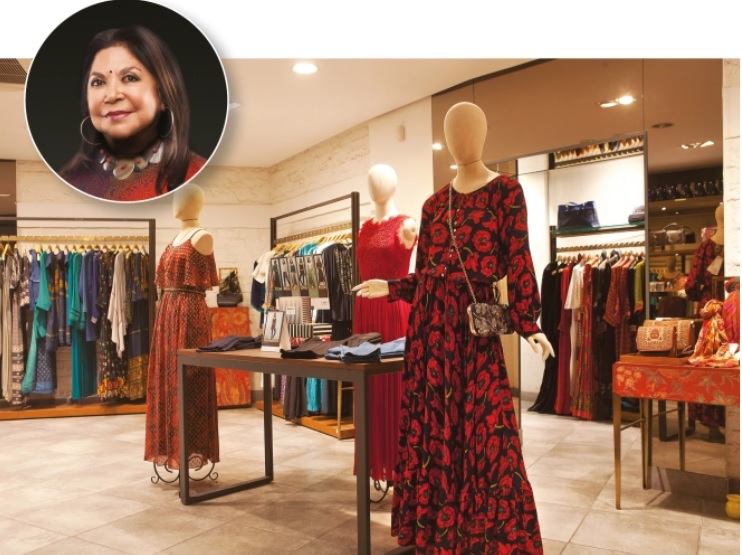

“Now you see people wearing bold gowns or black ties for one or two events, but Indians have kept a unique spirit of celebration and culture unlike anywhere else in the world. Bollywood has played a huge part in amplifying this because of the song and dance and colours and events such as Holi and Sangeet,” feels Tahiliani.
The bottomline: Luxury fashion is now more inclusive, and regional customers are the next big target area for brands.
(With inputs from Priya Kumari Rana)
(Published in Fortune India)
admin
July 8, 2022
Akash Podishetty & Krishna Veera Vanamali, Business Standard
New Delhi, 8 July 2022
India’s $900 billion retail market has emerged as one of the most dynamic industries and is expected to reach anywhere between $1.3-$1.5 trillion by 2025. The organized retail is seen gaining 15% market share in the overall retail space, while food & grocery and apparel and lifestyle may account for 80% of India’s retail market by 2025.
Large market offers big opportunities. And it looks like Reliance Retail has seized it, with its massive omni-channel retail play of physical stores, B2B with kiranas and e-commerce.
The company went on an acquisition spree and partnerships in the last three years, adding to its portfolio some of the biggest names, including Hamleys, Dunzo, Zivame etc.
It has also partnered with famous global retail chain 7-Eleven. Catering to India’s affluent consumers, Reliance, meanwhile, houses some of the most iconic brands such as Versace, Armani Exchange, GAP, GAS, Jimmy Choo, Michael Kors among others. The premium segment has become one of the fastest growing categories.
Also firming up its inorganic play, the company is planning to acquire dozens of niche local consumer brands to build a formidable consumer goods business.
Arvind Singhal, Chairman and Managing Director, Technopak Advisors says, there’s focus on physical retail expansion. Reliance is looking to cater to both price conscious and brand conscious customers, while trying to capture as much of the private consumption market as possible, he says.
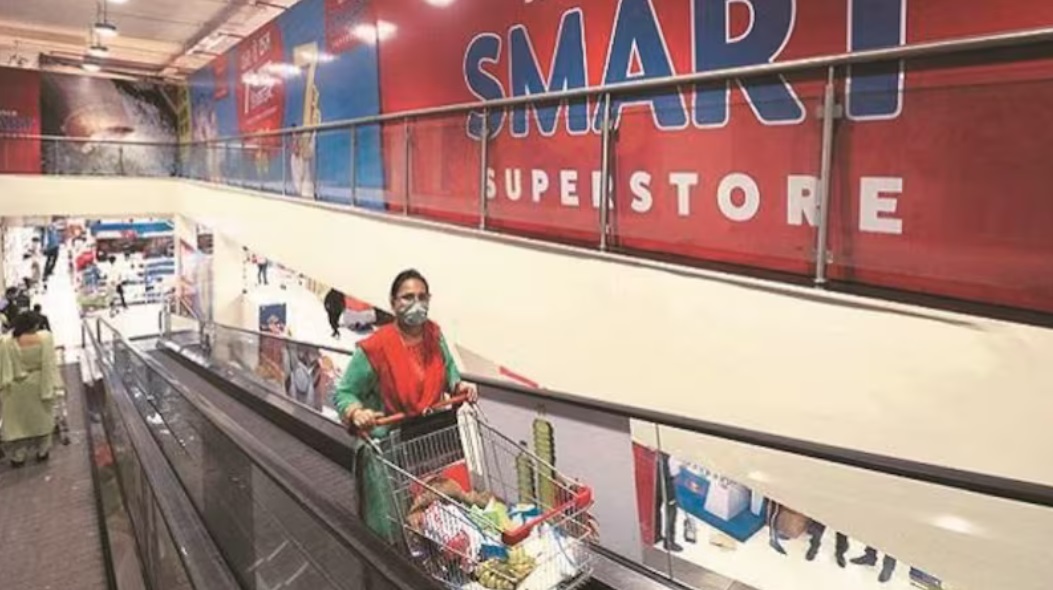
Reliance Retail’s competitors are nowhere close to even put up a fight. The company has over 15,000 offline stores across categories, compared with DMart’s 294 stores or Aditya Birla Fashion’s 3,468 outlets.
Reliance retail’s revenue has grown five times in the last five years and the core retail revenue of $18 billion is greater than competitors combined, according to a Bernstein report.
Speaking to Business Standard, Devangshu Dutta, CEO, Third Eyesight, says, Reliance wants a decent share of Indian consumers’ wallet. From that perspective, Reliance still has a long way to go, he says. As consumer preferences evolve, Reliance too should adapt.
An undisputed leader in the domestic market, the aim of Reliance, according to Mukesh Ambani, is to become one of the top 10 retailers globally. Part of this bet is based on the premise that incomes and consumption power of Indians will increase across the board in coming years. However, could the uneven recovery that different segments of the population have seen stop the pie from growing larger and prove to be a dampener for Ambani’s ambitions?
(Published in Business Standard)
admin
April 21, 2021

Debojyoti Ghosh, Fortune India
April 21, 2021
Billionaire entrepreneur Kumar Mangalam Birla-led retailer Aditya Birla Fashion and Retail Limited (ABFRL) has continued its build-up in the ethnic wear market with its fourth deal since 2019 and second this year. In February, the Mumbai-based fashion retailer picked up a 33.5% stake in fashion designer Tarun Tahiliani’s Goodview Properties—that will own and operate the designer’s eponymous couture label—for ₹67 crore. That was a month after ABFRL acquired a 51% stake in Kolkata-based designer Sabyasachi Mukherjee’s company, Sabyasachi Couture, which sells garments, accessories, and fine jewellery, for ₹398 crore.
ABFRL, which owns fashion brands such as Louis Philippe and Van Heusen, said in a statement that ethnic wear “is a large and growing market with a significant opportunity to build scale” and expects it to be an important category over the next few years.
Experts note the two recent deals come as the luxury industry, including fashion, has been hammered by the pandemic. The year-long shutdown in global travel has slowed over a decade of growth across luxury categories. Indeed, the global fashion industry’s profit is expected to have slumped about 93% in 2020, according to a report by consulting firm McKinsey and The Business of Fashion in December.
“[Luxury] business has been hit hard during the pandemic, like all fashion and retail businesses. And a significant injection of money is needed to maintain the business momentum, and to scale it further,” says Devangshu Dutta, chief executive of retail consultancy Third Eyesight.
In March, Italy’s billionaire Agnelli family—best known as the founders of automaker Fiat—acquired a 24% stake in French luxury shoemaker Christian Louboutin for $642 million. Three months before that it paid $95 million for a controlling stake in Shang Xia Paris, a Chinese luxury goods business founded by French luxury brand Hermès and Chinese designer Jiang Qiong Er.
Many fashion firms have used the Covid-19-induced slowdown to reshape business models, streamline operations, and sharpen their customer propositions, said the report by McKinsey and The Business of Fashion.
And that is exactly what Tahiliani plans to do with his new corporate partner. The duo will create a new entity—80% held by ABFRL and 20% by Tahiliani—to launch a new brand of apparel and accessories in the affordable premium ethnic wear segment, while it also plans to launch a men’s ethnic wear brand.
“Discussions with ABFRL have been in the works for nearly two years. I couldn’t be happier about entering into this partnership. They understand scale and numbers like no one else in the market today. Each of their home-grown brands is a resounding success,” Tahiliani, founder and CEO of Tarun Tahiliani Brand, tells Fortune India. “This collaboration permits me the financial freedom to focus on designing,” he adds.
ABFRL aims to build the new ethnic wear brand into a ₹500-crore business in the next five years, with more than 250 stores across India. The first tranche of stores is expected to open by September. “This new entity with ABFRL currently concentrates only on menswear. In our collective opinion, at present, there is only one branded national player in the Indian ethnic [wear] for men space. In order to scale this up, we need to be in three or four categories of clothing. This will give depth, both in terms of style and sizing to the men who come into the store,” says Tahiliani.
Currently, the top panIndia ethnic wear brand for men is Vedant Fashions’ Manyavar. The Kolkata-based company forayed into women’s wear in 2016 selling lehengas, saris, and the like under the label Mohey,
ABFRL’s previous deals in the segment—both in 2019—were a 51% stake in fashion designers Shantanu & Nikhil’s Finesse International Design for a reported ₹60 crore, and its ₹110-crore acquisition of Jaypore. Both make apparel, footwear, accessories, and other items.
ABFRL’s managing director, Ashish Dikshit, declined to comment for this story. ABFRL had, when announcing the Sabyasachi Couture investment, said it expected that deal to accelerate its strategy to build a comprehensive portfolio of brands across segments, occasions, and geographies.
Experts say ABFRL’s recent investments allow it to tap into the designer’s creative stream and goodwill, while providing the financial and organisational muscle of a large corporate. Albeit one that is not aiming too far upmarket.
“We shouldn’t see the ABFRL [stake] acquisitions as entry into couture, which is a different business from the ready-to-wear market. It is the expansion of these brands into ready-to-wear, tapping into the desirability of the designer brand, while making it accessible and affordable to a larger market is what will be of interest,” says Third Eyesight’s Dutta.
Indeed, Mukherjee, in a press release in late January, noted, “As my brand evolved and matured, I began searching for the right partner in order to ensure continuity and long-term sustainable growth.”
Nonita Kalra, a veteran fashion editor, says that the ABFRL deal shows the growing heft of the [Sabyasachi] brand in the fashion business. “Corporates aren’t sentimental. They are hard-nosed about investments, with careful due-diligence. ABFRL is paying what it is worth and expecting it to grow bigger. They are never going to invest in a stagnant business,” she says.
Experts, though, caution that while corporate partnerships and acquisitions allow a designer-entrepreneur and their investor partners to unlock some of the value being built, it is essential to have clarity about each brand’s design language and target consumer. “With [ABFRL’s] new venture [in men’s ethnic wear with Tahiliani], the key thing to understand is how the company will differentiate it from Shantanu & Nikhil’s positioning and focus, which is also menswear-driven,” says Abneesh Roy, executive vice president, Edelweiss Securities. “The challenge will be ensuring that each brand maintains its distinctive identity, while deriving synergies from the group.”
ABFRL has stitched up some unique deals; it now has to ensure they don’t unravel.
(The story originally appeared in Fortune India‘s April 2021 issue).
admin
September 27, 2014
 Alys
Francis, Nikkei Asian Review
Alys
Francis, Nikkei Asian Review
New
Delhi, 27 September 2014
 A few months ago, a group of wealthy industrialists and other
businessmen gathered in a plush Mumbai hotel suite to pore over
a selection of John Lobb handmade welted shoes that cost up to
$12,000 a pair.
A few months ago, a group of wealthy industrialists and other
businessmen gathered in a plush Mumbai hotel suite to pore over
a selection of John Lobb handmade welted shoes that cost up to
$12,000 a pair.
It may just be a temporary “pop-up” store, but Thomas Collette, John Lobb’s commercial director for India, was excited. He said that a local agent for the bespoke shoemaker would start taking orders by appointment only. “This is a big step for us and a big step as well for the country,” he said.
Although international luxury brands have opened flagship stores all over developing Asia, they have hardly touched the Indian market. This may be about to change.
After all, many people in the population of 1.3 billion are steadily getting wealthier. According to the Associated Chambers of Commerce and Industry of India, luxury spending will reach $14 billion a year by 2016 compared with $8.5 billion in 2013.
But foreign luxury brands have had a tough time in the country, partly due to restrictions on investment.
Many major brands, such as Prada and Versace, only entered after 2006 when the government began to allow foreign investors in single-brand retail operations. Prior to that, foreign companies were only allowed to operate wholesale “cash-and-carry” outlets.
While companies welcomed the chance to open in India — albeit
with the requirement that a local partner owned at least 49% of
the business — they struggled with the lack of suitable retail
space and trained staff, bad supply chains, and a raft of customs
taxes and duties, as well as a long wait to turn a profit because
there was only a nascent market for their goods.
Since 2006, Prada and Gucci have been among the 50-odd brands that have either left India, restructured or quit soured partnerships, according to a 2012 report by retail consultant Third Eyesight.
In 2012, India started allowing full foreign ownership of single-brand retailers but included restrictions such as the need to source at least 30% of products from local small and midsize enterprises. That is virtually impossible for most luxury labels since their brand integrity often rests on the craftsmanship of products made in their home country. Unsurprisingly, the new rules did not trigger an influx of foreign brands.
Jones Lang LaSalle, the real estate company, in August ranked New Delhi and Mumbai near the bottom of its list of 30 major Asia-Pacific cities in terms of the presence of top luxury brands.
Indians optimistic
Some foreign brands, like John Lobb, have decided that franchise and distribution deals are a better way to establish their presence in a difficult market.
John Lobb’s local partner is Regalia Luxury, which spent a year wooing the Hermes-owned brand before securing a deal to sell John Lobb’s “By Request” line of shoes that are custom-made for each client.
Regalia Luxury is one of a number of Indian companies eyeing the rising number of style-conscious local shoppers who are hungry for Western luxury brands but are wary of entering the market on their own.
“From a longer-term perspective, there’s immense opportunity if you do it the right way,” said Regalia Luxury founder Pratik Dalmia, who clinched a franchise for bespoke Italian suitmaker Kiton in 2013 and expects to sign up two more brands by year-end.
But he admits that the market boom has yet to start and that operators will have to “run a tight ship” for the next couple of years.
Indian companies that represent foreign luxury brands need to have a long-term view and keep a close eye on what the younger generation likes — these are the customers with the most potential, since they are more exposed to overseas fashion trends.
“India is all about the customer of tomorrow,” said Darshan Mehta, CEO of Reliance Brands, a subsidiary of Reliance Industries that was set up in 2007 to bring foreign luxury fashion to India.
Mehta often sits in a cafe at DLF Emporio, New Delhi’s first luxury mall which opened in 2008, and watches shoppers. He said many people shop at Zara but they walk into Gucci and Zegna just to have a look. “That is what makes markets like India so promising: the aspirational consumer,” he said.
Unlike China, where a lot of luxury retailers are now at a consolidation stage after years of rapid expansion, brands are still struggling to find space in India for their first shops.
Even in Mumbai, the Emporio is the “only true luxury mall,” according to Mehta.
It may take some time before India’s luxury market takes off, but the market has been boosted by a stream of well-off Indian professionals and students returning after working and studying abroad, including many bankers who left Wall Street and London after the global financial crisis.
Luxury players are also expecting a boost from the introduction of a Goods and Services Tax, which was promised by India’s new government and would get rid of complex multi-level taxes that are hampering the sector.
Reliance Brands, which also represents Reiss and BCBG Max Azria, expects to add three more brands to the company’s stable of 16 foreign brands by year-end.
A few pioneers are even setting up boutiques in smaller cities. Bangalore firm Fervour, which has licenses to sell Nina Ricci and Christian Lacroix, is planning to expand to Chennai and Hyderabad.
But most don’t see these cities as viable markets just yet.
“There is no sustained luxury market outside of Bombay and Delhi,” Mehta said. He expects luxury demand outside the two main cities to take another three years to reach critical mass.
Sanjay Kapoor, the founder of distributor Genesis Luxury, said India’s luxury market is not yet at the point where China was 10 years ago, even if the potential for growth is immense.
Kapoor founded Genesis Luxury in 2008 to sell foreign luxury brands in India and has deals with Jimmy Choo and Armani, among others.
“As awareness and retail space spread, demand will accelerate in smaller cities in the interior of India,” Kapoor predicted.
Tight ships
Amid the shortage of high-quality retail space, one option is to use the “shop in shop” model.
R&B International rents small spaces in other retailers’ stores to sell Australian luxury label Easton Pearson. The manufacturing firm supplied embroidery to the brand for years before nabbing a distribution agreement in India in June.
Dalmia also said he is in no hurry to open flagship stores for John Lobb and Kiton before 2016.
Instead he is targeting ultra-rich customers who want the pampering that comes with exclusive, by-appointment-only services. Clients are shown samples of Kiton’s made-to-measure suits and John Lobb shoes, and then measured by a trained team at a place and time that suits them, often at home in the late evening.
Collette said he’s been pleasantly surprised by how well the brand has been received in India. While the brand has wholly-owned stores in Japan and the U.S., Collette said it would have been impossible for it to enter India alone.
(Published in Nikkei Asian Review.)
