
admin
August 9, 2024
Sagar Malviya and Rica Bhattacharyya, Economic Times
9 August 2024, Mumbai
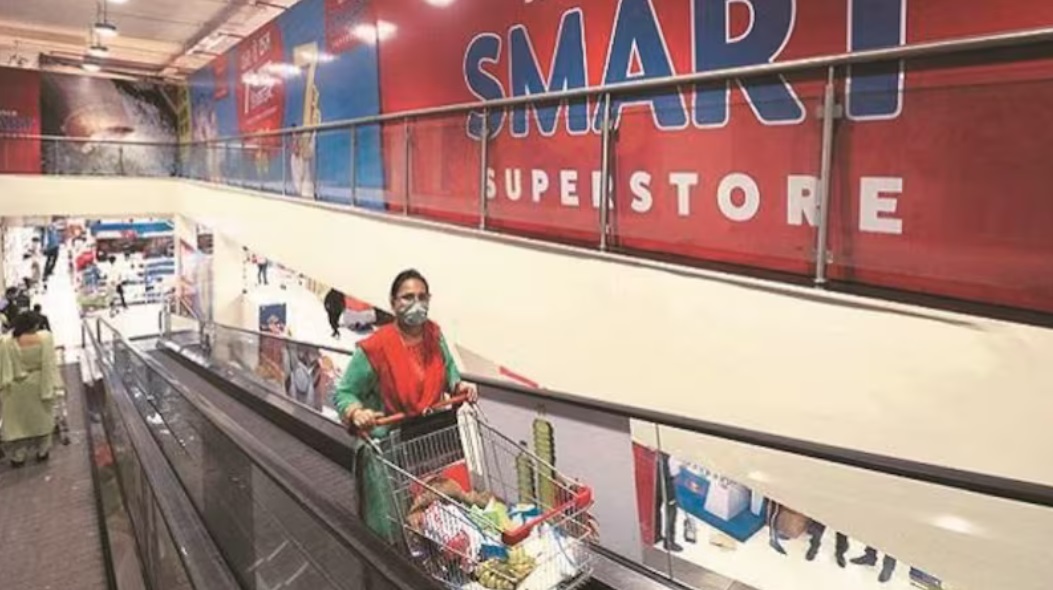
Reliance Industries Ltd. reduced its workforce by 42,000, or nearly 11%, in FY24, in what is being seen as an outcome of a cost-efficiency drive and reduced hiring, especially in its retail segment which also saw store closures and slower expansion.
The employee strength at the country’s largest company by market value, stood at 347,362 in FY24 compared with 389,414 a year ago. The intake of new recruits was slashed by more than a third to 171,116, according to its latest annual report.
“The new lines of businesses (at Reliance) have matured now and have significant support from digital initiatives. Now they are at a stage to better manage the operations with optimum strength,” said an analyst with a leading broking firm, requesting not to be named. “It doesn’t mean that the numbers (of headcount) won’t increase when new business opportunities emerge and strategy changes. They understand very well how to drive cost management and efficiency.”
Most of the job cuts were in its retail business, whose 207,552 employees last fiscal accounted for about 60% of RIL’s total employee strength. The number was 245,581 in FY23.
“Overall voluntary separations in FY24 are lower than FY23. The retail industry typically has a high employee turnover rate, especially in store operations,” RIL said in the report, adding that its employee benefits expense increased by 3% year-on-year to Rs 25,699 crore. In FY23, it had gone up by 33%.
In FY23, Reliance Retail expanded its physical store network, adding more than 3,300 new stores to take the total store count at the end of the year to 18,040. In FY24, the store count stood at 18,836–a net addition of some 800 after factoring in unviable store closures.
Last year, RIL’s online wholesale format JioMart aligned its operations with Metro Cash and Carry, which it acquired. With the addition of Metro’s permanent workforce of 3,500 employees, there was an overlap of roles, both in the backend and online sales operations.
Experts said many of the large conglomerates are rebadging some of the front-end service functions to third-party rolls.
“Many companies in the retail sector have been getting people off their own roles and appointing staffing companies for a leaner structure and efficient management. This may reflect as a drop in headcount (on the company reports) but need not necessarily be loss of jobs,” said Lohit Bhatia, president of workforce management at Quess Corp. “This could include functions such as security guards at the store level, facility management, logistics, picking and packing, etc. That apart, digitisation and tech advancement is also leading to some job roles being redundant across sectors.”
India’s retail sales expansion slowed to 4% last year after a surge in spending across segments—from clothes to cars—in the post-pandemic period, triggered by revenge shopping. Reliance’s retail division, however, grew 18% in sales to Rs 3,06,848 crore.
“Focus on store productivity usually happens in cycles; we have seen consumers unleash their spending post pandemic, which led to retailers expanding their network or square footage. However, if some of the stores are unviable, then management teams are now highly objective, even ruthless, and will shut stores,” said Devangshu Dutta, founder of retail consulting firm Third Eyesight. “In addition, any company planning to list would like to have healthy and lean operations, although we cannot pin-point it to Reliance in this case.”
Another analyst, who did not wish to be named, said, “Reliance’s annual report reveals that the group, spanning petrochemicals, telecom, and retail, has moved beyond its core investment phase and is now poised to reap substantial benefits from operating leverage, efficiency gains, and investments in technology and talent.”
(Published in Economic Times)
admin
February 23, 2024

Kailash Babar & Sagar Malviya, Economic Times
Mumbai, 23 February 2024
Tata Group and Reliance Industries, two of India’s largest conglomerates, are vying for premium retail real estate in Mumbai as they extend their footprints, creating rivalry in a city starved of marquee properties. From Zara and Starbucks to Westside and Titan, the Tata Group occupies nearly 25 million square feet of retail space in India. That is still no match for Reliance Industries that control three times more at 73 million sq ft for more than 100 local and global brands.
But in Mumbai, they are evenly matched, having nearly 3 million sq ft of retail space each. That is a quarter of what is considered the most prime retail real estate in the country, and both the retail giants are looking for more.
“In a modern retail environment, most visible locations contain more successful or larger brands. It just so happens that many of those brands are owned by either Reliance or the Tatas,” said Devangshu Dutta, founder of Third Eyesight, a strategy consulting firm.
“Tatas have been in retail for longer but also slower to scale up compared to Reliance which had this stated ambition of being the most dominant and put the money behind it,” he said.
In a market where demand is much higher than supply, developers and landlords seek to separate the wheat from the chaff, experts said. Ultimately, success in Mumbai’s retail real estate scene hinges on a delicate equilibrium between accommodating industry leaders and fostering a vibrant, varied shopping environment, they said. “In the competitive landscape of retail real estate in Mumbai, commercial developers and mall owners often face the strategic challenge of accommodating prominent retail brands,” said Abhishek Sharma, director, retail, at commercial real estate consultants Knight Frank India.
“These big brands, with a significant market share of 40-45% in the Indian retail sector, can easily be termed as industry giants and possess the potential to command 45-50% of space in any mall,” he said. According to Sharma, there may be perceptions of preferential treatments, but the dynamics are complex, and developers must balance the demand from these major brands with the need for a diverse tenant mix.
Tata Group entered retail in the late 1980s, initially by opening Titan watch stores and a decade later by launching department store Westside. So far, it has about 4,600 stores, including brands such as Tanishq, Starbucks, Westside, Zudio, Zara and Croma.
While Reliance Retail started in 2006, it overcompensated for its late entry by aggressively opening stores across formats. Reliance has over 18,774 stores across supermarkets, electronics, jewellery, and apparel space. It has also either partnered or acquired over 80 global brands, from Gap and Superdry to Balenciaga and Jimmy Choo. A diverse portfolio of brands across various segments through strategic partnerships and collaborations helps an entity like Reliance to leverage synergies and enhance retail presence, especially in malls, experts said.
“The array of brands with Reliance bouquet allows it to enter early into the project and set the tone and positioning of the mall,” said a retail leasing expert who requested not to be identified.
“This positively helps the mall to set its own positioning and future tenant mix. It also helps Reliance place their brands in most relevant zones within the mall. This will emerge as a clear differentiator in a city like Mumbai where brands are already jostling for space, which is the costliest in the country,” the person added.
(Published in Economic Times)
admin
December 7, 2023

Christina Moniz, Financial Express
December 7, 2023
Aditya Birla Fashion and Retail (ABFRL) on Wednesday announced a partnership with Christian Louboutin, a designer brand known for its signature extremely high red-soled heels.
As per the terms of the deal, the current Indian business of the luxury shoemaker will be transferred into a newly-incorporated arm of ABFRL where the partners will hold equal stakes. Ashish Dikshit, MD, ABFRL, said in a statement, “This partnership… exemplifies our ambition to develop and shape the future of the luxury market in India.”
Christian Louboutin made its entry into the Indian market with its first store in Delhi in 2012 and later launched its second store in Mumbai. Announcing the JV, Alexis Mourot, Christian Louboutin Group CEO, said, “India is an extremely important market for us.”
The fact that luxury markets in Europe and even in China are seeing sluggish growth has made India a strong emerging opportunity for brands such as Christian Louboutin, note experts.
The brand, which was founded in Paris in 1991, has since diversified into categories such as handbags, accessories and beauty and is present in over 30 countries.
With this JV, ABFRL will be taking on Reliance Brands, which has partnered with global luxury brands such as Burberry, Ferragamo, Hugo Boss and Versace in India.
Devangshu Dutta, CEO of Third Eyesight, said, “For ABFRL, the ambition is to create a diverse portfolio of brands catering to a range of consumer segments.”
Having been in India for a while now, the Louboutin brand is well aware of the potential for growth in the market. One of the key factors driving growth for luxury is the rise of high net worth individuals (HNIs), which is the fastest growing anywhere in the world, say observers.
The number of ultra-high net worth individuals (UHNWIs) in India is expected to rise 58.4% in the next five years from 12,069 in 2022 to 19,119 in 2027, a report by Knight Frank said in May.
In recent years, India has also seen new luxury shopping destinations coming up in cities like Mumbai, Delhi and Chennai, but experts believe that the total addressable market and the number of luxury shopping centres are still small.
Though there is “potential”, notes Santosh Sreedhar, partner at Avalon Consulting, this segment will take a few years to really take off. “Luxury is a long-term game in India, which is why brands need to have Indian partners like Reliance and Aditya Birla with deep pockets and vision to stay committed for the long haul.” E-tailers like Tata Cliq are also enabling omnichannel growth, says Sreedhar.
With a revenue of Rs 12,418 crore, ABFRL has a strong network of 3,977 brand stores across the country. It is present across 33,535 multi-brand outlets and 6,723 points of sales in department stores across India as on March 31, 2023.
It has a repertoire of brands such as Louis Philippe, Van Heusen, Allen Solly and Peter England, besides long-term exclusive tie-ups with global brands like Ralph Lauren, Hackett London, Ted Baker and Galeries Lafayette. Among Indian designers, ABFRL has strategic partnerships with Shantnu & Nikhil, Tarun Tahiliani, Sabyasachi and House of Masaba.
(Published in Financial Express)
admin
November 4, 2023

Faizan Haidar, Economic Times
4 November 2023
Some of the super-luxury brands that have opened stores at the recently inaugurated luxury mall, Jio World Plaza in Mumbai, have put in a condition that at least four top brands – such as Louis Vuitton, Gucci, Cartier, Burberry, Tiffany, Valentino, Bulgari, Zegna, Giorgio Armani and Bottega Veneta – should be present in the same complex, to ensure the position of their brands is not diluted.
ET has seen copies of the agreements between Reliance Industries, the owner of Jio World Centre, and five brands, accessed through data analytic firm CRE Matrix.
Reliance Industries and the brands did not respond to emails seeking comment till press time on Friday. Brands often have an exclusivity clause with the mall where they don’t want competing brands near their stores. However, in the high-end segment, to ensure a similar buyer profile, they want similar stores nearby. Jio World Plaza already meets the condition with several of these super-luxury brands having opened their outlets there.
“If at least four among the mentioned brands are not open within six months of us starting the operation, we should be entitled to a reduction of the licence fee by 25% for the period that this criteria remains unfulfilled,” Christian Dior Trading, which will operate Dior, has said in the agreement.
Dior will pay ₹21.56 lakh in monthly rent for a 3,317 sq ft space in the complex. Gucci has given a list of six luxury brands – Louis Vuitton, Dior, Cartier, Bulgari, Valentino and Burberry – and demanded that at least four have to be represented in the shopping centre.
Louis Vuitton, Cartier and Bulgari have also put in similar conditions. Most of them have kept the right to terminate the agreement after serving the notice for nine to 12 months.
“In the super-luxury segment, most of the brands complement each other and that is why they want the presence of these brands next to each other. Good mall developers also go with zoning of brands and don’t want to mix the super-luxury brands with the premium or mid to premium brands. As more luxury brands are contemplating India entry, we will see more luxury spaces coming up,” said Devangshu Dutta, founder of retail consulting firm Third Eyesight.
India only has a handful of malls that give space exclusively to super-luxury brands.

admin
August 26, 2023
Reliance Retail has established a dominant position and the growth trajectory remains robust – Devangshu Dutta of Third Eyesight tells Prashant Nair, Nigel D’Souza and Sonia Shenoy
