
admin
September 16, 2022
Over the past five years, legacy players have made a slew of investments in D2C startups.
Marico has acquired men’s grooming brand Beardo, beauty brand Just Herbs and breakfast brand True Elements. Similarly, Emami acquired vegan cosmetics brand Brillare Science and grooming brand The Man Company. It recently picked up a minority stake in nutrition company TruNativ. Colgate-Palmolive and Reckitt both hold minority stakes in Bombay Shaving Company, whereas Wipro Consumer Care has invested in The Ayurveda Company. ITC has invested in baby and mother care brands Mother Sparsh and Mylo.
Devangshu Dutta explained the reasons behind the trend of larger FMCG companies acquiring D2C brands.
admin
September 2, 2022
Written by Christina Moniz
Retail chains are on an expansion spree, riding on growing demand from a young consumer cohort
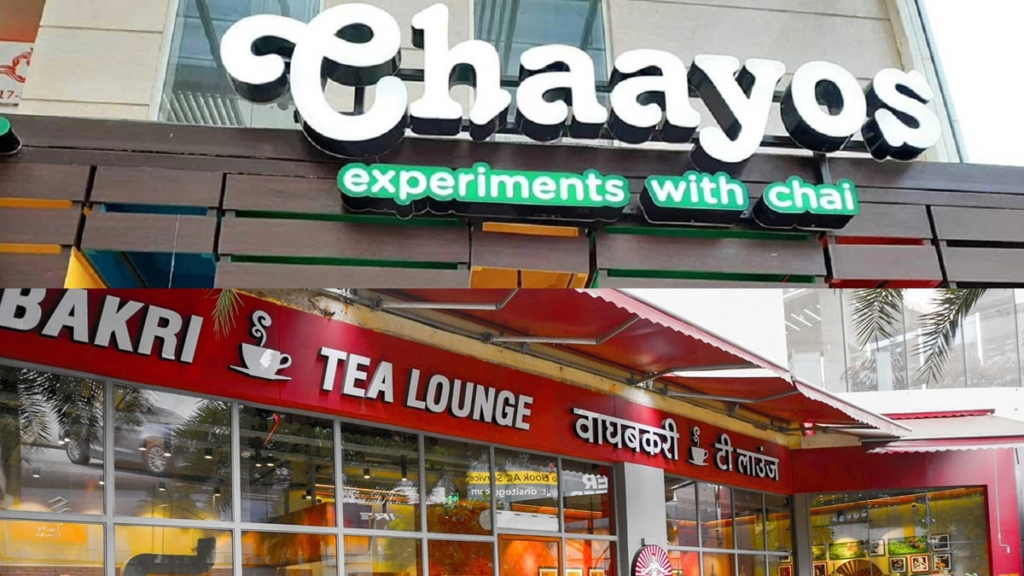
Just about a month back, Wagh Bakri Tea Group, the third largest packaged tea company in India with a turnover of over `1,500 crore, opened its 15th tea lounge in Noida’s upscale DLF Mall of India.
A little over two years ago, Chaayos’ physical footprint was 75 outlets across the country. Currently, its store count is 200.
Just about a month back, Wagh Bakri Tea Group, the third largest packaged tea company in India with a turnover of over `1,500 crore, opened its 15th tea lounge in Noida’s upscale DLF Mall of India.
A little over two years ago, Chaayos’ physical footprint was 75 outlets across the country. Currently, its store count is 200.
Get the drift?
Today the humble cuppa is much bigger than an excuse for roadside tittle-tattle. The rash of tea lounges and bars have taken what used to be, at its best, a social lubricant, and turned it into a `700-crore market.
Homegrown tea café chains have been quick to cash in on the out-of-home demand from a young consumer cohort, offering snacks, groovy ambience and even free wi-fi connectivity. Chains such as Chaayos, Chai Point and Wagh Bakri’s Tea Lounge are ramping up their offerings to cater to a segment for whom coffee shops were the default hang-out zone. Up until now.
But how sustainable are they, given that 80% of the tea drinking market is unorganised? Pramod Damodaran, CEO, Wagh Bakri Tea Lounge, says brands in this segment are catering to the “need state of the consumer”, whether it is meetings,family outings, a quick rest after shopping at the mall or a quiet moment in airports, offices or hospitals. “We elevate the tea drinking experience and make it premium, almost akin to how tea drinkers in the past would enjoy their tea at fancy hotels, but we offer the experience at affordable prices,” he says. While coffee chains offer muffins and croissants with their beverages, Wagh Bakri pairs its teas with pakoras, samosas and vada pav, which resonate more with the average Indian consumer.
Growing the market
Nitin Saluja, founder, Chaayos, draws parallels with global coffee brand, Starbucks. “Before Starbucks launched in the US, there were very few good quality coffee retail outlets. In the Indian context, before chai cafes were launched, consumers could barely enjoy a good cup of tea in a hygienic retail space outside their homes,” he says.
The pandemic, too, played its part in getting consumers to choose hygienic options. That is why home delivery, which was 20% of Chaayos’ revenue prior to the pandemic, now hovers around 30-35%.
The success of chai chains is a reflection of evolving consumer preferences. Saluja says despite the presence of huge international and homegrown brands in the coffee retail segment, the category earns an annual revenue of around 1,500 crore. “In comparison, there are only 3-4 homegrown chai café players, but their combined annual revenue is around700 crore. Only chai retail chains in India can replicate the success of coffee chains in the West,” he says.
Damodaran says his chain is not competing with coffee chains but rather catering to the growing need for cafes. It is for this reason that the brand also offers coffee across its outlets. Wagh Bakri has 15 tea lounges and 10 tea kiosks (Tea World) across Maharashtra, Gujarat and Delhi NCR but plans to ramp up its footprint in the North, West and South over the next three years.
“The industry can ensure long-term health only by capturing the value offered by out-of-home consumption in modern branded formats, packaged branded sales in modern retail and direct-to-consumer models,” sums up Devangshu Dutta, CEO, Third Eyesight.
Source: financialexpress
admin
August 31, 2022
Isha Ambani, director of Reliance Retail Ventures Ltd, said on August 29 that the company would soon enter the packaged consumer goods segment. Here’s how the move would impact the segment and existing FMCG players.

With this foray, Reliance Retail will be competing with the likes of FMCG behemoths like Hindustan Unilever, Nestle, and Britannia.
Reliance Retail’s announcement on August 29 that it would enter the packaged consumer goods segment has created buzz in the market.
The retail giant’s entry into the so-called Fast-Moving Consumer Goods (FMCG) sector is set to intensify competition as it does in every new industry that its parent, Reliance Industries Ltd (RIL), enters, experts say.
With the venture, Reliance Retail will be competing with FMCG behemoths like Hindustan Unilever, Nestle and Britannia in an industry valued at over $110 billion.
Even so, the company potentially confronts multiple challenges in its intended venture into FMCG.
“The competition intensifies in every segment that Reliance gets into because of their approach of being aggressive and not just in terms of growth. The company also wants to acquire market share very rapidly. The telecom sector was a prime example of this,” said Devangshu Dutta, CEO of retail consulting firm Third Eyesight.
“However, Reliance’s entry into any consumer-facing business has always been a long play,” he added.
The intended entry of Reliance Retail, the retail arm of RIL, into FMCG was announced by Isha Ambani, director of Reliance Retail Ventures, at RIL’s 45th Annual General Meeting (AGM) on August 29.
“I am excited to announce that this year, we will launch our Fast-Moving Consumer Goods business. The objective of this business is to develop and deliver high-quality, affordable products which solve every Indian’s daily needs,” Ambani told shareholders.
Isha Ambani was introduced as the leader of the company’s retail business by Mukesh Ambani, her father and Chairman and MD of RIL, at the AGM.
In his speech, Mukesh Ambani also said that he is hopeful of the retail arm emerging as the largest segment within the group.
Private labels
Reliance Retail already has a presence in the FMCG segment in the form of private labels that are sold in the company’s chain stores such as Reliance Smart, Reliance Mart, and its online grocery platform JioMart.
Brands like Good Life, Best Farms, Desi Kitchen, Snac Tac, Yeah!, Safe Lite, Petals, Mothercare and Calcident are some private label FMCG brands that the company sells.
Private labels (including in the fashion and lifestyle segment) contribute 65 percent of the company’s revenue.
According to analysts, the company initially is going to expand its private label offerings and will focus on segments in which it already has a presence.
“The products which it plans to sell range from groceries like pulses and grains, edible oils, flour, dry fruits, spices, pickles, pastes, idli dosa batter, snacks which include biscuits, namkeens and sweets, ready-to-cook meals, ketchup, jams, carbonated drinks, fruit juices, breakfast cereal, oats, muesli, honey, sauces, tea and coffee in the foods space,” said a note by Edelweiss.
In the non-foods space, the company sells products like soaps, shower gels, hand wash, face wash, hair oils, talcum powder, sanitisers, sanitary pads, diapers, toothpaste and toothbrushes, nail enamel, beauty and hair accessories, and daily essentials including deodorants, nail clippers and scissors, the securities firm said.
Edelweiss said it expects Reliance Retail to initially target the commoditised parts of FMCG like pulses and grains, edible oils, flour, dry fruits, spices, pickles, pastes, idli and dosa batter, namkeens, sweets and lower-end detergents.
Potential strategies
Experts indicate that much on the lines of its earlier playbook, Reliance Retail is likely to adopt organic as well as inorganic strategies for growth in the sector.
“Reliance aims to be a dominant player in every segment and, hence, the company, besides organic growth opportunities, is also likely to look out for acquisitions in the space,” said Dutta of Third Eyesight.
Edelweiss also expects Reliance Retail to acquire regional entities and Direct-to-Consumer (D2C) brands and also target unorganised/regional brands in most FMCG segments it enters.
The company, analysts said, will also look at value-play to gain penetration into the categories.
Impact on the competition
According to experts, the move is set to intensify competition in the segment and may have an impact on existing FMCG companies in the near term.
“We don’t expect a big impact on numbers of existing players from a two-three years’ perspective. However, near-term multiples could come under risk for some companies Hindustan Unilever, Britannia, Marico, Adani Wilmar, Godrej Consumer Products, etc. It will not have much impact on Nestle, Colgate, Dabur, ITC,” Edelweiss wrote in its note.
The impact on the industry will depend on the level of aggression Reliance Retail summons in product launches.
Challenges
FMCG is a well-established segment with well-known brands that have a huge distribution network, and cracking the market would be the biggest challenge for Reliance Retail, industry experts suggested.
“It is tough for new players to get shelf space in kirana (grocery stores). Earlier, we have seen some retailers entering the segment but with little success,” Edelweiss said.
“The existing players have decades of loyalty with consumers and relationships with distributors,” it added.
Analysts indicate that even after getting shelf space, new FMCG players have to constantly innovate to stay ahead of the curve.
“A company can offer early-stage incentives, launch offers to retailers to grab the shelf space but then it has to keep reviving that engine constantly, which is not easy,” said Dutta.
Although Reliance Retail has a significant share of modern retail trade through its grocery chains, the company needs to build a multi-tier distribution network, especially in general trade, which commands 80-90 percent of FMCG sales.
Disclosure: MoneyControl is a part of the Network18 group. Network18 is controlled by Independent Media Trust, of which Reliance Industries is the sole beneficiary.
admin
July 27, 2022
Written ByAlakananda Chakraborty
Brand’s positioning may be just below Starbucks

It is against this background that Reliance Brands (RBL) announced its strategic partnership with global fresh food and organic coffee chain, Pret A Manger (PAM).
By Alokananda Chakraborty
India may boast of the presence of several marquee international coffee chains, but none of them, with the possible exception of Starbucks, have been able to make much of an impact. The reasons are obvious; for one, India is largely a tea-drinking market, with coffee penetration still at just about 11%. Coffee remains largely an in-home consumption drink. Then there are the usual challenges of getting prime real estate at a reasonable cost and consumers’ capacity to pay. The pandemic, which disrupted food supply chains and the overall demand, delivered a body blow, leading to shutdown of around 8% of the outlets during 2021.
It is against this background that Reliance Brands (RBL) announced its strategic partnership with global fresh food and organic coffee chain, Pret A Manger (PAM). The first store will open by the end of this financial year. While RBL is tight-lipped about the pricing or positioning strategy, experts say PAM’s biggest advantage is its association with Reliance.
“PAM is a late entrant and would have been at a huge disadvantage if it went alone,” says Anthony Dsouza, executive director & country service line leader, innovation, Ipsos India.
So what does Reliance brings to the table? “Significant investment capability, real estate strength and know-how of retail. These could lead to a much higher scalability and access to the right locations,” says Angshuman Bhattacharya, national leader, consumer product and retail sector, EY India. “However, running a café chain also involves building out the right supply chains across the country, which the brand would need to build,” he adds.
Bhattacharya is bang on. The success of an F&B franchise business depends on getting real estate at the right price. Reliance can offer a tremendous advantage here to PAM. Not only does it run a very large retail business, it also owns malls.
Experts say a lot would also depend on the right pricing. Pramod Damodaran, who had relaunched Costa Coffee India in his earlier stint as COO for that firm, and is now CEO of Wagh Bakri Tea Lounge, says, “There’s a big space between the 240 and170 for a cup of cappuccino, that is, just below the Starbucks/Costa Coffees of the world.”
PAM will probably occupy that window – it is unlikely to be a premium offering for two reasons. One, PAM is primarily a sandwich chain in the UK and it’s not clear how much premium it can command for a pre-made sandwich. Two, if PAM were to take advantage of the retail footprint of Reliance and were to follow a shop-in-shop format, say, in a Reliance Trends store, it can’t afford to be premium. The positioning would be a consequence of that captive audience.
In other words, the store location will, to a large extent, determine both the pricing and positioning of PAM. Agrees Devangshu Dutta, chief executive of Third Eyesight, a specialist management consulting firm: “At the end of the day, PAM is more a quick service outlet than a cafe. (Pret A Manger means “ready to eat” in French). And the consistency of its offering comes from what is called the pre-prep.”
All PAM outlets in the UK follow the concept of “freshness of ingredients” and “quickness of service”. The hero product – the sandwich in this case – is still a convenience food, a grab-and-go item. It is prepared by a central commissary or multiple commissaries and is at the most heated or packaged at the counter. “So it is not a restaurant and it can’t charge a restaurant price,” says Dutta.
In a sense, Domino’s has perfected this model with a lot of pre-prep done at the commissary end but the actual pizza is prepared “at location” or in the store. “In this case (PAM), you are not doing that volume of work at the consumer-facing counter,” Dutta adds. And if that is the model RBL plans to replicate in the country, the positioning, by default, is mass.
“The PAM-Reliance combination is likely to be a mass market offer, with value pricing and highly localised strategy,” Dsouza of Ipsos says.
But mass or premium positioning, PAM’s entry will no doubt roil the waters. “Incumbents have to up the food game if they want to take on the might of Reliance,” says an executive with a rival brand. Beverages form a dominant part of the café industry sales. Besides food and beverages, merchandising, which is employed largely for branding, is rapidly becoming a source of additional revenue. About 60-65% of café sales come from beverages, followed by food which forms about 20-25% and about 10% from merchandise.
For one, Tata Starbucks, which witnessed a 76% growth and logged `636 crore revenue in FY22, has been working at its food menu and delivery for some time. In a recent interview to FE BrandWagon, Sushant Dash, CEO, Tata Starbucks, had said that the brand had to “re-prioritise” because of the pandemic, with innovation becoming more important to keep the brand relevant. Starbucks innovated with the menu to keep the interest level up among customers and introduced new food items and gave the existing food items an Indian twist,” he had said.
Earlier this month, Starbucks added masala chai, filter coffee and an array of bite-sized snacks and sandwiches to its menu card. Its new milkshakes will be priced starting at 275, while masala chai and filter coffee will start from190. It also introduced the ‘Picco’ – meaning ‘small’ in Italian – starting at `185.
Will that be enough? Given PAM’s strong presence in the food space, there is no denying that existing café chains in India have to tweak their food menu considerably. In other words, they will have to get out of their comfort zones.
Source: financialexpress
admin
June 30, 2022
Written By Aditya Kalra & Abhirup Roy

MUMBAI, June 30 (Reuters) – Reliance Industries (RELI.NS) said on Thursday it would open outlets of Pret A Manger in India under a franchise deal with the British sandwich and coffee chain, a first foray by the Indian firm in the country’s growing food and beverage industry.
Reliance Brands Ltd (RBL), a unit of the conglomerate that also runs India’s biggest retail chain, would start by opening branches of Pret, as the brand is known in Britain, in big Indian cities, both companies said.
RBL Chief Executive Darshan Mehta said in joint statement the partnership was “rooted in the strong growth potential” of the Pret brand, known for its organic coffee and upmarket sandwiches, and the Indian food and beverage industry.
The first outlet would open in Mumbai before March 2023 and India was expected to become one of Pret’s top three markets in three years, a source familiar with the matter told Reuters.
Pret A Manger, whose name means “ready to eat” in French, first opened in London in 1986. It now has 550 outlets globally, including in the United States and several European states. It is owned by investment group JAB and founder Sinclair Beecham.
In India, the brand will compete with Starbucks (SBUX.O), which has a joint venture with India’s Tata, and Costa Coffee, which is owned by Coca-Cola (KO.N).
Mukesh Ambani, one India’s richest men, runs Reliance, which has more than 2,000 supermarkets and grocery stores in India. Reliance also has partnerships with luxury brands, such as Burberry and Jimmy Choo.
“Reliance wants to look at retail in all its shapes and forms. Over time, they’ve realised partnerships are the way for business formats that may be difficult or slower to crack,” said Devangshu Dutta, head of retail consultancy firm Third Eyesight.
Source: reuters
