
admin
June 29, 2023

Dia Rekhi & Faizan Haidar, Economic Times
New Delhi, June 29, 2023
Fast Retailing, the parent company of Uniqlo, is looking to set up a significant manufacturing presence in India through about 20 ‘production partners’, multiple people aware of the development told ET.
One of the world’s most valuable clothing retailers, Uniqlo already has a cluster of production partners in India and is looking to expand this network through a significantly large investment, they said without sharing any estimated amount.
“The investment amount will be significant because Uniqlo is serious about India and views it as an important market,” one of the persons said. “Unlike the existing facilities in India, which cater more towards exports, the production partners that Uniqlo will bring to India will be specifically meant for the domestic market.”
One of the company’s production partners that ET spoke to confirmed that their current mandate is to produce only for exports.
Uniqlo, which is Asia’s biggest clothing brand, had said India is one of the top priority markets for them where consumers are increasingly shifting from ‘fast-fashion’ to long-lasting essentials and functional wear.
The company’s ambitions for India are considerable with its CEO Tadashi Yanai indicating that he wants Uniqlo to become the “best-selling retailer in India”.
The Japanese brand opened its first door in September 2019, but stringent lockdown measures announced to contain the outbreak of the pandemic in March 2020 delayed the expansion plan.
The brand is now planning to enter Mumbai and Bangalore. It has already opened stores in Lucknow and Chandigarh after Delhi.
Uniqlo does not own any factories. Instead, it outsources production of almost all its products to factories outside Japan.
As per a report titled ‘The Uniqlo case: fast retailing recipe for attaining market leadership position in casual clothing’, this model allows Uniqlo to keep its breakeven point low and improve return on investment.
“As we expand our global sales, we continue to grow our partner factory network in countries like Vietnam, Bangladesh, Indonesia, and India,” the company has stated on its website.
As per its list of garment factories, as on March 1, 2023, Uniqlo has 227 factories in China, 54 in Vietnam, 33 in Bangladesh, 13 in Indonesia, and 16 factories in India and Japan among several other locations.
As the world’s second most-populated country, India is an attractive market for apparel brands, especially with youngsters increasingly embracing western-style clothing.
Over the past decade, global brands Zara and H&M became market leaders in the fast fashion segment in India.
“For global brands, India should be one of the most logical sourcing hubs given its large vertically integrated manufacturing sector on the one hand and the large, growing domestic market driving demand on the other hand,” Devangshu Dutta, founder of retail consulting firm Third Eyesight, told ET. “However, its weight in the sourcing baskets has historically been low due to several reasons, in spite of China being visible for decades to the management teams of brands and retailers as a concentrated sourcing risk,” he said.
Uniqlo’s existing production partners in the country include Shahi Exports, Brandix Lanka, Tangerine Design, Maral Overseas, Shingora Textiles, Silver Spark Apparel, SM Lulla Industries Worldwide and Penguin Apparels.
As per Fast Retailing’s first-half results, the company said its revenue was 1.4672 trillion yen, or around $10.2 billion, and that its operating profit had risen to 220.2 billion yen ($1.53 billion), bolstered by strong performances from operations in several regions, including India where it said it generated significant increases in both revenue and profit.
With regard to Uniqlo International, in particular, it said revenue stood at 755.2 billion yen ($5.25 billion), while operating profit was 122.6 billion yen ($852.93 million).
The company said regions like India “reported significant revenue and profit gains as they enter a full-fledged growth phase”.
(Published in Economic Times)
admin
June 29, 2023

Raghavendra Kamath, Financial Express
June 29, 2023
Zara, touted as “Fast Fashion Queen”, has achieved a unique feat in India. The Spanish brand has been growing its revenues without opening any new stores.
The fashion brand, run by a joint venture between Tata-owned Trent and Spain’s retail group Inditex, posted a 40.7% growth in its revenues to Rs 2553.8 crore in FY23. The catch is that while many retailers/brands garner sales from opening new stores, Zara did not open any store but closed one during FY23.
In FY21 and FY22, its store count remained constant at 21 but its revenue grew 61.2% in FY22. Zara’s revenues grew at a 15.5 % CAGR in the last five years.
“Zara did not foray into any new city and closed one store. That said, it saw an exceptional performance on store productivity (83% higher than FY19). The increase in revenues lead to highest ever Ebitda margins at 16.3%,” said Nuvama Institutional Equities in a recent report.
The contribution in productivity includes contribution from online and also increase in store sizes, the brokerage said.
A mail sent to Inditex did not elicit any response. Trent executives could not be contacted.
Experts attribute Zara’s success to increase in customer spends and improved offerings by the brand.
“The customer base they are targeting has grown and their merchandise mix has become sharper,” said Devangshu Dutta, chief executive officer at Third Eyesight, a retail consultant.
Dutta said when a retailer opens stores, it would immediately boost sales, but to maintain sales momentum, one has to have “right merchandise at right price and have stores at right locations”.
Zara is known to churn its designs and styles very fast, and target young customers. In its Indian venture also, its parent Inditex controls merchandise mix and so on.
“The said entities (Zara and Massimo Dutti) are obliged to source merchandise only from the Inditex Group. Also, the choice of product & related specifications are at the latter’s discretion. Further, the entities are dependent on Inditex for permissions to use the said brands in India subject to its terms & specifications,” Trent said in its FY23 annual report.
Zara is also focusing on opening in select locations, a reason it could not open more stores in the country, experts said.
“The incremental store openings for Zara continue to be calibrated with focus on presence only in very high-quality retail spaces,” Trent said.
Susil Dungarwal, founder at Beyond Squarefeet, a mall management firm, said that propensity to spend has gone up among Indian shoppers after the pandemic and Zara being a renowned global brand with its stylish merchandise seems to be have been the beneficiary of the trend.
“They understand customers very well and brought products which are liked by Indian shoppers in terms of looks, styles and so on,” Dungarwal said.
Zara is a case study for Indian brands as to how to run a retail business successfully, he said.
(Published in Financial Express)
admin
June 9, 2023

By Pavan Lall, Fortune India
Jun 9, 2023
For fashion designer Tarun Tahiliani, getting funding from a corporate house was incidental. It happened through a high-profile customer, none other than Aditya Birla Group chairman Kumar Mangalam Birla. Birla had been a customer of Tahiliani’s Ensemble some three decades ago when he was getting engaged. They stayed in touch over the years and at one stage discussed the need for an Indian fashion brand focused on scale and accessibility. “It came out of a conversation and was a two-year ambling route. I had asked if they were expanding their designer brand footprint, and he (Birla) told me to meet the Aditya Birla Fashion and Retail (ABFRL) CEO for a deeper chat,” recalls Tahiliani.

The result was Tasva, a sub-brand that Tahiliani has a minority stake in. The focus was to zero in on the ethnic space, not lose out on the homegrown touch, yet keep user-friendly clothes in traditional silhouettes at accessible price points that were not haute couture. Launched in December 2021, Tasva primarily caters to the premium occasion-wear segment, and has been growing at a fast pace.
Raising Cash
Tahiliani, who got ₹67 crore funding for a third of his company with an option to further offload up to 20%, isn’t the only one to see corporate finance push capital into his designs and stores. Sabyasachi Mukherjee of Kolkata, who opened a large multi-level store in a heritage-style building early this year in Mumbai, sold a little over half his company to Birla, reportedly for around ₹398 crore. ABFRL has also bought a 51% stake in House of Masaba Lifestyle, the entity that houses apparel, personal care, and accessories businesses under brand ‘Masaba’ owned by designer Masaba Gupta. Besides the Aditya Birla Group, Mukesh Ambani-led Reliance Brands has bought a 52% stake in Ritu Kumar, 51% in Abu Jani Sandeep Khosla, and 40% in Manish Malhotra. Earlier, in 2008, Kishore Biyani’s Future Group took a 23% stake in Anita Dongre, which was later sold to private equity player General Atlantic for ₹150 crore.
“While we are reaching a sense of critical mass in terms of consumer base, luxury is not new to India. Designers have been flogging their wares for decades,” says Devangshu Dutta, founder of Third Eyesight, a consultancy firm focused on consumer goods and modern retail. “What has changed is the size of the target audience.”
According to a recent Knight Frank wealth report, India is set to see a projected 58.4% increase in ultra-high-net-worth individuals, those with a net worth over $30 million, from 12,069 in 2022 to 19,119 in 2027. The domestic apparel market, too, was pegged at $60 billion last year, not far behind the developed world, a McKinsey’s FashionScope report has said.


“Earlier, India was a country that just produced for the world. Today India is also becoming the largest consumer market. International brands are keen to invest in business relationships with India. India will change the game for luxury. Where else will you get a billion people who are of a young age, and will be the future luxury buyers of brands?” says Sabyasachi.
“The economy has expanded beyond bigger cities, which has raised the consumption size” adds Dutta of Third Eyesight.
Corporate Handholding
“Corporate involvement helps scale faster than organically, and a lot of designers are tying up with companies with technical expertise and go-to-market for smaller towns and cities,” says Anita Dongre. “For a designer, having a corporate brings in processes, technical expertise and management know-how, and helps her focus on designing,” she adds. In Sabyasachi’s case, too, a new CEO — Sumati Mattu, as well as a new HR head and COO, were brought on board to prepare for the brand’s expansion.
For Sabyasachi though, it has helped in creating a safety net, especially for his employees, more than anything else. “Right now we have two investors — me and Birla together, so it makes me feel protected. Nothing else has changed. The only thing that has changed is that we have a great HR policy with the Birlas; they will be able to look after my people better, as I have created a beautiful safety net for all my employees.”
Dutta, on the other hand, says that “for large companies in the fashion space such as Aditya Birla, it is a natural step to buy into an established brand with scale since brand recognition combined with capital and organisational structure make for a win-win. The platform of fashion is currently at the right juncture to replicate networks and create scale,” he adds.
Other designers, including Manish Malhotra, who has also received funding from Reliance, say, “corporatisation of fashion houses in India has brought about a safety net for luxury brands, making us push for larger creative forces and expansion in terms of scale, branding and customers.”
Growing Into India
Tahiliani says we have opened 55 Tasva stores and will reach 90 in this financial year. Tasva crossed around ₹60 crore in annual revenue in 2022, and is set to hit ₹200 crore this year, he adds.


Similarly, Dongre, widely regarded as the largest designer and fashion house by revenue, has around 150 stores across brands, and Global Desi, a substantial increase from the 10-15 stores she ran before receiving her first funding. “The added benefit is that such funding helps push into international markets.” While Dongre launched her stores in Dubai and New York a few years ago, Sabyasachi launched a New York-located store in West Village last year.
So, what’s the road ahead?
“Corporate India has successfully built large-scale fashion businesses and acquired international brands, but has not been able to create a homegrown luxury brand of cultural or social significance. That will change now,” says Sabyasachi. Jewellery is set to be his focus, along with sunglasses, beauty, shoes, and other categories. “Jewellery is a very important category in the country, a great revenue earner,” he says.
“The film industry was corporatised because its potential was discovered, now it is fashion’s time,” adds Manish Malhotra. “Corporatisation lets designers look beyond bridal-wear, occasion-wear, and focus on newer creative strategies as there’s more space and potential for experimentation.”
Tahiliani agrees that compared to overseas, the trend is an expected one. “Most of the brands abroad have seen stellar growth because they have been aligned with corporate houses.” He points to the famous Alexander McQueen, who started in 1992, and was discovered by Isabella “Issie” Blow. The tie-up allowed him to expand his label, open boutiques around the world, and push into the categories of perfume, eyewear, accessories trainer and clothes for men.
Globally, France-based Kering group owns designer labels Gucci, Alexander McQueen, and Balenciaga, among others. LVMH Moët Hennessy Louis Vuitton, commonly known as LVMH, owns Loro Piana, Fendi, Christian Dior, Kenzo and Marc Jacobs.
The question then is, with all the global exposure and corporatisation, will there be a shift in Indian design sensibilities?
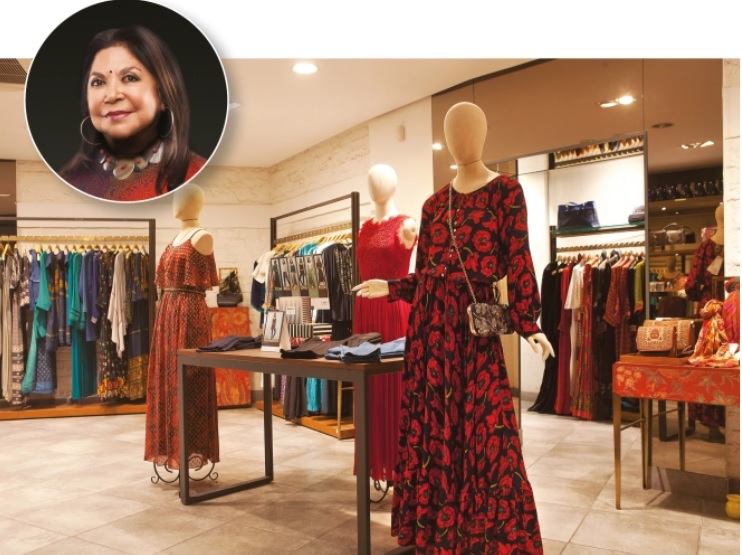

“Now you see people wearing bold gowns or black ties for one or two events, but Indians have kept a unique spirit of celebration and culture unlike anywhere else in the world. Bollywood has played a huge part in amplifying this because of the song and dance and colours and events such as Holi and Sangeet,” feels Tahiliani.
The bottomline: Luxury fashion is now more inclusive, and regional customers are the next big target area for brands.
(With inputs from Priya Kumari Rana)
(Published in Fortune India)
admin
June 5, 2023

Viveat Susan Pinto, Financial Express
June 5, 2023
A lot has happened at the Cafe Coffee Day (CCD) since its founder VG Siddhartha tragically passed away on July 29, 2019. Once India’s largest cafe chain, with a peak store count of 1,752 outlets in FY19, the company, part of Coffee Day Enterprises (CDEL), has now slashed its footprint by over two-thirds to 469 outlets in FY23, its latest results show.
The need to manage group debt and ensure that the business is profitable, say experts, has led to CCD shuttering stores over the last few years. The company was not immediately available for comment.
This has come even as the Rs 5,000-crore domestic coffee retail market is booming, with chains such as Starbucks and Tim Hortons announcing plans to ramp up store count over the next few years.
Consider this: Tata Starbucks, part of Tata Consumer Products, said in its Q4 investor presentation recently that it would introduce learnings from a pilot it ran in 2022, where the focus would be on introducing familiar and more beverage options, a new ‘Picco’ size (which is a smaller size) in beverages, a revamped food menu and more inviting store interiors. All of this was expected to aid sales growth and also help it get into newer markets, the company said of its future growth plans.
Tarun Jain, chief executive officer of Time Hortons India, meanwhile, said that the company was targeting 120 stores in the next three years and on its radar were metros as well as mini metros and satellite cities.
“The out-of-home market is booming after Covid-19 restrictions were lifted last year. And we are seeing this uptick in our stores,” Jain said of the response to Tim Hortons’ cafes in India, which were first launched in August last year. There are over 15 Tim Hortons cafes in the country across Delhi-NCR, parts of Punjab such as Chandigarh and Ludhiana and Mumbai. Starbucks has 333 cafes in 41 cities so far. “While the coffee retail market is growing, in CCD’s case the need to downsize has to do with internal issues. Sometimes a smaller footprint just helps to manage operations better especially when you are dealing with larger problems such as a debt overhang,” says Devangshu Dutta, chief executive officer of retail consultancy Third Eyesight.
Revenue from CDEL’s coffee retail business, which includes the CCD chain, wasRs 1,653 crore in FY19, which was down to Rs 869 crore in FY23. When compared to FY22, however, the revenue from this business has jumped by 75% in FY23, contributing as much as 94% to group turnover for the year. In FY22, the contribution of the coffee retail business to group turnover was 85%, its results showed. Losses in FY23 have narrowed to Rs 68 crore from Rs 112 crore in FY22. In FY19, the company had a net profit of Rs 10 crore.
Apart from cafes, CCD also has kiosks and vending machines installed in corporate offices, institutions and business hubs. While the number of kiosks has fallen over the last few years and is estimated at 250 now from a peak of 537 in FY19, the number of vending machines are growing after briefly slowing down over the last few years. From a peak of 58,697 crore in FY20, it is now close to 50,000 in number, the company’s latest results show. Group debt too, which stood at Rs 7,214 crore in FY19, is down by over two-thirds to Rs 1,711 crore as on March 31, 2023.
CDEL has over the last few years cut debt by selling assets, experts tracking the market said. Asset sales have included offloading a tech park in Bengaluru to private equity firm Blackstone for Rs 2,700 crore as well as selling off CDEL’s stake in tech firm Mindtree (which has now merged with L&T Infotech) for Rs 1,800 crore. CDEL still has around Rs 1,028 crore of dues to be recovered from Mysore Amalgamated Coffee Estates, a promoter entity, which owed around Rs 2,700 crore to the company five years ago.
(Published in Financial Express)
admin
May 6, 2023

Gargi Sarkar, Inc42
6 May 2023
With one of the largest consumer bases in the world, the Indian retail industry is on a constant upward spiral, thanks to the increase in the purchasing power of Indian consumers and the ever-increasing ecommerce adoption.
Notably, this has helped segments like online beauty and personal care (BPC) sustain and grow faster than the players in the offline space.
According to industry experts, the online BPC market has been growing in the range of 20% to 25% annually, compared to the offline segment at around 8% to 10% a year. According to a IMARC Group report, India’s BPC market size reached $26.3 Bn in 2022 and is expected to reach $38 Bn by 2028, growing at a CAGR of 6.45% between 2023 and 2028.
Notably, in their endeavour to capture this opportunity, new players are entering the BPC space, and the existing ones have started to scale their omnichannel presence.
The newest entrant in the space is Reliance Retail. The retail major forayed into the BPC market with its omnichannel platform, Tira, earlier last month. Along with launching its app, Reliance Retail also opened its flagship Tira store in Mumbai.
It is crucial to note that existing marketplaces like Nykaa and Purplle, and D2C brands such as SUGAR Cosmetics and Mamaearth, too, have started expanding their offline footprint, after scaling up their online presence.
Similarly, offline retailers such as Loreal India, Sephora, and Hindustan Unilever’s Lakme have increased their focus on expanding their online presence via direct-to-consumer websites.

Given that Reliance’s Tira has entered the market with an omnichannel playbook, piggybacking on its parent’s cash reserves, it becomes all the more important to understand what impact it will have in the long run on the existing players and industry dynamics.
According to the industry experts that Inc42 spoke with, the beauty and personal care market offers more than enough opportunities for multiple players to grow, due to multiple favourable factors.
“The BPC segment remains one of the fastest growing categories in consumer retail because the penetration of beauty products has remained relatively low. With increasing awareness, and more disposable income, the BPC segment has witnessed decent growth. Now, since the segment is growing, there is a scope for multiple players to grow. That is why some of the big players have entered into the market,” Ashish Dhir, EVP (consumer and retail), 1Lattice said.
Despite Dhir’s optimism, it is pertinent to note that Nykaa saw some initial pressure on its share prices and overall stock performance with the launch of Tira. Brokerage firm Macquarie said that the entry of new players such as Tira could exacerbate the problems for Nykaa at a time when the competition in the segment is already tough.
In the past, Reliance’s entry into the fashion ecommerce space with Ajio impacted leading existing players like Myntra. Now that we already have an example from the past, coupled with a falling will to spend due to factors like rising unemployment and inflation, it will be interesting to see how Nykaa performs under such pressure.
How Tira Could Threaten Nykaa & Ilks Dominance In The Beauty & Personal Care Space
It is no wonder that Reliance Retail will look at disrupting the market to emerge as a market leader as it has done in every segment.
Compared to sectors such as apparel and telecom, the BPC segment is different, and it is not very easy to scale here the way Nykaa has done over the years, according to Karan Taurani, SVP Research, Elara Capital. He noted that many other players in the past tried to scale but failed.
“Nykaa has emerged as a winner due to several factors such as a superior consumer experience on the app, trustworthiness, and product variety. Currently, the product delivery time is also lesser on Nykaa compared to Tira, although the latter could improve it. Moreover, Nykaa has created a network of influencers over the years, and its approach on social media is very different,” Taurani added.
He, however, highlighted that there will be an initial consumer churn as some customers will try Tira as well, and whether the new venture, Tira, can retain all these customers will depend on the consumer experience it provides.
As per Taurani, marketplaces like Nykaa will see some sort of pinch in terms of demand but will not have a significant impact until Tira offers a differentiated experience. Right now, Tira has very few differentiating factors.
However, we should not forget that Reliance Retail is experienced in building brands and has the heavy financial backing to scale in the offline segment.
Given that many players do not have much experience in the offline segment, they may see a visible impact facing the retail giant in the offline BPC space.
It is important to note that Nykaa’s consolidated net profit fell 70.7% year-on-year (YoY) to INR 8.5 Cr in the December quarter of the financial year 2022-23 (FY23), despite the festive season.
In addition, Mumbai-based beauty ecommerce startup Purplle’s net loss almost quadrupled to INR 203.6 Cr in the financial year 2021-22 (FY22) from INR 52 Cr in FY21.
An optimistic Dhir, however, likes to believe that Tira would only increase the competition in the segment and would not impact the profitability of its rivals, at least in the near term.

Will D2C Beauty & Personal Care Brands Face The Heat?
Along with conglomerate-backed large players such as Tata Cliq and online marketplaces, there are several Indian startups and brands such as mCaffeine, Mamaearth, Sugar and Minimalist, which are looking to capture a big chunk of the ever-increasing BPC market pie.
According to an Inc42 report, BPC will remain one of the fastest-growing D2C segments between 2022 and 2030, growing at a CAGR of 27%.
Talking about Tira’s impact, experts said these (aforementioned) D2C brands will not see any major impact due to two factors.
“Firstly, these brands will have similar arrangements with Tira as they have with Nykaa. Secondly, these brands have created a loyal customer base for the products they offer and they have their recall,” Taurani said.
“While deep-pocketed companies can spend their way into buying the market share, all brands need to be prepared for the long term. Also, for these brands a clear positioning be crucial to stand out, not just in their product and service mix but also the overall customer experience specific to their target audience. This would also give opportunities to several beauty and personal care brands to profitably serve niches that may be too small for the larger companies driving for the market, “Devangshu Dutta, the founder of Third Eyesight, said.
Also, Nykaa and Purplle have a portfolio of private labels, which includes skincare brands such as Dot & Key, Earth Rhythm, and Good Vibes, among others. Hence, it will not be surprising if Tira launches its private labels or acquires small brands to grow its portfolio.
As brands like Dot & Key, and Good Vibes are already direct competitors to these D2C beauty brands, a new player can pose more challenges for them.
What Else Could Work In Tira’s Favour
“Our vision for Tira is to be the leading beauty destination for accessible yet aspirational beauty, one that is inclusive and one that harbours the mission of becoming the most loved beauty retailer in India,” Reliance Retail’s executive director Isha Ambani said at the time of launch in April 2023.
When Reliance entered new segments like telecom and fashion ecommerce with Jio and Ajio, respectively, many of the existing players struggled to sustain in the segment as the Mukesh Ambani-led conglomerate scaled up quickly, thanks to its strong financial position. Hence, it will work as the biggest favourable factor in the beauty and personal care space as well, industry experts believe.
Tira is also expected to lure customers with big discounts. “For Tira, a big chunk of revenue will initially go towards marketing and customer acquisition, at least for the first couple of years, as it is a new brand. More than marketing, Reliance will look at discounting more prominently. Reliance will try to give higher discounts compared to other players,” Taurani said.
He added that Reliance has some expertise in building new platforms, such as Ajio, and a rich talent pool and strong brand exposure.

While players like Tata Cliq, Purplle, and Myntra’s beauty segment have tried to scale up in BPC, none of these players has seen significant growth. Hence, the market consists of one large player, making it easier for a deep-pocket player like Tira to carve its positioning quickly and create a duopoly with Nykaa.
At the time of Tira’s launch, the company said that the brand would offer a curated assortment of the best global and home-grown beauty brands. In terms of its offline play, Reliance Retail can leverage partnerships with global beauty brands and suppliers to get better deals. As it is looking at an omnichannel play at an entry stage itself, it may be able to gain market share from smaller beauty retailers, especially in bigger cities.
The Tira offline store will have the latest beauty tech tools such as virtual try-on to create customised looks and a skin analyser that will personalise and assist consumers in making purchasing decisions based on their needs, the company said.
On the luxury side, Reliance Retail is also directly targeting the market which has higher margins and could eat into the margins of Nykaa easily. It must be noted that Nykaa’s Luxe is still in its infancy.
While it is true that Tira will increase the competition in the BPC segment, it is not likely to rewrite the industry’s future over the next couple of years. Tira currently has very few differentiating factors in both the online and offline segments. Additionally, in the offline segment, Tira has opened only one store while Nykaa already has 141 physical stores across 56 Indian cities, as shared in its Q3 earnings report.
Even though there are glaring differences, some industry experts see Tira’s journey to be the same as that of Nykaa, going ahead.
(Published in Inc42)
