
Devangshu Dutta
February 16, 2013

About six years ago, Kishore Biyani of the Future Group and I were discussing a presentation I had delivered at CII’s National Retail Summit, during which I had mentioned “Purushartha”. This millennia-old living philosophy takes a balanced view of life. Aspects related to consumption are two of its major components including Artha (wealth, commerce) and Kama (sensory pleasure). Dharma (righteousness in society and individual life) and Moksha (liberation) are the other two. My point was that most “traditionalists” and certainly policy-makers in the country have tended to view the retail sector negatively or dismissively.
Of course, at that time most businesses themselves hardly demonstrated any sense of balance, let alone any connection with the reality of India, whether in terms of the consumer’s needs, or in terms of the operating environment in the country. By and large the theme was: push explosive growth, margins be damned; promote “westernised” consumption aspirations, regardless of capability to fulfil those aspirations. Conversely, the four years after the global financial crisis in 2008 have been possibly the worst that the retail sector has faced in recent decades, whether in terms of total losses or the quantum of lost growth opportunity, and business sentiment has swung to the other extreme.
On its part the government has not done much to encourage the sector. After several policy flip-flops, approving investment proposals of some high-profile global brands is a positive signal to the outside world, but none of them so far have unlocked or grown the value of Indian retail businesses in any significant way. There is no doubt that foreign brands and retailers can and should be an integral part of India’s developing retail landscape, but they cannot be the prime drivers of the retail business in India or the saviours of its supply chain. That vision and energy needs to come from within, and the resultant growth will benefit all – Indian and international companies, consumers and the government.
From the ancient treatise Arthashastra, Professor Thomas Trautman quotes the concept of concept of “shad-bhaag” (the state having one-sixth share) as “entrepreneurial” because it has a sense of mutual interest, promoting production and the growth of everyone’s share. This spirit of co-ownership and entrepreneurial participation is largely missing in today’s governance. Direct and indirect taxation remains a complex net for all but the savviest evaders, not to mention all the other regulation and approvals that each business – large or small – needs to comply with.
Somehow the mandarins don’t seem to see that the retail business is a platform for the multi-fold growth of new enterprise, that it is a vehicle for urban renewal, and that it can help enormously in channelling the economy into visible taxable revenues. It also seems to escape them that the biggest drivers for this growth and change will typically be small entrepreneurial businesses, who themselves can only thrive in a simpler and non-adversarial regulatory environment.
The wishlist is not large, but needs some bold steps: enact policies that free up unproductive real estate to reduce costs, reduce regulatory hurdles, remove tax traps, reduce import duties. For instance, one estimate for illegal imports in watches is 75 per cent, where the beneficiaries are the smugglers and those who oil the wheels for them, not the consumer, not the brands or retailers, not the revenue department.
It is an important budget year politically due to impending elections but also economically due to the dismal GDP growth. The animal spirits that the Prime Minister has referred to in the recent past are more in the nature of a “bheegi billi” right now rather than a roaring tiger. The caged golden bird will not lay any golden eggs. Will the Finance Minister choose to crack the whip this year, or cut the chains? We watch with bated breath.
(An edited version of this piece was published as in Daily News & Analysis – DNA on 19 February 2012, under the title “Foreign brands can’t be prime drivers of retail”.)
Devangshu Dutta
July 30, 2012

(Published in “BusinessWorld SME Handbook 2012-13”, released on Oct. 29, 2012 in New Delhi, and “Indian Management”, the journal of the All India Management Association in January 2013, published by Business Standard.)
There are parallels between Christmas and the growth of modern retail. At Christmas much of the attention is fixed on Santa Claus, while the elves labouring away behind the scenes barely get any air-time. So also in the retail business, the focus very much is on the retailer; the bigger the better.
The Indian retail sector’s sales are estimated at about Rs. 26 lakh crores. Of this, more than 80% of the product requirements are estimated to be met by small or mid-sized businesses. We don’t usually think about these myriad manufacturing and trading companies that make up the retailer’s supply chain. Large branded suppliers – multinational or domestic corporate groups – are still able to make their presence known, but most others remain largely invisible. Many of these fall not just into the small-medium enterprise (SME) classification, but in micro-enterprises, even cottage-scale. Not only do the large retailers source from SMEs directly, those small suppliers in turn work with other upstream SME manufacturers.
Chicken or Egg?
Most of us are inclined to view the growth of modern retail as a precursor to the growth of the SME sector. Actually the reverse is equally true, perhaps even more so. Without a robust base of suppliers having taken the initial risk of setting up better-organised manufacturing facilities and supply chains, modern retailers would not be able to set up their businesses in the first place. We may view modern retailers as the catalyst for this development; however, they are first beneficiaries of SMEs, and only after they achieve critical mass can they catalyse further SME growth.
For instance, through the 1950s and 1960s, as the American and western European economies grew with the baby boom, it was the growth of manufacturing entities and brands – most of them SMEs – that led the charge. As these SMEs consolidated their growth, modern retail chains actually rode upon this. Subsequently, of course, retail chains have put most of their suppliers in the shade in terms of overall size and profitability. Japan in the 1960s and 1970s, Taiwan and Korea during the 1970s and 1980s, and China during the 1990s and 2000s also saw similar manufacturing-led prosperity and consumption, although their growth was driven initially by exports to the west.
In India, too, the tremendous social and economic changes in the last two decades have encouraged a resurgence of the entrepreneurial spirit. The consumer sector is specifically attractive to entrepreneurs as something that is tangible, provides visibility of the business fairly quickly and can be communicated and positioned well within the entrepreneur’s family and social circle, an important driver.
The Rationale for Supporting SMEs
We tend to ignore the fact that India has a workforce estimated at over 750 million, and which is growing annually by 9-10 million. Most of these people will not be employed by the government, or in large organisations or in the much-feted service sector. Allowing for a declining active employment in agriculture, it is manufacturing, trading and retail by small businesses that is needed to keep the economic engine running.
It is also important to remember that growth of SMEs raises prosperity rather more equitably than other sectors. Widespread growing incomes lead to growth in consumption, supporting retail growth, which in turn can feed back into further growth of SMEs. There are enough significant examples of such economic growth worldwide, whether we look at economies such as Western Europe and Japan recovering from the ravages of war, or at the Asian tigers, China and others emerging countries who’s GDPs are not overly dependent on extractive natural resources.
Innovation is another reason to nurture SMEs. Consumer needs are changing more rapidly than ever before in India’s history, with rising incomes, and evolution of life styles and social structures. Small companies are better at foreseeing or at least reacting to rapid changes. Large companies compete on the basis of their sheer scale and aim to maximise returns from every investment made, but small businesses have no choice but to be innovative in some way simply to enter the market or to stay in business. Experimentation with products, business models, service level and commercial practices is what SMEs thrive on. Differentiation is what makes small suppliers attractive to retailers. With the technology and tools available today, we should expect ever increasing amount of innovation to emerge from small rather than large companies in the consumer sector.
Small suppliers also provide diversification of supply risk for individual retailers, as well as for the market overall. Concentrating on a few large sources has, time and again, proven to be a risky approach, whether it is due to the balance of power tilting unduly towards a specific supplier, or simply the risk of product not being available in case the dominant large supplier’s business is affected. A mix of small suppliers is more like a supporting cushion – a bean bag, if you like – which can be adapted and moulded more easily to changing customer needs.
The Role of Modern Retail
There are three areas in which modern retail can be a significantly more important partner for SMEs than traditional channels.
Firstly, modern retail stores are possibly the most effective route to launch new products, or even entirely new categories. As a platform they offer a more consolidated and effective way to reach a new product to consumers, and to gain visibility and acceptability quicker.
As a follow-on to this, due to their innate need to scale-up successful initiatives, a product and or a service proven in one store or region would typically get included in buying plans for the retailer’s stores across the country. This provides a quicker and more efficient scaling up opportunity than the small brand or supplier trying to reach myriad stores across the country on its own.
Third, whether it is quintessentially Indian brands such as Fabindia, or Indian products through international brands and retailers such as Monsoon, Gap, Mothercare, Ikea, Marks & Spencer, these are but a few examples of the access route for small Indian companies to major world markets. In fact, B. Narayanaswamy suggested in an article titled “Opportunity Lost is Gone for Good” (July 2012), that the Indian government should negotiate hard with retailers interested in investing in India to open supply opportunities to the retailers’ businesses globally, rather than putting minimum sourcing requirements for the small Indian business alone which only act more as a constraint than an enabler. The government has, in the past, used such opportunities to allow investment in the consumer sector while enlarging the playing field for Indian businesses – Pepsi is a case in point.
For some companies, modern retail is in fact a launch pad for wider ambitions, as they evolve into building brands themselves. Mrs. Bector’s has grown from a contract supplier to the likes of McDonald’s to launching its branded products not only in India but also in international markets targeting Indian expatriates. Genesis Colors went from being a Satya Paul licensee for ties to being the owner of the brand, and then further to being a partner for many internationally established premium and luxury brands who want to be part of the India growth story. Others become growth vehicles for larger businesses after being acquired by them, such as ColorPlus by Raymond, Fun Foods by Dr. Oetker (Germany) or Anchor by Panasonic (Japan).
Making Business Easier
India is one of the few countries to have a Ministry dedicated to SMEs. However, India’s SME sector is very far from competing effectively with SMEs in other countries.
The German Mittelstand employs more than 70% of Germany’s workforce and is acknowledged to be at the leading edge of technology and efficient business management. Other western European countries such as the UK and Italy also have vibrant SME sectors. All these countries have not only been competitive globally as exporters, but have also co-opted into the growth of industries elsewhere including the BRICs.
Three enormous obstacles stand in the way of the growth of India’s SMEs, as a huge amount of entrepreneurial energy is wasted tackling these areas. The government certainly has a large role to play in all, but one of these is also the responsibility of large corporate groups.
The lack of adequate infrastructure is arguably the most recognised obstacle, followed by compliances that can hold SME operations hostage under outdated laws, many of which have not been reviewed since India had an Empress! Entrepreneurs and businesses lose millions of manhours annually managing these two areas.
However, the one area in which not just the government but large retailers can play a role is in ensuring that SMEs are funded adequately. Bank sources in the form of term loans and working capital limits is only the start. The rest comprises of actual cash flow, much of which are limited by the long credit period demanded by retailers. Payment can stretch as far as 6-8 months, and include sale-or-return terms which squarely place the burden of funding the retailer’s business on the SME supplier. Unless we can mandate better payment practices, the boom of retail giants will be created using millions of dead or barely alive SMEs as building blocks. And what we don’t realise is that the retailers’ own health is also at stake, because lazy payment terms create a maze of poor practices, from product planning at head office all the way to the retail store. For instance, products that will not sell get stocked for short-term margin through placement fees, and block shelf-space and cash flow that affects other suppliers. Promptness of payment to SMEs must become a metric to measure the health of retail companies – after all, what gets measured gets tackled. And for the proponents of “Corporate Social Responsibility” – what better way to promote CSR and wide-ranging economic well-being than by ensuring the the smaller businesses in the ecosystem are not starved of the funds that are rightfully theirs!
SMEs are not just the foundation, but also the beams and pillars on which the glass and steel cathedrals of modern retail are built, and a vital indicator of the economy’s overall health. The sector needs to be tended to proactively and holistically, both by government and by large businesses, as an investment in India’s economic future. Perhaps we will even create some world-beating companies along the way.
Devangshu Dutta
October 14, 2008
If you’re like me, then at any given point of time you have a vague idea about what is in your refrigerator, but not quite. That must why we end up buying stuff that duplicates what is already in the fridge.
Here’s an example of what that translates into for me:
At other times, it is the semi-consumed half-loaf of bread that gets trashed half-way through its fossilization process. Or the new flavour of cheese spread, where the price offer may have been tastier than the spread itself.
I sure there will be at least some among you who would have similar stories. (I would be shattered if I’m told that I am the only one with these tales of inadvertent consumption!)
In the normal course, we would not call ourselves excessive consumers. For the most part, we believe we display rational shopping behaviour. We make our lists before leaving for the market and we generally know which shop or shops we want to stop in at. So, why do we end up doubling or trebling our purchases, when we aren’t actively “consuming” double or triple the amount of food?
Well, the lords of marketing spin have mapped their way into our minds. In a strategy that has been proven over centuries, we are offered things ‘free’ or at a significant discount. The very thought of getting something for free, or for less than what it is worth, is so seductive and irresistible.
(As an aside, just look at what has happened during the last few years in the real estate market and the stock market – everyone thought that they were getting a good deal because the stuff was “worth actually more” than the amount they were paying. Not!)
We believe we are being rational in buying the three packs of juice at the price of two – never mind the fact that juice wasn’t on the shopping list in the first place. The danglers and end-caps jump out and ambush us, as we walk through the aisles. The samplers entice in their small voices: “try me”.
You might say that the really traditional kiranawala is the customer’s greatest friend and also a barrier against uncontrolled consumption.
By keeping the merchandise behind the counter or in the back-room, he maintains a healthy distance between the addiction source and all us potential shopaholics. In fact, he goes beyond the call of duty, and even prevents us from stepping anywhere near the merchandise by delivering to our homes.
The enticing deals and offers that you can’t see won’t hurt you. You won’t call to get that new, exciting BOGO (buy one-get one) offer, because you don’t know that it’s there in the store.
Unless, of course, the sneaky brand with its accomplice – the advertising agency – sidesteps him, and puts out the temptation in your morning newspaper.
By now, surely, you’re wondering whose side I am on.
Well, as a consumer and a customer, I am only on one side – mine!
As someone who is intensively involved with the retail sector, I’m also on the side of the brands and the retailers.
And believe me, we are all actually sitting on the same side of the table.
The years in this decade, after the recovery from the minor blip of dot-com busts, have been like one mega party and most people have forgotten that parties seldom last forever. And the morning after the wild party can start with quite a headache.
Retailers and brands have recently acted as if there is no end to multiplier annual growth rates, and consumers have been only to happy to prove them right. Until now.
Currently, we are passing through a fairly serious global economic correction which started in 2007. But it has only really hit hard in the last couple of months, as the headlines have increasingly started talking about recessions and depressions. Naturally, there are some people who have really lost money, others may be looking at the possibility of lower income. But even those people who sustain their current incomes are “feeling poor”, just as they were “feeling wealthy” when the markets were booming.
Of course, superfluous or discretionary expenditure such as movies in multiplexes, eating out etc. are the first to get hit. But should grocery retailers rest easy – after all, people still have to eat, right?
And how about deals, and multi-buy discounts – isn’t this the scenario where “more for less” will be the strategy which will work?
Well, I don’t believe it is quite so cut-and-dried, or quite so simple. The grocery shopping lists will not only become tighter, but will also be more tightly adhered to. Anything that looks like it may be a wasteful expense will be unlikely.
Remember the deals in the fridge? What you are throwing away now starts looking like money being put into the trash.
Pardon the seemingly sexist remark, but men: your wives will not let you get away with driving your trolleys irresponsibly into aisles where you are not supposed to be!
So how should retailers and brands respond?
Well, a good starting point would be to understand what the real market is. Let us not infinitely extrapolate growth figures on a excel spreadsheet on the basis of the early-years of new businesses. Let us not extrapolate national demand numbers from the consumption patterns of select suburbs of Delhi and Mumbai.
When we have the numbers right, let’s look at the business fundamentals at those basic levels of consumption. Is there a viable business model?
Is the business full of productive resources, or are we overstaffed with “cheap Indian labour”?
Is your modern retail business or your food / FMCG brand really providing value to the Indian consumer? For instance, two very senior people from large retail companies were very vocal this last weekend in stating that the value provided by local business to the value-conscious consumer was grossly underestimated by the industry.
I believe that best filter for business plans is the filter of business sustainability. How sustainable is the business over the next few years? What is the real demand? What are the true cost structures, and can these be supported on an inflationary basis year-on-year, or will you be squeezing the vendors for more margin at every stage until the relationship goes into a death spiral?
Let’s look at macro-economics. Are you actively looking at generating and spreading wealth and income around, or is your focus only on stuffing that third pack of juice into the fridge for it to go stale? If your strategy is the latter one then, to my mind, that is neither a sustainable economic model nor a sustainable business.
There’s more about the current and developing economic scenario, “realistic retailing” and other such issues, elsewhere on the Third Eyesight website and blog, including a presentation made at the CII National Retail Summit in November 2006 (download or read as a PDF). (The article based on that presentation is here.)
I really look forward to your thoughts and would welcome a dialogue on how you believe retailers and brands should work through the next few years as we unravel the excesses of the recent past.
admin
September 22, 2008
Devangshu Dutta
In a departure from popular retail philosophy, Devangshu Dutta calls for a new model of food supply based on multiplicity and diversity. Modern retail must, he says, take into account the changing environment and be sensitive to evolving consumer preferences and to the failures and obsolescence of traditional mass retail models adopted by western developed markets.
Devangshu Dutta is chief executive of Third Eyesight, a management consulting firm focused on consumer products and retail, whose clients include brand leaders and some of the largest companies in their respective markets.
Food price inflation it is still hogging the headlines. It is, after all, an emotive topic. We are terribly concerned not just as food and grocery professionals, but also as consumers and the general public. After all, food and grocery typically account for half of our monthly spend, give or take a few percentage points.
Most students of management, economics, and human behaviour are aware of Abraham Maslow’s classification of human needs into a hierarchy construct. Other economists and psychologists prefer to use other models. Whichever model you consider, the need to eat and the need for security are invariably at the bottom or base level which must be fulfilled the earliest.
The interesting fact is that well after you would imagine these basic concerns have been taken care of, they are actually never far from the surface. This is true not just of the poorest of the poor, but of the wealthy and the well-off as well—whether individuals, communities, or nations.
Increasingly, the agricultural supply chain is dependent on non-renewable petroleum and its products, rather than by the natural energy of the sun being converted into food by the plants.
Is it any wonder that “food security”—the combination of these two—is such a charged subject, especially in these times?
However, a significant set of questions is not really touched in the question of costs and in the question about the continuing security of food supplies: how the food supply chain is structured, how it is driving consumption, what impact that might have on food prices and several broader cost implications.
INDUSTRIALISING AGRICULTURE—FARMING PETROLEUM
Thousands of years ago, when hunter-gatherer human beings stumbled upon agriculture, it was a breakthrough similar to the discovery of controlled fire. Hunter-gatherers were dependent on the natural availability of food, while agriculture created the opportunity to have some control over food supplies and reduce the natural feast-famine cycle. Thereafter, farming, processing and storage techniques kept evolving incrementally to ensure that more food could be produced for each unit of land and effort, and stored for longer – all moving towards ensuring “food security”. This led to the age of empire-building, where monarchs grew their wealth (essentially food territory) with the help of military- imperial complexes, and the greater wealth in turn supported the military-imperial complex.
This remained the trend for a few thousand years, until the age of industrialisation and the age of petroleum. Through the industrialisation and the world wars, the military- imperial complex gave way to a military-industrial complex, which essentially became the military-industrial-petroleum- agricultural complex. Suddenly, there were not just machines to plant, reap, thresh, sort, clean and process, but also petroleum-based and synthetic substances to dramatically increase output and to keep the produce fresher for longer.
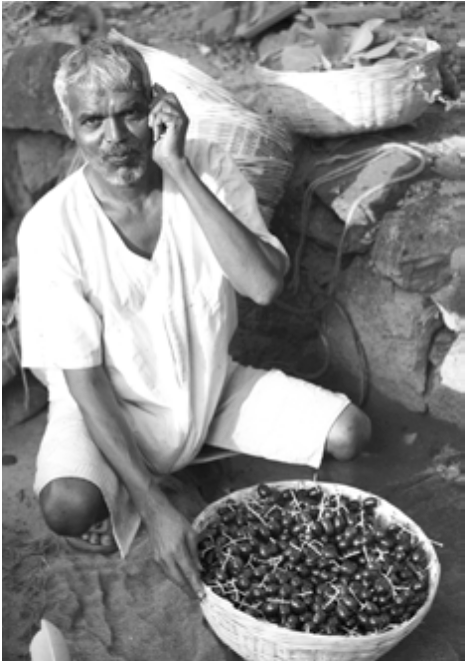
As farms industrialised, the parameters that began to be applied were the same as in any factory—how to produce more while spending less—and every year the target was to grow more for less. Underlying this was the principle of “efficiency from larger scale”. The same philosophy played out further down in the supply chain – from processing aimed at extending the shelf-life of the product as it was (chilling, cleaning, sorting) to processing and packing in order to change the nature of the product itself and gain additional value (such as turning tomatoes into puree and potatoes into chips).
Standardisation became a vital link in industrialisation — if you can standardise produce, you can cut down human handling — while you may lose product variety (including flavour and colour) you gain through lower production costs. By reducing unpredictability, you can also concentrate on building the scale of business, because it becomes more repetitive.
The interesting side-effect of this is that, gradually, we are converting ourselves (and people in many industrialised economies already have) into petroleum-burning machines rather than those running on solar energy, because increasingly, the agricultural supply chain is dependent on non-renewable petroleum and its products, rather than by the natural energy of the sun being converted into food by the plants.
The important thing to keep in mind is that, in this switch- over, energy efficiency is actually going down rather than up
Energy efficiency is actually going down rather than up – we are using more calories of fuel source to produce each calorie of food energy.
—we are using more calories of fuel source to produce each calorie of food energy.
So it is worth asking the question: can lower costs actually be costing us more?
THE DEMAND-SIDE STORY
The growth of industrial agriculture has not happened alone, but has been accompanied by the growth of modern or “organised” retail.
On the one hand, large retailers such as Wal-Mart, Carrefour, Tesco, Metro and others, have been widely credited for achieving cost-efficiencies from scale, and then passing on these efficiencies to the consumer in the form of lower prices (and, apparently, higher standards of living). That is a good thing and definitely of benefit to the population at large, especially in inflationary times such as these. Surely, it is good to push for lower costs rather than keeping prices high as a result of inefficient sourcing, wasteful and expensive handling, and non-value-adding costs in the supply chain.
On the other hand, these organisations are driven to standardise their own product offerings, reduce the number of supplier touch-points and increase the volume per supply source.
There is not just a reduction in diversity of suppliers, but also a reduction in the number of product variants. (I’m not referring to the number of “types” of potato chips or packaged meals, but to the actual core food product—the natural species or sub-species that are the basic source.) Of course, agriculture itself is a process of consciously selecting and encouraging species that are more useful to us humans, but industrial
Lower costs can be delivered by reducing the variation of products
Higher sales can come from either having consumers buy more of the same product (which in food does tend to taper off after a while), or by turning the basic product into a “value-added” product (e.g. potatoes into wafers, mash, fries; corn into syrup and food additives, and so on).
THE NEED FOR A DIFFERENT MODEL
We don’t have to look too far into the future to realise that this is not a sustainable model. (Or, as someone pithily said: “Only fools and economists believe in infinitely compounding growth.”) So far, this model has impacted less than a fifth of the world’s human population, but now the growth markets of choice for industrial agriculture companies are China and India. If these two countries move through the exactly same path as have the western economies in terms of agriculture and food processing, given the population base itself the impact may be 5-7 times (or more) on the demand for petroleum as well as the fall-out on the ecosystem.
You may ask: why should retailers and their suppliers worry about this?
Firstly, pure cost considerations – clearly, the costs of petroleum are ranging at the highest levels ever, and explosive demand through industrialised agriculture will only serve to push them up. How far can you push the food bill every month, before people start buying less? What impact would that have on large retail supply chains and farmers whose processes are increasingly built around products of industrial agriculture?
Secondly, what consumers are already beginning to express in western markets will possibly happen in India in the next few years as well: concern about where and how the product has been produced, what has been the fall-out on the environment and on the overall health of people involved with that supply chain as well as the health of consumers. Carbon footprint, food miles and locavores (people who only consume food that is produced within 100 miles of where they live) are terms that companies are increasingly becoming familiar with.
agriculture takes it to a completely different level. Carbon footprint, food miles
The industrial-agricultural-retail economic model can be paraphrased as follows:
Businesses (especially those that are publicly held) need to show growth in profits each year
Growth in profits can come from higher sales at the same cost base or lower costs
Carbon footprint, food miles and locavores (people who only consume food that is produced within 100 miles of where they live) are terms that companies are increasingly becoming familiar with

And an alternative set of questions is also being raised. Is it ok to burn non-sustainable fossil fuel if you get “carbon credits” by planting trees somewhere else—have all the carbon costs been accounted for from the start to the finish of the production process? Is it better to reduce the food miles and have food produced locally in a high-cost economy’s industrial agricultural model, or to have naturally grown foods from a more primitive farm in Africa or Asia where the environmental impact is only the “carbon debit” of the air-freight. And, even if the produce is carbon-friendly, what about the nitrogen footprint (from the fixation of nitrogen into fertilisers) and the methane footprint (from large scale animal farming)?
THE POWER OF THE SMALL AND THE MANY
And finally the question of maintaining diversity must be top- of-mind. For all its so-called inefficiency, diversity is actually a great shock-absorber. Imagine a bean bag or a piece of foam — what gives them their cushioning ability is the space and air between the little balls, or the material. Now imagine a cropland that is attacked by a pest—if there is diversity in the plant population, there is a good chance that certain varieties will survive even if others don’t; unlike a cropland with limited variety which may be totally wiped out (and possibly the farmer with it). Further imagine a supply chain that has multiple suppliers with the same or similar product versus one where the supply base is highly concentrated. Which ecosystem do you think will survive better during times of trouble, even if some of the suppliers—a part of the ecosystem—do not? (One doesn’t have to think too far: the example of the former Soviet Union with its mega manufacturing plants supplying the whole country are a case in point.)
To really find long-term solutions for food security issues, retailers, suppliers, economists and governments need to acknowledge that sustainable safety lies in numbers and diversity. A dispersed economic system with a lot of variety has resilience built in. And the solutions may actually be very close at hand, in the updating of traditional techniques.
It is high time to start figuring out how India (and China) can take the lead in creating an alternative and more sustainable model for food security for large populations, rather than blindly push development models borrowed from the 19th and 20th century western economic history.
Source: FLY ON THE WALL
Send download link to:
Devangshu Dutta
May 25, 2008
A few days ago, I wrote about the possible “Dis-economy of Scale”, when we start to add up the hidden costs in industrial agriculture.
I’ve just found an interesting article from Fortune about Jason Clay, described as a “thinking environmentalist”.
He calls for intensification of agriculture, and “economies of scale”. However, the critical departure from usual proponents of industrial farming, his view is to make agriculture “both more productive and sustainable” (i.e. “generating more output from fewer inputs”).
I wonder if that means using truly fewer inputs through the entire chain. That is really the key, since the current intensive and industrial model of farming actually seems to use more input (fuel and production) calories to produce fewer output (food) calories. Unless that changes, the model of industrial agriculture is unsustainable over time.
(The earlier post is here: The Dis-Economy of Scale)
And while we are on the subject of sustainability, it’s always good to remember that human beings haven’t suddenly become rapacious in the industrial and post-industrial age. We’ve displayed similar behaviour of overdoing things over centuries – a good book to pick up is Jared M. Diamond’s “Collapse: How Societies Choose to Fail or Succeed”. (Here’s his profile on Wikipedia, and book on Amazon).
