
admin
September 2, 2022
Written by Christina Moniz
Retail chains are on an expansion spree, riding on growing demand from a young consumer cohort
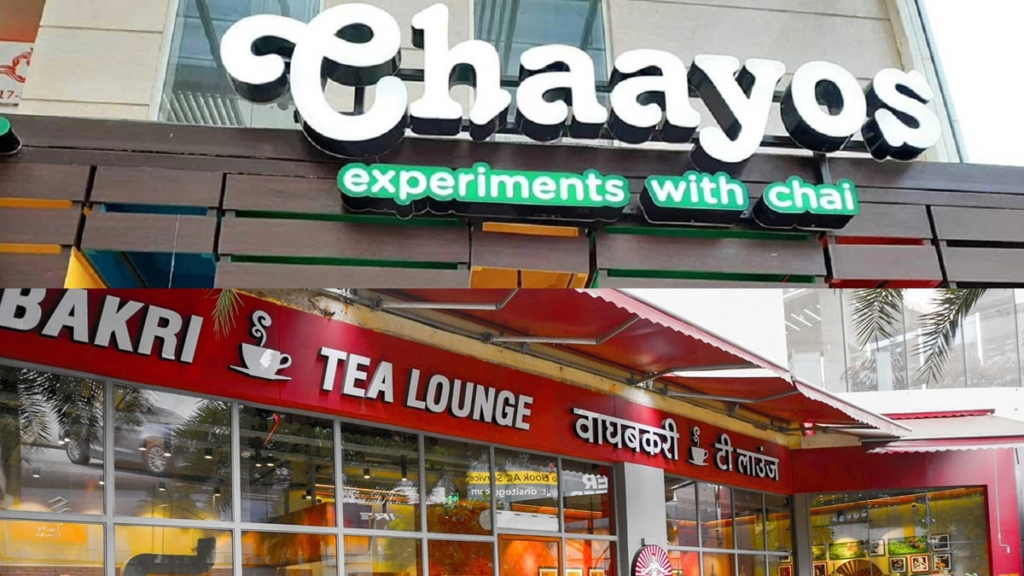
Just about a month back, Wagh Bakri Tea Group, the third largest packaged tea company in India with a turnover of over `1,500 crore, opened its 15th tea lounge in Noida’s upscale DLF Mall of India.
A little over two years ago, Chaayos’ physical footprint was 75 outlets across the country. Currently, its store count is 200.
Just about a month back, Wagh Bakri Tea Group, the third largest packaged tea company in India with a turnover of over `1,500 crore, opened its 15th tea lounge in Noida’s upscale DLF Mall of India.
A little over two years ago, Chaayos’ physical footprint was 75 outlets across the country. Currently, its store count is 200.
Get the drift?
Today the humble cuppa is much bigger than an excuse for roadside tittle-tattle. The rash of tea lounges and bars have taken what used to be, at its best, a social lubricant, and turned it into a `700-crore market.
Homegrown tea café chains have been quick to cash in on the out-of-home demand from a young consumer cohort, offering snacks, groovy ambience and even free wi-fi connectivity. Chains such as Chaayos, Chai Point and Wagh Bakri’s Tea Lounge are ramping up their offerings to cater to a segment for whom coffee shops were the default hang-out zone. Up until now.
But how sustainable are they, given that 80% of the tea drinking market is unorganised? Pramod Damodaran, CEO, Wagh Bakri Tea Lounge, says brands in this segment are catering to the “need state of the consumer”, whether it is meetings,family outings, a quick rest after shopping at the mall or a quiet moment in airports, offices or hospitals. “We elevate the tea drinking experience and make it premium, almost akin to how tea drinkers in the past would enjoy their tea at fancy hotels, but we offer the experience at affordable prices,” he says. While coffee chains offer muffins and croissants with their beverages, Wagh Bakri pairs its teas with pakoras, samosas and vada pav, which resonate more with the average Indian consumer.
Growing the market
Nitin Saluja, founder, Chaayos, draws parallels with global coffee brand, Starbucks. “Before Starbucks launched in the US, there were very few good quality coffee retail outlets. In the Indian context, before chai cafes were launched, consumers could barely enjoy a good cup of tea in a hygienic retail space outside their homes,” he says.
The pandemic, too, played its part in getting consumers to choose hygienic options. That is why home delivery, which was 20% of Chaayos’ revenue prior to the pandemic, now hovers around 30-35%.
The success of chai chains is a reflection of evolving consumer preferences. Saluja says despite the presence of huge international and homegrown brands in the coffee retail segment, the category earns an annual revenue of around 1,500 crore. “In comparison, there are only 3-4 homegrown chai café players, but their combined annual revenue is around700 crore. Only chai retail chains in India can replicate the success of coffee chains in the West,” he says.
Damodaran says his chain is not competing with coffee chains but rather catering to the growing need for cafes. It is for this reason that the brand also offers coffee across its outlets. Wagh Bakri has 15 tea lounges and 10 tea kiosks (Tea World) across Maharashtra, Gujarat and Delhi NCR but plans to ramp up its footprint in the North, West and South over the next three years.
“The industry can ensure long-term health only by capturing the value offered by out-of-home consumption in modern branded formats, packaged branded sales in modern retail and direct-to-consumer models,” sums up Devangshu Dutta, CEO, Third Eyesight.
Source: financialexpress
admin
August 3, 2022
Written By Ratna Bhushan

Large restaurants have increased the amount of discounts and promotional offers by 15-20% on their own apps compared with those offered by aggregators Swiggy and Zomato, to offset steep commissions and search optimisation fees being charged by the aggregators and reduce the dependence on them, industry executives said.
India’s largest quick service chain, Domino’s Pizza which operates 1,625 outlets, launched multiple “free rewards offers” on its own app last weekend, across delivery, takeaway and dine-ins.
While Zomato and Swiggy charge commissions of 15-30% on every order, new tech platforms like ThriveNow and Google-backed DotPe levy only 3-5%. These food tech platforms allow restaurants to set up their own digital services.
Domino’s, McDonald’s, Social, Punjab Grill, deGustibus Hospitality, Street Foods of India, Wow!Momo and Pizza Hut are among the ones offering higher discounts on their own apps.
For large brands, orders from their own apps are averaging anywhere between 10% and 25%, though smaller ones are still relying heavily on the aggregators for scale, executives said.
“Our focus is to increase promotions and give more value through our own delivery platforms to entice customers to transact and reduce dependence on more expensive aggregators,” said Rohit Aggarwal, director at Lite Bite Foods, which operates Punjab Grill, Artful Baker and YouMee. He said close to 20% of the company’s delivery business was now through its own platforms.
Executives said the relationship between restaurants and aggregators involved both a huge benefit and cost.
“There’s the inherent benefit which restaurants reap from the aggregators in terms of scale and last-mile delivery, specially for the mid-sized restaurants which don’t have the budgets to set up their own deliveries. But the restaurants are also dealing with the very steep cost of commissions,” said Devangshu Dutta, chief executive of retail consultancy Third Eyesight.
Some brands that offer direct deliveries are also focusing on the nascent but emerging subscription-based meal services and menu customisation.
“It is extremely important for restaurants to take back some control of their digital landscape, rather than being totally dependent on the aggregators. This will not only save them huge delivery costs but also give them access to more customer data; aggregators have thrived on discounts, which is funded almost entirely by the restaurants,” said Anurag Katriar, chief executive of Indigo Hospitality.
In addition to third-party delivery operators such as Dunzo and Shadowfax, which work either through logistics aggregators or directly with the restaurants, brands are also delivering through their own fleet.
Riyaaz Amlani, chief executive at Impresario Handmade Restaurants, which runs Social, Smoke House Deli and Salt Water Cafe, said: “We are offering the best price on our own platforms and our discounts are in the range of 20-25%.”
For large brands, orders from their own apps are anywhere between 10% and 25%, though smaller ones are still relying heavily on the aggregators for scale, executives said.
In addition to third-party delivery operators such as Dunzo or Shadowfax which work either through logistics aggregators or directly with the restaurants, brands are also delivering through their own fleet. Some that offer direct deliveries said they were also focusing on the nascent but emerging subscription-based meal services and menu customisation.
Mid last year, over a dozen large restaurant chains had collaborated to start a #OrderDirect movement, amid escalation of a long-standing tussle between restaurants and aggregators. The food services chains alleged that aggregators charged steep commissions and masked critical customer data.
According to estimates by the National Restaurant Association of India, the annual food services market in India is of about Rs 4.2 lakh crore and could grow to Rs 7.7 lakh crore by 2025.
India’s largest quick service chain, Domino’s Pizza which operates 1,625 outlets, launched multiple “free rewards offers” on its own app last weekend, across delivery, takeaway and dine-ins.
While Zomato and Swiggy charge commissions of 15-30% on every order, new tech platforms like ThriveNow and Google-backed DotPe levy only 3-5%. These food tech platforms allow restaurants to set up their own digital services.
“We’ve grown 40% this quarter over the previous quarter, enabling restaurants to set up their own direct ordering platform; we expect to see further escalation in demand in the upcoming festive season,” said Dhruv Dewan, cofounder at Hashtag Loyalty, which operates ThriveNow.
Jubilant Foodworks, the master franchise for Domino’s Pizza in India, had acquired a 35% stake Hashtag Loyalty late last year.
Thrive charges a 5% commission and is working to increase its scale from 11,300 restaurants at present, Dewan said.
Domino’s, McDonald’s, Social, Punjab Grill, deGustibus Hospitality, Street Foods of India, Wow!Momo and Pizza Hut are among the ones offering higher discounts on their own apps.
For large brands, orders from their own apps are averaging anywhere between 10% and 25%, though smaller ones are still relying heavily on the aggregators for scale, executives said.
“Our focus is to increase promotions and give more value through our own delivery platforms to entice customers to transact and reduce dependence on more expensive aggregators,” said Rohit Aggarwal, director at Lite Bite Foods, which operates Punjab Grill, Artful Baker and YouMee. He said close to 20% of the company’s delivery business was now through its own platforms.
Executives said the relationship between restaurants and aggregators involved both a huge benefit and cost. “ .
“There’s the inherent benefit which restaurants reap from the aggregators in terms of scale and last-mile delivery, specially for the mid-sized restaurants which don’t have the budgets to set up their own deliveries. But the restaurants are also dealing with the very steep cost of commissions,” said Devangshu Dutta, chief executive of retail consultancy Third Eyesight.
Some brands that offer direct deliveries are also focusing on the nascent but emerging subscription-based meal services .
“It is extremely important for restaurants to take back some control of their digital landscape, rather than being totally dependent on the aggregators. This will not only save them huge delivery costs but also give them access to more customer data; aggregators have thrived on discounts, which is funded almost entirely by the restaurants,” said Anurag Katriar, chief executive of Indigo Hospitality.
In addition to third-party delivery operators such as Dunzo and Shadowfax, which work either through logistics aggregators or directly with the restaurants, brands are also delivering through their own fleet.
Riyaaz Amlani, chief executive at Impresario Handmade Restaurants, which runs Social, Smoke House Deli and Salt Water Cafe, said: “We are offering the best price on our own platforms and our discounts are in the range of 20-25%.”
For large brands, orders from their own apps are anywhere between 10% and 25%, though smaller ones are still relying heavily on the aggregators for scale, executives said.
In addition to third-party delivery operators such as Dunzo or Shadowfax which work either through logistics aggregators or directly with the restaurants, brands are also delivering through their own fleet. Some that offer direct deliveries said they were also focusing on the nascent but emerging subscription-based me .
Mid last year, over a dozen large restaurant chains had collaborated to start a #OrderDirect movement, amid escalation of a long-standing tussle between restaurants and aggregators. The food services chains alleged that aggregators charged steep commissions and masked critical customer data.
According to estimates by the National Restaurant Association of India, the annual food services market in India is of about Rs 4.2 lakh crore and could grow to Rs 7.7 lakh crore by 2025.
Source: economictimes
admin
June 30, 2022
Written By Aditya Kalra & Abhirup Roy

MUMBAI, June 30 (Reuters) – Reliance Industries (RELI.NS) said on Thursday it would open outlets of Pret A Manger in India under a franchise deal with the British sandwich and coffee chain, a first foray by the Indian firm in the country’s growing food and beverage industry.
Reliance Brands Ltd (RBL), a unit of the conglomerate that also runs India’s biggest retail chain, would start by opening branches of Pret, as the brand is known in Britain, in big Indian cities, both companies said.
RBL Chief Executive Darshan Mehta said in joint statement the partnership was “rooted in the strong growth potential” of the Pret brand, known for its organic coffee and upmarket sandwiches, and the Indian food and beverage industry.
The first outlet would open in Mumbai before March 2023 and India was expected to become one of Pret’s top three markets in three years, a source familiar with the matter told Reuters.
Pret A Manger, whose name means “ready to eat” in French, first opened in London in 1986. It now has 550 outlets globally, including in the United States and several European states. It is owned by investment group JAB and founder Sinclair Beecham.
In India, the brand will compete with Starbucks (SBUX.O), which has a joint venture with India’s Tata, and Costa Coffee, which is owned by Coca-Cola (KO.N).
Mukesh Ambani, one India’s richest men, runs Reliance, which has more than 2,000 supermarkets and grocery stores in India. Reliance also has partnerships with luxury brands, such as Burberry and Jimmy Choo.
“Reliance wants to look at retail in all its shapes and forms. Over time, they’ve realised partnerships are the way for business formats that may be difficult or slower to crack,” said Devangshu Dutta, head of retail consultancy firm Third Eyesight.
Source: reuters
admin
January 24, 2022
Written By Devika Singh
The entry of Jubilant FoodWorks will intensify competition in the fried chicken segment, where KFC so far has maintained its stronghold.

Popeyes, founded in 1972 in New Orleans, Louisiana, has over 3,400 restaurants in over 25 countries around the world. Popeyes (Wikimedia Commons)
Jubilant FoodWorks, the franchisee for Domino’s Pizza, will launch the iconic US-based fried chicken brand Popeyes, known for spicy New Orleans-style fried chicken and chicken sandwiches, in India on January 19 with the unveiling of the first outlet in Bengaluru.
“Popeyes was founded in 1972 and has been one of America’s most popular and fastest-growing chicken brands. Popeyes aims to delight Indian guests with the bold and delicious flavours of its Louisiana-style chicken,” the company said in a filing to stock exchanges.
“The success of the brand lies in its traditional and unique technique of hand breading, battering, and marinating its fresh chicken for 12 hours in bold Cajun seasonings,” the company added.
Popeyes runs over 3,400 restaurants in 25 countries.
With the entry of Jubilant FoodWorks, the competition is set to intensify in the fried chicken segment, where KFC has maintained leadership in the country so far.
“KFC has enjoyed a free run in the fried chicken market. There are some local players in this segment but no large QSR (quick service restaurant) player had a presence in it until now. With Popeyes as a competitor, now Jubilant FoodWorks is stepping into that opportunity,” said Devangshu Dutta, chief executive at consulting firm Third Eyesight.
While launching its initial public offering (IPO) last year, Devyani International, the largest franchisee of Yum! Brands (which owns KFC), had stressed the advantage it has over other QSRs in the country.
“We have no competition for KFC in India,” Ravi Kant Jaipuria, chairman, Devyani International, had said at the time. Devyani International runs 284 KFC India stores across 107 cities and the brand contributes more than half of its revenues. Sapphire Foods, which too launched its IPO last year, is another major franchise for KFC in India.
Both the companies already compete with Jubilant FoodWorks in the pizza segment as they also operate Yum! Brands-owned Pizza Hut in India. Jubilant FoodWorks with Domino’s Pizza, however, has clear leadership in the pizza market. Sample this: Pizza Hut currently has 500 stores in India, of which 317 are run by Devyani International; Jubilant FoodWorks, on the other hand, already has 1,335 outlets of Domino’s Pizza in India.
Now with the launch of Popeyes, Jubilant FoodWorks, it seems, wants a chunk of the fried chicken pie too.
Westlife Development, which holds the master franchise for McDonald’s in southern and western India, also has set its sight on the fried chicken segment in India. In an interview with Moneycontrol in September last year, Smita Jatia, managing director of Westlife Development, shared an ambitious plan to become a market leader in the segment. The company has already introduced fried chicken in its 125 stores in South India and plans to soon launch the food item in the western region too.
Clearly, the fried chicken market is certainly headed for interesting times as several new QSR players vie for a share of it. According to experts, the segment also offers the next avenue for growth for QSR players. “While fried chicken was the first to take off in Southeast Asia, in India, pizza and burgers found takers given the preference towards wheat-based cuisine in some parts of the country,” said Rajat Tuli, partner at global management consulting firm Kearney.
“However, as Indians become more experimental with food and trying out different cuisines, the fried chicken segment offers the next arena for growth to QSR companies,” he added.
Tuli also believes that the segment has enough space for a couple of players. “The QSR space is poised for over 20 percent growth in the next five-six years and hence there is enough headroom for multiple players to grow in it,” he said.
‘Veg options and no MSG’
The Popeyes India menu will feature the signature Cajun-flavoured Chicken Sandwich and Popeyes signature Chicken in Classic and Spicy flavours. The Indian menu will also feature an array of vegetarian options and will also have rice bowls and wraps. The entire India menu has no flavour enhancer monosodium glutamate (MSG), and the chicken is antibiotic-free, said Jubilant FoodWorks.
In a statement, Shyam S. Bhartia, chairman, and Hari S. Bhartia, co-chairman, Jubilant FoodWorks, said, “We are excited to introduce the Popeyes Louisiana Kitchen brand to chicken-loving Indian consumers. We are confident that Popeyes will not only delight guests but also strategically complement our portfolio and fortify JFL’s leadership in the QSR domain.”
Popeyes will start with its flagship store in Bengaluru’s Koramangala on January 19, followed by stores in New BEL Road and Kammanahalli soon thereafter. The brand will have its own app (Android and iOS) and mobile website.
To ensure a smooth and seamless delivery experience, Jubilant FoodWorks has built its in-house delivery fleet with e-bikes to enable zero-emission delivery. The company is also taking precautions given the pandemic situation.
“Safety protocols like daily temperature screening for all employees and frequent sanitisation of the restaurant are being implemented and frequent sanitisation of bikes will be conducted. All delivery riders will be compulsorily wearing face masks and gloves while following the frequent hand sanitisation protocol,” it added.
Source: moneycontrol
admin
October 7, 2019
Indian tea brands want a piece of this steaming hot business.
Written By Devika Singh

The company now plans to expand to the North Indian cities of Gurugram, Chandigarh, Amritsar and Lucknow, among others.
Homegrown tea makers are foraying into quick-service restaurants (QSRs) to tap into the ‘eating out’ culture in India and grow the business. But competition is aplenty — global brands have a formidable presence in India’s QSR scene, even as start-up brands such as Chai Point and Chaayos are gaining traction. According to a report by CARE Ratings, the total market size of QSRs in India is approximately Rs 25,900 crore. The overall restaurant and food service industry is expected to grow at a CAGR of 10.4% between 2018 and 2020.
Indian tea brands want a piece of this steaming hot business. Society Tea, a brand predominantly present in Maharashtra, recently opened its first tea café in Mumbai. Goodricke Group has tied up with the Tea Board of India to launch tea lounges in Mumbai and Kolkata on the latter’s premises. Gujarat-based Wagh Bakri, which was among the first movers, plans to expand its tea lounge presence to 50 large and small format outlets, from the current 13, over the next four years.
What’s brewing?
When Wagh Bakri opened its first tea lounge in Ahmedabad in 2007, the company saw it only as another experiential marketing tool. “Initially, it was a place where people could explore different kinds of tea. But, over the years, we saw a demand for these lounges,” says Parag Desai, executive director, Wagh Bakri Tea Group. The company claims to receive a footfall of 300-400 people per day on an average in stores present in high-street locations.
“We have deliberately stepped out of food courts to keep our offering premium,” Desai adds. A Wagh Bakri tea lounge could entail an investment of Rs 50-75 lakh. The company now plans to expand to the North Indian cities of Gurugram, Chandigarh, Amritsar and Lucknow, among others.
Society Tea, meanwhile, plans to open 10 more stores — mid-size stores around corporate offices — in Maharashtra. Pricing will be its key differentiator. “We are not pricing the product at Rs 300 like other players, but offering a full glass of chai at Rs 50,” says Karan Shah, director, Society Tea.
Goodricke Group has five operational tea lounges in the country, with plans to open one more, its second, in Darjeeling by the year end. The aim is to first foster brand awareness via its presence in locations of high tourist interest.
Blending in
Is a QSR foray really their cup of tea?
According to Devangshu Dutta, chief executive, Third Eyesight, each player could be backed by a different motivation to enter this space. Some may want to use it purely as a marketing tool, while some others may look at it as an alternative source of revenue.
QSRs can be an effective marketing tool especially for brands that have limited access to customers through retail. “Such stores help increase visibility and offer insights about their customers, their spending patterns, etc,” says Pinakiranjan Mishra, partner and leader, consumer products and retail, EY India.
However, expanding footprint in the market and eyeing revenue from the QSR chain could entail substantial investments for tea brands. “If tea companies look at QSRs as an additional business stream, then besides tea, there are food items and cold beverages to be served, which cannot be sourced just from the gardens,” says Dutta.
Furthermore, it will be an uphill task in the presence of biggies Starbucks, Café Coffee Day and Costa Coffee, that are established names in the market, in addition to other upstarts like Chaayos, which has over 50 cafés across Delhi-NCR, Mumbai and Chandigarh, and Chai Point which has 100 cafés in eight cities.
To get an edge, Harsha Razdan, partner and head – life sciences and consumer markets, KPMG India, says that new entrants would have to go beyond metros “and should ensure competitive pricing as the market is price sensitive”.
Source: financialexpress
