
admin
August 28, 2023

Viveat Susan Pinto, Financial Express
August 28, 2023
Coffee Day Global, which operates the Cafe Coffee Day (CCD) chain, has been given a temporary relief against bankruptcy proceedings initiated by lender IndusInd Bank last month. The Chennai bench of the National Company Law Tribunal (NCLAT) last week halted admission of IndusInd Bank’s plea against Coffee Day Global, a subsidiary of the listed Coffee Day Enterprises (CDEL), by the NCLT Bengaluru, till September 20.
What this means for CCD is that it get some more time at a time when it has swung into the black after struggling for the last few years, since the tragic demise of its founder VG Siddhartha in 2019. Coffee Day Global posted a net profit of Rs 24.57 crore for the June quarter of 2023-24 (FY24) versus a net loss of Rs 11.73 crore reported in the same period last year.
Revenue from operations stood at Rs 223.20 crore in the quarter under review, a growth of nearly 18% versus the year-ago period, CDEL results for Coffee Day Global showed.
More importantly, CCD outlets are down to 467 in the June quarter of FY24 from a peak of 1,752 stores in FY19, indicating that the company is shutting down unprofitable operations as it looks to manage its debt and other expenses. Group debt is down to Rs 1,711 crore, according to its latest annual report for FY23, versus Rs 7,214 crore reported in FY19.
“While the coffee retail market in India is growing, in CCD‘s case the need to downsize has to do with internal issues. Sometimes a smaller footprint just helps to manage operations better especially when you are dealing with larger problems such as a debt overhang,” says Devangshu Dutta, chief executive officer of retail consultancy Third Eyesight.
CCD’s financial health is critical for CDEL, which derives close to 94% of its group turnover from the coffee retail business, according to its FY23 annual report. In FY22, the contribution of the coffee retail business to group turnover was 85%. Losses of Coffee Day Global in FY23 narrowed to Rs 69.62 crore from Rs 112.48 crore in FY22. In FY19, the company had a net profit of Rs 10 crore.
Apart from cafes, CCD also has kiosks and vending machines installed in corporate offices, institutions and business hubs. While the number of kiosks has fallen over the last few years and is at around 265 now from a peak of 537 in FY19, the number of vending machines have been growing after briefly slowing down over the last few years. From a peak of 58,697 crore in FY20, it is now at 50,870 in number, the company’s latest results show.
CCD is also expected to fight the insolvency proceedings against it aggressively, according to industry sources. IndusInd Bank has claimed that Coffee Day Global defaulted on a loan of Rs 94 crore, which occurred on February 28, 2020. The company has disputed this in court.
(Published in Financial Express)
admin
August 24, 2023
admin
August 11, 2023

Christina Moniz, Financial Express
August 11, 2023
Pizza chain Domino’s recently unveiled a Rs. 49 pizza, its cheapest anywhere in the world. At $0.60, the pizza chain’s seven-inch cheese pizza is priced far lower than Domino’s in China (where $3.80 is the cheapest option). As per media reports, the rising inflation has caused Jubilant FoodWorks, which runs Domino’s outlets in India, to see a 70% slide in profits in the first quarter of CY23.
Competitor Pizza Hut has launched its Flavour Fun range, offering 12 new pizzas in five different sauce flavours, starting at a price of Rs. 79, which is easy on the pocket, especially targeted at young consumers. “We further stabilise costs by rolling out value deals from time to time such as 1 Plus 1 (two personal pizzas at Rs. 299 each), a Hut Treat Box for four starting at Rs. 799 and My Box deals starting at Rs. 229 for solo consumption. While food inflation is projected to persist, QSR brands must demonstrate agility and innovation in their offerings to effectively engage with customers,” says Merrill Pereyra, managing director, Pizza Hut India Subcontinent. Despite the competitive nature of the QSR market, he remarks that the rising purchasing power of consumers opens up promising opportunities for brands to expand.
Get the drift?
Crisil says the cost of a vegetarian thali rose 28% in July on the back of high tomato, onion and other raw material prices. With consumers also cutting back on eating out and discretionary spends, brands are bending over backwards to serve offerings at attractive prices to drive up footfalls .
Other fast food chains in the country too are rolling out value meals and snacks to appeal to price-conscious consumers. Burger King India announced its latest value range of ‘Tasty Meals’ starting at Rs. 99 to encourage dine-in consumers, while KFC too has unveiled its snacker range, featuring its most popular offerings like the classic chicken roll and chicken popcorn, at Rs. 99. McDonald’s India (West and South) also recently unveiled a campaign showcasing its easy-on-the-pocket McSaver meals at Rs. 179. McDonald’s India (North and East) made headlines with its decision to temporarily drop tomatoes from their products due to quality concerns and supply shortage.
This is just the second quarter of the current fiscal, but Devangshu Dutta, CEO, Third Eyesight, observes that the trend among QSR brands is to absorb costs or reduce expenses rather than raise prices and risk a drop in footfalls. Most brands are hoping to keep consumer demand up and make up for the loss in margins in the second half of the financial year.
That would be a 1% hit on margins on account of inflation, say experts.
Pramod Damodaran, CEO, Wagh Bakri Tea Lounge, has a slightly different take. Noting that food input cost is just one cost item for a QSR brand, he says that most companies make gross margins of over 60% on each order. These margins are without taking into account costs of labour, rent, etc. “The new price points are designed to drive more walk-ins and new customers. The menu is vast enough to get consumers to eventually spend more after they walk in. Customers often buy a small burger but that is not a substantial meal and so they need to buy fries or other sides, which have higher margins. Most QSR chains find a way to pass on the inflation-added cost to the customer,” says Damodaran. For example, he says, if the inflation rate is at 5% this year, restaurants may increase the price of certain items on the menu by 3% for the first six months and by another 3-4% in the next six months, thus covering the additional input cost.
Focus on efficiency
The fact that brands have launched affordable, lower-priced offerings may have landed them in a slightly tricky situation, says Rajat Tuli, partner, Kearney. “The value offerings at lower prices have encouraged trials and new customer walk-ins, but existing customers are also opting for these. That has resulted in a lower average ticket size, while the cost to serve stays the same. Order volumes have grown but average order values have stayed the same or reduced, which could be a challenge if the trend continues,” he points out, though he adds that gross margins in the current quarter have shown improvement over the last quarter. Fast food chains need to bring in more efficiencies in cost, streamline processes and introduce more digitalisation.
It is also something that McDonald’s India (West & South) is working towards, says MD Saurabh Kalra. Noting that inflation is not new to the company in India, Kalra explains, “Recognising that food inflation is a domestic truth, over the years, we have developed tools and strategies to manage it effectively. This is attributed to our strategic management of our supply chain and product mix, as well as our cost initiatives. We have been successful in managing our costs and in maintaining healthy margins.” Further, with the reality of global warming, there will be pressures on agricultural output.
Kalra argues that enhancing efficiency and adoption of new technology are the only ways to create long-term solutions, something that McDonald’s has been doing globally too.
(Published in Financial Express)
admin
June 7, 2023

M. Sriram and Aditya Kalra, Reuters (MUMBAI/NEW DELHI)
June 7, 2023
Starbucks is revamping its strategy to lure Indians, including children, with smaller, cheaper beverages as it looks to expand in small towns amid a fierce challenge from domestic startups in one of its fastest-growing markets.
Among the first foreign coffee brands to enter tea-loving India, the U.S. giant has taken almost 11 years to open 343 stores, in contrast with private equity-backed chains Third Wave and Blue Tokai that opened about 150 in the last three years.
“As you grow in size, you need to get new consumers,” said Sushant Dash, the chief executive of Starbucks in India, adding that the chain’s “pricing play” would help shatter a perception that it is expensive.
The company has launched a six-ounce drink, “Picco”, which starts at $2.24, and milkshakes for $3.33 as part of its revamp to target affluent Indians who prefer smaller servings.
Starbucks plans to open more stores in smaller towns, said an industry source, who spoke on condition of anonymity.
Both its new offerings are unique to India and unavailable in China, Singapore and the United States.
India’s small but fast-growing specialty tea and coffee cafe market is worth $300 million and set to grow 12% each year, Euromonitor estimates. Canada’s Tim Hortons and Britain’s Pret A Manger are also expanding, but have only a handful of outlets.
“Excessively large portion sizes are an American phenomenon,” said Devangshu Dutta, head of retail consultancy Third Eyesight.
“Indian consumers are value-conscious. If adjusting portion sizes down to what is more normal helps make prices accessible, that’s a double win.”
He was among the analysts who felt the move by Starbucks, operating in India in a joint venture with Tata Group, could further boost its sales, which hit a record $132 million in fiscal 2022/23.
Although Starbucks still dominates in India, rivalry is fizzing in the capital, New Delhi, and the technology hub of Bengaluru, where many Third Wave cafes are often as crowded as Starbucks outlets.
“We’ve lost 30 cups a day to them,” said a barista at a Starbucks shop in Delhi that sells 7,500 drinks a month, referring to a Third Wave that opened nearby months ago, but already sells 3,700.
Starbucks has faced homegrown challengers elsewhere, most notably in China, where its 6,200 stores service the biggest market outside the United States.
There, in just the last five years, Luckin Coffee has used discounts to lure customers to its 10,000 mostly pickup or delivery stores.
Bet On Chai
In India, where Starbucks has added domestic touches to its offerings over the years to boost their appeal, it is now stepping up that game, just as global giants McDonald’s and Domino’s have done.
It estimates that just 11% of Indian homes drink coffee, as opposed to 91% drinking tea. Hot milky tea, or “chai” as it is known in Hindi, is sold at roadside stalls by the hundreds of cups each day for as little as 10 rupees (12 U.S. cents).
Starbucks, which offered for years just one milk chai “latte” made with tea syrup, has launched “Indian-inspired” tea offerings laced with spices and cardamom, both favourites in many Indian homes, which start at 185 rupees ($2.24).
The drinks were introduced to attract those who do not drink coffee and shun Starbucks, said Dash, adding the company would retain its focus on coffee and not make chai a primary offering.
The launch of smaller, cheaper beverages in India indicates Starbucks may have seen “a decline in traffic related to a pushback” on higher prices, said Chas Hermann, a U.S.-based restaurant consultant and former Starbucks executive.
Competition, Small Cities Push
In May, people lured by a one-for-one offer queued in a street outside the first Starbucks store in the western city of Aurangabad, a YouTube video showed in scenes reminiscent of when it first opened in India.
But its rivals are catching up and a price war has begun.
Soon after Starbucks’ May launch of $3.33 milkshakes, designed to attract children, Third Wave launched its own range, a fifth cheaper at $2.71.
In Bengaluru, startup investors and founders hold meetings in Third Wave outlets. It has more than 40 stores there, exceeding the 35 of Starbucks, data from real estate analytics firm CRE Matrix shows.
Third Wave’s chief executive, Sushant Goel, said he planned to add 60 to 70 stores every year, with a focus on big cities. He saw Starbucks’ cheaper, small-sized drinks as a response to competition in “an incredibly price-sensitive market”.
Matt Chitharanjan, chief executive of Blue Tokai, said it had “seen success in converting customers from Starbucks”, partly because of lower prices.
While Dash said he was undeterred by competition, Starbucks recognises the threat, although privately.
In one lease deal for a Bengaluru mall reviewed by Reuters, Starbucks inserted a “cafe exclusivity” clause barring the mall owner from allotting space on the same floor to rival “premium” brands, including Third Wave and Blue Tokai.
“Going deeper into smaller cities, beyond the metros, is the only way to grow,” said Ankur Bisen, head of retail at India’s Technopak Advisors.
(Reporting by M. Sriram and Aditya Kalra; Additional reporting by Anushree Fadnavis in New Delhi, Varun Vyas and Euan Rocha in Bengaluru, Miyoung Kim in Singapore, Sophie Yu in Beijing and Hilary Russ in New York; Editing by Clarence Fernandez)
admin
December 23, 2022
ET Bureau, Dec 23, 2022
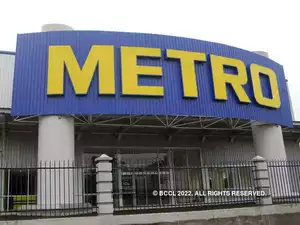
Reliance Retail Ventures, a subsidiary of Reliance Industries and the holding company of the group’s retail businesses, signed definitive agreements to acquire German wholesaler Metro AG’s India business – Metro Cash & Carry India-for a total cash consideration of ₹2,850 crore.
As part of the deal, Reliance will get 31 large format stores in 21 cities as well as the realty portfolio that includes six store-occupied properties, 3,500 staff and Metro’s 3 million B2B customers, of which 1 million are frequent buyers. The deal is subject to regulatory and other conditions and is expected to be completed by March 2023, the companies said on Thursday. ET had first reported in its edition dated Oct 15 that Reliance is the frontrunner to acquire Metro’s India business.
Metro AG said in a release that the India business valuation implies a sales multiple of 0.6x based on sales in the year ended September and takes into account lease rental and other related liabilities of e150 million (₹1,320 crore). Metro India generated sales of ₹7,700 crore (926 million euros), its best ever, in the year ended September.
Metro expects a transaction gain of about 150 million euros and an earnings per share (EPS) gain, once the deal closes.
The move will help Reliance consolidate its presence in the B2B trade segment, which it calls new commerce and is among its next big growth drivers, intensifying competition with Udaan, Amazon and Walmart-owned Flipkart. Reliance owns and runs the country’s largest retail business. All Metro India stores will continue to operate under the Metro brand during an agreed transition period.
Reliance Retail Ventures director Isha Ambani said the acquisition of Metro India aligns with its new commerce strategy of building a unique model of shared prosperity through active collaboration with small merchants and enterprises.
“We believe that Metro India’s healthy assets combined with our deep understanding of the Indian merchant and kirana ecosystem will help offer a differentiated value proposition to small businesses in India,” she said.
Metro AG chief executive officer Steffen Greubel said it is selling a growing and profitable wholesale business at the right time. “Indian trade industry is currently experiencing strong consolidation and disproportionate growth in ecommerce, including the B2B segment,” he said. “Due to the market dynamics, a sizable investment would be required to further grow the business. Therefore, now is the right time to use the momentum and open a new chapter for Metro India.”
Metro said it aims for a leading market position in wholesale. Due to increasing market consolidation, accelerated digitalisation and intense competition, Metro India’s operations don’t fit Metro’s core growth strategy, it said. Abneesh Roy, executive director, institutional equities at Nuvama, said the price to sales ratio is 0.37, which seems fair, given the B2B segment is a low-margin business.
Reliance will gain a significant jump in revenue and established locations that it can expand or optimise under its own branding and formats, said Devangshu Dutta, founder of retail consulting firm Third Eyesight. “The additional shelf space will also be very welcome for its own FMCG brands,” he said.
(Published in The Economic Times)
