
admin
May 25, 2023

Rochelle Britto & Shabori Das, The Economic Times
May 25, 2023
“Taiyaar Hoke Aaiye”. It seems the tagline has worked for the company which has been able to attract investors who came prepared for its offer for sale (OFS).
In a bid to reduce promoters’ shareholding down to 75% as per SEBI norms, Vedant Fashions, known for its ethnic wear brand Manyavar, floated the OFS on May 19 which saw huge participation — oversubscribed 1.4 times with bids for 34 million shares as compared to 24 million shares on the offer. The non-retail segment was oversubscribed 2.24 times.
The shares were offered at a price of INR1,161. While the stock initially fell 1.5% on May 19 to INR1,230, it was trading at INR1,268 on May 24, up 4.59% in five days.
The promoters have offloaded 16.9 million shares, which works out to 7% of the total equity shares with an option to sell additional 6.9 million (2.88%) shares, taking the total to 9.88%.
Manyavar represents the premium wedding market of the country and boasts of some big names as its brand ambassador — Virat Kohli, Amitabh Bachchan, Ranveer Singh, and Kartik Aaryan. With strong fundamentals, the company has grown at 30% CAGR over the last one year and investors feel this is one classic growth stock with high valuations that cannot be ignored. Vedant Fashions trades at a PE multiple of 73x while Trent, a competitor, has a PE of 119x.
The great Indian wedding
The sales of Vedant Fashion are highly correlated to the wedding season. The Indian wedding market is massive at USD50 billion with around 3 million weddings or events taking place every year. According to news reports, the spending is growing and is likely to be around INR3.75 lakh crore this year.
According to Crisil, weddings are getting bigger, grander, and longer, fuelled by higher disposable incomes and a surge in discretionary spending. It expects the ethnic-apparel market to grow between 15% and 17% to nearly INR1.38 trillion by 2025, supported by a growing desire among Indians to wear traditional attire instead of western wear for big celebrations.
While a lavish spending is done on everything, from venue to food to even flower arrangement, clothes hog the limelight. The business has become high-margin, elite, and high-fashion. And the organised market is growing at a very fast pace.
In the organised market, Vedant Fashion has a 40% market share which might be difficult to maintain as competition increases. “In the upcoming quarter, while April experiences a slight lull in wedding dates, May and June present an abundance of excellent opportunities. Moreover, as we analyse the entire year ahead, we are highly confident in the favourable wedding dates during Q3 and Q4. These trends align closely with our historical data, reinforcing our optimism for the current new financial year,”says Vedant Modi, chief marketing officer, Vedant Fashions.
“Vedant Fashions has successfully tapped into and emerged as the market leader, head and shoulders above competitors, in a segment that has been extremely fragmented. Festive wear and occasion wear is not immune to downturns, but is better placed to ride them out, and this makes it a very attractive product segment. However, Vedant have exploited this opportunity and scaled up much more successfully than other companies, beginning with menswear and then in womenswear,” says Devangshu Dutta, CEO, Third Eyesight.
Expansion spree
Vedant Fashions is expanding its retail footprint by adding around 75,000 sq ft retail area in Q4FY23. It has a total retail presence of 1.47 million square feet as of March FY23, spanning across 649 stores in 257 cities. There is a direct correlation between the addition of stores and the growth in sales, but the full potential of a new store takes some time. Almost 40% of the expansion has happened in the fourth quarter, so the full revenue (of the expansion) would come in the following year. Thus, many times the store growth doesn’t match the revenue growth.
The company is also expanding in US, UAE, London, and Canada to cater to the growing Indian community in these markets. For FY23, it has had sales growth of 30% at INR1,355 crore with Ebitda margins at 50%.
However, the growth witnessed by the company in FY23 has slowed down despite an upswing in events and weddings.
Vedant Fashions reported revenue growth of 76% in FY22 over FY21 and profit growth of 136% during the same period. While the slowdown in the growth rate can be attributed to settling down of revenge shopping post-pandemic, the number of social events has definitely increased to not take notice.
“Market valuations are an indicator of not only present value of a business but also perceived future value, and market leaders usually are rewarded with richer valuations(Page Industries is another such example),” adds Dutta.
The company’s latest presentation states that it has achieved 95% ROCE for FY23. The company is still in an investment stage and its cash flow statement says that INR249 crore is blocked in investments for FY23.

Market outlook
In a market that is lacking growth, the wedding season almost looks like recession-proof. The market has returned to growth mode even at a time when inflation is high and the overall economy is subdued. But then, the Indian wedding market — especially the part that Vedant Fashion tracks — is on a high and the growth will continue for a long time.
While the number of players is increasing, not many have a picture-perfect balance sheet with high ROEs and even higher Ebitda margins. Vedant Fashions has become the classic growth stock with very high valuations. It has a price/book value of 28x but investors feel that for a company that generates a high ROE and a high growth, the valuation is not extreme.
Mutual funds and institutional investors are making a beeline for the stock because of the growth rate and the overall size of the market. According to BSE filings, mutual funds account for 8.90% of the total holding where SBI Mutual Fund has the biggest share at 3.80%. On the other hand, retail holds 1.43%. Post the OFS, these numbers will go up.
The company successfully launched its initial public offering (IPO) last year. The stock debuted at an 8.08% premium over the issue price of INR866. The share slipped more than 4% on May 18 as the promoters announced plans to sell stake in the company.
Since listing, the company has gained 36% and has had a great run with its stock being up by a significant 27% over the last one year as compared to its peer Aditya Birla, which is down by 30.95%, and Nifty 50, up by just 12%.
The Indian apparel market is amongst the top three consumer categories. The pandemic made a lot of consumers switch to the online channel — which was also enabled by easy returns. However, while western apparel in India is a lot more frequently purchased when it comes to the online channel, the offline channel continues to be the primary source of consumers and footfall for ethnic-wear brands. The organised ethnic wear market in India is still relatively small, as the unorganised apparel category, ethnic and otherwise, continues to dominate.
The primary market for the unorganised ethnic wear is mostly women, driven by everyday and wedding wear categories.
According to Euromonitor International, a UK-based market research firm, the Indian apparel market is expected to be at USD58,773.8 million by the end CY23 (excluding the footwear market). The market is expected to grow at a CAGR of 8.6% during CY2023-CY2027.
“The apparel and footwear market experienced significant recovery in 2022 with the easing of Covid-19 restrictions. The industry also benefited from the return of festivals and weddings to their pre-pandemic fervour, as these are periods when the demand for categories such as ethnic apparel and other occasion-based apparel spiked,” says Euromonitor International.
The peer play
Prominent players like Aditya Birla Fashion, Reliance Retail, and Tata-owned Trent are making strategic investments in the country’s thriving ethnic wear market, estimated at INR1.84 trillion.
The recent acquisition of TCNS Clothing by Aditya Birla Fashion further solidifies this ongoing trend. With a transaction value of INR1,650 crore for a controlling stake of 51%, this acquisition highlights the company’s commitment to capitalising on the prevailing market dynamics.
According to Ashish Dikshit, managing director of Aditya Birla Fashion, ethnic wear commands the largest market share in India’s apparel industry, comprising 30% (equivalent to INR1.84 trillion) of the total domestic apparel market valued at INR6.15 trillion, while 80%-85% of the ethnic wear market, according to experts, is dominated by the unorganised segment. The branded or organised end of the market at 15%-20% (around INR28,000 crore – INR37,000 crore in size) is growing at around 20% per annum.
Trent, owned by Tata, has launched a new ethnic wear brand Samoh to increase its market share, as consumers splurge on fresh attire for every event. The new brand will help Trent to compete with Manyavar, and Aditya Birla in the ethnic wear space. The company also has two other fashion retail formats. Its flagship concept, Westside, caters to discerning customers who are aspirational and yet seek value for money. The other format, Zudio, with much smaller stores, operates in a more mass-priced segment. Besides, Trent runs a relatively new concept store, Utsa, which sells its own ethnic and indie wear private labels like Utsa, Zuba, Vark, and Diza.
A growth stock?
The management’s disciplined approach to growth, exemplified by the gradual scale-up of brands like Mohey and Twamev, has been instrumental in mitigating the risks associated with inflated working capital and excessive write-downs. This prudent strategy has safeguarded Vedant Fashions’ profitability and allowed it to maintain sustainable growth without compromising on scalability.
The company’s strong design capabilities with data-driven decision making (leading to no discounted sales), tech-driven supply chain, and auto replenishment model, exclusive vendor ecosystem, and franchise-based EBO expansion have helped scale up its business and achieve superior margins. Most brokerage houses give the stock a “buy” rating.
Manyavar’s decision to team up with some of the country’s top names like Virat Kohli, Ranveer Singh, and Kiara Advani (for Mohey) demonstrates its ambition to capture new markets and connect with a diverse customer base. Continuing the brand’s vision to associate with the best, it reinforced #DulhanWaliFeeling by looping in actress Kiara Advani in January 2023 as the new brand ambassador. With all of them on board, Vedant Fashions hopes to have a joyful journey in style!
By capitalising on their influence, Manyavar solidifies its position as a leading ethnic wear brand in India. But will the company live up to the investors’ expectations? For a growth investor, the answer is yes.
(Published in Economic Times)
admin
March 15, 2023

Faizan Haider, ET Bureau, 15 March 2023
Value apparel brands are set to grow in India.
The success of Tata Group’s Zudio that sells clothes below Rs 1,500 has prompted Reliance, Shoppers Stop and several global brands to enter the mass-priced retailing segment.
While Reliance Retail is planning to launch a value apparel format, likely to be named ‘Youth’ to compete directly with Tata’s Zudio and Landmark group-owned Max, Shoppers Stop is coming up with a mass-priced brand, internally called InTune, people in the know said.
Aditya Birla Fashion & Retail has been eyeing shoppers in tier-2 and -3 cities with Style Up, a similar format, while affordable French brand Kiabi is in talks with retail space providers and potential partners to enter the India market.
“Although there is a significant concentration of demand in the metro cities and tier-1 cities, these are also hypercompetitive markets. With economic growth spreading into the smaller cities and rising aspirations, especially among young consumers, there is an opportunity for brands to expand into these markets,” said Devangshu Dutta, founder of retail consulting firm Third Eyesight.
“However, keeping price-sensitive segments in mind, companies are creating new labels and brands, rather than pulling down their existing brands’ selling price,” Dutta said.
Trent, the Tata Group company that houses retail brands such as Westside, Zudio and Landmark, had earlier said that while Westside accounted for 70% of its standalone business, Zudio had the potential to outpace the department chain due to the size of the opportunity in the value segment.
“While the value format can offer growth in smaller cities, in metro cities the retailers are trying to target youth through this format. The youth is also aware of the sustainability part and most of these brands are focusing on it,” said Shriram PM Monga, who cofounded retail consultancy firm SRED.
Both Reliance and Shoppers Stop are looking for 6,000-9,000 sq ft space at malls and high street for their new brands, said a person familiar with the development.
Experts said India’s consumption structure was skewed in the past over a narrow base of rich consumers accounting for a large chunk of the market. However, as the economy is broadening across many more cities and the impact is reaching further down the income ladder, the opportunity for value formats and value brands is expanding.
For Lifestyle International, its value brands Max and Easy Buy have already outpaced the department stores by sales, indicating that consumers are increasingly seeking either lower-priced merchandise or opting for global brands such as Zara and H&M for fashion apparel instead of department stores.
(Published in The Economic Times)
admin
September 23, 2022
Sagar Malviya, The Economic Times
September 13, 2022
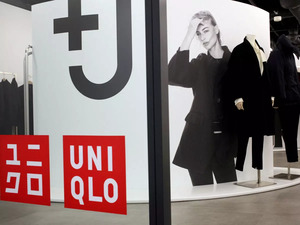
Uniqlo, Asia’s biggest clothing brand, has turned profitable in India in less than three years after it opened its first store in the country despite operating in a period marked by Covid-led lockdowns and restrictions.
The Japanese brand posted a net profit of ₹21.4 crore for 2021-22 compared to a loss of ₹36.1 crore in the previous year, according to business intelligence firm AltInfo. Its sales rose 63% year on year to ₹391.7 crore for the year to March 2022, a slower pace compared to FY21 when it clocked 86% sales growth on a low base.
Experts feel Uniqlo’s strategy of pricing its merchandise at least 20% higher than rivals Zara and H&M has helped it earn better margins despite inflationary pressures in terms of raw materials.
“The market is not easy and turning profitable at a time when most rivals are spending aggressively is a good indication of success. As an international brand, they (Uniqlo) are able to get good locations and are preferred tenants, which helps in generating sales, especially in top cities,” said Devangshu Dutta, founder of Third Eyesight, a strategy consulting firm. “However, the pricing is a bit premium and until they are able to source locally, selling products at a right value for the market will remain challenging.”
The Japanese brand opened its first door in the country in September 2019, but stringent lockdown measures announced in March 2020 to contain the Covid-19 outbreak delayed its store expansion plans, restricting its store count to about seven outlets so far.
Uniqlo has said India is one of the most priority markets where consumers are increasingly shifting from ‘fast-fashion’ to long-lasting essentials and functional wear. “India is an important and very big priority market,” Tomohiko Sei, CEO of Uniqlo India told ET in June.
(Published in The Economic Times)
admin
June 24, 2022
Written By Christina Moniz
Prashanth Aluru, a former Facebook and Bain hand, will be behind the steering wheel for this venture

The Aditya Birla Group has just announced the launch of its ‘house of brands’ business entity, TMRW, to support digital fashion and lifestyle brands. TMRW, which will operate as a wholly owned subsidiary of Aditya Birla Fashion & Retail (ABFRL), aims to build and buy over 30 brands in the next three years, the company said in a statement.
With this move, the company expects to make its entry into the D2C market, which is expected to be reach $100 billion by 2025. “What a brand like Shoppers’ Stop does in brick and mortar, ABFRL is doing online. While in the past, the company was known for certain brands, it is now pivoting itself towards a wider pitch with bigger variety of brands that could potentially appeal to a wider range of consumers,” said Ankur Bisen, senior partner and head, food and retail, Technopak Advisors. The launch could be ABFRL’s next step in positioning itself as a fashion major, he said.
Prashanth Aluru, a former Facebook and Bain hand, will be behind the steering wheel for this venture.
ABFRL will compete with start-ups like the Good Glamm Group and Mensa Brands, among others. The number of D2C brands and online sellers in the country have grown over the last couple of years, and experts believe that TMRW could be the company’s endeavour to become relevant to new-age consumers. Brands like Reliance Retail and Myntra are going down the same path, says Bisen.
The opportunity is immense; according to a report by IMARC Group, the Indian textile and apparel segment reached $151.2 billion in 2021 and is set to grow at a CAGR of 14.8% between 2022 and 2027.
ABFRL, which has a network of over 3,300 stores across India, is home to brands like Pantaloons, Van Heusen, Louis Philippe and Allen Solly, and has partnerships with labels like Forever 21, American Eagle and more recently, Reebok. The retail company has also forayed into the ethnic wear business and has forged strategic partnerships with designers such as Sabyasachi, Masaba and Shantanu & Nikhil.
Having reported losses for the last three years, the company narrowed its losses to `108.72 crore in FY22 on the back of revenues of `8,136.22 crore. The company reported a 55% surge in revenues during the last fiscal. While Madura Fashion & Lifestyle contributed 68.4% to the company’s FY22 revenue, the remainder 31.6% came from Pantaloons, according to Bloomberg data.
Ambi Parameswaran, author and founder of Brand-Building.com, said ABFRL has already built a good retail presence for the brands in its portfolio. “There must be significant synergies at the back end, but the brands are managed separately,” he said. “I suppose the new venture, TMRW, will offer all these brands as well as all the other ethnic brands that ABFRL has acquired in the last three years.”
He said the synergies will probably lie at the back end with supply chain, logistics, finance and HR. However, the brands will most likely be given the space to build strong individual identities.
This is not the company’s first foray into the e-commerce space. ABFRL shut down its e-commerce venture, ABOF (All About Fashion) in 2017, though in August last year, it said the brand would be made available on Flipkart and Myntra.
A concept like ‘house of brands’ is potentially beneficial to both — the large conglomerates and also to the smaller, emerging brands that are acquired. In a D2C framework, niche brands that would otherwise find it difficult to navigate the established multi-layered distribution and retail channels see greater feasibility in connecting with their customers directly through digital channels.
According to Devangshu Dutta, CEO of retail consultancy Third Eyesight, this makes it viable to launch a product range, which would not be immediately entertained in established channels, and allows them to retain their distinctiveness. With the passage of time and with their growth, some of these brands could also expand into established modern retail and traditional retail formats and to a more mainstream audience.
“Large companies, on the other hand, can find it difficult to grow their existing brands beyond a certain pace, and often may not be able to break new ground in terms of product development and customer experience. At some point, inorganic growth by acquiring other businesses and brands becomes an important element of their strategy,” Dutta said.
The house of brands model, to be sure, comes with its fair share of challenges. Angshuman Bhattacharya, EY India partner and national leader – consumer products and retail, said the strategy must have clear synergies from an operations and distribution perspective. “Possible challenges could emanate out of the non-compatibility of categories with the distribution. Another potential challenge could be in supporting multiple brands with marketing investments, failing which the realisable value envisaged during acquisition could stay unfulfilled,” Bhattacharya said.
The other downside, as Dutta pointed out, is that over time there is consolidation of market power within a handful of companies. This has happened across the globe and across sectors, and can negatively impact consumer choice, supplier dynamics and pricing.
Source: financialexpress
admin
April 21, 2021

Debojyoti Ghosh, Fortune India
April 21, 2021
Billionaire entrepreneur Kumar Mangalam Birla-led retailer Aditya Birla Fashion and Retail Limited (ABFRL) has continued its build-up in the ethnic wear market with its fourth deal since 2019 and second this year. In February, the Mumbai-based fashion retailer picked up a 33.5% stake in fashion designer Tarun Tahiliani’s Goodview Properties—that will own and operate the designer’s eponymous couture label—for ₹67 crore. That was a month after ABFRL acquired a 51% stake in Kolkata-based designer Sabyasachi Mukherjee’s company, Sabyasachi Couture, which sells garments, accessories, and fine jewellery, for ₹398 crore.
ABFRL, which owns fashion brands such as Louis Philippe and Van Heusen, said in a statement that ethnic wear “is a large and growing market with a significant opportunity to build scale” and expects it to be an important category over the next few years.
Experts note the two recent deals come as the luxury industry, including fashion, has been hammered by the pandemic. The year-long shutdown in global travel has slowed over a decade of growth across luxury categories. Indeed, the global fashion industry’s profit is expected to have slumped about 93% in 2020, according to a report by consulting firm McKinsey and The Business of Fashion in December.
“[Luxury] business has been hit hard during the pandemic, like all fashion and retail businesses. And a significant injection of money is needed to maintain the business momentum, and to scale it further,” says Devangshu Dutta, chief executive of retail consultancy Third Eyesight.
In March, Italy’s billionaire Agnelli family—best known as the founders of automaker Fiat—acquired a 24% stake in French luxury shoemaker Christian Louboutin for $642 million. Three months before that it paid $95 million for a controlling stake in Shang Xia Paris, a Chinese luxury goods business founded by French luxury brand Hermès and Chinese designer Jiang Qiong Er.
Many fashion firms have used the Covid-19-induced slowdown to reshape business models, streamline operations, and sharpen their customer propositions, said the report by McKinsey and The Business of Fashion.
And that is exactly what Tahiliani plans to do with his new corporate partner. The duo will create a new entity—80% held by ABFRL and 20% by Tahiliani—to launch a new brand of apparel and accessories in the affordable premium ethnic wear segment, while it also plans to launch a men’s ethnic wear brand.
“Discussions with ABFRL have been in the works for nearly two years. I couldn’t be happier about entering into this partnership. They understand scale and numbers like no one else in the market today. Each of their home-grown brands is a resounding success,” Tahiliani, founder and CEO of Tarun Tahiliani Brand, tells Fortune India. “This collaboration permits me the financial freedom to focus on designing,” he adds.
ABFRL aims to build the new ethnic wear brand into a ₹500-crore business in the next five years, with more than 250 stores across India. The first tranche of stores is expected to open by September. “This new entity with ABFRL currently concentrates only on menswear. In our collective opinion, at present, there is only one branded national player in the Indian ethnic [wear] for men space. In order to scale this up, we need to be in three or four categories of clothing. This will give depth, both in terms of style and sizing to the men who come into the store,” says Tahiliani.
Currently, the top panIndia ethnic wear brand for men is Vedant Fashions’ Manyavar. The Kolkata-based company forayed into women’s wear in 2016 selling lehengas, saris, and the like under the label Mohey,
ABFRL’s previous deals in the segment—both in 2019—were a 51% stake in fashion designers Shantanu & Nikhil’s Finesse International Design for a reported ₹60 crore, and its ₹110-crore acquisition of Jaypore. Both make apparel, footwear, accessories, and other items.
ABFRL’s managing director, Ashish Dikshit, declined to comment for this story. ABFRL had, when announcing the Sabyasachi Couture investment, said it expected that deal to accelerate its strategy to build a comprehensive portfolio of brands across segments, occasions, and geographies.
Experts say ABFRL’s recent investments allow it to tap into the designer’s creative stream and goodwill, while providing the financial and organisational muscle of a large corporate. Albeit one that is not aiming too far upmarket.
“We shouldn’t see the ABFRL [stake] acquisitions as entry into couture, which is a different business from the ready-to-wear market. It is the expansion of these brands into ready-to-wear, tapping into the desirability of the designer brand, while making it accessible and affordable to a larger market is what will be of interest,” says Third Eyesight’s Dutta.
Indeed, Mukherjee, in a press release in late January, noted, “As my brand evolved and matured, I began searching for the right partner in order to ensure continuity and long-term sustainable growth.”
Nonita Kalra, a veteran fashion editor, says that the ABFRL deal shows the growing heft of the [Sabyasachi] brand in the fashion business. “Corporates aren’t sentimental. They are hard-nosed about investments, with careful due-diligence. ABFRL is paying what it is worth and expecting it to grow bigger. They are never going to invest in a stagnant business,” she says.
Experts, though, caution that while corporate partnerships and acquisitions allow a designer-entrepreneur and their investor partners to unlock some of the value being built, it is essential to have clarity about each brand’s design language and target consumer. “With [ABFRL’s] new venture [in men’s ethnic wear with Tahiliani], the key thing to understand is how the company will differentiate it from Shantanu & Nikhil’s positioning and focus, which is also menswear-driven,” says Abneesh Roy, executive vice president, Edelweiss Securities. “The challenge will be ensuring that each brand maintains its distinctive identity, while deriving synergies from the group.”
ABFRL has stitched up some unique deals; it now has to ensure they don’t unravel.
(The story originally appeared in Fortune India‘s April 2021 issue).
