
Tarang Gautam Saxena
October 10, 2008
I recently had the opportunity of window shopping with some friends visiting India and it was interesting to note how visitors to India from different continents react to the retail prices of the products of the international brands available in the Indian market.
Friends from Europe (specifically from the UK, which is a relatively expensive country to live in) were pleasantly surprised to find the prices of some of the products of international brands such as L’Oreal, Tommy Hilfiger, Marks & Spencer and Levi Strauss cheaper and they extended their list of things to buy from India at the cost of paying for the extra baggage on their way home. (Well, it also happened to be the discount season during their visit.)
On the other hand, friends from Canada who had arrived a few weeks earlier (before the discount sales started) found the products of international brands too expensive by “Indian standards” and decided that they should do their shopping back in their home country during the markdown sales for Halloween or Christmas!! After all, shouldn’t India be cheaper?!
Yet again, a case in point, when I visited a “just opened” retail outlet of an international brand at a well known mall in the NCR region, I noticed the Rupee price mentioned on the tag was higher than the converted value of the unit price printed in Euros on the same tag. As a consumer I rationalized that probably the brand was launched in a hurry and one forgot to remove the Euro price stickers, though it may also have been a possibility that since the products were imported, the high import duty structure may have resulted in a higher Indian price!
Is it possible for the international brands to follow a common pricing globally? Could the international brands integrate the global tariff barriers/ duties, and currency conversions in their cost structure and have their products priced the same across all international borders?
Well, maybe not just yet…although some brands have tried. For now, consumers can only hope for more parity.
Come to think of it…..if you went shopping in the UK after the US you may just find that for some products the prices (read digits) appear to be the same ……only the “$” would have been replaced by “£”.
Devangshu Dutta
October 8, 2008
The title of this post is from a Winston Churchill quote that I came across a few days ago. I thought this is a must-have on the desk of every entrepreneur in the current times to look at every day, maybe several times each day.
But why only entrepreneurs? Any one and everyone who has been touched or fears being touched by the economic downturn needs to keep this thought in mind.
A few days ago I heard an impassioned monologue from an entrepreneur, founder of a mid-sized listed brand manufacturer & retailer in India, when the first two of the big investment banks in the USA collapsed. He repeated one theme of despair several times – “How can there be wealth / money available at the closing of the business day, and then suddenly in the morning such a well-established institution is no more – all the wealth seemingly lost overnight? Is nothing certain?”
Sometimes an important part of building a great business may just be having the ability to live through a downturn.
Here’s another quote from a Forbes article titled – “The Greatest Risks They Ever Took”: …Kit DesLauriers, the first person to ski from all seven summits. Of her descent from the top of Mount Everest, she says: “There were no safety nets, no fixed lines established, freezing winds. We had to spend an unplanned night at 26,000 feet, with very little food and water. The next day, we skied the Lhotse Face, 5,000 feet of blue ice on a 50-degree slope…At one point, we ran out of oxygen. I kept telling myself: “Don’t sit down and die. Just keep going.’ It’s really easy to let your mind get a hold of you, but the journey taught me we are much more than our minds.” (The whole article is available here.)
Times like these are mainly about mind-games that we play against ourselves – the daily newspaper, the stock ticker on TV, the conversations in the hallway all contribute to the feeling of helplessness. But the biggest freefall is within us. So, remember Churchill’s thought: “If you feel you’re going through hell…just keep going.”
Amit Singh
October 1, 2008
“The Indian consumer is a damn tough customer”, said a senior manager a large retailer in India.
But is it really so?
Are we trying to open a simple combination lock (the Indian consumer’s mind) with a complex cryptographic fingerprinting algorithm?
Retailers need to invest in understanding, gauging and benchmarking the local preferences. They need to be able to react to those preferences in a highly local manner. And they need to acknowledge that the consumer is an intelligent value-conscious buyer, not a cost-focussed idiot.
That is the magic 3-number combination to the riches of the Indian consuming market.
admin
September 22, 2008
The Textile and apparel industry is of particular importance to India. It not only provides employment to a broad base of semi-skilled and unskilled labour but also helps to extend the economic bounty to urban and semi urban areas. Though India has a history of thousands of years in global trading of textile, it contributes only 3% to the global exports of textile and clothing.
While the urge to grow exists, there is a huge difference between the current exports of about Rs. 864 billion (US$ 20 billion) and the target of Rs. 2,500 billion (US$ 55 billion) by 2012. To achieve this vision, exports must grow at around 25-35 per cent a year for the next 4 years, depending on how weak or stable the current year is. This growth rate seems difficult considering the fact India has actually grown its exports of textiles and apparel at an annualized growth of a little over 14 per cent from 2003-04 to 2007-08.
Even if the industry looks at increasing the volume of exports to achieve the vision, the ports do not have the handling capacity considering that they currently operate at 91 to 92 % of available capacity.
Hence, incremental thinking will not help to achieve the vision.
Our key concern is the value “lost” by the industry. Being the low cost supplier does not necessarily translate into greater market share. The Indian Industry must look at enhancing the value delivered rather than competing on the cost platform. Indeed, India compares poorly to other countries on the value captured per employee. (For instance, if the export value captured per employee in India was as much as Turkey, India’s exports would be close to China’s exports of US$ 161 billion.)
One major concern that needs to be addressed is that India’s exports are still weighted in favour of raw materials and intermediate products, rather than finished products. Apparel exports account for only 41% of India’s textile exports in 2007-08. India’s product mix also needs to be aligned to global market needs, rather than only focussing on “traditional strengths” – this includes enhancing the share of non-cotton products in the basket.
Another area that is neglected is the inherent competitive capability of developing new products. The industry needs to develop and nurture these skill sets to create a sustained competitive advantage in the global scenario. India already provides buyers with value in terms of product development and design, which needs focus and further strengthening.
Further, India’s domestic industry, and its skill at understanding market needs, creating and merchandising product, can also play a valuable role in the industry’s growth.
The competitive advantage offered by being able to influence the development of a product is immense. And given that sourcing lead times are shorter in unpredictable times, a supply base that has been involved with the buyer right from the development stage of the product is most likely to get the final order. Third Eyesight proposes a four dimensional model: Define, Design, Develop and Deliver so as to achieve the industry-wide development, of projecting India as a valuable supplier, and sustaining its value needs.
By creating an ecosystem focused on design and product development, India can create and capture the billions of dollars worth of value that is being lost to other countries.
This is an extract from Third Eyesight’s report presented at the FICCI 3rd Annual Textile And Garment conference in Mumbai. The report was released by the Minister of Textiles, Government of India. To download the full report prepared by Third Eyesight, please click here.
To discuss how we can help you with your specific business needs, please get in touch with us via email (please send it to services [at] thirdeyesight [dot] in) or via this form: CONNECT.
admin
September 22, 2008
Devangshu Dutta
In a departure from popular retail philosophy, Devangshu Dutta calls for a new model of food supply based on multiplicity and diversity. Modern retail must, he says, take into account the changing environment and be sensitive to evolving consumer preferences and to the failures and obsolescence of traditional mass retail models adopted by western developed markets.
Devangshu Dutta is chief executive of Third Eyesight, a management consulting firm focused on consumer products and retail, whose clients include brand leaders and some of the largest companies in their respective markets.
Food price inflation it is still hogging the headlines. It is, after all, an emotive topic. We are terribly concerned not just as food and grocery professionals, but also as consumers and the general public. After all, food and grocery typically account for half of our monthly spend, give or take a few percentage points.
Most students of management, economics, and human behaviour are aware of Abraham Maslow’s classification of human needs into a hierarchy construct. Other economists and psychologists prefer to use other models. Whichever model you consider, the need to eat and the need for security are invariably at the bottom or base level which must be fulfilled the earliest.
The interesting fact is that well after you would imagine these basic concerns have been taken care of, they are actually never far from the surface. This is true not just of the poorest of the poor, but of the wealthy and the well-off as well—whether individuals, communities, or nations.
Increasingly, the agricultural supply chain is dependent on non-renewable petroleum and its products, rather than by the natural energy of the sun being converted into food by the plants.
Is it any wonder that “food security”—the combination of these two—is such a charged subject, especially in these times?
However, a significant set of questions is not really touched in the question of costs and in the question about the continuing security of food supplies: how the food supply chain is structured, how it is driving consumption, what impact that might have on food prices and several broader cost implications.
INDUSTRIALISING AGRICULTURE—FARMING PETROLEUM
Thousands of years ago, when hunter-gatherer human beings stumbled upon agriculture, it was a breakthrough similar to the discovery of controlled fire. Hunter-gatherers were dependent on the natural availability of food, while agriculture created the opportunity to have some control over food supplies and reduce the natural feast-famine cycle. Thereafter, farming, processing and storage techniques kept evolving incrementally to ensure that more food could be produced for each unit of land and effort, and stored for longer – all moving towards ensuring “food security”. This led to the age of empire-building, where monarchs grew their wealth (essentially food territory) with the help of military- imperial complexes, and the greater wealth in turn supported the military-imperial complex.
This remained the trend for a few thousand years, until the age of industrialisation and the age of petroleum. Through the industrialisation and the world wars, the military- imperial complex gave way to a military-industrial complex, which essentially became the military-industrial-petroleum- agricultural complex. Suddenly, there were not just machines to plant, reap, thresh, sort, clean and process, but also petroleum-based and synthetic substances to dramatically increase output and to keep the produce fresher for longer.
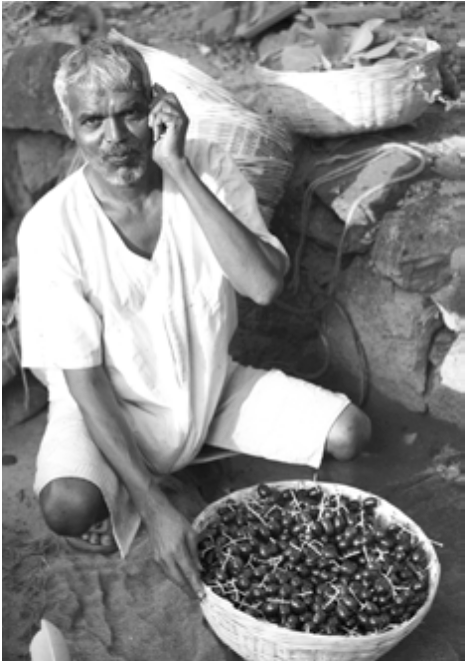
As farms industrialised, the parameters that began to be applied were the same as in any factory—how to produce more while spending less—and every year the target was to grow more for less. Underlying this was the principle of “efficiency from larger scale”. The same philosophy played out further down in the supply chain – from processing aimed at extending the shelf-life of the product as it was (chilling, cleaning, sorting) to processing and packing in order to change the nature of the product itself and gain additional value (such as turning tomatoes into puree and potatoes into chips).
Standardisation became a vital link in industrialisation — if you can standardise produce, you can cut down human handling — while you may lose product variety (including flavour and colour) you gain through lower production costs. By reducing unpredictability, you can also concentrate on building the scale of business, because it becomes more repetitive.
The interesting side-effect of this is that, gradually, we are converting ourselves (and people in many industrialised economies already have) into petroleum-burning machines rather than those running on solar energy, because increasingly, the agricultural supply chain is dependent on non-renewable petroleum and its products, rather than by the natural energy of the sun being converted into food by the plants.
The important thing to keep in mind is that, in this switch- over, energy efficiency is actually going down rather than up
Energy efficiency is actually going down rather than up – we are using more calories of fuel source to produce each calorie of food energy.
—we are using more calories of fuel source to produce each calorie of food energy.
So it is worth asking the question: can lower costs actually be costing us more?
THE DEMAND-SIDE STORY
The growth of industrial agriculture has not happened alone, but has been accompanied by the growth of modern or “organised” retail.
On the one hand, large retailers such as Wal-Mart, Carrefour, Tesco, Metro and others, have been widely credited for achieving cost-efficiencies from scale, and then passing on these efficiencies to the consumer in the form of lower prices (and, apparently, higher standards of living). That is a good thing and definitely of benefit to the population at large, especially in inflationary times such as these. Surely, it is good to push for lower costs rather than keeping prices high as a result of inefficient sourcing, wasteful and expensive handling, and non-value-adding costs in the supply chain.
On the other hand, these organisations are driven to standardise their own product offerings, reduce the number of supplier touch-points and increase the volume per supply source.
There is not just a reduction in diversity of suppliers, but also a reduction in the number of product variants. (I’m not referring to the number of “types” of potato chips or packaged meals, but to the actual core food product—the natural species or sub-species that are the basic source.) Of course, agriculture itself is a process of consciously selecting and encouraging species that are more useful to us humans, but industrial
Lower costs can be delivered by reducing the variation of products
Higher sales can come from either having consumers buy more of the same product (which in food does tend to taper off after a while), or by turning the basic product into a “value-added” product (e.g. potatoes into wafers, mash, fries; corn into syrup and food additives, and so on).
THE NEED FOR A DIFFERENT MODEL
We don’t have to look too far into the future to realise that this is not a sustainable model. (Or, as someone pithily said: “Only fools and economists believe in infinitely compounding growth.”) So far, this model has impacted less than a fifth of the world’s human population, but now the growth markets of choice for industrial agriculture companies are China and India. If these two countries move through the exactly same path as have the western economies in terms of agriculture and food processing, given the population base itself the impact may be 5-7 times (or more) on the demand for petroleum as well as the fall-out on the ecosystem.
You may ask: why should retailers and their suppliers worry about this?
Firstly, pure cost considerations – clearly, the costs of petroleum are ranging at the highest levels ever, and explosive demand through industrialised agriculture will only serve to push them up. How far can you push the food bill every month, before people start buying less? What impact would that have on large retail supply chains and farmers whose processes are increasingly built around products of industrial agriculture?
Secondly, what consumers are already beginning to express in western markets will possibly happen in India in the next few years as well: concern about where and how the product has been produced, what has been the fall-out on the environment and on the overall health of people involved with that supply chain as well as the health of consumers. Carbon footprint, food miles and locavores (people who only consume food that is produced within 100 miles of where they live) are terms that companies are increasingly becoming familiar with.
agriculture takes it to a completely different level. Carbon footprint, food miles
The industrial-agricultural-retail economic model can be paraphrased as follows:
Businesses (especially those that are publicly held) need to show growth in profits each year
Growth in profits can come from higher sales at the same cost base or lower costs
Carbon footprint, food miles and locavores (people who only consume food that is produced within 100 miles of where they live) are terms that companies are increasingly becoming familiar with

And an alternative set of questions is also being raised. Is it ok to burn non-sustainable fossil fuel if you get “carbon credits” by planting trees somewhere else—have all the carbon costs been accounted for from the start to the finish of the production process? Is it better to reduce the food miles and have food produced locally in a high-cost economy’s industrial agricultural model, or to have naturally grown foods from a more primitive farm in Africa or Asia where the environmental impact is only the “carbon debit” of the air-freight. And, even if the produce is carbon-friendly, what about the nitrogen footprint (from the fixation of nitrogen into fertilisers) and the methane footprint (from large scale animal farming)?
THE POWER OF THE SMALL AND THE MANY
And finally the question of maintaining diversity must be top- of-mind. For all its so-called inefficiency, diversity is actually a great shock-absorber. Imagine a bean bag or a piece of foam — what gives them their cushioning ability is the space and air between the little balls, or the material. Now imagine a cropland that is attacked by a pest—if there is diversity in the plant population, there is a good chance that certain varieties will survive even if others don’t; unlike a cropland with limited variety which may be totally wiped out (and possibly the farmer with it). Further imagine a supply chain that has multiple suppliers with the same or similar product versus one where the supply base is highly concentrated. Which ecosystem do you think will survive better during times of trouble, even if some of the suppliers—a part of the ecosystem—do not? (One doesn’t have to think too far: the example of the former Soviet Union with its mega manufacturing plants supplying the whole country are a case in point.)
To really find long-term solutions for food security issues, retailers, suppliers, economists and governments need to acknowledge that sustainable safety lies in numbers and diversity. A dispersed economic system with a lot of variety has resilience built in. And the solutions may actually be very close at hand, in the updating of traditional techniques.
It is high time to start figuring out how India (and China) can take the lead in creating an alternative and more sustainable model for food security for large populations, rather than blindly push development models borrowed from the 19th and 20th century western economic history.
Source: FLY ON THE WALL
Send download link to:
