
admin
June 9, 2023

By Pavan Lall, Fortune India
Jun 9, 2023
For fashion designer Tarun Tahiliani, getting funding from a corporate house was incidental. It happened through a high-profile customer, none other than Aditya Birla Group chairman Kumar Mangalam Birla. Birla had been a customer of Tahiliani’s Ensemble some three decades ago when he was getting engaged. They stayed in touch over the years and at one stage discussed the need for an Indian fashion brand focused on scale and accessibility. “It came out of a conversation and was a two-year ambling route. I had asked if they were expanding their designer brand footprint, and he (Birla) told me to meet the Aditya Birla Fashion and Retail (ABFRL) CEO for a deeper chat,” recalls Tahiliani.

The result was Tasva, a sub-brand that Tahiliani has a minority stake in. The focus was to zero in on the ethnic space, not lose out on the homegrown touch, yet keep user-friendly clothes in traditional silhouettes at accessible price points that were not haute couture. Launched in December 2021, Tasva primarily caters to the premium occasion-wear segment, and has been growing at a fast pace.
Raising Cash
Tahiliani, who got ₹67 crore funding for a third of his company with an option to further offload up to 20%, isn’t the only one to see corporate finance push capital into his designs and stores. Sabyasachi Mukherjee of Kolkata, who opened a large multi-level store in a heritage-style building early this year in Mumbai, sold a little over half his company to Birla, reportedly for around ₹398 crore. ABFRL has also bought a 51% stake in House of Masaba Lifestyle, the entity that houses apparel, personal care, and accessories businesses under brand ‘Masaba’ owned by designer Masaba Gupta. Besides the Aditya Birla Group, Mukesh Ambani-led Reliance Brands has bought a 52% stake in Ritu Kumar, 51% in Abu Jani Sandeep Khosla, and 40% in Manish Malhotra. Earlier, in 2008, Kishore Biyani’s Future Group took a 23% stake in Anita Dongre, which was later sold to private equity player General Atlantic for ₹150 crore.
“While we are reaching a sense of critical mass in terms of consumer base, luxury is not new to India. Designers have been flogging their wares for decades,” says Devangshu Dutta, founder of Third Eyesight, a consultancy firm focused on consumer goods and modern retail. “What has changed is the size of the target audience.”
According to a recent Knight Frank wealth report, India is set to see a projected 58.4% increase in ultra-high-net-worth individuals, those with a net worth over $30 million, from 12,069 in 2022 to 19,119 in 2027. The domestic apparel market, too, was pegged at $60 billion last year, not far behind the developed world, a McKinsey’s FashionScope report has said.


“Earlier, India was a country that just produced for the world. Today India is also becoming the largest consumer market. International brands are keen to invest in business relationships with India. India will change the game for luxury. Where else will you get a billion people who are of a young age, and will be the future luxury buyers of brands?” says Sabyasachi.
“The economy has expanded beyond bigger cities, which has raised the consumption size” adds Dutta of Third Eyesight.
Corporate Handholding
“Corporate involvement helps scale faster than organically, and a lot of designers are tying up with companies with technical expertise and go-to-market for smaller towns and cities,” says Anita Dongre. “For a designer, having a corporate brings in processes, technical expertise and management know-how, and helps her focus on designing,” she adds. In Sabyasachi’s case, too, a new CEO — Sumati Mattu, as well as a new HR head and COO, were brought on board to prepare for the brand’s expansion.
For Sabyasachi though, it has helped in creating a safety net, especially for his employees, more than anything else. “Right now we have two investors — me and Birla together, so it makes me feel protected. Nothing else has changed. The only thing that has changed is that we have a great HR policy with the Birlas; they will be able to look after my people better, as I have created a beautiful safety net for all my employees.”
Dutta, on the other hand, says that “for large companies in the fashion space such as Aditya Birla, it is a natural step to buy into an established brand with scale since brand recognition combined with capital and organisational structure make for a win-win. The platform of fashion is currently at the right juncture to replicate networks and create scale,” he adds.
Other designers, including Manish Malhotra, who has also received funding from Reliance, say, “corporatisation of fashion houses in India has brought about a safety net for luxury brands, making us push for larger creative forces and expansion in terms of scale, branding and customers.”
Growing Into India
Tahiliani says we have opened 55 Tasva stores and will reach 90 in this financial year. Tasva crossed around ₹60 crore in annual revenue in 2022, and is set to hit ₹200 crore this year, he adds.


Similarly, Dongre, widely regarded as the largest designer and fashion house by revenue, has around 150 stores across brands, and Global Desi, a substantial increase from the 10-15 stores she ran before receiving her first funding. “The added benefit is that such funding helps push into international markets.” While Dongre launched her stores in Dubai and New York a few years ago, Sabyasachi launched a New York-located store in West Village last year.
So, what’s the road ahead?
“Corporate India has successfully built large-scale fashion businesses and acquired international brands, but has not been able to create a homegrown luxury brand of cultural or social significance. That will change now,” says Sabyasachi. Jewellery is set to be his focus, along with sunglasses, beauty, shoes, and other categories. “Jewellery is a very important category in the country, a great revenue earner,” he says.
“The film industry was corporatised because its potential was discovered, now it is fashion’s time,” adds Manish Malhotra. “Corporatisation lets designers look beyond bridal-wear, occasion-wear, and focus on newer creative strategies as there’s more space and potential for experimentation.”
Tahiliani agrees that compared to overseas, the trend is an expected one. “Most of the brands abroad have seen stellar growth because they have been aligned with corporate houses.” He points to the famous Alexander McQueen, who started in 1992, and was discovered by Isabella “Issie” Blow. The tie-up allowed him to expand his label, open boutiques around the world, and push into the categories of perfume, eyewear, accessories trainer and clothes for men.
Globally, France-based Kering group owns designer labels Gucci, Alexander McQueen, and Balenciaga, among others. LVMH Moët Hennessy Louis Vuitton, commonly known as LVMH, owns Loro Piana, Fendi, Christian Dior, Kenzo and Marc Jacobs.
The question then is, with all the global exposure and corporatisation, will there be a shift in Indian design sensibilities?
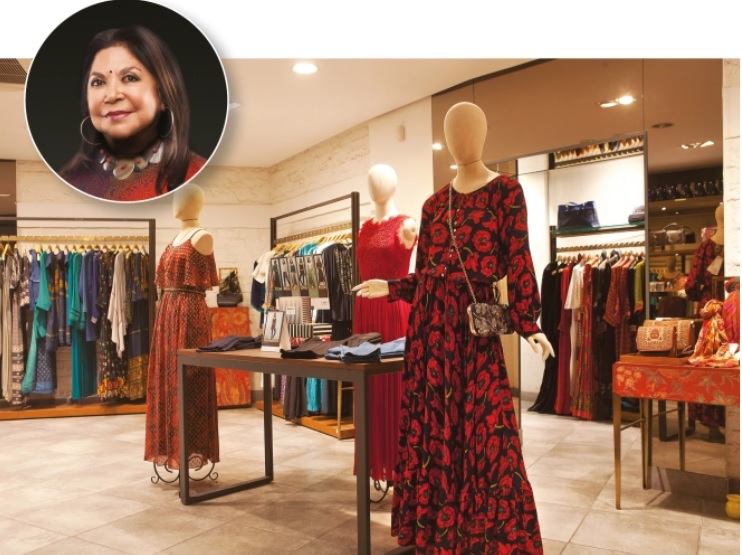

“Now you see people wearing bold gowns or black ties for one or two events, but Indians have kept a unique spirit of celebration and culture unlike anywhere else in the world. Bollywood has played a huge part in amplifying this because of the song and dance and colours and events such as Holi and Sangeet,” feels Tahiliani.
The bottomline: Luxury fashion is now more inclusive, and regional customers are the next big target area for brands.
(With inputs from Priya Kumari Rana)
(Published in Fortune India)
admin
June 7, 2023

M. Sriram and Aditya Kalra, Reuters (MUMBAI/NEW DELHI)
June 7, 2023
Starbucks is revamping its strategy to lure Indians, including children, with smaller, cheaper beverages as it looks to expand in small towns amid a fierce challenge from domestic startups in one of its fastest-growing markets.
Among the first foreign coffee brands to enter tea-loving India, the U.S. giant has taken almost 11 years to open 343 stores, in contrast with private equity-backed chains Third Wave and Blue Tokai that opened about 150 in the last three years.
“As you grow in size, you need to get new consumers,” said Sushant Dash, the chief executive of Starbucks in India, adding that the chain’s “pricing play” would help shatter a perception that it is expensive.
The company has launched a six-ounce drink, “Picco”, which starts at $2.24, and milkshakes for $3.33 as part of its revamp to target affluent Indians who prefer smaller servings.
Starbucks plans to open more stores in smaller towns, said an industry source, who spoke on condition of anonymity.
Both its new offerings are unique to India and unavailable in China, Singapore and the United States.
India’s small but fast-growing specialty tea and coffee cafe market is worth $300 million and set to grow 12% each year, Euromonitor estimates. Canada’s Tim Hortons and Britain’s Pret A Manger are also expanding, but have only a handful of outlets.
“Excessively large portion sizes are an American phenomenon,” said Devangshu Dutta, head of retail consultancy Third Eyesight.
“Indian consumers are value-conscious. If adjusting portion sizes down to what is more normal helps make prices accessible, that’s a double win.”
He was among the analysts who felt the move by Starbucks, operating in India in a joint venture with Tata Group, could further boost its sales, which hit a record $132 million in fiscal 2022/23.
Although Starbucks still dominates in India, rivalry is fizzing in the capital, New Delhi, and the technology hub of Bengaluru, where many Third Wave cafes are often as crowded as Starbucks outlets.
“We’ve lost 30 cups a day to them,” said a barista at a Starbucks shop in Delhi that sells 7,500 drinks a month, referring to a Third Wave that opened nearby months ago, but already sells 3,700.
Starbucks has faced homegrown challengers elsewhere, most notably in China, where its 6,200 stores service the biggest market outside the United States.
There, in just the last five years, Luckin Coffee has used discounts to lure customers to its 10,000 mostly pickup or delivery stores.
Bet On Chai
In India, where Starbucks has added domestic touches to its offerings over the years to boost their appeal, it is now stepping up that game, just as global giants McDonald’s and Domino’s have done.
It estimates that just 11% of Indian homes drink coffee, as opposed to 91% drinking tea. Hot milky tea, or “chai” as it is known in Hindi, is sold at roadside stalls by the hundreds of cups each day for as little as 10 rupees (12 U.S. cents).
Starbucks, which offered for years just one milk chai “latte” made with tea syrup, has launched “Indian-inspired” tea offerings laced with spices and cardamom, both favourites in many Indian homes, which start at 185 rupees ($2.24).
The drinks were introduced to attract those who do not drink coffee and shun Starbucks, said Dash, adding the company would retain its focus on coffee and not make chai a primary offering.
The launch of smaller, cheaper beverages in India indicates Starbucks may have seen “a decline in traffic related to a pushback” on higher prices, said Chas Hermann, a U.S.-based restaurant consultant and former Starbucks executive.
Competition, Small Cities Push
In May, people lured by a one-for-one offer queued in a street outside the first Starbucks store in the western city of Aurangabad, a YouTube video showed in scenes reminiscent of when it first opened in India.
But its rivals are catching up and a price war has begun.
Soon after Starbucks’ May launch of $3.33 milkshakes, designed to attract children, Third Wave launched its own range, a fifth cheaper at $2.71.
In Bengaluru, startup investors and founders hold meetings in Third Wave outlets. It has more than 40 stores there, exceeding the 35 of Starbucks, data from real estate analytics firm CRE Matrix shows.
Third Wave’s chief executive, Sushant Goel, said he planned to add 60 to 70 stores every year, with a focus on big cities. He saw Starbucks’ cheaper, small-sized drinks as a response to competition in “an incredibly price-sensitive market”.
Matt Chitharanjan, chief executive of Blue Tokai, said it had “seen success in converting customers from Starbucks”, partly because of lower prices.
While Dash said he was undeterred by competition, Starbucks recognises the threat, although privately.
In one lease deal for a Bengaluru mall reviewed by Reuters, Starbucks inserted a “cafe exclusivity” clause barring the mall owner from allotting space on the same floor to rival “premium” brands, including Third Wave and Blue Tokai.
“Going deeper into smaller cities, beyond the metros, is the only way to grow,” said Ankur Bisen, head of retail at India’s Technopak Advisors.
(Reporting by M. Sriram and Aditya Kalra; Additional reporting by Anushree Fadnavis in New Delhi, Varun Vyas and Euan Rocha in Bengaluru, Miyoung Kim in Singapore, Sophie Yu in Beijing and Hilary Russ in New York; Editing by Clarence Fernandez)
admin
June 5, 2023

Viveat Susan Pinto, Financial Express
June 5, 2023
A lot has happened at the Cafe Coffee Day (CCD) since its founder VG Siddhartha tragically passed away on July 29, 2019. Once India’s largest cafe chain, with a peak store count of 1,752 outlets in FY19, the company, part of Coffee Day Enterprises (CDEL), has now slashed its footprint by over two-thirds to 469 outlets in FY23, its latest results show.
The need to manage group debt and ensure that the business is profitable, say experts, has led to CCD shuttering stores over the last few years. The company was not immediately available for comment.
This has come even as the Rs 5,000-crore domestic coffee retail market is booming, with chains such as Starbucks and Tim Hortons announcing plans to ramp up store count over the next few years.
Consider this: Tata Starbucks, part of Tata Consumer Products, said in its Q4 investor presentation recently that it would introduce learnings from a pilot it ran in 2022, where the focus would be on introducing familiar and more beverage options, a new ‘Picco’ size (which is a smaller size) in beverages, a revamped food menu and more inviting store interiors. All of this was expected to aid sales growth and also help it get into newer markets, the company said of its future growth plans.
Tarun Jain, chief executive officer of Time Hortons India, meanwhile, said that the company was targeting 120 stores in the next three years and on its radar were metros as well as mini metros and satellite cities.
“The out-of-home market is booming after Covid-19 restrictions were lifted last year. And we are seeing this uptick in our stores,” Jain said of the response to Tim Hortons’ cafes in India, which were first launched in August last year. There are over 15 Tim Hortons cafes in the country across Delhi-NCR, parts of Punjab such as Chandigarh and Ludhiana and Mumbai. Starbucks has 333 cafes in 41 cities so far. “While the coffee retail market is growing, in CCD’s case the need to downsize has to do with internal issues. Sometimes a smaller footprint just helps to manage operations better especially when you are dealing with larger problems such as a debt overhang,” says Devangshu Dutta, chief executive officer of retail consultancy Third Eyesight.
Revenue from CDEL’s coffee retail business, which includes the CCD chain, wasRs 1,653 crore in FY19, which was down to Rs 869 crore in FY23. When compared to FY22, however, the revenue from this business has jumped by 75% in FY23, contributing as much as 94% to group turnover for the year. In FY22, the contribution of the coffee retail business to group turnover was 85%, its results showed. Losses in FY23 have narrowed to Rs 68 crore from Rs 112 crore in FY22. In FY19, the company had a net profit of Rs 10 crore.
Apart from cafes, CCD also has kiosks and vending machines installed in corporate offices, institutions and business hubs. While the number of kiosks has fallen over the last few years and is estimated at 250 now from a peak of 537 in FY19, the number of vending machines are growing after briefly slowing down over the last few years. From a peak of 58,697 crore in FY20, it is now close to 50,000 in number, the company’s latest results show. Group debt too, which stood at Rs 7,214 crore in FY19, is down by over two-thirds to Rs 1,711 crore as on March 31, 2023.
CDEL has over the last few years cut debt by selling assets, experts tracking the market said. Asset sales have included offloading a tech park in Bengaluru to private equity firm Blackstone for Rs 2,700 crore as well as selling off CDEL’s stake in tech firm Mindtree (which has now merged with L&T Infotech) for Rs 1,800 crore. CDEL still has around Rs 1,028 crore of dues to be recovered from Mysore Amalgamated Coffee Estates, a promoter entity, which owed around Rs 2,700 crore to the company five years ago.
(Published in Financial Express)
admin
May 26, 2023

Chloe Cornish in Mumbai and Eleanor Olcott in Hong Kong, Financial Times
May 26 2023
India’s biggest company Reliance Industries is seeking to dominate the country’s $10bn online domestic fashion market, striking a deal with Shein that will allow the rapidly growing Chinese retailer to return to the world’s most populous nation.
The retail unit of billionaire Mukesh Ambani’s petrol-to-telecoms conglomerate will tie up with Shein three years after India banned the online retailer’s app in its attempt to freeze Chinese companies out of the local market in retaliation for border clashes that had left at least 20 Indian soldiers dead.
“We can confirm Shein’s partnership with Reliance Retail and have no additional comment at this time,” said Shein, declining to answer questions about the structure of the deal. Reliance did not respond to queries about the partnership, which was first reported by the Wall Street Journal.
The addition of a low-priced offering gives India’s biggest listed company by market capitalisation an important boost in its battle to dominate the country’s growing online fashion retail market, which was worth $10bn in 2022, according to analyst estimates.
As part of the licence agreement, which was recently approved by the government, Shein will receive a percentage of profits generated from its fast fashion sales in India, people familiar with the deal said, while Reliance will help Shein build a supply chain with India’s garment industry for global exports.
The move into Indian sourcing comes as Shein diversifies its supply chain outside the coastal province of Guangdong in southern China, where it has 8,000 suppliers, mostly located in the garment hub of Panyu. Pandemic-era supply chain bottlenecks, rising labour costs in China and geopolitical tensions between Beijing and Washington have propelled multinational companies, including Apple and clothing retailer Mango, to migrate parts of their supply chains out of the country.
Shein, which does not sell in China, has been seeking to distance itself from its home country. Last year, it made its Singapore arm the de facto holding company, rapidly expanding its workforce there and shifting some of its operations from its China headquarters in Nanjing.
Shein will seek to minimise delivery times by having more manufacturing centres around the world. India, meanwhile, hopes to benefit from multinationals’ “China plus one” movement, a strategy that seeks to avoid investing only in China and aims to diversify supply chains to other countries.
Reliance has signed agreements with international luxury brands ranging from Balenciaga to Burberry, catering to India’s small but growing demographic of super-rich consumers. In addition, it has nearly 13,000 bricks-and-mortar stores across the country selling affordable apparel.
“Reliance’s other international brand partnerships are more premium, being luxury or designer brands,” said Devangshu Dutta, chief executive of consultant Third Eyesight. “India is still a relatively low per capita income economy. The bigger opportunity is in brands which are euphemistically called value brands, and that’s where Shein is positioned.”
For Shein, access to the Indian market will allow the company to boost sales as the pace of its expansion in Europe and the US begins to lose steam, according to people briefed on its growth figures.
The Financial Times reported that in a recent presentation to investors, Shein forecast that gross merchandise value — the total value of merchandise sold on its platform — will almost triple by 2025 to $80.6bn compared with the figure last year.
The lofty revenue projections come ahead of a much anticipated initial public offering, which promises to be one of the largest listings of a Chinese-founded company in years.
In fashion ecommerce, Reliance lags behind Myntra, one of India’s oldest ecommerce players, which merged with Walmart-backed Flipkart in 2014. Myntra accounts for around half of the online fashion market in India, according to Satish Meena, an independent ecommerce analyst based in Gurgaon.
“Myntra is the nucleus” for online fashion, said Ankur Bisen, senior partner at retail consultancy Technopak Advisors, adding that its “cohort” of shoppers is primarily young and urban. “With the Reliance and Shein partnership, they would like to get into this cohort and break the monopoly of Myntra,” Bisen said.
Meena estimates that Reliance’s ecommerce fashion business Ajio has about 4 per cent of market share, while Bisen put Ajio among the “long tail” of ecommerce fashion ventures behind Myntra. Reliance’s JioMart online shop also sells clothes, alongside groceries and electronics.
“If you look at Reliance as a company, it’s about dominance and it’s about long term,” Dutta said.
(Published in the Financial Times)
admin
May 25, 2023

Rochelle Britto & Shabori Das, The Economic Times
May 25, 2023
“Taiyaar Hoke Aaiye”. It seems the tagline has worked for the company which has been able to attract investors who came prepared for its offer for sale (OFS).
In a bid to reduce promoters’ shareholding down to 75% as per SEBI norms, Vedant Fashions, known for its ethnic wear brand Manyavar, floated the OFS on May 19 which saw huge participation — oversubscribed 1.4 times with bids for 34 million shares as compared to 24 million shares on the offer. The non-retail segment was oversubscribed 2.24 times.
The shares were offered at a price of INR1,161. While the stock initially fell 1.5% on May 19 to INR1,230, it was trading at INR1,268 on May 24, up 4.59% in five days.
The promoters have offloaded 16.9 million shares, which works out to 7% of the total equity shares with an option to sell additional 6.9 million (2.88%) shares, taking the total to 9.88%.
Manyavar represents the premium wedding market of the country and boasts of some big names as its brand ambassador — Virat Kohli, Amitabh Bachchan, Ranveer Singh, and Kartik Aaryan. With strong fundamentals, the company has grown at 30% CAGR over the last one year and investors feel this is one classic growth stock with high valuations that cannot be ignored. Vedant Fashions trades at a PE multiple of 73x while Trent, a competitor, has a PE of 119x.
The great Indian wedding
The sales of Vedant Fashion are highly correlated to the wedding season. The Indian wedding market is massive at USD50 billion with around 3 million weddings or events taking place every year. According to news reports, the spending is growing and is likely to be around INR3.75 lakh crore this year.
According to Crisil, weddings are getting bigger, grander, and longer, fuelled by higher disposable incomes and a surge in discretionary spending. It expects the ethnic-apparel market to grow between 15% and 17% to nearly INR1.38 trillion by 2025, supported by a growing desire among Indians to wear traditional attire instead of western wear for big celebrations.
While a lavish spending is done on everything, from venue to food to even flower arrangement, clothes hog the limelight. The business has become high-margin, elite, and high-fashion. And the organised market is growing at a very fast pace.
In the organised market, Vedant Fashion has a 40% market share which might be difficult to maintain as competition increases. “In the upcoming quarter, while April experiences a slight lull in wedding dates, May and June present an abundance of excellent opportunities. Moreover, as we analyse the entire year ahead, we are highly confident in the favourable wedding dates during Q3 and Q4. These trends align closely with our historical data, reinforcing our optimism for the current new financial year,”says Vedant Modi, chief marketing officer, Vedant Fashions.
“Vedant Fashions has successfully tapped into and emerged as the market leader, head and shoulders above competitors, in a segment that has been extremely fragmented. Festive wear and occasion wear is not immune to downturns, but is better placed to ride them out, and this makes it a very attractive product segment. However, Vedant have exploited this opportunity and scaled up much more successfully than other companies, beginning with menswear and then in womenswear,” says Devangshu Dutta, CEO, Third Eyesight.
Expansion spree
Vedant Fashions is expanding its retail footprint by adding around 75,000 sq ft retail area in Q4FY23. It has a total retail presence of 1.47 million square feet as of March FY23, spanning across 649 stores in 257 cities. There is a direct correlation between the addition of stores and the growth in sales, but the full potential of a new store takes some time. Almost 40% of the expansion has happened in the fourth quarter, so the full revenue (of the expansion) would come in the following year. Thus, many times the store growth doesn’t match the revenue growth.
The company is also expanding in US, UAE, London, and Canada to cater to the growing Indian community in these markets. For FY23, it has had sales growth of 30% at INR1,355 crore with Ebitda margins at 50%.
However, the growth witnessed by the company in FY23 has slowed down despite an upswing in events and weddings.
Vedant Fashions reported revenue growth of 76% in FY22 over FY21 and profit growth of 136% during the same period. While the slowdown in the growth rate can be attributed to settling down of revenge shopping post-pandemic, the number of social events has definitely increased to not take notice.
“Market valuations are an indicator of not only present value of a business but also perceived future value, and market leaders usually are rewarded with richer valuations(Page Industries is another such example),” adds Dutta.
The company’s latest presentation states that it has achieved 95% ROCE for FY23. The company is still in an investment stage and its cash flow statement says that INR249 crore is blocked in investments for FY23.

Market outlook
In a market that is lacking growth, the wedding season almost looks like recession-proof. The market has returned to growth mode even at a time when inflation is high and the overall economy is subdued. But then, the Indian wedding market — especially the part that Vedant Fashion tracks — is on a high and the growth will continue for a long time.
While the number of players is increasing, not many have a picture-perfect balance sheet with high ROEs and even higher Ebitda margins. Vedant Fashions has become the classic growth stock with very high valuations. It has a price/book value of 28x but investors feel that for a company that generates a high ROE and a high growth, the valuation is not extreme.
Mutual funds and institutional investors are making a beeline for the stock because of the growth rate and the overall size of the market. According to BSE filings, mutual funds account for 8.90% of the total holding where SBI Mutual Fund has the biggest share at 3.80%. On the other hand, retail holds 1.43%. Post the OFS, these numbers will go up.
The company successfully launched its initial public offering (IPO) last year. The stock debuted at an 8.08% premium over the issue price of INR866. The share slipped more than 4% on May 18 as the promoters announced plans to sell stake in the company.
Since listing, the company has gained 36% and has had a great run with its stock being up by a significant 27% over the last one year as compared to its peer Aditya Birla, which is down by 30.95%, and Nifty 50, up by just 12%.
The Indian apparel market is amongst the top three consumer categories. The pandemic made a lot of consumers switch to the online channel — which was also enabled by easy returns. However, while western apparel in India is a lot more frequently purchased when it comes to the online channel, the offline channel continues to be the primary source of consumers and footfall for ethnic-wear brands. The organised ethnic wear market in India is still relatively small, as the unorganised apparel category, ethnic and otherwise, continues to dominate.
The primary market for the unorganised ethnic wear is mostly women, driven by everyday and wedding wear categories.
According to Euromonitor International, a UK-based market research firm, the Indian apparel market is expected to be at USD58,773.8 million by the end CY23 (excluding the footwear market). The market is expected to grow at a CAGR of 8.6% during CY2023-CY2027.
“The apparel and footwear market experienced significant recovery in 2022 with the easing of Covid-19 restrictions. The industry also benefited from the return of festivals and weddings to their pre-pandemic fervour, as these are periods when the demand for categories such as ethnic apparel and other occasion-based apparel spiked,” says Euromonitor International.
The peer play
Prominent players like Aditya Birla Fashion, Reliance Retail, and Tata-owned Trent are making strategic investments in the country’s thriving ethnic wear market, estimated at INR1.84 trillion.
The recent acquisition of TCNS Clothing by Aditya Birla Fashion further solidifies this ongoing trend. With a transaction value of INR1,650 crore for a controlling stake of 51%, this acquisition highlights the company’s commitment to capitalising on the prevailing market dynamics.
According to Ashish Dikshit, managing director of Aditya Birla Fashion, ethnic wear commands the largest market share in India’s apparel industry, comprising 30% (equivalent to INR1.84 trillion) of the total domestic apparel market valued at INR6.15 trillion, while 80%-85% of the ethnic wear market, according to experts, is dominated by the unorganised segment. The branded or organised end of the market at 15%-20% (around INR28,000 crore – INR37,000 crore in size) is growing at around 20% per annum.
Trent, owned by Tata, has launched a new ethnic wear brand Samoh to increase its market share, as consumers splurge on fresh attire for every event. The new brand will help Trent to compete with Manyavar, and Aditya Birla in the ethnic wear space. The company also has two other fashion retail formats. Its flagship concept, Westside, caters to discerning customers who are aspirational and yet seek value for money. The other format, Zudio, with much smaller stores, operates in a more mass-priced segment. Besides, Trent runs a relatively new concept store, Utsa, which sells its own ethnic and indie wear private labels like Utsa, Zuba, Vark, and Diza.
A growth stock?
The management’s disciplined approach to growth, exemplified by the gradual scale-up of brands like Mohey and Twamev, has been instrumental in mitigating the risks associated with inflated working capital and excessive write-downs. This prudent strategy has safeguarded Vedant Fashions’ profitability and allowed it to maintain sustainable growth without compromising on scalability.
The company’s strong design capabilities with data-driven decision making (leading to no discounted sales), tech-driven supply chain, and auto replenishment model, exclusive vendor ecosystem, and franchise-based EBO expansion have helped scale up its business and achieve superior margins. Most brokerage houses give the stock a “buy” rating.
Manyavar’s decision to team up with some of the country’s top names like Virat Kohli, Ranveer Singh, and Kiara Advani (for Mohey) demonstrates its ambition to capture new markets and connect with a diverse customer base. Continuing the brand’s vision to associate with the best, it reinforced #DulhanWaliFeeling by looping in actress Kiara Advani in January 2023 as the new brand ambassador. With all of them on board, Vedant Fashions hopes to have a joyful journey in style!
By capitalising on their influence, Manyavar solidifies its position as a leading ethnic wear brand in India. But will the company live up to the investors’ expectations? For a growth investor, the answer is yes.
(Published in Economic Times)
