
admin
August 26, 2026
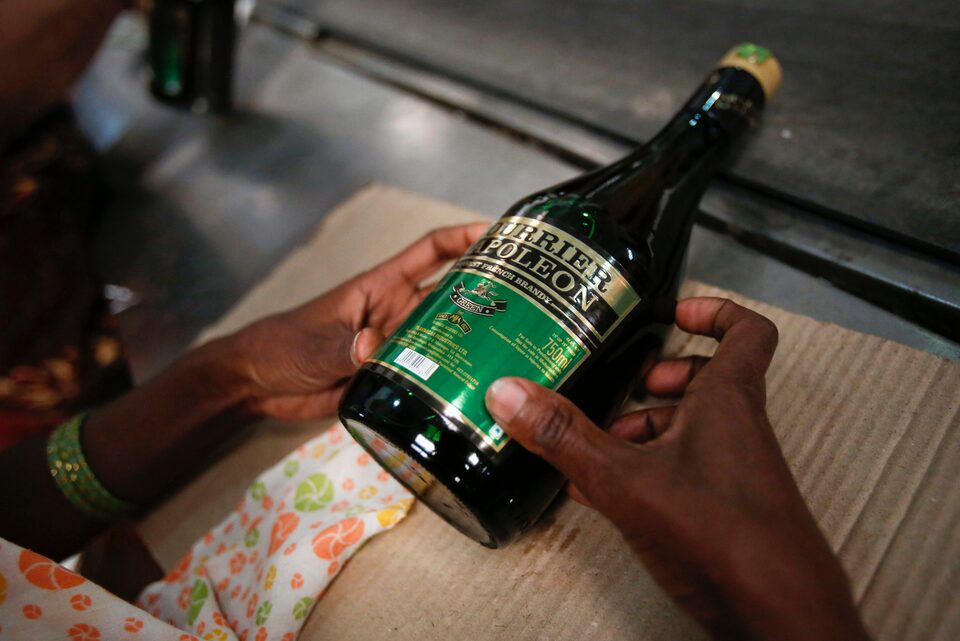
Praveen Paramasivam, Reuters
26 August 2026
India’s Tilaknagar Industries, is open to another large deal after its nearly $500 million purchase of the Imperial Blue whisky brand from Pernod Ricard, a top executive said, as consolidation gathers pace in India’s liquor market. Deals, including United Spirits’ purchase of Nao Spirits and Sazerac’s stake in John Distilleries, underscore growing investor interest in India’s spirits industry as liquor makers seek to broaden portfolios and gain scale.
“Definitely we will” consider another deal on that scale if the right opportunity emerges, Chairman and Managing Director Amit Dahanukar said. “Before Imperial Blue, I would have never given a target number which had two times our revenue.”
The maker of Mansion House brandy is open to any spirits category on acquisitions, Dahanukar said. “From an M&A perspective, we remain focused on the craft spirits space within the high-growth super premium and luxury segments,” he added.
Dahanukar did not disclose how much the company had set aside for potential deals. He said Tilaknagar would be “disciplined” in financing future acquisitions, citing the mix of debt and equity used for the Imperial Blue purchase.
The Imperial Blue acquisition has already transformed Tilaknagar’s scale. Revenue nearly tripled to 10.26 billion Indian rupees ($107.46 million) in the first quarter ended June 30, with the whisky brand accounting for nearly two-thirds of total sales volume.
Industry fragmentation and state-level regulations make it difficult for liquor makers to build national scale, creating incentives for consolidation, said Devangshu Dutta, founder of retail consultancy Third Eyesight.
India is expected to become the world’s largest spirits market by volume by 2032, surpassing China as millions of consumers reach legal drinking age each year, according to alcohol industry data provider IWSR. ($1 = 95.4800 Indian rupees)
Reporting by Praveen Paramasivam in Chennai; Editing by Dhanya Skariachan and Anil D’Silva
(Published on Reuters)
admin
January 26, 2024

Sagar Malviya, Economic Times
Mumbai, 26 January 2024
Hindustan Unilever and United Spirits together present a study in contrasts that seemingly reinforces the current purchasing trends in India’s consumption sector. At the country’s biggest consumer-goods and alco-bev companies, respectively, premium brands are flying off the shelves, but mass-priced products remain relative stragglers.
“At the premium and luxury ends, they (consumers) are continuing to spend, continuing to experiment, continuing to do repertoire drinking, especially experimenting with the white spirits, drinking at home,” Hina Nagarajan, managing director at Diageo-controlled United Spirits, told investors in a post-earnings call. “However, Middle India, or the value-oriented consumer, is actually cutting down on the number of occasions (to spend) to manage their money.”
The maker of Johnnie Walker and Smirnoff posted a 12.4% volume decline in the mass-priced segments, while pricier prestige and above categories saw a 10% growth during the December quarter. The Indian unit of the world’s biggest distiller said it expects this trend in purchasing behaviour to continue over the next couple of quarters.
At Hindustan Unilever, the country’s biggest consumer company by both sales and market value, the story isn’t vastly different. The FMCG bellwether said its premium portfolio expanded more than two-and-a-half times the mass segment over the past few quarters.
This trend was seen even in the rural areas that make up nearly half the annual sales at the maker of Dove soaps and Glow & Lovely skin creams. Pricier products now constitute a third of Hindustan Unilever’s total sales. “In rural areas, there are people who can afford and spend money, and hence, the premium portfolio in has also grown well – like it has grown in urban parts of the business,” Rohit Jawa, managing director, Hindustan Unilever, told investors after the December-quarter earnings. “We have always seen that essential and discretionary are the two realities of (the) rural (market).”
Incomes & Business Cycles
This dichotomy in purchase decisions appears to be a function of income disparity and is market-agnostic, experts believe. For instance, rural India that accounts for nearly 40% of the overall FMCG market saw a noticeable drop in demand for a year due to inflation and erratic monsoons. Cities, meanwhile, appear to be at the vanguard of overall consumption demand across categories as urban incomes, typically linked to organised sectors of the economy, are more resilient to business cycles and promise better protection against broader inflationary pressures. “Even if the consuming class, mainly upper and middle class, saw an impact on their incomes, it is still not significant to affect their discretionary spends,” said Devangshu Dutta, founder of Third Eyesight, a strategy consulting firm. “There is a buffer available for higher income growth and it will hit them later in any economic downturn. At present, it is felt in the lower-income segment.”
Over the past decade and a half, consumer companies expanded sales by pushing both pricier and affordable products. Companies still have budget-friendly options in their portfolio, but lower incomes, especially in rural areas, appear to have dented purchasing power at the budget end of the market. “The real pressure on the wallet is on the lower side, where we do see upgrades are not happening from country liquor to either the popular category or the lower end of prestige,” said Nagarajan at United Spirits.
(Published in Economic Times)
