
admin
December 23, 2022
ET Bureau, Dec 23, 2022
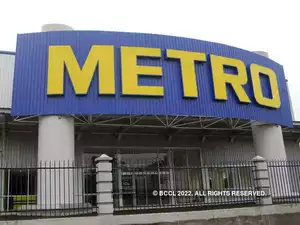
Reliance Retail Ventures, a subsidiary of Reliance Industries and the holding company of the group’s retail businesses, signed definitive agreements to acquire German wholesaler Metro AG’s India business – Metro Cash & Carry India-for a total cash consideration of ₹2,850 crore.
As part of the deal, Reliance will get 31 large format stores in 21 cities as well as the realty portfolio that includes six store-occupied properties, 3,500 staff and Metro’s 3 million B2B customers, of which 1 million are frequent buyers. The deal is subject to regulatory and other conditions and is expected to be completed by March 2023, the companies said on Thursday. ET had first reported in its edition dated Oct 15 that Reliance is the frontrunner to acquire Metro’s India business.
Metro AG said in a release that the India business valuation implies a sales multiple of 0.6x based on sales in the year ended September and takes into account lease rental and other related liabilities of e150 million (₹1,320 crore). Metro India generated sales of ₹7,700 crore (926 million euros), its best ever, in the year ended September.
Metro expects a transaction gain of about 150 million euros and an earnings per share (EPS) gain, once the deal closes.
The move will help Reliance consolidate its presence in the B2B trade segment, which it calls new commerce and is among its next big growth drivers, intensifying competition with Udaan, Amazon and Walmart-owned Flipkart. Reliance owns and runs the country’s largest retail business. All Metro India stores will continue to operate under the Metro brand during an agreed transition period.
Reliance Retail Ventures director Isha Ambani said the acquisition of Metro India aligns with its new commerce strategy of building a unique model of shared prosperity through active collaboration with small merchants and enterprises.
“We believe that Metro India’s healthy assets combined with our deep understanding of the Indian merchant and kirana ecosystem will help offer a differentiated value proposition to small businesses in India,” she said.
Metro AG chief executive officer Steffen Greubel said it is selling a growing and profitable wholesale business at the right time. “Indian trade industry is currently experiencing strong consolidation and disproportionate growth in ecommerce, including the B2B segment,” he said. “Due to the market dynamics, a sizable investment would be required to further grow the business. Therefore, now is the right time to use the momentum and open a new chapter for Metro India.”
Metro said it aims for a leading market position in wholesale. Due to increasing market consolidation, accelerated digitalisation and intense competition, Metro India’s operations don’t fit Metro’s core growth strategy, it said. Abneesh Roy, executive director, institutional equities at Nuvama, said the price to sales ratio is 0.37, which seems fair, given the B2B segment is a low-margin business.
Reliance will gain a significant jump in revenue and established locations that it can expand or optimise under its own branding and formats, said Devangshu Dutta, founder of retail consulting firm Third Eyesight. “The additional shelf space will also be very welcome for its own FMCG brands,” he said.
(Published in The Economic Times)
admin
December 20, 2022
Metro AG global chief executive officer Steffen Greubel said the company is at a “very advanced” level of discussions on its India business, suggesting for the first time that it could be looking at an exit from the country soon.
“We are very advanced in the process regarding India and are at a certain maturity level in the process. It’s too early to share any information, but we have discussed it greatly,” Greubel told analysts when asked if he is looking at a possible withdrawal from India and the status of talks. “We are very deep in the (sale) process in India,” he said last week while announcing annual earnings.
The German wholesaler grew its Indian business by 21% to $982 million during the year ended September, as per its latest annual report.
Last month, ET reported that Reliance had agreed in principle to buy Metro AG’s cash-and-carry wholesale India business for ₹4,000-4,500 crore.
Its unit Reliance Retail is already the biggest grocery retailer in the country with over 2,400 stores across formats while Metro operates 31 wholesale stores in India with seven of them on company owned land in prime locations. The company hasn’t publicly stated that it’s looking to leave India. Metro would be the second big international wholesaler retailer to exit India, if this happens. French retailer Carrefour wound up its India business in 2014 after struggling with sales for four years.
Globally, Metro is the world’s fourth-largest retailer by revenue. In India, it doesn’t sell directly to consumers and is an organised wholesaler or cash-and-carry operator that sells merchandise to local kirana stores, hotels and catering firms.
It decided to put the India business on the block as part of a global decision to exit the country due to heightened competition, a tougher regulatory environment and the lack of a level playing field between local and foreign retail companies, industry executives said.
Experts said the difficult European and global economic environment, regulatory restrictions in India, tough competition from domestic Indian groups and thin margins in the B2B business in India may have led Metro to focus on growing its core markets in Europe.
“Though India is, indeed, a long-term strategic market for companies looking at global growth, whether retail or B2B, not every business model from other geographies can be successfully transplanted or rapidly scaled in India, and Metro’s business footprint in India may be far smaller than they may have expected in the two decades of presence here,” said Devangshu Dutta, founder of retail consulting firm Third Eyesight. The choice to be present in different countries is always a dynamic one for global retailers and entry or withdrawal is driven by individual strategies, rather than solely on the merit of the market itself, he said.
“In September, the management board reported on the current status of the audit of strategic options for Metro India,” according to the annual report.
Overseas investment in offline trade has been a tricky issue, despite India allowing 100% foreign direct investment (FDI) in wholesale trade on a cash-and-carry basis. Metro was one of the first companies to enter the segment in India in 2003. Lobby groups representing small Indian retailers have accused overseas retailers of violating FDI rules, which the foreign companies have consistently denied. Some trade lobbies have complained to the government that a few global wholesalers have been flouting FDI rules by selling to consumers directly, which is not allowed as per current regulations.
(Published in The Economic Times)
admin
September 20, 2022

New Delhi: The launch of online shopping experience by WhatsApp, along with Jio platforms, the holding company for the digital services businesses of Reliance Industries (RIL), will help these companies to take on e-commerce behemoths such as Jeff Bezos-controlled Amazon and Walmart-owned Flipkart.
Experts are of the view that the partnership will give JioMart, the e-commerce platform of RIL, around 48.7 crore WhatsApp users in India. At present, the total annualised active e-commerce users in the country are only 20 crore.
Rohan Agarwal, partner at research firm Redseer, told Business Standard: “WhatsApp is the primary messaging app for most Indians and the partnership shows the level of access JioMart would have to reach out to them.”
He went on add that it would help in expanding the reach of the e-commerce to users who might not be accessing online retail platforms.
To recap, speaking at the 45th AGM of RIL on Monday (August 29), Isha Ambani, director, Reliance Retail Ventures Ltd (RRVL), gave a presentation on placing online grocery orders using Meta-owned WhatsApp and making payments.
In a global first, JioMart on WhatsApp will aid users in India, including first-time online shoppers, to have a new shopping experience in ordering a wide range of groceries on WhatsApp. They will be able to shop via JioMart’s entire grocery catalogue by easily selecting their favourite items. Also, they will be able to add these products to the cart and pay without leaving the WhatsApp chat.
Mark Zuckerberg, founder and chief executive officer (CEO), Meta, said the association with JioMart would enable people to buy groceries from JioMart in a single chat.
Agarwal highlighted that most of the online grocery businesses generate from big cities and this alliance will be an opportunity for small cities and towns.
The financial daily quoted Devangshu Dutta, CEO, Third Eyesight, as saying that the partnership will have a big impact on the entire e-commerce industry.
He told the publication: “Reliance is the largest retailer in the country and with deep pockets. It wants to (tap) not just the big cities but small cities and towns as well. Given the fact that WhatApp is something consumers are comfortable with, and grocery is related to high-frequency purchases, they are firing on all cylinders.”
Dutta added that the crucial thing for both companies to be successful is to create a delivery process that is quick and cost-effective.
Source: timesnownews
admin
August 31, 2022
Isha Ambani, director of Reliance Retail Ventures Ltd, said on August 29 that the company would soon enter the packaged consumer goods segment. Here’s how the move would impact the segment and existing FMCG players.

With this foray, Reliance Retail will be competing with the likes of FMCG behemoths like Hindustan Unilever, Nestle, and Britannia.
Reliance Retail’s announcement on August 29 that it would enter the packaged consumer goods segment has created buzz in the market.
The retail giant’s entry into the so-called Fast-Moving Consumer Goods (FMCG) sector is set to intensify competition as it does in every new industry that its parent, Reliance Industries Ltd (RIL), enters, experts say.
With the venture, Reliance Retail will be competing with FMCG behemoths like Hindustan Unilever, Nestle and Britannia in an industry valued at over $110 billion.
Even so, the company potentially confronts multiple challenges in its intended venture into FMCG.
“The competition intensifies in every segment that Reliance gets into because of their approach of being aggressive and not just in terms of growth. The company also wants to acquire market share very rapidly. The telecom sector was a prime example of this,” said Devangshu Dutta, CEO of retail consulting firm Third Eyesight.
“However, Reliance’s entry into any consumer-facing business has always been a long play,” he added.
The intended entry of Reliance Retail, the retail arm of RIL, into FMCG was announced by Isha Ambani, director of Reliance Retail Ventures, at RIL’s 45th Annual General Meeting (AGM) on August 29.
“I am excited to announce that this year, we will launch our Fast-Moving Consumer Goods business. The objective of this business is to develop and deliver high-quality, affordable products which solve every Indian’s daily needs,” Ambani told shareholders.
Isha Ambani was introduced as the leader of the company’s retail business by Mukesh Ambani, her father and Chairman and MD of RIL, at the AGM.
In his speech, Mukesh Ambani also said that he is hopeful of the retail arm emerging as the largest segment within the group.
Private labels
Reliance Retail already has a presence in the FMCG segment in the form of private labels that are sold in the company’s chain stores such as Reliance Smart, Reliance Mart, and its online grocery platform JioMart.
Brands like Good Life, Best Farms, Desi Kitchen, Snac Tac, Yeah!, Safe Lite, Petals, Mothercare and Calcident are some private label FMCG brands that the company sells.
Private labels (including in the fashion and lifestyle segment) contribute 65 percent of the company’s revenue.
According to analysts, the company initially is going to expand its private label offerings and will focus on segments in which it already has a presence.
“The products which it plans to sell range from groceries like pulses and grains, edible oils, flour, dry fruits, spices, pickles, pastes, idli dosa batter, snacks which include biscuits, namkeens and sweets, ready-to-cook meals, ketchup, jams, carbonated drinks, fruit juices, breakfast cereal, oats, muesli, honey, sauces, tea and coffee in the foods space,” said a note by Edelweiss.
In the non-foods space, the company sells products like soaps, shower gels, hand wash, face wash, hair oils, talcum powder, sanitisers, sanitary pads, diapers, toothpaste and toothbrushes, nail enamel, beauty and hair accessories, and daily essentials including deodorants, nail clippers and scissors, the securities firm said.
Edelweiss said it expects Reliance Retail to initially target the commoditised parts of FMCG like pulses and grains, edible oils, flour, dry fruits, spices, pickles, pastes, idli and dosa batter, namkeens, sweets and lower-end detergents.
Potential strategies
Experts indicate that much on the lines of its earlier playbook, Reliance Retail is likely to adopt organic as well as inorganic strategies for growth in the sector.
“Reliance aims to be a dominant player in every segment and, hence, the company, besides organic growth opportunities, is also likely to look out for acquisitions in the space,” said Dutta of Third Eyesight.
Edelweiss also expects Reliance Retail to acquire regional entities and Direct-to-Consumer (D2C) brands and also target unorganised/regional brands in most FMCG segments it enters.
The company, analysts said, will also look at value-play to gain penetration into the categories.
Impact on the competition
According to experts, the move is set to intensify competition in the segment and may have an impact on existing FMCG companies in the near term.
“We don’t expect a big impact on numbers of existing players from a two-three years’ perspective. However, near-term multiples could come under risk for some companies Hindustan Unilever, Britannia, Marico, Adani Wilmar, Godrej Consumer Products, etc. It will not have much impact on Nestle, Colgate, Dabur, ITC,” Edelweiss wrote in its note.
The impact on the industry will depend on the level of aggression Reliance Retail summons in product launches.
Challenges
FMCG is a well-established segment with well-known brands that have a huge distribution network, and cracking the market would be the biggest challenge for Reliance Retail, industry experts suggested.
“It is tough for new players to get shelf space in kirana (grocery stores). Earlier, we have seen some retailers entering the segment but with little success,” Edelweiss said.
“The existing players have decades of loyalty with consumers and relationships with distributors,” it added.
Analysts indicate that even after getting shelf space, new FMCG players have to constantly innovate to stay ahead of the curve.
“A company can offer early-stage incentives, launch offers to retailers to grab the shelf space but then it has to keep reviving that engine constantly, which is not easy,” said Dutta.
Although Reliance Retail has a significant share of modern retail trade through its grocery chains, the company needs to build a multi-tier distribution network, especially in general trade, which commands 80-90 percent of FMCG sales.
Disclosure: MoneyControl is a part of the Network18 group. Network18 is controlled by Independent Media Trust, of which Reliance Industries is the sole beneficiary.
admin
August 29, 2022
By Sharleen D’Souza & Sourabh Lele
‘First-ever end-to-end shopping experience’ on messaging platform, says Mark Zuckerberg

Meta Platforms Inc, the parent company of WhatsApp, will partner with Reliance JioMart for a service where WhatsApp users can buy groceries on the messaging platform from the Indian retail firm.
Mark Zuckerberg, chief executive officer (CEO) of Meta Platforms, said in a Facebook post, “[I am] Excited to launch our partnership with JioMart in India. This is our first-ever end-to-end shopping experience on WhatsApp–people can now buy groceries from JioMart right in a chat.”
“Business messaging is an area with real momentum and chat-based experiences like this will be the go-to way people and businesses communicate in the years to come,” he said in an announcement coinciding with the annual general Meeting (AGM) of Reliance Industries the parent company of JioMart.
A Reliance press statement said the service “will enable users in India, including those who have never shopped online before, to seamlessly browse through JioMart’s entire grocery catalog, add items to cart, and make the payment to complete the purchase–all without leaving the WhatsApp chat.”
WhatsApp users can shop on JioMart via by messaging “Hi” to +917977079770.
Mukesh Ambani, chairman and managing director of Reliance Industries, said, “The JioMart on WhatsApp experience furthers our commitment to enabling a simple and convenient way of online shopping.”
“Reliance Retail is looking at touching as many consumers across the country and WhatsApp is a logical platform as India is the largest market for the messaging app in the world,” said Devangshu Dutta, CEO of Third Eyesight, a retail consultancy firm. While WhatsApp is important for growth, Reliance Retail will also need to work on product availability and the cost of delivering to the customer, he said.
Ambani said Reliance’s retail business model has “five imperatives”, or ‘Panch Pran’. These include: enriching customer experience using technology; operationalising and growing multiple channels; integrating with small merchants and providing them a platform to prosper. The fourth imperative is to expand the product portfolio and the fifth one is to strengthen logistics and supply chain.
Isha Ambani, director at Reliance Retail Ventures, said at the AGM that the digital commerce platforms–reliancedigital.in and JioMart–enabled the retail major to deliver 93 per cent of online orders from stores within six hours. “We rolled out our JioMart Digital (JMD) initiative during the year. The platform enables small electronics merchants to sell the entire product portfolio of Reliance Retail on an assisted selling model, helping them deliver superior customer experience and growing their income,” she said.
The company’s new commerce initiative is on course to partner with one crore merchants as it expands to cover the entire country in the next five years, Isha Ambani said.
Last year, Reliance Retail entered pharmacy retail with the acquisition of Netmeds. That year, it launched new operations through Netmeds Wholesale and onboarded merchants in 1,900 towns and cities.
Source: business-standard
