
admin
September 21, 2016
Richa Maheshwari, The Economic Times
Bengaluru, 21 September 2016
 In
2014, Domino’s India sold 120 million pizzas, twice the number of
burgers McDonald’s served in the country in the same year. The figures
may have changed somewhat since, but India’s prodigious craving for
pizza, especially with a generous helping of paneer or chicken tikka,
remains unchanged.
In
2014, Domino’s India sold 120 million pizzas, twice the number of
burgers McDonald’s served in the country in the same year. The figures
may have changed somewhat since, but India’s prodigious craving for
pizza, especially with a generous helping of paneer or chicken tikka,
remains unchanged.
The man who helped stoke this appetite for the Italian staple is Ajay
Kaul.
In
2005, 52-year-old Kaul became the chief executive of Jubilant
Foodworks, which owns the franchise rights for Domino’s in India,
Nepal, Bangladesh, and Sri Lanka. From then on, he expanded the chain
from just 93 outlets to over 1,062 stores across the country, making
India the largest market outside the US for the American brand.
On
Sept. 19, after over a decade at the helm, Kaul announced his
departure. The precise reasons for the exit aren’t clear; in a
statement, the company only said that Kaul wants to “evaluate and
pursue opportunities” elsewhere. Kaul’s exit comes after a management
rejig at the company was announced earlier this year.
Nonetheless,
the move comes at a challenging time for Domino’s. The pizza chain is
struggling to boost same-store sales (a measure of sales at stores open
for at least a year) amid growing competition from stand-alone
restaurants. After the news broke, Jubilant’s stock price plunged by
over 8% on the Bombay Stock Exchange. Kaul will continue in his current
role till March 2017.
Making pizzas
mass
When
Kaul, an Indian Institute of Technology-Delhi alumnus, took over
Jubilant Foodworks, Indians had already been introduced to pizzas and
burgers, thanks to local chains such as Nirula’s, apart from Domino’s,
McDonald’s, and Pizza Hut.
But they still weren’t spending
big on eating out or ordering in. In the early 2000s, Domino’s was
still considered an expensive brand, especially among middle-income
consumers.
Soon after, Kaul, who attended Xavier School of
Management (XLRI) in Jamshedpur in 1989, realised that Domino’s needed
to change the game by selling inexpensive pizzas.
In a 2006
interview with the DNA newspaper, Kaul said that while Domino’s was
well-accepted among the higher-income and upper middle-income groups,
its penetration was below satisfaction in the middle and lower-middle
strata.
That’s why, between 2006 and 2008, Domino’s introduced
the Fun-Meal pizza range at Rs. 45, and later the Rs. 35 Pizza Mania
campaign that brought the price of a single serving of pizza (i.e for
one person) down to less than a dollar. These campaigns “dramatically
expanded the pizza category in India,” according to Kaul, outdoing
Pizza Hut’s attempts at lowering prices.
Indeed, the rock-bottom
prices paved the way for Jubilant to expand beyond metro cities to
smaller towns like Bhopal, Madurai, and Belgaum. Gradually, it also
expanded its India menu, adding cheese-burst pizzas, pastas, and
desserts.
Kaul, who spent a decade working in logistics firm
TNT Indonesia before coming to Jubilant, also bolstered Domino’s
delivery service, promoting its “30 minutes or free” campaign.
The
efforts paid off big time. In 2012, the chain hit 500 outlets across
India and has doubled since. Today, Domino’s is much bigger in terms of
number stores than McDonald’s or KFC. Pizza Hut, its biggest direct
competitor, has only 450 outlets in the country.
“While
pizza was already part of the fast-food mix, over the last 10 years or
so, Domino’s India brought it to the forefront through its systematic
and aggressive growth. Ensuring a flavour mix attuned to the Indian
palate, penetrating into locations that were not previously serviced,
adding dine-in to a brand that essentially had delivery-based DNA, were
all part of this growth,” said Devangshu Dutta, CEO at consulting firm
Third Eyesight.
Kaul also pulled off a successful
Rs329-crore initial public offering (IPO) in 2010 and spearheaded the
India entry of coffee and donut chain Dunkin’ Donuts through franchised
rights in 2012.
For the year ended March 31, Jubilant Foodworks
registered a turnover of Rs. 2,410 crore (US$362.2 million) and a net
profit of Rs. 114.56 crore (US$17 million). That’s 33 times more than
the Rs. 73 crore (US$11 million) clocked in 2005 when Kaul took over.
With
Kaul’s impending exit, though, Domino’s finds itself in a spot of
bother. Fast-food chains have been struggling lately as competition
from newer brands and a general gloom in consumer sentiment hinder
growth. Analysts reckon that the company will need solid leadership in
an environment where the fast-food model is undergoing transition.
“In
the last 3-4 years, consumer sentiment has been more muted. While
inflation has been pushing costs and prices up, the consumer doesn’t
have the same appetite for spending on eating out,” said Third
Eyesight’s Dutta. “All QSRs are facing the impact but, clearly,
Domino’s as a market leader is bound to show the effects of slowing
growth more visibly.”
(Published in Quartz)
admin
September 21, 2016
Richa Maheshwari, The Economic Times
Bengaluru, 21 September 2016
 Thailand-based quick service restaurant chain
Five Star Chicken has shut down 133 outlets in India in the past five
months owing to sluggish growth even as it seeks to push sales.
Thailand-based quick service restaurant chain
Five Star Chicken has shut down 133 outlets in India in the past five
months owing to sluggish growth even as it seeks to push sales.
The chain, which recently rebranded itself as Five Star, now has 220
outlets in Kerala, Tamil Nadu and Karnataka, and an outlet each in
Hyderabad, Goa, Pune and Mumbai, where it is testing the waters.
“We have shut down non-performing stores and slowed down our rate of
expansion,” said Sanjeev Pant, senior vice president-food business.
“While we were opening 10-15 stores in a month before, now it is down
to three-four stores in a month,” he said.
The company is now looking at a new strategy to gain growth momentum as
the Rs 6,000 crore quick service restaurant or QSR segment has been
reporting single-digit or negative same-store sales growth for the past
two years.
Other western-style QSR and coffee chains such as Pizza Hut, KFC and
Barista have either shut down or downsized operations in the past year
and a half because of consumers scaling back spends and increasing
pressure on their profitability.
Owned by Charoen Pokphand Foods (CP Foods), Five Star Chicken is
opening shop-in-shop stores in retail outlets, introducing private
label packaged drinks and expanding its menu offerings.
The company, which entered India in 2012, has tied up with supermarket
store Spar, Tata-led Star Bazaar and a few local bakeries to open six
shop-in-shop stores. These stores will entail lower real estate cost
than standalone stores and are expected to have a healthier footfall.
The Bengaluru-based company has launched two drinks, Masala Nimbu and
Green Apple, to attract customers who are drifting away from high sugar
concentrated drinks. Known for its non-vegetarian offerings, the
company has also revamped its menu from 100% non-vegetarian to 40%
vegetarian and 60% non-vegetarian.
“We are aiming to make the menu 50% veg and 50% non-veg to bring in our
vegetarian customers and loyal consumers who don’t prefer eating
non-veg every day,” said Rijoy Prabhakar, assistant vice president.
Experts said
India is a different market than the home markets of such overseas
chains, which is why often such brands take time to adapt to the local
requirements. Besides, the slow growth in this segment is here to stay,
they said.
“As the
expenses are going up, these chains are finding it difficult to pass
these on to the customer as Indians are discretionary spenders,” said
Devangshu Dutta, chief executive of consultancy firm Third Eyesight.
According to a Goldman Sachs report, titled ‘The India Consumer
Close-up,’ the QSR segment grew at 16% CAGR in the past decade and is
estimated to grow over 20% annually over the next few years.
(Published in The Economic Times)
admin
September 15, 2016
Sapna Agarwal, Mint
Mumbai, 15 September 2016
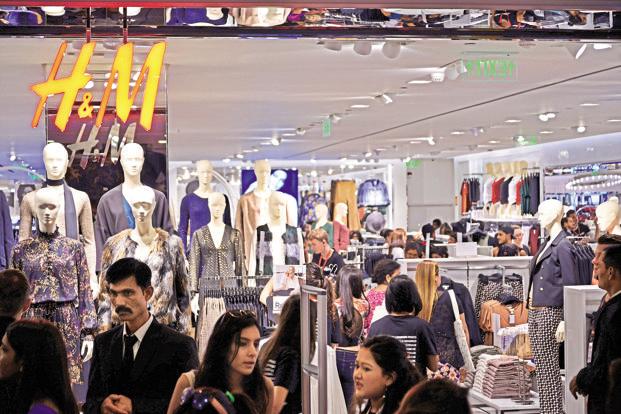 Foreign
luxury, apparel, and accessories companies that can own their own
retail chains in India—the government allowed foreign investment in
so-called single-brand retail in 2012—still continue to operate through
local franchises and distributors.
Foreign
luxury, apparel, and accessories companies that can own their own
retail chains in India—the government allowed foreign investment in
so-called single-brand retail in 2012—still continue to operate through
local franchises and distributors.
Of the 28 apparel and
accessories brands which have entered India since the country allowed
100% foreign direct investment (FDI) in single-brand retail, 23 came in
through a franchise or distribution partnership, according to data from
Third Eyesight, a retail consulting firm.
Under a franchise or
distribution agreement, a global retailer partners with a local
company. The latter pays a fee to the brandowner, and invests in
marketing and launching the brand in India. In the last year, Gap Inc,
Aeropostale Inc, Desigual, Rider and Ipanema have entered India through
franchise agreements.
“Most
companies do not see India as a strategic market, and tend to take
lower-risk export-oriented approach through franchise or distribution
relationships,” said Devangshu Dutta, chief executive officer, Third
Eyesight.
Foreign
investment into the business, regardless of the quantum, is an
indicator that a company is making a serious long-term commitment to
the country, since it brings along with it investment of management
time and effort as well.
One
exception is H&M Hennes and Mauritz AB. The Swedish fast fashion
retailer, which has come in through the FDI route, will have 12 stores
in India by the end of the year.
“The government’s decision to
allow single-brand retailers to open stores by themselves came at right
time,” Janne Einola, country manager, H&M India, said in an
interview in August while explaining that the timing matched the
company’s internal research which showed that India was emerging as a
good retail market to set up shop.
India is the second-most
attractive market for global retailers to expand after China, according
to the 2016 Global Retail Development Index by consulting firm AT
Kearney. According to the firm, India has, in the past couple of years,
improved the ease of doing business. Clarity on foreign direct
investment (FDI) regulations too have helped.
To be sure, the
challenges remain. India continues to be a complex market for foreign
retailers, where understanding dynamics at the local level is important
as the country’s 29 states have the power to opt in or out of FDI
reforms. Infrastructure bottlenecks, including archaic labour laws,
complex regulations, high attrition rates and limited high quality
retail space, remain important areas of concern for retailers, said the
AT Kearney report, adding that still, the potential is vast as the
country presents a $1 trillion retail market.
Meanwhile, even
the firms entering the country through franchise and distribution
partnerships have become a lot more sensitive to the challenges of
doing business in India.
Many are working with their local
partners to ensure that the products are right for the market, and also
available at the right price. Products sold through franchisees may
turn out to be costlier due to multiple margins (the brand owners, and
the distributor’s).
“We are collaborating with our partners at
every level— from store fit-outs to (product) assortment for India.
Also, they sell to us at manufacturing cost which then allows us to
price the goods at a globally competitive price in India,” said J.
Suresh, MD and CEO, Arvind Brands Ltd, the franchise partner of Gap and
Aeropostale in India.
In March last year, Arvind exited a franchise agreement with UK retailer Debenhams citing the chain’s steep pricing.
(Published in Mint)
admin
September 12, 2016
Suneera Tandon, Quartz
New Delhi, 12 September
2016
 The Platonic ideal
“Efficiency
is doing better what is already being done.” – Peter Drucker,
Innovation & Entrepreneurship: Practices and Principles
The practice
Research
firm Gartner defines supply chain as, “…the processes of creating and
fulfilling demands for goods and services. It encompasses a trading
partner community engaged in the common goal of satisfying end
customers.”
Sounds simple? But it hardly is. In fact, the
supply chain can be one of the most complex structures in a business,
piecing together design, development, sourcing, manufacturing, and
distribution. It gets even more complex when it relies on rural India,
which is scattered over 640,867 villages and are often hard to access.
Fabindia, a chain of retail stores, has spent close to five decades
scoping India’s hinterland to connect rural Indian artisans to urban
shoppers. Here’s how they did it.
Fabindia began its India
sojourn back in 1960 when John Bissell, who was first introduced to the
country in 1958 while on a two-year grant from the Ford Foundation,
decided to set up an export shop to sell home furnishings to overseas
customers. Bissell, whose work at the foundation involved advising
government-based craft organizations on handloom fabrics, spent a lot
of time traversing the length and breadth of the country.
In
1976, the export house diversified into retail through a small store
that sold leftovers from export orders in Delhi’s tony market of
Greater Kailash. It took another two decades for retail to became the
mainstay of the company’s business.
Fifty years later, Fabindia,
managed by John’s son William Bissell, is a widely recognized global
brand, known for handwoven and hand-made goods that connect some 55,000
artisans from the country to consumers worldwide. In the process, it
has achieved two broad goals: to market the handloom tradition of India
to the rest of the world and to provide sustained employment to
artisans in rural areas.
The chain sells everything from
handwoven saris, rugs, apparel, home d�cor, and organic food in its 220
stores across 83 cities in India, including eight stores in overseas
markets such as Dubai, Singapore, Malaysia etc. It also retails its
products online to 33 countries. For the fiscal year 2014-15, Fabindia
had a turnover of Rs1,148 crore (approximately $170 million).
But
behind the red and black Ikat-printed scarves, Kalamkari prints from
south India, and block-printed Bagru fabric from north India is an
extensive and complex supply chain that runs from villages across the
country, covering a third of India’s over 650 districts.
The
retailer has successfully taken its founder’s vision to enable social
change at the grassroots level while engaging in a profit-making
business for urban shoppers. It does this while building systems that
encourage not just fair remuneration to India’s rural artisans, but
also provides infrastructure, access to technology and systems, quality
guidelines, and timely payments to these craftsmen. Fabindia also
offers access to capital and raw materials to artisans working with the
retailer.
As William Bissell puts it in a Harvard Business
School case study: “It seems contradictory that we pursue both a social
goal and a profit, but I believe that is the only way to do it.”
Through most of the ’90s and early 2000s, Fabindia grew as a retail chain expanding modestly in the country’s top metros.
Since
the opening of the Indian economy through the economic reforms of 1991,
Fabindia’s interaction with artisans scattered across the country has
grown significantly (pdf). The complexity of the company’s supply chain
is far different from that of a regular manufacturer that works through
designated factories.
The company’s interaction with these
artisans is very localized since it works with them through multiple
associations. The retailer deals directly with individual artisans who
work out of their homes and also with clusters of crafters and rural
NGOs and organizations that have a crafts supply base.
In
addition, the company uses its 11 production hubs across the country,
which are basically aggregation points, to centralize orders and pair
up vendors with artisans. Each hub has a number of field offices
attached to it.
“The production hubs and field offices act as
nodal points for interaction with the artisans that constitute the
supply chain, which is one of the most unique in the world,” said
Prableen Sabhaney, head of communications and public affairs at
Fabindia Overseas.
While most artists have the skill and the
craft, they don’t have the acumen to decipher fashion trends for the
season. So Fabindia acts like a conduit between their crafts and the
market.
At Fabindia, a large proportion of products carry some
element of the handmade, which requires an ability to communicate with
artisans and institute quality control as most artisans work largely in
India’s hinterland. For instance, an 18-step process is required to
create a simple pattern in Bagru print, a traditional form of
block-printing using natural dyes perfected in the northern state of
Rajasthan.
And the company has spent years putting processes to
ensure newer collections reach the stores on time. Recently, the
product range has become more diversified as well.
As for
remuneration, Fabindia follows a bottom-up structure. It asks artists
what it costs them in terms of—time, energy, skills, and raw material
to hand-make a certain fabric or accessory and pays accordingly.
Analysts
who track the sector believe that Fabindia’s unique model sets it apart
from other domestic or export-focused handicraft companies purely
because of the sheer volume of artisans it works with.
“In
handicraft, there are several companies that have created substantial
export-led supply bases, which tap into craft both from the rural
artisans as well as those based in smaller urban centers,” Devangshu
Dutta, chief executive at consulting firm, Third Eyesight said.
“Among
these, Fabindia has certainly had the most visible success in terms of
size and brand profile domestically. Fabindia has achieved scale by
working through artists, intermediaries and supplier companies who have
acted as anchors in the rural communities,” said Dutta.
Sabhaney
offers that challenges span from co-creating contemporary products
while using traditional techniques to quality issues, since the
products are created in environments that are very different from where
they are finally used. The company also works hard to provide access to
raw material and capital across many hard-to-access areas—and doing all
of this at scale.
“The ability to do this and not lose anything
in translation has been and will continue to be Fabindia’s strength,”
added Sabhaney.
The takeaways
As
the market evolves with e-commerce and the entry of foreign brands,
which has altered consumer preferences and style-cycles, Fabindia knows
it needs to quicken its response to these changes.
Not all of
the innovations the company has tested remain. In a unique ownership
structure created by Bissell, Fabindia set up supplier regional
communities (SRCs), which were community owned companies, self-managed
by a group of artisans, weavers and craft workers in a particular
geography back in 2007. According to a case study by INSEAD (pdf),
these SRC’s “offered artisans joint ownership of resources and access
to common facilities. It also trained artisans and developed new
handicrafts. The SRC allowed Fabindia to consolidate supply capacity
instead of dealing with single-loom weaver units, and to implement a
standard system for production and delivery control.”
The 2010
book, The Fabric of Our Lives reveals how production worked under the
SRC model. A number of dedicated designers and sourcing officers worked
closely with rural artists giving them design inputs in tandem with the
latest trends in the market and order quantities through dedicated
distribution centers in key villages. These designers worked with the
weaver to develop samples. They were then shown by the designers that
refer it to a product selection committee. The fabric was then approved
and the cost price finalized. The quantity of fabric to be produced the
first time was pre-determined by software based on a minimum stock
requirement ratio and an order is given to the weaver to make the
product. The weaver produced the requisite amount of fabric in a month
and brought it into the distribution centers.
But the SRC model has now been diluted as the company looks more innovative ways to engage rural artisans.
In
the company’s next vision plan, it is focusing more on cluster
development that will basically help bring artisans up to speed with
the processes and market trends.
“There are plans for a greater focus on the handloom and hand-craft sector,” Sabhaney said.
“There
is a much bigger focus on the social aspect, there are going to be
significant investments in developing clusters and bringing them up to
what is required around the country,” she added.
(Published in Quartz)
admin
September 6, 2016
 Priyanka Pani, The Hindu
Businessline
Priyanka Pani, The Hindu
Businessline
Mumbai, 6 September
2016
 Going digital seems to be the mantra for some of
India Inc’s generation-next. Kavin Mittal, son of Airtel’s Sunil Bharti
Mittal; Ananyashree Birla, the eldest daughter of Kumar Mangalam Birla,
Chairman of Aditya Birla Group; Isha and Akash Ambani, scions of the
Reliance Group, are spearheading various online and digital ventures.
Going digital seems to be the mantra for some of
India Inc’s generation-next. Kavin Mittal, son of Airtel’s Sunil Bharti
Mittal; Ananyashree Birla, the eldest daughter of Kumar Mangalam Birla,
Chairman of Aditya Birla Group; Isha and Akash Ambani, scions of the
Reliance Group, are spearheading various online and digital ventures.
The new generation not only wants to carve a niche for itself by
getting into the online ventures but also plans to take on the digital
biggies.
Harminder Sahni, founder of consultancy Wazir Advisory, said that “the
trend clearly shows that the new generation wants to step out of the
traditional businesses and create a separate identity for themselves.
They don’t want to get associated with business that they don’t relate
to, a trend opposite to what their parents did.”
While Isha Ambani played a pivotal role in the launch of fashion portal
Ajio.com, Akash is deeply involved in RJio telecom venture.
Twenty-eight-year-old Kavin Mittal is the founder of messaging app
Hike, which recently raised about $175 million from Chinese Internet
giant Tencent at a $1.4-billion valuation.
Ananyashree Birla is coming out with her own luxury portal, CuroCrate,
never mind that the Aditya Birla Group has a fashion portal Abof.com.
Ananyashree, who started her first venture when she was 17, has
declined to join her father’s $41-billion diversified conglomerate.
According to
Devangshu Dutta, founder of advisory and research firm Third EyeSight,
“The new generation has grown up in the age of Internet. They
understand it better than their parents. Digital business, Internet of
Things (IoT), e-commerce are moving rapidly in India and hence it makes sense
for the GenNext to enter this space.”
But can the next generation compete with established players such as
Flipkart and Snapdeal?
Arvind Singhal of technology research firm Technopak says “digital is
the toughest segment as it has no entry barrier. Besides, even if you
have enough money and infrastructure, one can fail as in this space all
you need is agility, hunger to do something different and
innovation.”
(Published in The Hindu Businessline)
