
admin
January 28, 2012
 Mihir
Dalal & Suneera Tandon, Mint (A Wall Street Journal Partner)
Mihir
Dalal & Suneera Tandon, Mint (A Wall Street Journal Partner)
Bangalore/New
Delhi, January 28, 2013
 After
weak demand and piled-up inventory forced clothing retailers to
give discounts for longer than usual in 2012, companies such as
Arvind Lifestyle Brands Ltd, DLF Brands Ltd and Lifestyle International
Pvt. Ltd say they will not extend their sale period this year.
After
weak demand and piled-up inventory forced clothing retailers to
give discounts for longer than usual in 2012, companies such as
Arvind Lifestyle Brands Ltd, DLF Brands Ltd and Lifestyle International
Pvt. Ltd say they will not extend their sale period this year.
Last year, some retailers started offering discounts early and extended them till the end of March as they dealt with the overhang of a post-recession boom in retail: massive inventory.
The end-of-season sale lasted as long as seven-eight weeks, against
the norm of four-five weeks, industry executives said.
In the first half of 2012, too, discounts were extended for unusually
long as slowing economic growth and high inflation hurt demand.
However, growth picked up later in the year as a combination of improved consumer confidence and a flurry of festivals prompted shoppers to hit the stores.
“In the first two weeks of the sale period, we’re 10%
above last year on a like-to-like basis. This year, by 15 February,
the main part of the sale will be over. There will probably be
a couple of weeks of silent sale after that, at most,” said
J. Suresh, chief executive officer (CEO) of Arvind Lifestyle,
which runs the Megamart chain and sells brands such as Flying
Machine and Tommy Hilfiger.
Madura Fashion and Lifestyle’s Louis Philippe will not extend
its discounts for longer than four weeks this year as sales growth
in the months following the Diwali festival season had been “strong”
at over 25%, brand head Jacob John said.
“Sales have been good for us since August. It’s been
a combination of the FDI (foreign direct investment) announcement
by the government, which helped consumer sentiment, strong and
early winterwear sales, plus the numerous marriage season dates
post-Diwali,” said Rachna Aggarwal, CEO of Indus-League Clothing
Ltd, which owns brands such as Indigo Nation and Scullers.
Indus League’s sales growth had averaged 15-20% from August
to December, she added.
Retailers and experts also said that due to the insipid demand
last year, companies haven’t kept a large amount of inventory.
“The sentiment is more positive than before, so we will
see timely sales in 2013. Stock and inventory is being maintained
keeping that in mind, we won’t see a desperate situation
like last year,” said Dipak Agarwal, CEO of DLF Brands.
“Last year inventory had been stocked up, but reality
fell short of expectations and so (inventory) had to be liquidated.
This year retailers have been more careful,” said Devangshu
Dutta, CEO of retail consultancy Third Eyesight. “A number
of brands have also started giving huge discounts earlier in the
(end-of-season-sale) rather than towards the end, so sales may
not be stretched out as last year.”
Indus League has already started shipping in fresh merchandise
when a majority of clothes in its stores are last year’s
leftovers and still bear the on-sale sign.
Department store chain Lifestyle, too, will introduce a new spring-summer
merchandise in the first week of February, a company official
said.
However, Rajive Ranjan, managing director at German retailer
S. Oliver Fashion India Pvt. Ltd, expects early sales will continue
in India for sometime as retailers’ dependence on discounts
is high.
“But as retail will mature, this trend of multiple and preponed
sales will mature too. In the coming years, more retailers will
move down stock within the season and dependability on sales will
go down,” he said.
Third Eyesight’s Dutta warned that though revenues are
likely to show strong growth in the second half of 2012, retailers’
profits will take a hit as many companies offered promotions continually.
“Many companies were offering promotions throughout the festival
season starting from October. So my sense is that the second-half
topline (revenue) will be good, but margins will take a hit,”
he said.
Median Ebitda margins for the retail sector are likely to decline
by 50-75 basis points in 2013, India Ratings said in a report
last week.
Ebitda, or earnings before interest, taxes, depreciation and
amortization, is a measure of profitability. A basis point is
0.01%.
“Sales in 2012 were driven by discount offers,” India Ratings said, “and the trend is likely to continue in 2013, providing volume growth at the cost of margin.”
admin
January 20, 2012
The Hindu, BusinessLine
Purvita Chatterjee, January 20, 2012
The Bombay ‘Swadeshi’ Store at Fort in Mumbai may have patriotic leanings (it was started in 1906 by Indian patriot Bal Gangadhar Tilak and businessman Munmohandas Ramji) but today the home décor and gift retailer does not want to be perceived as an old-fashioned store brand catering primarily to NRIs.
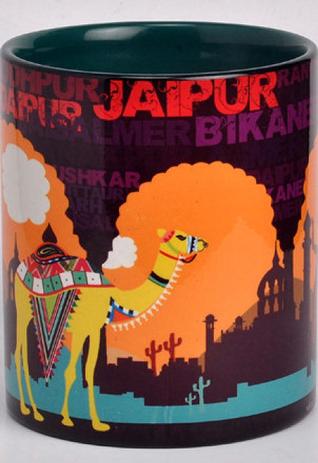
It is hoping to attract youth with its new brand, The Elephant Company, a young, quirky brand with products ranging from magnets and key chains to more expensive offerings such as wall clocks, at prices between Rs 200 and Rs 4,000.
Bombay Swadeshi Store, the parent company, has already spun off its Bombay Store brand as an independent subsidiary under the Bombay Store Retail Company.
It is now planning to add two new subsidiaries for its new brand of The Elephant Company and the e-commerce business, which are expected to serve as growth engines.
Speaking to Business Line, Mr Asim Dalal, Managing Director, The Bombay Store, said, “While Bombay Store is a serious brand, The Elephant Company is a colourful brand with youthful flavour. We are looking at more aggressive growth for this brand vis-a-vis the Bombay Store brand. We expect to take this brand to tier 2 & 3 cities and also intend selling it at other retail stores.”
The Elephant Company has a host of colourful products with graphics from India. “It’s all about the unique things in India which are put on plain vanilla products such as T-shirts and mugs to bags, cushion covers and clocks. The brand is not premium and we also intend selling it through the e-commerce route,” explains Mr Dalal.
There are already counters of The Elephant Company within the premises of retailers such as Crosswords and WH Smith and there are plans to launch stand-alone stores in the future. “We would be setting up smaller stores ranging between 170 sq. ft. and 250 sq. ft. in malls for The Elephant Company. Consumer insight tells us that people are not looking to buy the same old things which Bombay Store is already selling at its 17 outlets,” added Mr Anaggh Desai, CEO, The Bombay Store.
According to Mr Devangshu Dutta, of Third Eyesight, a retail consultancy, “Bombay Store had more generic products which could be replicated. But now with The Elephant Company, the store has products marked with its own brand where it can also command healthier margins.” Besides, the store has also created private labels such as Ishstyle (for fashion) and Chai Patti (for tea), which could lead to better margins.
The Bombay Store is also tapping into the overseas markets and has identified places such as Singapore, Dubai, London and Sri Lanka, which have considerable tourist attraction. It has already tied up with franchising solutions company Francorp International to make a foray into these new markets. “While franchising is an option, we may also form joint ventures in the markets which allow FDI,” added Mr Dalal.
The Rs 33-crore Bombay Swadeshi Store has already sold 14.9 per cent of its equity to investment company Fidelity Investrade to raise money for expansions in the past. “We need about Rs 30-odd-crore for funding the operations of the new subsidiaries like The Elephant Company and the e-commerce operations and may approach our existing investors for it,” said Mr. Dalal.
admin
January 19, 2012
Sapna
Agarwal, Mint (A Wall Street Journal partner)
Mumbai,
January 19, 2012
Dutch-based supermarket chain Spar International plans to partner
with multiple firms to expand its retail presence in India, a
senior company executive said on Wednesday.
This is a model the retailer practices globally, but in India currently it has at least 10 hypermarkets—in Karnataka, Maharashtra, Andhra Pradesh and the National Capital Region, among other places—in partnership with only Landmark group’s Max Hypermarket India Pvt. Ltd.
“The new partnerships will be for entering new regions and developing new formats to penetrate the market,” said Gordon Campbell, managing director of Spar International.
The chain follows a licensee model globally and has multiple partners in other emerging markets. For instance, in China, it has six retail partners and in Russia, eight.
In each of these countries, too, it will increase the number of licensees to 20 by 2015, Campbell said, but declined to give details on the number of partners the company would seek in India. It is looking to open 20 stores in the next three years with its existing partner Max. “So far, Max has invested close to Rs.600 crore in setting up hypermarkets and all our stores have achieved break-even within six months of starting operations,” added Campbell.
The new partners will help Spar aggressively ramp up the retail chain’s operations and expand its reach. For this, it is also tweaking its strategy by entering the supermarkets retail format.
In contrast, home grown retailers such as Reliance Retail Ltd and Aditya Birla Retail Ltd, which runs the More chain, have been focusing on the hypermarket format in the last few quarters after opening hundreds of supermarkets.
Spar’s global rival Wal-Mart Stores Inc. is present in India in a joint venture with Bharti Enterprises, and French retailer Carrefour SA is in the cash-and-carry business in which 100% foreign direct investment (FDI) is allowed.
The Indian government has put liberalization of foreign investment in multi-brand retail on hold in the face of resistance from within and outside the ruling coalition.
Earlier this month, it allowed 100% foreign direct investment in single-brand retail, but did not give any indication when it would free up multi-brand retail.
The size of retail industry in India is $450 billion and 8% of this market is organized retail, according to Technopak Advisors Pvt. Ltd, a retail consultancy.
“There is a huge potential for hypermarkets in India. The challenge is finding the right real estate,” said Devangshu Dutta, chief executive officer of Third Eyesight, a retail consultancy firm.
admin
January 17, 2012
Global quick-service restaurant brands are expanding their footprint in the quickly evolving Indian market. But some are also falling by the wayside.
Here are some perspectives from the industry (ET Now telecast video – about 6 minutes):
admin
January 13, 2012
Pallavi
Srivastava, Pitch
New
Delhi, January 13, 2012
Contrary to popular belief that allowing 100 per cent in single
brand retail will give impetus to luxury brands in India and bring
down costs, experts do not have high hopes.
The government of India, a couple of days ago decided to allow 100 per cent FDI in single brand retail product trading. Till now, only 51 per cent FDI was permitted. However, there’s no FDI still allowed in multi-brand retail trade.
The decision, according to a government notification is aimed at attracting investments in production and marketing, improving the availability of such goods for the consumer, encouraging increased sourcing of goods from India, and enhancing competitiveness of Indian enterprises through access to global designs, technologies and management practices.
Marketers and brand experts have welcomed the decision as it paves way for more reforms which had taken a back seat lately. Ramesh Srinivas, Partner, Management Consulting, KPMG Advisory Services; and Purnendu Kumar, Vice President, Retail & Consumer Goods Division, Technopak, feel that opening up the sector to 100 per cent FDI “is a good thing” and “brands will love it”.
However, they are disappointed with the riders that the government has put in, particularly the one that makes proposals involving FDI beyond 51 per cent, mandatory sourcing of at least 30 per cent of the value of products sold from Indian ‘small industries/village and cottage industries, artisans and craftsmen’.
The government notification defines ‘Small industries’ as industries, which have a total investment in plant and machinery not exceeding US$ 1 million. This valuation refers to the value at the time of installation, without providing for depreciation. Further, if at any point in time, this valuation is exceeded, the industry shall not qualify as a ‘small industry’ for this purpose.
While many international brands looking to invest in India could ignore the conditions, luxury brands still would not find the market conducive enough. “Most luxury brands will find it very difficult to source from small vendors for fear of brand and quality dilution. This condition will dampen enthusiasm of most foreign luxury brands,” says Srinivas.
Devangshu Dutta, CEO, Third Eyesight, feels that many luxury players already have their supplier base set up, so unless they are look at setting up a supplier base in India separately, they may not be able to comply with the 30 per cent sourcing restrictions. “Especially because it takes certain amount of lead time to develop the suppliers’ network and achieve a certain standard. That lead time should be allowed for luxury marketers who don’t have a supplier base in the country,” he says.
The permission for 100 per cent FDI in single-brand retail could be good news for some luxury brands who wants to take control of their operations in India. Dutta feels that many brands may still want to stick with an Indian partner because it will provide them knowledge about the consumer insight, market conditions and provide management support. “Not everybody will rush to convert existing joint ventures into 100 per cent ownership,” he says.
Another aspect that experts feel that could be a hindrance for luxury market to is the small size of the market in India. Consumers of luxury brands in India are global consumers and as demanding as luxury consumers in a European country or probably even more. “So the standards of quality and service among luxury brands in India are already fairly high. So there won’t be much change on that front,” Dutta says.
On the positive side, experts feel that advertising and promotions of luxury brands might go up a bit if there are new brands looking to create a niche for themselves in the market.
Kumar feels that what eventually will give fillip to the luxury
market in India is the “reduction in import duties.”
(This article was published in the magazine "Pitch".)
