
admin
September 26, 2026
Kartikay Kashyap, Brand Wagon/Financial Express
25 September 2026
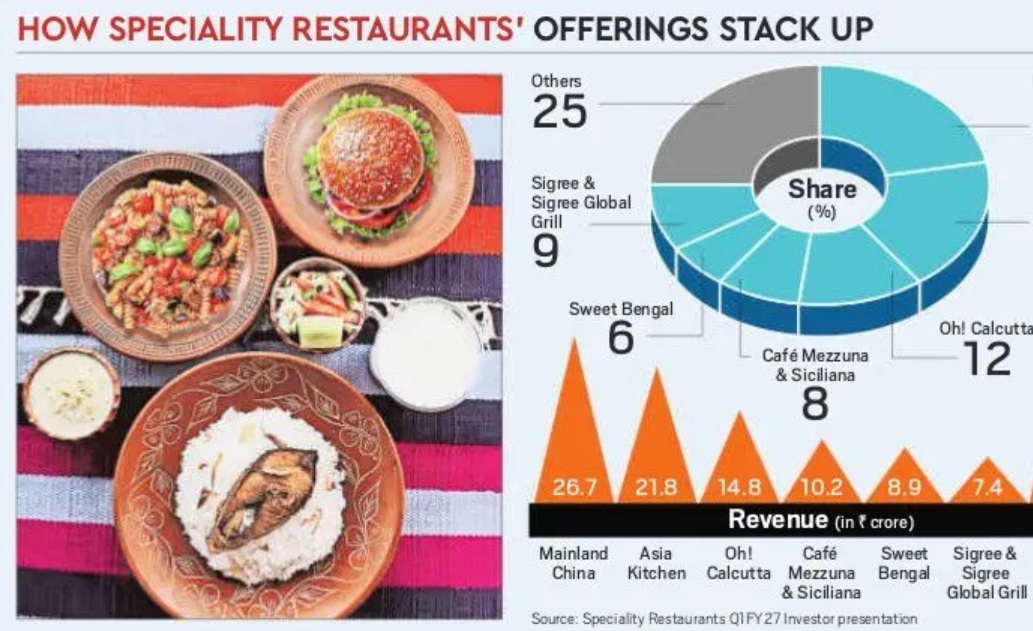
Walters Burger and Sweet Bengal could turn out to be the lynchpin of Speciality Restaurants’ expansion plan this year, helping it capture the fast-growing high-margin quick service restaurant (QSR) and cloud kitchen markets. Known for its sit down fine dining brands like Mainland China and Oh! Calcutta, Speciality Restaurants is working to expand a smaller selection of highly scalable brands. By aggressively rolling out physical stores alongside integrated cloud kitchens, like it has done across Mumbai and Pune, the 34-year old brand is looking to establish a massive delivery footprint with a highly optimised overhead.
Take designed-for-delivery Walters Burgers, for instance. Instead of offering massive, vertically stacked burgers that turn messy during delivery transit, it specialises in pairs of medium-sized, structurally sound gourmet burgers designed for a one-handed, mess-free eating experience.
This structural integrity makes it perfect for both high-volume delivery channels and curbside pickup.
Anjan Chatterjee, CMD, Speciality Restaurants, says Walters Burgers allows the company to “participate in the large and growing QSR/gourmet-burger opportunity through a format that is scalable and can address a younger consumer base”.
For its part, Sweet Bengal, rooted in Bengali culinary heritage, has a significant potential to take traditional sweets and gifting beyond their existing markets.
“Together, they demonstrate that our expansion strategy is not dependent on one format or one price point,” Chatterjee says. “We are building a portfolio across occasions ― from everyday consumption and affordable indulgence to premium dining and traditional gifting ― while leveraging the strength of our existing brands.”
As the food industry grapples with ingredient inflation, high cost of fuel and slowing discretionary spending, the company’s expansion strategy is going to be “cautious and sustainable”. It will open 20-25 new outlets every year.
Devangshu Dutta, founder, Third Eyesight, believes that Speciality Restaurants’ multi-brand portfolio spanning diverse cuisines, price points and formats has given it the opportunity to diversify risk during these uncertain times. “Restaurants are vulnerable to fashionability and economic swings like other discretionary, lifestyle businesses. Catering to varied dining occasions ― from casual impulse buys to premium dining ― the company has a wide consumer base, with a cushion against changing consumer preferences,” says Dutta.
Starting his journey in 1992 with a 40-seater dining outlet, Only Fish (now Oh! Calcutta), in Mumbai, the company’s house of brands now includes Asian and Oriental offerings Mainland China, Asia Kitchen, GONG and HAKA; North Indian and royal Mughal flavours Riyasat and Sigree, and buffet formats Global Grill and Flame & Grill. It launched Siciliana earlier this year to offer Italian flavours. In June, Chatterjee’s son Avik took over as CEO and currently holds the reins of its expansion engine.
Recipe for success
Speciality Restaurants operates 118 outlets and has a large presence in the Eastern and Western parts of the country. It operates Oh! Calcutta and Mainland China in Delhi and is planning to launch Gong in Vasant Kunj, Delhi, soon. The Kolkata-based company sees opportunities across markets like the National Capital Region, Chandigarh, Jaipur, Lucknow, among others. “Our expansion will remain market-led rather than driven by geographical presence. With a diversified portfolio, we have the flexibility to identify the right brand and format for the right market,” says Chatterjee.
But operating a disparate range of brands has its own set of challenges. “Managing separate supply chains for vastly different cuisines introduces complexity and cost,” says Third Eyesight’s Dutta.
Also, every new brand entails developing a separate brand identity. “They cannot follow the same marketing playbook for every brand,” says Ankur Bisen, senior partner, The Knowledge Company.
One might argue that many FMCG companies also have a large portfolio of brands, addressing the needs of different cohorts. But Bisen says product segments and services segments have different business realities. “The fixed cost is fairly low in the case of product companies which is why large FMCG companies can launch or manage multiple brands simultaneously. But the fixed cost in the food services sector is relatively high,” he shares.
Ken Research estimates that India’s food services market was around ₹7.1 lakh crore in 2025 and is expected to grow at a CAGR of 7.7% to touch ₹11.9 lakh crore by 2032. QSR chain majors Jubilant FoodWorks, Devyani International, Sapphire Foods India, Westlife Foodworld and Restaurant Brands Asia dominate the sector.
But Speciality Restaurants proposition of a diverse set of cuisines and formats targeting different sets of consumers might actually be its trump card. Brand building is Speciality Restaurants’ forte, says Naresh Gupta, CSO & managing partner, Bang In The Middle, and it also knows the formula to scale.
(Published in Brand Wagon / Financial Express)
