
admin
July 13, 2020
Written By Devika Singh
Start-ups such as HipBar, Drinkify and Liqhub tried their hands at alcohol delivery in the past, but hit regulatory hurdles
Zomato, for instance, has a total of 250 retailers on board so far, and has plans to partner with all the authorised government retailers in the cities where it is active.
Alcohol delivery is emerging as the next big thing in India’s e-commerce scene. BigBasket and Amazon recently acquired licences for delivering alcohol in West Bengal. Food aggregators Swiggy and Zomato are already offering alcohol delivery services in Jharkhand, Odisha and West Bengal.
This could be a lucrative business for e-commerce companies as several states continue to be under lockdown and consumers are wary of visiting liquor stores to buy alcohol, given the risks involved. Start-ups such as HipBar, Drinkify and Liqhub tried their hands at alcohol delivery in the past, but hit regulatory hurdles.
However, in view of the huge losses incurred by state governments during the lockdown — according to a report by the Reserve Bank of India, on average, Indian states collected Rs 15,000 crore per month as excise duty on alcohol in 2019-20 — regulations have been eased. This has attracted interest among several e-commerce companies eyeing the alcohol business in India, which Statista estimates is valued at Rs 2.4 lakh crore.
Prepping the tech
E-commerce firms venturing into this space are busy developing technology for age verification, which is critical from a regulatory compliance standpoint. Zomato has adopted a two-step verification process for ascertaining the age of the user, while Swiggy has developed an AI-based face recognition feature with OTP to automate age verification and user authentication.
“We have mandated a one-time instant age verification followed by a selfie of the customer. The integrated solution instantly digitises the customer’s identity card, checks if the customer’s selfie matches with the picture on the card, and then checks if the customer is really present in it or if it is a photo of a photo,” says a Swiggy spokesperson. The company has also introduced a crowd control feature for the safety of its delivery partners, which ensures there is no overcrowding at the retail stores during peak hours.
These companies are tying up with authorised retailers in specific cities for delivery. Zomato, for instance, has a total of 250 retailers on board so far, and has plans to partner with all the authorised government retailers in the cities where it is active.
Although these e-commerce players are in talks with other states to scale up their services, at the moment, their focus is on getting the processes right. “Alcohol delivery is complex, involving multiple stakeholders — governments, retailers, and brands — and strict operating guidelines. These are early days and it faces challenges typical to any new category, such as technology adoption by suppliers, stock availability, etc,” says Rakesh Ranjan, VP – Zomato.
Bottlenecks
Devangshu Dutta, chief executive, Third Eyesight, says following the diverse regulatory guidelines will not be easy for these companies. “Since every state has its own set of rules, adhering to them will be challenging for the companies entering this space, especially when they are eyeing pan-India operations.”
Zomato and Swiggy, on average, are charging Rs 60-100 per order for delivery, depending on the order size and distance covered. The Odisha government has fixed the delivery fee at Rs 100 for orders up to Rs 1,000, and beyond that for every Rs 500, charges go up by Rs 25, with a ceiling of Rs 300 on delivery charges.
Ankur Pahwa, partner and national leader – e-commerce and consumer internet, EY India, says a “reasonable” delivery fee is critical in the adoption of this service. “A customer buying 10 bottles of beer would not mind shelling out Rs 100 as delivery fee, but someone buying one or two products may not want to spend as much on delivery.”
He foresees that food aggregators would benefit from the impulse purchases, while grocery players would see planned orders coming their way, when customers are looking at stocking up for the month.
Rajat Wahi, partner, Deloitte India, says that these companies could expand into alcohol distribution going ahead, which, so far, has been tightly controlled by the states. “Currently, there are only 86,000 alcohol stores in the country, as compared to 10-12 million FMCG retailers. Distribution is the bigger play here,” he adds.
Source: financialexpress
admin
July 9, 2020
Written By Peerzada Abrar
The companies said this investment builds on the long-standing engagement between the two organisations that have been working together for several years

Arvind Fashions has a portfolio of renowned brands, both international and indigenous
The Flipkart Group has invested Rs 260 crore for a significant minority stake in retailer Arvind Fashions’ (AFL) recently formed subsidiary Arvind Youth Brands, which owns the Flying Machine brand. The companies said this investment builds on the long-standing engagement between the two organisations that have been working together for several years to address the demands and needs of the fashion-conscious youth in India.
An Indian brand with a 40-year legacy, Flying Machine has been retailing on the Flipkart Group platforms of Flipkart and Myntra for more than 6 years. With its brand legacy, design sensibilities and youth appeal, Flipkart said the brand is seen as a strong style partner across metros and smaller towns. Through this investment, the Flipkart Group and Arvind Fashions will work collaboratively to identify opportunities and synergies to innovate and develop products with strong value propositions at attractive price points.
“Flying Machine is a brand that is known in households across India, popular with the youth and synonymous with value and style,” said Kalyan Krishnamurthy, chief executive officer, Flipkart Group. “Through this investment, we look forward to partnering with the team at Arvind Youth Brands to continue to grow the market for its portfolio of products and enhance the strong brand equity that has been built over the last few decades,” he said.
Arvind Fashions has a portfolio of renowned brands, both international and indigenous. Some of these brands include US Polo Assn., Arrow, GAP, Tommy Hilfiger and Calvin Klein. It is also India’s leading beauty retailer in partnership with Sephora. It owns and runs the value fashion retail chain, Unlimited.
“The partnership with the Flipkart Group will help us accelerate our online growth strategy as we focus our efforts on developing an omni-channel retail approach for Arvind Youth Brands and Flying Machine,” said J Suresh, managing director and CEO of Arvind Fashions. He said the company would continue to grow its offline sales through channels like exclusive brand stores, department stores and multi-brand stores.
Devangshu Dutta, CEO of retail consultancy Third Eyesight said this was a good time for any company that had the cash to pick up assets and the new investment would help Flipkart in the value-oriented segment.
“There are about 300 odd brands which have come into the country, but those are (mainly) restricted to the larger cities. When you look at the bulk of the market in terms of just sheer numbers and where the growth potential is, it is in the smaller cities and for targeting those you need a set of brands which actually fit the pocket,” said Dutta. “Flying Machine is one of the oldest and surviving denim brands in the country. It is a brand which fits well with the Indian consumer landscape. So in that sense, it is potentially a good asset (for Flipkart) to back and grow,” he said.
According to experts, fashion is a $100 billion market in the country with only 6 per cent having been penetrated by the online retail players. With the Covid-19 crisis and the lockdowns severely impacting businesses, experts said an increasing number of retailers, local shops and brands were now looking at e-commerce to jumpstart and scale their business. The pandemic has caused consumers to form new online buying habits and get the products home-delivered via e-commerce platforms to minimise exposure to the virus.
Source: business-standard
admin
July 8, 2020
Written By Sankalp Phartiyal
NEW DELHI (Reuters) – E-commerce companies in India like Amazon.com’s local unit and Walmart’s Flipkart have begun to update their back-end systems to allow sellers to identify the country of origin on all new product listings on their platforms, two sources aware of the matter said on Wednesday.
The Indian trade ministry’s Department for Promotion of Industry and Internal Trade (DPIIT), which hosted an online meeting of e-commerce players on Wednesday, wanted the changes to be implemented by the end of July.
The companies, however, said they would need two to three months, according to the sources, who asked not to be named as the discussions were private.
The changes would first be made for new product listings as it was difficult to do this for the tens of millions of products already selling on their platforms, they added.
Amazon, Flipkart and DPIIT did not respond to requests for comment.
The government push to have e-commerce companies name the country of origin beside product listings comes against the backdrop of tensions between India and China following a border skirmish in June that left 20 Indian soldiers dead.
Trader groups have since called for a boycott of Chinese-made products and echoed Prime Minister Narendra Modi’s call for a self-reliant nation. New Delhi has banned 59 Chinese origin apps, and Chinese goods in ports have also faced extra scrutiny and delays.
“In the current context, there is an anti-China sentiment so if there is labelling, it could potentially influence purchases,” said Devangshu Dutta, head of retail consultancy firm Third Eyesight.
E-tailers have previously asked the government to clarify the definition of “country of origin”, which they say remains vague with some products assembled in countries including India but with their components or raw materials sourced from another nation.
On Wednesday, the government said it would discuss the matter internally, according to the sources.
Source: reuters
admin
June 19, 2020

“The industry has no reserves. And now with all the constraints from the curfew to the liquor ban to the reduction in the capacity we are all going to lose money for a few months. On top of the losses during the lockdown, this is very hard to recover from and hence many are closing,” said AD Singh, the founder and Managing Director of the Olive Group of Restaurants.
New Delhi: The restaurant industry fears 30-40% eateries (from the organized sector) will shut down shutters soon out of the half a million present in the larger cities. Popular restaurants in Khan Market, New Delhi have already announced closure and many to follow suit, as shared by industry sources.
Some ground realities
“The industry has no reserves. And now with all the constraints from the curfew to the liquor ban to the reduction in the capacity we are all going to lose money for a few months. On top of the losses during the lockdown, this is very hard to recover from and hence many are closing,” said AD Singh, the founder and Managing Director of the Olive Group of Restaurants.
It takes no science to understand why the restaurant industry is the worst hit as opined by the industry experts. The industry which thrives on socializing and creating good times with family and friends is surely the worst hit where maintaining social distancing now is the norm. Besides, one of the primary reasons for the closing of restaurants is that it’s a capital intensive business wherein the daily churn is required to get going.
National Restaurants Association of India (NRAI) President Anurag Katriar said the sustainability cost is very high in the restaurant industry. There is no working capital and there is uncertainty in business volumes going forward. The volume is expected to be subdued as will need cash to fund losses that restaurants are unlikely to get. Further, the operational cost including the rentals is very high to afford.
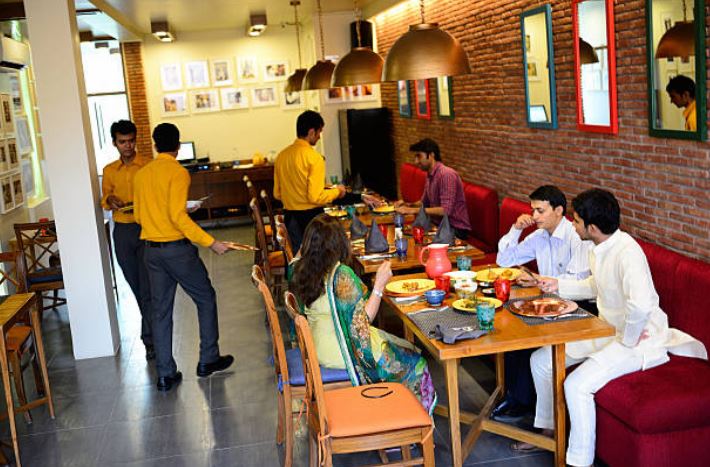
Even if the restrictions are not there, customers at this time will not be in that state of mind to dine out. Economic factors as well as the fear of spending some good amount of time (40 minutes to one hour) in a closed environment where many strangers will come and go does not look feasible for consumers.
Also, high rental is another cascading factor in the operating cost. Moreover, with the kind of guidelines to operate a restaurant business these days, many would not have the capability to follow such guidelines of social distancing and fewer footfalls, no liquor, etc.
“Eating out at restaurants is not a necessity, by and large; it’s a part of discretionary spending when you go out, socialize ― it’s all part of that. If you are not in a secure mind-frame about your future income, you will be as conservative as possible, and these are the kinds of expenditures that get knocked out first,” said Devangshu Dutta, founder, Third Eyesight.
“The restaurant industry was always a high mortality rate industry but the effects of the pandemic has been devastating. Some estimates say that 25-40% of restaurants may never open and even those that open will have to deal with low sales for a few months,” said Zorawar Kalra, founder of Massive Restaurants.
“I see the cost to sustain closure is very high. Many don’t have any resources which will impact the industry in such a way that 30-40% of restaurants will not reopen,” Katriar said.
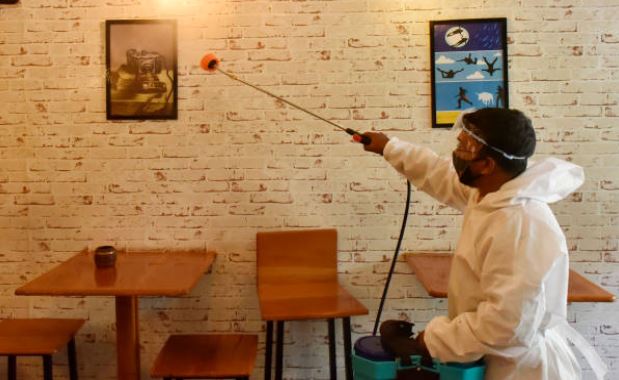
Maintaining the utmost care in health and hygiene measures may prove a double whammy for restaurateurs. Firstly, it will add to their operating costs but they won’t be able to do away with this measure-as this is the only way to bring back consumer confidence. Adopting digital menus and digital payment solutions is another area they will have to travel around.
What’s in the offing?
Maintaining the utmost care in health and hygiene measures may prove a double whammy for restaurateurs. Firstly, it will add to their operating costs but they won’t be able to do away with this measure-as this is the only way to bring back consumer confidence. Adopting digital menus and digital payment solutions is another area they will have to travel around.
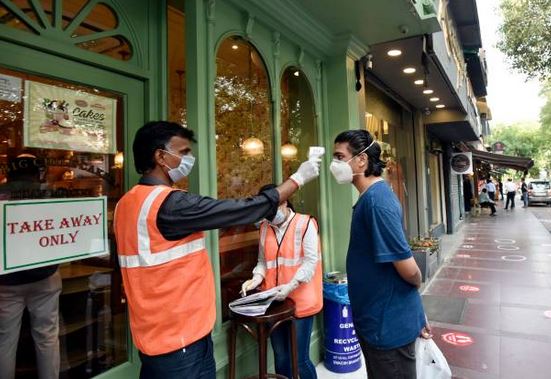
Besides, working with 50 percent or less of total capacity to ensure social distancing, the restaurants will probably have to get on the apps that provide online reservations, pre-ordering, and waitlist management to help minimize the queue of people waiting to be served. Popular restaurants have already started with thermal scanning for employees as well as consumers.
So, in the post COVID era, thermal scanning will be the new metal detection initiative that the restaurants will have to partake.
“Restaurants will have to opt for digital menus, contactless food, and sanitization among others. And with 50 percent occupancy, no alcohol and reduced working hours-restaurants will not make any money,” said Riyaaz Amlani, MD of Impresario Handmade Restaurants and the former President of NRAI.
Source: etvbharat
admin
June 17, 2020
Written By RASHMI PRATAP
A handwritten note on a piece of recycled paper plus a hand-made trinket or pen is what one receives along with every order from Gwalior-based iTokri, an online store of handcrafted fabrics, jewellery, paintings and other artworks. Just like its little free gift, all the products in iTokri’s catalogue are unique and especially crafted for the brand, which has been doubling its revenues every year since launch in 2012. The small town retailer has achieved all this without following the typical e-commerce template of being a marketplace.
iTokri online is India’s only crafts and artwork retailer with its own inventory of handmade artisanal products ranging from Punjab’s phulkari dupattas and Gujarat’s bandhani sarees to Andhra’s ikkat handloom fabrics and Odisha’s pattachitra paintings. It sources products including jewellery, dress materials and household items from nearly 500 artisans and NGOs across India. iTokri founders Jia and Nitin Pamnani believe in taking away the burden of sale from artisans and allowing them to focus on what they are best at – their craft.
The inventory model
“Artisans don’t have the financial strength to hold on to the inventory after production. If we put the onus of holding inventory on the artisan and tell them to dispatch the products as per demand, we cannot succeed. We buy from artisans in bulk, stock goods at our warehouse and courier orders from here,” says Pamnani, a documentary maker who left Delhi in 2010 to start the sustainable business in his home town Gwalior with Jia.
“Some of my friends were in the art and crafts sector. They suggested that an e-commerce platform could work from anywhere in the country. Since the availability of traditional art and craft products was still limited to government emporia and exhibitions those days, I decided to take the plunge,” he says.
Set up with an investment of Rs 50 lakh in 2012, iTokri has now expanded its reach to the nooks and corners of the country both for sourcing as well as sales in the last 8 years.
“Sometimes, artisans have ready products and we procure them. We also design our collection and send it for production, like we make our own prints for textiles and those are exclusive to us. You won’t find them anywhere else,” says Pamnani, adding that some factories make products only for iTokri.
Unlike other retailers, who follow the marketplace model and charge sellers or artisans a commission for using their platform, the inventory model is more capital intensive. “The working capital requirement in an inventory model is high as the retailer holds the inventory. Moreover, overheads like warehousing add to costs,” says Devangshu Dutta, Chief Executive at retail consultancy Third Eyesight.
In the case of Pamnani, warehousing is not a big cost as his family already owned one when he started the business.
But Dutta says an inventory model offers some advantages. “The biggest benefit is that you have the complete control over curating a product as well as its production and branding. This helps build a consistent customer experience,” Dutta adds.
Besides, when products are not generic, there are significant margin advantages to retailers. A case in point is itokri masks, the largest variety of which can be found on the online shopping site. From hand-woven handspun Eri silk natural-dyed masks to Lucknowi chikankari and ajrakh print cotton masks, the retailer has them all.
“There is a huge amount of margin play in that. If you are a marketplace, the major margin in such a case will go to the merchant and you will only receive the regular commission for usage of the platform. But if you own the inventory, you can decide the margin and selling price,” Dutta says.
Artisans love iTokri
While Pamnani has bootstrapped the venture so far and is fully in control, he has managed to keep away from increasing his margins to generate higher profits. “iTokri keeps the least margin of all the retailers we work with,” says Jaipur-based Ahmed Badhshah Miyan, award-winning master craftsman of resist tie and dye technique leheriya. He was associated with the Ministry of Textiles for many years, supporting textile traditions, and has won many national and international awards.
Award winning tie and dye craftsman Ahmed Badshah Miyan at his workshop in Jaipur. His son, Shahnawaz Alam, says during the lockdown, iTokri was the only retailer that did not stop payments to artisans.
“iTokri supported us and made payment for all orders as per schedule so that artists are not impacted.”
Alam and his father, who have been associated with Pamnani since 2012, say that iTokri trusts artisans with designs and colours, not forcing them to deviate from the tradition to meet mass requirements. “We don’t repeat the collection sent to iTokri,” says Alam, who supplies leheriya dupattas and sarees to the retailer.
iTokri also provides the name of the craftsman or organisation below every product detailed on its website, giving them due credit.
Hyderabad-based A G Govardhan, Padma Shri master weaver for ikkat, says Pamnani does not try to bring down prices by negotiating rates with craftsmen. “He wants perfect, authentic quality. Unlike others who are now mixing power loom products with handloom, iTokri’s only expectation from us is high quality genuine products. This supports traditional weavers like us,” he says.
t is this exclusivity, moderate pricing and following of the traditional craft processes that has helped iTokri gain a customer base of over 3 lakh across India and overseas.
Nearly 20 percent of these are from the UK, US and Canada and almost one lakh are regular buyers.
Despite its rapid growth, iTokri has not roped in any other investor so far. “We don’t want to go for funding as we are not yet ready for it,” Pamnani says.
It was love for sustainability that brought Pamnani to Gwalior in 2010. And it also helped him keep the business going even when the country was under total lockdown from March 25 till mid-May. During this period too, iTokri’s 8 am e-mailers announcing the collection of the day did not stop.
“There was enough in our warehouse to keep sharing with our customers. And we resumed operations in the first week of May itself after getting clearance from local administration,” says Pamnani.
The advantage: Gwalior, being away from the hustle bustle and without the population density of a metro, has reported only 150 cases of COVID-19 so far and most of them have recovered. “If we have to understand small businesses and work with them, we have to understand sustainability. And that comes from de-centralisation, not necessarily being in big towns,” says Pamnani.
At a time when most businesses are still struggling to resume operations in the COVID-19 world, iTokri’s toli (as its team is referred to) is busy writing lovely notes for putting in their customers’ orders.
And that’s the beauty of being a sustainable enterprise — it can sustain even during a crisis like COVID-19.
(Rashmi Pratap is a Mumbai-based journalist specialising in financial, business and socio-economic reporting)
Source: 30stades
