
admin
December 3, 2020
Written By Dheeraj Tagra
At a time when India is seeing a growing number of young entrepreneurs eager to innovate and take risk in the shape of ‘start-ups’, it is sad to note that the apparel manufacturing sector has not attracted these youngsters. If we do see some intervention in the textile value chain, it is mostly on the retail side and little bit on the tech side. Over the years, there are very few professionals who have taken the plunge to be entrepreneurs and run a factory successfully.

While entrepreneurship is being encouraged greatly these days, the definition of MSME is enhanced and many Government schemes are inviting investments in apparel manufacturing, why has the apparel industry been left behind in getting new ‘entrepreneurs’ is a question many are asking. The fact remains that the Indian apparel professionals lack entrepreneurial skills and feel safe working with established companies rather than using their experience to upgrade the industry.
It is also pertinent to mention here that the second generation of established players are not much enthusiastic to continue in the apparel or textile manufacturing sector; so having a fresh entrepreneur, for whom understanding the functions of the industry is difficult, is indeed a cause of worry for many.
At a time when India is seeing a growing number of young entrepreneurs eager to innovate and take risk in the shape of ‘start-ups’, it is sad to note that the apparel manufacturing sector has not attracted these youngsters. If we do see some intervention in the textile value chain, it is mostly on the retail side and little bit on the tech side. Over the years, there are very few professionals who have taken the plunge to be entrepreneurs and run a factory successfully.
Often, Indian apparel factories claim that a particular department/unit of their company is a separate profit centre for them and their teams runs its business as entrepreneurs, rather than just doing their stated job, but is that enough? What more can be done to encourage fresh entrepreneurs to be a part of the apparel industry, needs serious debate.
Many at small scale but none at the large level To its credit, the industry in the last few years has seen a few players that have started their own business and are surviving well. Majority of such entrepreneurs are those that have decades of experience in a particular department of an apparel unit, developed strong network as well as resources. And now they are utilising their strengths as a business promoter. In most cases these units are very small and operations are very much under the control of the promotor, so they are surviving, and a few of them have even grown reasonably well. There also there are few who are still struggling to create a place of their own.
Major obstructions
This is a hard fact, but the reality is that over the last 5 years, Indian apparel export is facing negative growth and it is very hard to grow for most of the established players. Very few companies have expanded in recent years while majority of the companies have seen standard growth. So, it’s natural that no one would like to invest in such an industry which does not promise growth on the base of past performance.
New players prefer to invest in other industries like retail, e-commerce as the variables are more manageable. One of the biggest constraints in apparel manufacturing or even in textile industry is managing a large labour base, besides being deadline driven and seasonal in nature (in export mainly).
Government push
It is heartening to note that the Government in the last few years has announced various initiatives to promote entrepreneurship across the manufacturing industry, that too at state as well as centre level like incubation centre, one district one product (ODOP), Mudra loan, Start-up India, Make in India, Single Window Clearance and various other kinds of subsidies.
The overall industry can expect to see more inflow of investment with initiatives likes proposal for creation of National Technical Textiles Mission for a period of 4 years (2020-21 to 2023-24) with an outlay of Rs. 1,480 crore and approval to introduce the Production-Linked Incentives (PLI) Scheme with the financial outlay of Rs. 10,683 crore for over a 5-year period.
Yet, experts believe that Government is not much concerned regarding new entrepreneurs in the apparel business as fresh investment by old players also serves the purpose of the Government – large-scale employment generation. According to information shared by Apparel Export Promotion Council (AEPC), there are 493 members who have established their companies from 2017 to date, but how many of them are actually new entrepreneurs, even AEPC is not sure about this.
Giving the obvious reasons for lack of fresh talent in the industry, Rahul Mehta, Chief Mentor, CMAI and MD, Creative Garments, Mumbai, argues, “The simple reason is the meagre profitability of the apparel sector. Garment manufacturing is a labour-intensive activity, involving largely hands-on working and day-to-day operations. Although the investment tends to be lower than most other industries, the returns do not justify the effort. Hence, whilst existing companies continue to operate, very little incentive is there for new entrepreneurs coming in.” He further adds that apparel industry is considered a traditional industry, and does not have the appeal of a ‘New Age’ industry – which most people of the younger generation would be interested in.
Regarding Government schemes, he is of the view that most of the Government schemes are for refund of taxes, and not really for making the business more profitable. Hence, these would not incentivise fresh investments and that too from new entrants.
What could be the solution!
To bring fresh approach to a stagnant industry, new entrepreneurs are a must and to encourage this, Government schemes have to be devised accordingly. At the same time, proper guidance and hand holding by existing players is also required rather than looking at these new players as just a competition.
Akhilesh Anand, MD, Carnation Creations, Coimbatore who is among the successful entrepreneurs to have grown in last few years, is of the view that first of all, any professional planning to start their own business should have clarity regarding what they wish to do and why. After this they should build partnership with like-minded people so that both the sides have a common vision and their team should also align with the same vision. He further adds that along with positive aspects, budding entrepreneurs have to think and plan for negative aspects also. “Whatever age a professional has, his/her thought process should be young, should have a knack for rapidly accepting the changes and be innovative at all levels,” he reasons.
A proper ecosystem having equal focus on export as well as domestic market should also exist to promote new players in this industry. With the recent labour reforms and strong focus on skill development, one can expect that managing labour, one of the most difficult aspects of the apparel manufacturing industry, will be easy in coming years. And it will help to attract entrepreneurs in the trade.
Dr. Biswajit Acharjya, Assistant Professor, Entrepreneurship Development Institute of India (Ahmedabad) agrees that Indian apparel manufacturing industry has been missing new entrepreneurs in the last couple of years in India. “The need is to strengthen and properly execute the labour law on a national level. Major textile and apparel units run on electricity which costs more compared to other mediums, especially CNG gas. At the same time, India is having limited water facilities in specific areas. We need to create sufficient water preservation through rainwater or recycling seawater. Infrastructure also needs to improve,” he says. He further adds that there is always a mismatch between the State and Central Government policies in India, which is again a concern. “Existing entrepreneurs should play an active role in mentorship for the new, like job training, grooming and assurance for future responsibility,” he argues.
Apart from Entrepreneurship Development Institute of India (EDII), there are other institutes in the country also dedicated to entrepreneurship like Institute of Entrepreneurship Development (IED), The National Institute for Entrepreneurship and Small Business Development (NIESBUD).There is a strong need to push for entrepreneurship, with a focus on the apparel sector.
Devangshu Dutta, CEO, Third Eyesight, a leading consultancy company, is of the view that the textile value chain has not really been seen as a strategic area by the Indian Government for many years, regardless of the political composition of the Government at the centre.
“Textile and apparel exports have grown at a compounded rate of around 7 per cent annually, a rate almost half of overall exports, when some other major sectors have grown 12-15 per cent, or even as high as 22 per cent annualised in the case of the automotive sector which was virtually non-existent in the export basket 20 years ago,” he says and further adds that India has some critical disadvantages against other competing nations – it is logistically distant from most developed markets, and it is not part of any trade bloc that would give it duty-free access.
To fight against these disadvantages, its natural advantages of entrepreneurship, design and product-development capability and vertical value chain need a lot of support. The Government must also stop seeing the sector in terms of its individual components (fibre, yarns, fabrics, apparel), and must see it as a chain in which we should be focused on the end-point (finished products) to maximise the value captured by India.
“There is no dearth of entrepreneurs in India, and the apparel business has relatively low barriers to entry. If the overall operating environment is cleaned up and made less cumbersome, our firms will do much better. A strategic push is also needed to be funded by the Government for technological upgradation of Indian apparel businesses, not only in terms of manufacturing but also in terms of the improvement of business processes, human capital and digitisation – it will not be expensive in the larger scheme of things but will go a long way in making Indian entrepreneurs and their teams better equipped to deal with the rapidly changing business environment,” he says.
Closing the debate on a thoughtful note, Deepak Mohindra, Editor-in-chief, Apparel Resources opines, “New ventures require professionals at its realm, those having the foresight to see and adapt to new consumer needs and changes and well-honed skills to take calculated risk. The existing stalwarts are largely not willing to take up this challenge, neither have they trained the generation next to take up these kinds of challenges. And that forms the basic handicap in building entrepreneurs and entrepreneurship. Building entrepreneurs requires not only a basic understanding of the industry but also support that has to come in from all quarters – Government, industry stalwarts and the banking system, which has to believe in them and back them as they have backed them in IT sector.”
Source: apparelresources
admin
November 12, 2020
Written By MANU BALACHANDRAN
After being on the verge of shutting down in 2017 following a failed merger with Flipkart, the Gurugram-headquartered company has seen revenue surge and unique customers grow by focusing on value ecommerce

Kunal Bahl, co-founder, Snapdeal
Photo: Amit Verma
Kunal Bahl doesn’t like to give up easily. And certainly not without a fight.
A pioneer in the Indian ecommerce industry, Bahl co-founded Snapdeal—one of the country’s earliest unicorns—in 2010, when he was just 24. Within six years, it became the second-biggest ecommerce company in the country, with a market valuation of $6.5 billion. In that period, apart from becoming a darling among investors—Snapdeal boasted some heavyweights as investors, including Ratan Tata, eBay, SoftBank and Nexus Venture—the company also acquired 11 companies, the most notable being Freecharge and Unicommerce.
Then, in the summer of 2017, that dream run came crashing down. Seven years after it was founded, an imminent shutdown loomed over the Gurugram-headquartered company after a failed merger with Flipkart. It was left with inadequate funds, enough to barely last a month. Bahl and co-founder Rohit Bansal were in a similar situation sometime in 2013 when the funds had run dry, but 2017 was different. Raising money wasn’t going to be easy and it would only mean the end of the road, as Amazon and Flipkart tightened their grip in the Indian market. Even the planned sale to Flipkart was at a fraction of its peak valuation of $6.5 billion.
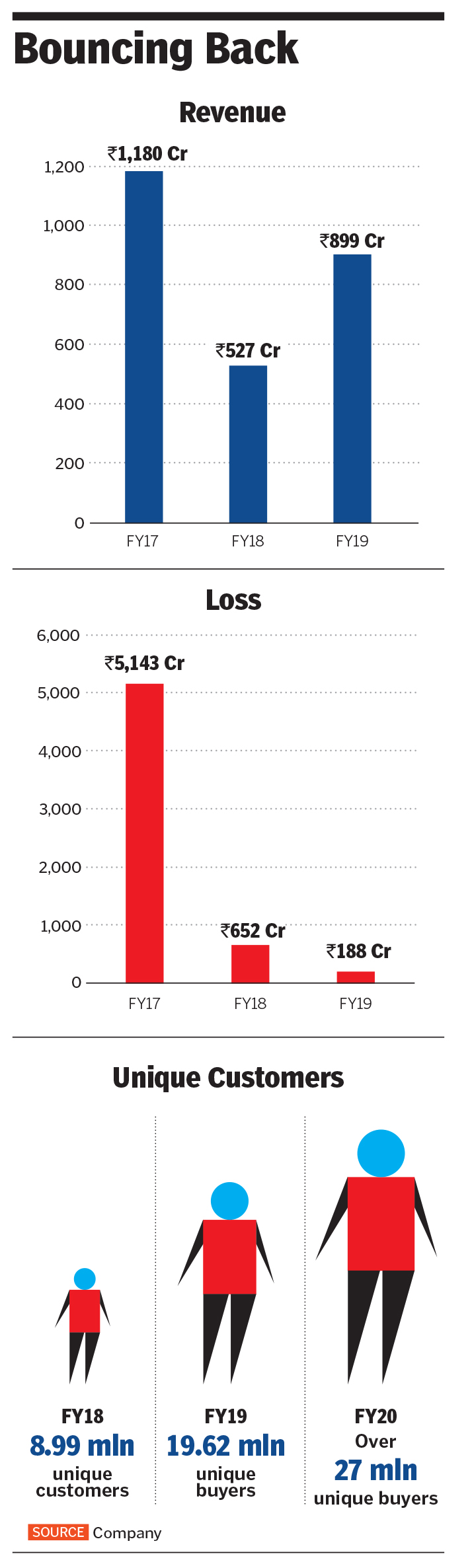
Bahl and Bansal, however, weren’t ready to leave without a fight. “With a perplexed team in the office and critics crowing from rooftops, it was much easier for Rohit and I to move away, washing our hands off a toxic situation,” Bahl wrote on LinkedIn in 2018. “That, however, was farthest from our minds.”Now, three years later, perhaps as the last surviving entrepreneurs with the reins of their ecommerce business firmly in their hands, Bahl and Snapdeal are starting to script some serious turnaround. Over the last three years, Snapdeal has reduced its loss by an incredible 95 percent, while revenue from operations grew by 85 percent. Traffic, the company claims, has seen a 100 percent growth. Last year, more than 27 million unique buyers bought on the platform, and amidst the pandemic, it added another six million users and 20,000 new sellers, apart from its already-existing 500,000 sellers.
“We are the last large entrepreneurial Indian ecommerce company left,” Bahl tells Forbes India over Google Meet. “Outside of us are large global or Indian corporations. One has to wonder, why that can’t be just happenstance. It’s because we have been sharp about what we work on, and what we don’t want.”
Of course, much of that is because of a reinvigorated energy, vision and focus that the company calls Snapdeal 2.0, and more importantly, a deeper understanding of what it doesn’t want to do. Also, a guard rail that it claims to have put in place, ensuring that it doesn’t deviate too far away from where it wants to focus, unlike earlier when it spread too fast too early.
“It’s about focusing on very few things and doing those few things very well,” Bahl says. “That’s a big learning for us as a company, as an entrepreneur, as a management team… that excellence comes with focus and doing very few things really well.” That focus on specialisation is what eventually brought Snapdeal to find a niche and shift its attention to what it calls value ecommerce. The segment, Bahl claims, provides a $163 billion opportunity in India and involves selling unbranded or lesser-known brands with very high value to the consumer, particularly in the low- and middle-income categories.
“It is about unlocking aspirations for those with less money,” Bahl says. “These customers are looking to make a discretionary purchase online but are fairly value sensitive. What they care more about is not for the big brand logo on what they are wearing, or what they are buying, but whether what they are buying is of value or not within a narrow price band.”
Piggybacking On Value Ecommerce
Bahl’s latest gamble towards betting on the value ecommerce category is largely a result of India’s growing mobile phone and internet penetration. India currently has some 504 million active internet users, of which about 70 percent are daily users, according to the Internet and Mobile Association of India. The country’s smartphone base is expected to swell to some 820 million by 2022, according to consultancy firm KPMG.
“With Jio entering in 2016 and the 4G penetration growing quite dramatically, it brought online hundreds of millions of new internet users who were earlier not online,” Bahl says. “A large number of them belonged to the low- to middle-income demographic in the small towns of India whereas earlier it was mostly consumers from the big cities who were affluent and buying online. Also, what we saw was that a lot of smaller regional manufacturers and traders started coming online in the last four years.”
That meant taking a step back and devising a different tactic to its earlier version. “Prior to 2016, mostly what would sell online and what would be bought online were brands,” Bahl says. “It’s not that the buyers don’t want to buy an iPhone or make some very expensive purchase. But they lack the ability to do so. However, they don’t lack any aspiration to look good or to feel good.”
To do that, Snapdeal began by building a portfolio of products that aren’t expensive or could potentially dissuade buyers. “We don’t do any discounting because most of our selection is incomparable,” Bahl says. “We have 200 million listings on our platforms. When comparability comes in, that’s when discounts become a critical element.” It also helped that the company found numerous manufacturers, who were looking to sell directly, unlike the traditional structure of selling through wholesalers and retailers.
“When we first started ecommerce, what was sold on ecommerce platforms was coming from traders. They were buying something from a brand and then re-selling it online,” Bahl says. “As internet and ecommerce proliferated in our country, the next generation of manufacturers in India, many of whom were entrepreneurs, began questioning the need for an intermediary and instead started selling online.”
India’s retail market is pegged to be around $785 billion, according to Technopak, of which some $220 billion is in the non-food retail category. Of this, Snapdeal believes that the non-branded retail space is around $163 billion, a market that it sees huge potential in, especially in bringing it online. “I believe we significantly dominate this segment, and more importantly, I feel in the larger scheme of things, ecommerce is still in its early days in India,” Bahl says. “When you look at the percentage penetration of retail that is online today, it is still in low single digits. People can argue whether it is two or three or four. It is still very modest.”
But there has been a glimmer of hope, and Bahl’s plans got a much-needed boost as India announced a lockdown in late March, as the Covid-19 pandemic raged on. The lockdown meant a push towards ecommerce adoption, particularly for those who had remained sceptical about online purchases. Besides, the economic crisis that accompanied the lockdown, Bahl reckons, also made customers extremely wary about their purchases.
“People who were not buying on ecommerce started buying because they felt it was safer with more options online,” Bahl says. “The more interesting thing we see is that the pandemic has led to a lot of people in the more affluent and semi-affluent categories to reprioritise their needs and spend, where consumers are shifting towards value as a result of income uncertainty or economic uncertainty.”
And, as more buyers flocked online, sellers too saw a massive opportunity, helping create a wider assortment of value-priced products. “The moment sellers identified that people are shifting to buying online, what was earlier sold only in the bazaars was also being sold online,” Bahl says. “Some of the sellers who may have required a lot of convincing to try out ecommerce are now rushing and listing.”
Snapdeal claims to have added six million new buyers during the pandemic, in addition to over 1,500 new pin codes, taking its total coverage to over 27,000 pin codes. “Six million people is not a small number of new buyers,” Bahl says. “Sixty lakh people gravitating to a platform organically with 20,000 new sellers on board… we must be doing something right.”
The Comeback
The roots of that newfound success lie in the summer of 2017 when the merger with Flipkart was finally called off.
“This was a mergers and acquisitions process that had dragged on for more than half a year without an end in sight, with many discords outstanding, while at the same time, the business was losing money and cash reserves were depleting fast,” Bahl wrote in his LinkedIn post. “We were going to fall off a cliff if a call was not taken immediately to continue to build the business.”
That’s when Bahl and Bansal devised Snapdeal 2.0, with a focus on four key areas. It began with a hyper focus on the value ecommerce segment. “This market is three times larger than the size of the branded goods market—that had been the primary focus of the ecommerce industry till 2016-17,” Bahl says. “We seemed to understand this segment well because given our name, our origin as a couponing platform many years ago, it’s not that we were selling luxury before. It’s not very different from what we wanted to be and what we wanted to evolve into.” That also meant significant tradeoffs, including not selling the latest high-margin gadgets such as Apple phones or other premium stuff.
Today, about 70 percent of the company’s sales comes from apparels and home décor. The remaining is from electronics accessories or other items. “Being okay with saying no to things is the starting point of focusing as a company,” Bahl says. “It is tremendously hard when you have not been doing that for a long time. We got over the hump or potentially circumstances allowed us to get over that mental hump.”
Then, over the next few months, the company also began divesting or selling businesses that didn’t seem lucrative. The company had acquired 11 companies—it spent a staggering $400 million for Freecharge and others, including MartMobi, and Exclusively, in addition to investing in the defunct PepperTap. “We were a business that, over a period of time, felt non-core… it was important to build a strong core business, a flourishing marketplace, which had a strong market position,” Bahl says. Apart from getting additional revenue through its divestments—Snapdeal sold Freecharge to Axis Bank for some Rs385 crore—the company decided to cut down its operating costs significantly.
“You can build a Titanic or a speed boat,” Bahl says. “We were clear we wanted to build a speed boat. It moves fast and is easy to maintain… I am sure there are disadvantages like the mass, as you see from outside. But, given our management styles, personalities and past experiences, and most importantly, what we wanted to build—a platform company—we felt this was the right model, of having very lean operating cost in the business and operating costs that don’t grow linearly with our scale.”
In FY19, the company clocked revenues of Rs899 crore, with net loss shrinking to Rs188 crore from a staggering Rs5,143 crore in 2017. The company claims to have over 27 million unique buyers who purchased from the company in 2020, in comparison to a mere 8.99 million in 2018. Over the past few years, Snapdeal also managed to break-even in multiple months, claims Bahl.
Taking To The Fight
Despite its newfound focus, reclaiming lost territory won’t be easy. In 2015, Snapdeal held over 30 percent of the ecommerce market in India and had even set ambitions to take on Flipkart for the top spot.
However, since the near-death experience in 2017, and the eventual resurgence, India’s ecommerce industry has seen some serious transformation. For one, Mukesh Ambani, chairman of Reliance Industries [owner of Network 18, the publisher of Forbes India], has already launched JioMart, an ecommerce platform that has the potential to become the fastest-growing ecommerce platform in India, challenging Amazon India and Flipkart, according to Goldman Sachs.
Goldman Sachs reckons that Jio’s online gross merchandise value (GMV) will reach $35 billion by 2025, cornering 31 percent of the ecommerce market from around 1 percent now. GMV is the total value of merchandise sold over a given period. Besides, both Flipkart and Amazon are also pumping in enormous money to ramp up their business in India. In July, Flipkart raised an additional $1.2 billion equity from Walmart at a staggering valuation of $24.9 billion to take on the fight in the Indian market. Amazon’s Jeff Bezos had also promised to spend $1 billion on the Indian arm in early 2020.
Bahl, though, isn’t worried. “India is too big and too heterogeneous to be served by a single brand or company in any industry,” he says. “As long as you have a core that is strong enough, that creates a significant enough gravitational pull towards yourself of a large enough customer segment. That’s our goal.”
Last year, claims Bahl, over three crore unique customers came on Snapdeal, an indication of that gravitational pull, despite not indulging in aggressive marketing, something that has become a hallmark of the Indian ecommerce industry. “For every 100 people, three people bought once from Snapdeal last year,” he says. “If you aren’t differentiated enough, why would anyone buy, let alone 30 million people? Eventually, there will be 500 million buyers who will likely belong to this cohort (value ecommerce). Not the cohort of the affluent urban buyers.”
That’s probably why SoftBank, Snapdeal’s lead investor, is rooting for Bahl’s and Bansal’s vision. “Value is an enduring concept in India, as in most other parts of the world,” says Manoj Kohli, country head of SoftBank. “Snapdeal’s business model, which focuses on good quality products at a great value, serves the burgeoning, aspirational Indian middle-class market, which is huge in India. The enhanced propensity in the last eight months of people from smaller cities, towns and villages to shop online has bolstered this growth.”
SoftBank, which is among the largest shareholders in Snapdeal, hasn’t put any additional capital of late. “SoftBank has been on our board for six-plus years, and I would argue that their engagement on their board has gone up over the last two to three years,” Bahl says. “It has to do with the sharp positioning of the company, where investors tend to appreciate the fact that a company has a clear strategy—that instils confidence in investors.”
Experts, meanwhile, see merit in Snapdeal’s focus on the value ecommerce sector. “As an ecommerce retailer, you have to create an identity for yourself,” says Devangshu Dutta, chief executive at retail consultancy firm Third Eyesight. “Because, for the customer, what matters is how distinct you are. You can’t be everything to everyone. Having clarity of your business helps significantly then.” PN Sudarshan, a partner at Deloitte Touche Tohmatsu India, reckons that the e-commerce industry by its nature tends to gravitate towards a limited group of companies that tend to dominate the segment. “Which is why, in most segments, there is a small group of large players,” Sudarshan says. “Value e-commerce has a certain substance to it, because it offers a commercial platform for non-customised but unbranded categories of products as well as the generic brands catering to both the affluent and the aspirational markets.” However, there could also be challenges. “There are critical matters of supply chain logistics, uniformity of quality standards and customer fulfilment in addition to regulatory and compliance issues that needs to be resolved for this proposition to realise its potential,” adds Sudarshan. “These are best resolved through technology interventions, some of which may be readily available, but a significant set of solutions may need to be developed.”
What Next?
For now, Bahl is keeping his head low and focusing on capability creation. That includes investments into technology, including personalisation, algorithm and discovery.
“For most ecommerce platforms, intent-led search brings 85 percent of the traffic. In our case, 85 percent of the users discover products through browsing, and only 15 percent through search,” Bahl says. “It’s because we have invested a tremendous amount of effort into technology, data science and artificial intelligence to aid that discovery. In fact, we say please come to us when you don’t know what you want. We will help you discover something you want from us, which is a 180-degree turn versus traditional ecommerce companies which are all about, ‘We have everything, come search, and you get it’.”
Then there is a lean supply chain model in addition to focusing on zero inventory and being extremely asset-light. “We have also been keeping our operating costs very low,” Bahl says. “For instance, we served over 30 million customers or two percent of India’s population last year with just 650 to 700 people in the company and generated over $100 million of net revenue, which is our commission income. That’s no easy task.” That achievement, Bahl claims, means that on a per-employee basis, the company has generated revenue of the same magnitude as some of the top technology companies in Silicon Valley.
“As a company, we don’t think of the runway,” Bahl explains. “We make money on everything we sell post-marketing and fulfilment on a variable basis. Whatever little money we may be losing is because we are making some longer-term investment in capabilities.”
For now, Snapdeal has no plans to raise capital and if it does, it will be more of a choice than a compulsion. Still, he doesn’t rule out another fundraising. “We are comfortable. We haven’t raised capital for a few years,” Bahl says. “A lot of people would have said a few years ago that this company may not make it. But I think the proof of the pudding is that we haven’t raised external capital in the last few years, and we are still doing ok, which means that fundamentally we must have done something right with the business and the business model itself—it has pivoted the business from a cash-guzzling one to one that is capital efficient.”
Another round of fundraising, as and when it happens, will be largely to fund the company’s organic and inorganic growth. Over the last six months, Snapdeal claims to have had over 15 companies reach out to them to be acquired. “It’s a dynamic marketplace,” Bahl says. “We should not let our focus mutate into stubbornness. We have a flexible, need-based approach to capital, rather than just accumulate capital. It’s not the right use of the capital also.” That means Bahl is quite certain about not scaling up as quickly as Snapdeal had done in the past, flush with investor money.
So, where does Snapdeal go from here? “We believe the future belongs to companies that can focus, and while that may seem that they are relinquishing parts of the market along the way, it also means they will have higher certainty and probability of success in whatever they pursue,” Bahl says.
Clearly, Bahl has no intention of letting go. And he is only getting ready to tussle it out.
Source: forbesindia
admin
November 11, 2020
Written By Saritha Rai P R Sanjai & Bhuma Shrivastava | Bloomberg
Ratcheting up competition, Ambani’s portals are offering blockbuster discounts of as much as 50% on sugary confections and other holiday staples like spice mixes for India’s rice delicacy, biryani

Billionaire Mukesh Ambani obliterated rivals in India’s telecommunications sector by selling $2 data plans and free voice calls. Four years later, he’s deploying a very similar tactic — cutthroat pricing — to gain an edge in the country’s increasingly competitive e-commerce space.
As India this week hits the peak of its biggest shopping season, the festival of Diwali, the tycoon’s retail websites — including JioMart — are elbowing their way into a space long dominated by Amazon.com Inc. and Walmart Inc.’s local unit Flipkart Online Services Pvt.
Ratcheting up competition, Ambani’s portals are offering blockbuster discounts of as much as 50% on popular sugary confections and other holiday staples like spice mixes for India’s rice delicacy, biryani. Meanwhile, his Reliance Digital website is selling some flagship Samsung smartphones at prices cheaper than rivals, with as much as 40% rebates.

JioMart saleReliance’s JioMart website is currently offering up to 50% discounts
It’s a push that comes as Ambani’s sprawling conglomerate, Reliance Industries Ltd., is flush with cash. After raising an eye-popping $20 billion for its technology venture, it’s shifted fundraising to its retail arm, which has won over $6 billion in investment in recent weeks from heavyweights like KKR & Co. and Silver Lake. Already India’s biggest brick-and-mortar retailer, Ambani’s online ambitions pit him against the two U.S. giants, both of which have invested big in India.
The country, one of the last big consumer markets, is still up for grabs, and Morgan Stanley estimates that India will generate $200 billion in e-commerce sales by 2026. Yet, the billionaire’s triumphs in telecommunications — where he started as a tiny player, but outpaced established rivals by undercutting them on price and capitalising on regulatory changes — are a cautionary tale for the American giants.
Huge Edge
In retail, Ambani’s firm has a huge edge: Government policies are increasingly stacked in favor of domestic retailers, of which Reliance is the largest. Since the end of 2018, India’s foreign investment rules have also barred Amazon and Walmart’s local unit Flipkart from featuring exclusive products and owning inventory, in a bid to restrict their ability to directly influence prices and offer discounts. International companies aren’t allowed to own more than 51% of local brick and mortar supermarket chains. Even that limit is subject to conditions such as setting up only in cities with populations of less than 1 million.
With his local strategy, low-cost procurement and chain of brick-and-mortar stores, Ambani has the ability to shake up online retail, said Siju Narayan, Chief Experience Officer, RexEmptor Consult LLP in Mumbai. “JioMart can dent the fortunes of grocery e-commerce majors like Bigbasket & Grofers,” he said, referring to the country’s biggest online grocers. “And impact the grocery, home & personal care category of e-tail majors like Amazon and Flipkart in coming days.”

Many of Reliance’s brands can be sought under one roof at Reliance Malls. Representatives for Reliance and Bigbasket declined to comment, while those for Walmart, Amazon and Grofers didn’t respond to requests for comment.
Tweaked Rules
Ambani’s success in telecom shows his ability to benefit from pricing and policy. India’s government tweaked rules in 2013 to create a “unified license” that allowed operators with a broadband wireless permit to offer voice calls by paying a one-time fee. Only one operator had such a permit nationwide at that time – Reliance Jio. The new rules helped it move swiftly.
After receiving a unified license and rolling out Reliance Jio’s telecom services in September 2016, Ambani sold voice and data plans at rock bottom prices. That made digital services more affordable for millions of Indians. Although rivals won similar licenses, some went bankrupt amid the ensuing price war, including his younger brother Anil’s Reliance Communications Ltd. Non-state operators in telecommunications eventually dropped to three from at least a dozen. Jio turned profitable in 2018. It’s currently India’s biggest wireless operator with over 400 million subscribers.
High Stakes
In India, the stakes are high for the American retailers. Jeff Bezos, Amazon’s hard-charging founder and chief executive officer, has pledged to invest $6.5 billion there. Walmart spent $16 billion in 2018 to acquire Indian portal Flipkart in its biggest ever deal, and has invested over $1 billion this year in the e-tailer and steadily plowed cash into its sister unit, payments service PhonePe.
But for Ambani, 63, Asia’s richest man with a net worth of $78 billion, the e-commerce push may turn out to be tougher than telecom. First, he will be up against formidable rivals. The wireless operators he defeated were mostly homegrown players, lacking the heft, experience and deep pockets of Amazon or Walmart. Also his group’s e-commerce websites are newer compared to its rivals’.

The Jiomart shopping app
Reliance group’s JioMart – which only started this year and is still in the beta phase – has had delivery snafus and refund delays, and some users haven’t been shy about venting on Twitter. All that means winning big against Walmart and Amazon could take years.
Future Business
Yet, getting it right is key because Ambani has cast retail and technology as the future of Reliance, which got its start in textiles under his father and then progressed into petrochemicals and oil refining. Two of his oldest children, Ivy-league educated twins Isha and Akash, are on the board of Reliance Retail Ventures Ltd.
Reliance is already India’s biggest company and its market capitalisation of $185 billion equals about 6.6% of India GDP. Its heft would only increase if it wins a greater foothold in e-commerce — something that’s increasingly becoming important in India, which has suffered a lockdown for much of the year due to the pandemic and where organised retail is yet to penetrate rural corners.
The pandemic is offering a boost to Reliance because many local stores can’t offer aggressive discounts due to financial difficulties, said Laiji Varghese, who runs a provision store in Nerul, a town in the outskirts of Mumbai, and has a partnership with Reliance to deliver orders.
“Reliance Retail is a big bulk player with deep pockets,” she said. “They have the financial muscle to offer such discounts compared to others.”
Samsung Phones
For Diwali, JioMart has a “Bestival Sale” on and has been touting the “season’s biggest grocery sale” with large discounts and cashback running through Nov 8. Flipkart and Amazon are also showcasing a slew of discounts, putting the three companies neck to neck.

The “Bestivel Sale” was advertised in a wrap-around cover of an edition of The Times of India supplement the Bombay Times last weekend
Yet on some key items, Ambani’s sites are offering bigger price cuts. A Samsung S20, this year’s flagship model from the world’s biggest smartphone maker, for instance, was going for 43,999 rupees at the start of this week on Reliance Digital. The same phone on Amazon’s India website was available for 47,990 rupees and on Flipkart for 69,999 rupees.
Regardless of who draws more customers and offers the biggest price cuts this holiday season, a pitted, protracted battle for India’s online shoppers is likely to play out in the coming years.
Complex Restrictions
Despite the complex pricing restrictions that Walmart and Amazon face in India, they have been able to showcase discounts offered via manufacturers and brands. In some cases, they are able to restructure their relationships with sellers so they can legally offer price cuts, and have allied with banks and credit card companies, which are allowed to offer deals that give shoppers price benefits on websites.
Yet, in the long term, pricing rules favoring local companies would allow Ambani’s JioMart and other websites to be more nimble in tweaking costs since they are bound by fewer restrictions.
JioMart and Reliance Retail account for around $12 billion of India’s retail market combining brick and mortar and digital sales, according to Ankur Bisen, senior vice president and head of Technopak’s retail consulting division. Meanwhile, Amazon and Flipkart, leveraging their pure online plays, can claim about $14 billion each, he said.

Amazon opened a 15-storey campus at the end of August last year in Hyderabad’s technology and financial district
Although Amazon and Walmart are far ahead in online retail, a winner will need to straddle both domains, physical and virtual, to cater to India’s diverse and heavily rural geography. Yet the restrictions on foreign companies owning grocery stores, puts them on a backfoot. That’s in keeping with Prime Minister Narendra Modi’s goal of nurturing home-grown champions. Across the border, China’s protection of domestic companies has created technology behemoths like Alibaba Group Holding Ltd. and Tencent Holdings Ltd.
Ambani has built his businesses with a decades-long understanding of India’s bargain-hungry consumers. Over the years, he’s also aligned Reliance’s own ambitions with government goals across different administrations. In 2016, when he launched Reliance Jio, the telecom business, he promoted it as part of Modi’s Digital India initiative.
India’s Alibaba
“Narendra Modi has clearly decided that he wants to produce an Indian equivalent of Alibaba or Tencent, and he knows Reliance is the only plausible candidate,” said James Crabtree, an associate professor of practice at the Lee Kuan Yew School of Public Policy at the National University of Singapore, author of The Billionaire Raj, which chronicles India’s economic opening and has Ambani’s much-storied Mumbai home on its cover.

Narendra Modi greets Mukesh Ambani during the Vibrant Gujarat Global Summit in January 2017 To cement his position as the nation’s No. 1 retailer, Ambani bought the retail, wholesale, logistics and warehousing units of Future Group for $3.4 billion in August. Amazon, which owns a tiny stake in one of the unlisted firms under the Future Group, has sought to block the sale in an arbitration court. Reliance, meanwhile, said it intends to complete the transaction without any delay.
“It’s a head-on competition in online retail,” said Devangshu Dutta, CEO of retail consultancy Third Eyesight. “An extremely well capitalised, very aggressive player is the new challenger.”
Source: business-standard
admin
November 1, 2020
Written By Sagar Malviya, ET Bureau

Swedish fashion retailer Hennes & Mauritz (H&M) has overtaken its main rival Zara to become India’s largest clothing brand by revenues in FY19-20, helped by aggressive store expansion and lower pricing.
H&M expanded sales 28% to Rs1582 crore during the year ended March 2020, according to its latest filing sourced from Altinfo, a data insights firm. In comparison, Inditex Trent, a joint venture with Tata that runs Zara
Source: economictimes
admin
October 29, 2020
Written By Samreen Ahmad
Reports say the online grocer is in talks with salt-to-software conglomerate to sell around 50 per cent of its stake in the company for around $1 billion
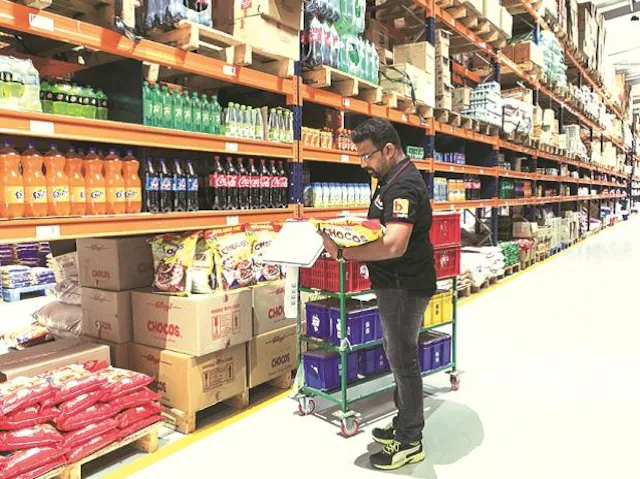
According to sources, the company is in final-stage talks with Tata Group and the deal could be sealed in a matter of days.
Online grocer BigBasket, which is in final-stage talks with Tata Group to sell majority stake in the company, could be doing this because of lack of visibility in terms of investments from large investors, say experts.
With big players such as Amazon and Reliance making serious bets in the space and investments from Chinese players looking unlikely, the company will need serious bucks to stay in the game, they add.
According to sources, the company is in final-stage talks with Tata Group and the deal could be sealed in a matter of days.
“The competition which BigBasket faces now is with the big three – Amazon, Walmart, and Reliance. If BigBasket’s biggest investors want to bet on it, they will have to write out a big cheque. A $10-15-million cheque will not help the company,” says Satish Meena, senior forecast analyst, Forrester Research.
BigBasket is, therefore, looking at someone it can partner with or strategic investors like the Tatas who can top up the investment further, adds Meena.
Reports suggest that the Bengaluru-based online grocer is in talks with the salt-to-software conglomerate to sell around 50 per cent of its stake in the company for around $1 billion, with China’s Alibaba, which is the largest investor in the company, looking to exit.
BigBasket also fits the criteria for Tata Group, which is now looking at something in retail to go omnichannel because it realises that pure-play will not help it in the long run. “It will be a good deal for both if it goes through,” says Meena.
According to a Redseer report, online grocery has seen Covid-induced tailwinds. Coupled with participation from large conglomerates, it is likely to witness high growth. From an overall 0.3 per cent, it could touch 2.3 per cent of the overall food and grocery market by 2024, which would make it a $18-billion segment.
“We keep talking to several firms, but nothing has been firmed up. Our e-commerce play will be really big and we’ll not contend with a minor stake in any company,” a Tata Group spokesperson had earlier said in response to a potential stake purchase in BigBasket.
Earlier reports had also pointed out that the Mumbai-headquartered conglomerate was also in talks with Snapdeal and IndiaMART to buy stake in the companies to strengthen its online presence.
“For them to have serious play online, inorganic is the quickest route. So buying a majority stake in a player like BigBasket makes sense,” says Devangshu Dutta, chief executive, Third Eyesight.In August, Tata Sons Chairman N Chandrasekaran had also made it public that the group was building a SuperApp that would go live in December. The group’s holding company is overseeing the project, with inputs from consumer-facing businesses, including Trent, Croma, and Tata Cliq, among others.
Source: business-standard
