
admin
March 13, 2020
Here’s taking a look at how COVID-19 has affected the apparel industry in India and how several companies are coping with the growing crisis…
Written By Dheeraj Tagra

It’s been over two months since the first death case was reported (January 11 in China) due to Coronavirus (COVID-19), which is now declared a global pandemic by the World Health Organization (WHO). Various reports are showing its negative impact on global apparel trade too. All stakeholders of the Indian textile and apparel industry are actively concerned about various aspects of this challenge. Apparel Resources interacted with several companies from across India, exploring how COVID-19 has impacted the industry so far and how it is likely to affect in future, as well as what steps are being taken by the apparel manufacturing units for the safety of their workforce.
As far as major buying countries are concerned, as per the official data, the US apparel imports in January 2020 noticed a downfall of 11.19 per cent (in values terms) of its global imports. The major reason for the same is the impact of Covid-19. Though the official data of the EU is yet to come, Indian apparel exporters are worried about it.
Now as the epicentre of this challenge is shifting from China to Europe, Indian apparel exporters exporting mainly to Europe are more concerned about the situation. Exporters told Apparel Resources that the shipments are being asked to put on hold for one month which will further lead to delay in payments. While Raja M Shanmugham, President, Tirupur Exporters Association (TEA), is of the view that one should see it as a temporary phase and not worry much. “We should not be in a panic situation. The situation has started improving in China, so I expect that Europe as well as other countries/regions will overcome the situation soon.” He further added that China has started dispatching accessories, which is a good sign for Indian apparel industry too.
At the same time, since Japan is also suffering hugely due to the Coronavirus epidemic, Jaipur which is India’s leading apparel hub is also going to be affected in future. Majority of Jaipur’s exporters are working for Japan-based buyers, and so, they are worried in this regard. A leading exporter of the pink city Anil Sharma, Director, Art & Craft Exclusive, Jaipur, said, “So far, there is no major and direct impact on our export business from Japan, as Japanese buyers are ethical and are not cancelling current orders. But as the market is impacted there heavily, the next season is definitely going to be dull for exporters like us who are catering to Japan.”
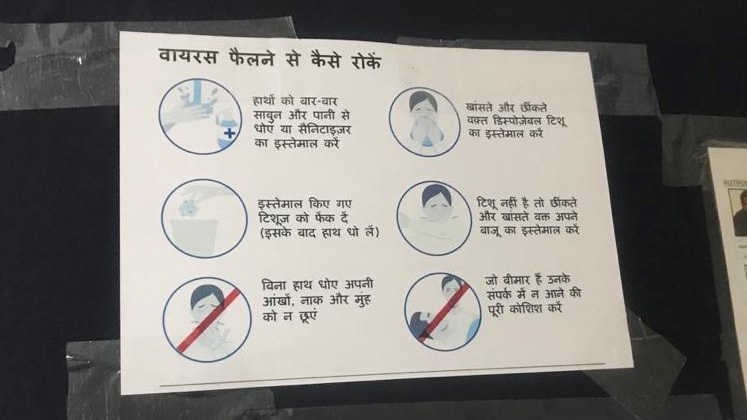
Information in Hindi shared on the notice board of TCNS Clothing Company
Many apparel manufacturers do feel that uncertainty of things is one of the biggest worries for them and whatever developments are there, it will have a temporary impact. Experts believe that India should take this opportunity to put itself in the forefront of polyester-based fabric as well as cotton.
Achal Goenka, Director, Go Go International, Bangalore – a well-known apparel export company, believes, “The business impact has been both good and bad as we have started receiving more enquiries than before from our customers in fabrics/styles which were before more suitable for China. Whether it will eventually translate into orders is what we need to see. We manufacture garments from fabrics imported from China, but now that we are not sure about this fabric supply owing to the current situation, and so, we can’t take these orders. This has clearly impacted our business unfavourably.”
He further adds that trims and accessories supplies are mainly affected, as they were sourced mainly from China. However, customers are agreeing to develop the same in India. Now that the buyer would find more risk to place orders in China going forward, India has an advantage of being vertically integrated and self-sufficient in raw material supply unlike its competitors Bangladesh, Vietnam and Myanmar. However, this will benefit India short-term and temporarily.
Another important aspect in this scenario is the down sentiment of the domestic market, as the share market has also crashed. Overall buying by the customers can be slow and will impact the domestic market too. “Garment is not a primary requirement and when people have less outings to malls, cinema halls, it will naturally have a negative impact on their shopping also,” says Devangshu Dutta, Chief Executive, Third Eyesight, a prestigious consultancy firm.
Source: apparelresources
Trims SME and giants are equally cautious
A multinational thread company, having manufacturing plants in India as well as many other countries, is doing a detailed survey among its customers (garment and footwear manufacturers) so it can have a fair idea about the uncertainty of the market. “This year is definitely not going to be a good year. To have minimal impact, we are trying to know the opinion of our customer and impact on their business, so we can plan accordingly,” shared a senior executive of the company on the condition of anonymity. The company has completely banned the entry of outsiders in its manufacturing facilities as a precautionary measure.
SME manufacturers are facing the challenge of the increased price of yarn and dyeing raw material, as they can’t keep much stock due to the temporary nature of this problem. Traders who used to import accessories are also of the opinion that they have not gained much so far, as whatever additional demand was raised could not be fulfilled completely due to high price and quality issues of Indian accessories.
Initiatives taken by apparel manufacturing units

Hand sanitisers are being placed at various factories
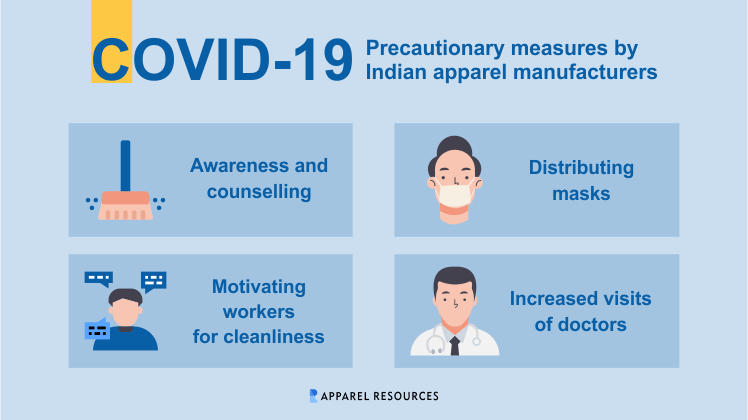
Majority of apparel manufacturing units are fully active in this regard and taking the workers and staff safety on top priority. Travel is almost banned even within India; even local meetings are mostly being held through technical tools. Awareness and counselling are on their top priority, as various sessions have been organised with workers in which HR and compliance teams, along with doctors, explained precautionary measures to remain safe. Factories have also distributed masks to all workers as well as to staff. Hand sanitisers are kept at various places in the factory premises and workers are being motivated to wash hands regularly.
Local administration is also in touch with apparel manufacturing facilities and issuing instruction too.
Orient Fashion Exports, one of the leading export houses of Gurugram, is also keeping a close eye on the temperature of workers, as HR teams are checking it on a regular basis. Rashmi Singh, Welfare Officer of the company, told, “We are also giving a mask to every visitor, offering sanitisers to them. As we counsel our workers, they are now fully informed and taking all required measures.”
CTA Apparels, Noida, one of the most respected names in apparel manufacturing, has increased visits of doctors on the shop floor, and doctors are talking to the workers frequently to motivate them about safety. HR and welfare teams of the company are closely following instructions given by the WHO and Union and State Governments, taking all necessary steps accordingly.
TCNS Clothing Company (W Brand), another well-known firm, has replaced soap cakes with liquid hand wash across all its plants. A. Rehman, Manager Compliance (Export Division) of the company, informed, “We have distributed masks to all of our employees. A training session in this regard was attended by one to all including the top-level management. Awareness messages are being announced twice a day. Even if a worker feels cold, he or she is immediately asked to contact the factory’s medical team.”
admin
March 9, 2020
Written By Devika Singh
According to Technopak, the total Indian ethnic wear market is valued at Rs 70,000 crore.

While a large share of this market remains unorganised, existing organised players such as FabIndia and Manyavar have tasted success.
Swedish retailer H&M recently announced its plans to introduce a saree collection in collaboration with designer Sabyasachi Mukherjee in April. Japanese brand Uniqlo, meanwhile, introduced a special kurta collection, when it launched its first store in India last September. These are just some of the examples of international fashion retailers showing interest in the ethnic wear market in India.
Besides these, some established Indian retailers who primarily deal in western clothing, too, have shown interest in ethnic product lines. Aditya Birla Fashion and Retail Ltd (ABFRL), which manages brands such as Van Heusen and Peter England, plans to soon introduce a mass-market fashion brand in the country, while Raymond launched its Ethnix range last year.
Experts cite a high growth rate seen in the ethnic apparel segment as a reason for this newfound interest in the category. According to Technopak, the total Indian ethnic wear market is valued at Rs 70,000 crore; women’s ethnic wear has an 85% (Rs 59,500 crore) share in the market and is expected to grow at a CAGR of 10% till 2022. While a large share of this market remains unorganised, existing organised players such as FabIndia and Manyavar have tasted success.
Traditional is ‘in’
Raymond has been opening exclusive brand outlets and tapping its extensive distribution network to grab a share of this market. “Raymond has a massive distributional spread and it has a very high recall when it comes to occasion-based selling. Therefore, we see that it is a fitting opportunity for us to pursue,” says Gaurav Mahajan, president, group apparel, Raymond. The company has opened 40 stores so far for Ethnix and plans to add 10 more by the end of this year. Raymond, besides occasion-based or ceremonial wear, is offering casual Indian wear under Ethnix, too. The brand, according to Mahajan, is positioned in the premium category.
Uniqlo’s kurta collection, too, commands a price premium; its products, which include kurta dresses, tunics, stoles, etc, range from Rs 1,290-3,990. The company has tied up with Delhi-based designer Rina Singh for this collection and made it available in its stores across Japan, Singapore, Malaysia, Thailand, Indonesia and Philippines, besides India.
“We are committed to providing customers in India with apparel that comes from our Japanese value of simplicity, quality, and longevity, and made to be affordable and accessible to all. The team was inspired to create a new version of the kurta, made for a progressive woman. Given its versatility, kurta is a democratic shape that could be offered to women across the world,” says a Uniqlo India spokesperson.
ABFRL, which has ethnic wear products under Pantaloons, announced a partnership with designers Shantanu & Nikhil last year and acquired a 51% stake in Finesse International Design. The company had also acquired ethnic apparel retailers Jaypore and TG Apparel in 2019 and plans to leverage these to introduce a mass-market ethnic brand soon.
Fitting issues
Experts are of the opinion that multinational brands are not looking at a pure-play offering in this segment, but plan to leverage this category to drive their growth further into the country.
“The objective is to make the brand a bit more local. Launching ethnic ranges helps these brands drive walk-ins from those consumers who do not wear western outfits,” says Rajat Wahi, partner at Deloitte India.
However, for brands that are looking at this more seriously, there are several challenges and positioning is one of them.
“International brands have a fairly distinct positioning and attract customers because of this distinction. Why would a customer walk into an H&M store to buy Indian wear clothes?” says Devangshu Dutta, chief executive officer, Third Eyesight.
Experts say about 80-90% of the ethnic wear market in India is still unorganised, which is another hurdle.
“Selling ethnic wear requires a different set of skills than western wear. The ecosystem for suppliers and vendors is not fully developed here and companies need to work on this,” says Abheek Singhi, managing director and senior partner, BCG.
For example, he adds, many Indian apparel players have been manufacturing shirts for years for global manufacturers and know all the requirements to produce them at scale. However, ethnic wear has been made at a more local level and therefore “there is a learning curve here for these companies”, he says.
Source: financialexpress
admin
February 26, 2020
Written By RASHMI PRATAP
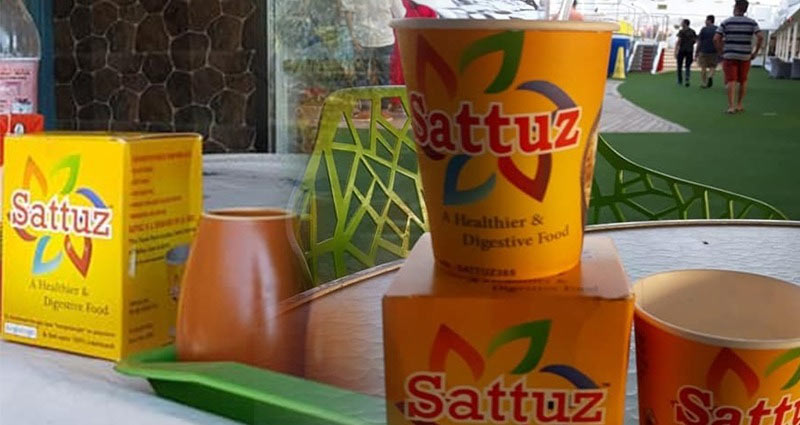
From being used by the armies of the Mauryan Empire (between 322 and 185 BCE) to being the super food of the valiant Indian soldiers during the Kargil war of 1999, use of sattu is as old as the cultivation of barley itself, which goes back to 5000 BCE. It has been the traditional staple for military men, travelers and monks, who always spent months away from homes and monasteries.
Made by grinding roasted barley (jau) or Bengal gram (chana) and even mixing both, sattu has been used in the kitchens of Bihar, Uttar Pradesh, West Bengal and Punjab for long. It can be had with sugar and ghee as a snack, mixed with water to make a cooling drink or stuffed into a wheat ball and roasted to make the famous Bihari litti. While sattu recipes vary from state to state, a company has now created sachets of sattu, which can be made into a drink in no time, to cash in on the health benefits of the traditional food.
Bihar-based start-up Sattuz has found a sweet spot in Indian consumers, who are waking up to the power of local and traditional foods. Sattuz hit the market in April 2018, selling sachets of sattu in three flavours – sweet, jal-jeera and chocolate. It is now selling directly to the US, UK, Germany and Singapore.

“I belong to Madhubani (in Bihar). While the place is famous for its Mithila or Madhubani painting and makhana (fox nut), its other well known product is sattu, which has not been marketed well. Little is known about it outside Bihar. I decided to popularise it,” says founder Sachin Kumar, who quit his job in Mumbai after attending a workshop on the marketability of traditional foods.
Once back home, he conducted market research on the potential of a ready-to-mix sattu drink. The idea found favour in both Bihar and outside the state. “Within Bihar, the hygiene of roadside sattu stalls was an issue and people wanted hygienic alternatives. In big cities, professionals, especially women, wanted healthy and easy to prepare items while rushing for work. We clearly saw a demand for pre-mixed sattu in a sachet and started working on it,” he says.
Sachin used his mother’s recipe to get the product right. He resolved freshness issues around sattu by sticking to single-use sachet format.
After getting the recipe right, Sattuz got lab tests conducted, sought approval from FSSAI (Food Safety and Standards Authority of India) and hit the market with a prototype travel pack with two paper glasses, two sachets and stirrers at Rs 30. And the product proved to be an instant hit in both Madhubani and Bihar’s capital Patna.

In India, and globally, there is an increasing awareness against consuming carbonated drinks, which are said to have harmful effects on health. Many Indians are now returning to traditional drinks like aam panna (raw mango drink), aam ras (made from ripe mangoes), tangy jal-jeera, lassi (a yogurt-based drink) and chaas (buttermilk), giving up sodas.
“There is a growing awareness about the health impact of carbonated drinks or packaged drinks. Plus there is a resurgence of not only healthy, but also traditional foods as people are linking back to traditional lifestyles,” says Devangshu Dutta, Chief Executive at retail consultancy Third Eyesight.
According to research firm Statista, among non-alcoholic beverages in India the market for juices is expected to grow at 17 percent between 2016 and 2021 while that of carbonated drinks at only 6.8 percent. Moreover, the per capita consumption of soft drinks in India was 44 bottles in 2016, while it was 34 times more in the US at 1496 bottles.
Realising this opportunity, Sattuz is not only selling overseas but also online through Amazon, Flipkart besides its own website. Currently, 40 percent of its sales are coming through the online channel. Now, Sattuz is deepening direct selling channels in the overseas market.
Within India, the company is tying up with corporate canteens, co-working spaces and hospital canteens. It has already entered the national capital region (NCR) and will now expand to Mumbai and Bengaluru. “We are in no hurry to be present on retail shelves as of now. It requires deep pockets and time. We will go for it later,” says Sachin.
Dutta says any company looking at large numbers, needs to be on the retail shelves. “Food and beverage is still predominantly a retail play. It is quicker to grow online and through direct selling, but volumes exist in offline sales. Depending on their strategy, they (Sattuz) can look at only online for a couple of years before going retail,” he says.
Sattuz has raised funds from New Delhi-based Indian Angel Network, IIM Calcutta Innovation Park and Bihar Industries Association. Sachin says the company could break-even in the next year or so. But that’s not the immediate goal. “We want to continue investments in expansion and increase our team size. So breaking even can wait,” he says.
So what’s on the cards for Sattuz? Kumar says he is currently focused on enhancing the product range itself. They plan to launch products like sattu cookies besides increasing the number of flavours of the drink on offer. “We are planning to sell ready-to-drink sattu through our own cafes as well,” he adds.
Just as ancient grains and superfoods like quinoa and chia seeds have gained worldwide popularity, perhaps it’s time for the humble sattu from Bihar to take on the global stage!
(Rashmi Pratap is a Mumbai-based journalist specialising in business, financial and socio-economic reporting)
admin
February 10, 2020
Consider Nestle, which in December expanded its offerings under Maggi and introduced ready-to-cook poha and upma variants, whereas Marico had earlier last year introduced two different ranges – Saffola Fittify
Written By Devika Singh

Nestle’s Maggi Masala Onion Poha Express (65g) is priced at Rs20, while Marico, Gits and MTR’s small poha pouches of 60g are also available at Rs20, each.
FMCG companies in India are increasingly eyeing the ready-to-cook (RTC) segment, but what is noteworthy is their newfound interest in traditional breakfast items such as poha and upma. Consider Nestle, which in December expanded its offerings under Maggi and introduced ready-to-cook poha and upma variants, whereas Marico had earlier last year introduced two different ranges – Saffola Fittify
Gourmet Power Breakfast and Saffola Perfect Nashta range, which includes poha, upma, dosa and idli. Gits Food, too, introduced ready-to-cook poha in cups and pouches in August 2019 and plans to further expand its range.
Then there’s MTR, among the first entrants in this category in 2017, which claims that within a year of its product launches, these products generated revenues of more than Rs 25 crore in FY18. While MTR already had traditional breakfast products in the market, its 3-minute range, which only needed hot water brought down the preparation time considerably. Now other players, too, want in to tap this growing segment and are launching similar products.
“We started with the launch of poha, upma and halwa and followed it up with seviyan upma in 2019, after research revealed that hectic lifestyles and time constraints have led to the trend of skipping breakfast,” says Sunay Bhasin, chief marketing office, MTR Foods.
According to Pakhi Saxena, head, retail and consumer packaged goods, RedSeer Consulting, the RTC market in India stood at Rs2,100 crore in 2019 and is expected to grow at a CAGR of 18% to reach Rs4,800 crore by 2024. Within the RTC universe, breakfast has 57% share, currently, with Marico, MTR Foods, Gits Food, Mother’s Recipe and Kellogg’s as some of the top players.
Thus far, the focus for most companies was either on non-traditional fares such as oats, or on instant breakfast mixes. “The urban and time-starved consumer is looking for convenient options for healthy and tasty foods, even in their main meals, especially breakfast. The current convenient options are seen as a compromise, either on taste, variety, nutrition or satiety,” says Koshy George, chief marketing officer, Marico. “Even the traditional breakfast mixes category is seen as a compromise and is used only occasionally. Marico had reported a value market share of 75% (June, 2019) in the flavoured oats category in the first quarter of the financial year 2020, but as per experts, most other players have seen limited success here.
“The companies operating in the breakfast space have misread the market for years now and have imported their perspective from the West. While convenience is important, it has to fit with the Indian cuisine and palate,” says Devangshu Dutta, chief executive officer, Third Eyesight.
According to Abheek Singhi, senior partner and managing director, Boston Consulting Group, while packaged food products including cereals have not been very successful in the breakfast category, the attempt to make traditional foods more convenient can yield better results.
However, with the entry of multiple players in this segment, competition is likely to be fierce, especially since most companies have products placed in a similar price bracket. Nestle’s Maggi Masala Onion Poha Express (65g) is priced at Rs20, while Marico, Gits and MTR’s small poha pouches of 60g are also available at Rs20, each.
Besides this, related sectors like food delivery apps and quick service restaurants (QSR) also pose a threat as they look to tap the same target consumer. “Competition is coming in from fresh foods, whether it is a Rs50 worth idli or poha delivered by food aggregators, or even a Rs50 burger offered by QSR players,” says Anurag Mathur, leader, retail and consumer goods, PwC India.
“Also in many of the target households, breakfast is cooked by the house help. This presents a structural problem for these players as there is fresh food available at reasonable prices both at home and out of home,” said Mathur.
Source: financialexpress
admin
February 6, 2020
Written By Writankar Mukherjee, ET Bureau

KOLKATA: Tata’s has started direct selling to consumers through Tata Cliq in the namesake e-commerce marketplace, converting it into an entity which will become a seller holding inventory and not just run a marketplace. The group has also invested over Rs 300 crore into this entity – its highest ever — to support this expansion of role , two industry executives said.
The executives said this could be termed as an almost last ditch effort to spruce up the three year old e-commerce business since Tata Cliq has largely remained a fringe player in the Indian e-commerce landscape dominated by Walmart-owned Flipkart and Amazon.
Earlier, retailers, brands and other sellers would sell through TataCliq and the platform would earn revenue from it.
The new model may lead to higher sales and faster growth, since as a seller in the platform Tata Cliq is now holding inventory whereby it can directly control price, supplies, delivery and offer discount to consumers, two industry executives said.
As per regulatory filings made by the company to Registrar of Companies and sourced from Veratech Intelligence, Tata Cliq has raised around Rs 313 crore from its promoters – Tata Industries Ltd – this year till now. There has been fresh fund infusion in December and January.
The executives said bulk of this money will help Tata Cliq expand into the inventory model. Tata Cliq has already started trials of direct sales with television and home appliances of top brands like Xiaomi and Voltas, and will expand into other high value and fast moving categories like smartphones to gain volume.
In response to an email, Tata Industries executive director KRS Jamwal said the e-commerce business is experimenting with selectively acquiring head inventory, specifically for enhancing customer experiences, better delivery mechanisms and for enhanced margins. “This does not necessarily imply that we are implementing the inventory model,” he said.
Jamwal said the current infusion of capital is part of routine infusions of capital and will be ongoing. “Unlike a VC funded company, capital is not raised in bulky rounds,” he said.
He said the group is innovating an alternate ecommerce model that will speak to audiences who prioritise trust, brands and new launches as much as value.
An industry executive said Tata Cliq is approaching to sell exclusive models so that it can have a distinct space in the market as a seller and has a long-term target to generate a majority of the platform sales by itself.
Veratech founder Mohit Yadav said the shift to inventory model gives a unique advantage to Tata over Amazon and Flipkart as it is an Indian company and will not be tied down by the stringent foreign direct investment regulations in e-commerce. “It will help Tata leve .
Retail analyst Devangshu Dutta, chief executive officer at consultancy firm Third Eyesight, said just because Tata Cliq is now holding inventory it may not mean that it can easily achieve the scale of Flipkart and Amazon. Flipkart and Amazon have become what they are after years and spending billions of dollars, he said.
“That way, the Tata group is fairly conservative in spending capital and is not oriented towards throwing money at a business just to gain scale. However, holding inventory makes the business more predictable than depending on partners. After all, you don’t have to depend on the partner retailer for product availability, service level and pricing,” said Dutta.
Tatas have been investing money into the e-commerce business. In 2018-19, Tata Industries had invested Rs 292 crore, Rs 224 crore was in FY18 and Rs 172 crore in FY17. However, it’s a fraction of the thousands of crore which Flipkart and Amazon are investing on their India business every year. As per RoC filings, Tata Unistore net losses was Rs 246 crore in 2018-19 while its income was Rs 110 crore.
Source: economictimes
