The smarter the better

admin

April 30, 2020

Written By ABHIK SEN AND SHISHIR BEHERA,

Despite the stress in the telecom space, call drops, and a sputtering economy, it’s been mostly smooth sailing for the upper end of the smartphone industry in 2019.

Delhi-based senior school teacher Jyotsna Varma, 46, has been using her iPhone 7 since Diwali 2018. Its all-in-one capabilities, friendly user interface, and robust performance continue to work for her so a handset upgrade is not imminent. But when it does happen, it will be to an iPhone 11, she says. Bengaluru-based Romit Dasgupta, 28, a senior analyst at an American bank, bought his OnePlus 7 Pro for its powerful hardware and call quality. Any replacement will be another premium handset, he says. He’d rather delay buying a phone than pick up a cheaper alternative.

It’s too premature—and a bit of a stretch—to liken it to a lipstick economy but there is an interesting parallel in the continued consumer indulgence in smartphones. The ubiquitous gadget—similar to the markets currently—is defying economic realities in India. Despite the stress in the telecom space because of regulatory issues, call drops, and a sputtering economy, it’s been largely a buoyant period for the upper end of the smartphone industry in 2019. Especially premium smartphones which are priced above ₹30,000, but below ₹50,000.

According to data from analytics firm Counterpoint TechnologyMarket Research, the premium market grew at 29% in 2019, while the overall smartphone market grew at 7%. And though premium smartphones account for less than 5% of the overall market, Counterpoint says the segment has the potential to grow 3x-4x.

To explain the Indian’s predisposition towards premium smartphones instead of cheaper alternatives, let’s rewind to 2014: There was a rush of first-time buyers (according to a report from market research firm IDC, smartphone users made up 35% of India’soverall mobile phone market in the quarter ended December 2014, compared to 13% in the year-ago period), facilitated by the entry of some Chinese companies, like Xiaomi, and home-grown players such as Micromax, Karbonn, and Intex, who built smartphones toa price, encouraging people to trade up from their feature phones.

Soon after, this was aided by the ease of4G and the advent of Reliance Jio with cheap data. People finally had access to high-speed Internet at a low cost. The focus shifted to data, and consumers became more inclined to spend on their smartphones, experts say. This led to a fall in the prices of smartphones. “As a result, today one can get a decent smartphone for as little as ₹5,000-₹6,000, something one couldn’t think of five years ago,” says Pinakiranjan Mishra, partner and leader, consumer products and retail, EY.

This led to more phone-time, exploring and finding new use cases: streaming or OTT (over-the-top) apps like Hotstar, Netflix, and Amazon Prime had started coming into their own; the better Internet speeds gave a fillip to online gaming, such as PUBG and Fortnite, as well. This was in 2016-17, when people were already on to their second or third smartphone. Soon after, aided by an upsurge in apps such as TikTok, consumers started spending more and more time on their phones. People were giving as much as four-five hours daily to their phone, says Tarun Pathak, associate director at Counterpoint.

Over five years, people have started seeing a smartphone as beyond just a phone—they use it for entertainment, social media, payments, and features like the camera, says EY’s Mishra.“Then the value perception of a higher-priced phone is very different. So, what I am getting out of a phone is far, far more than what I was getting out earlier.” That’s why many consumers don’t think twice before putting down money for a high-end phone.

Vikas Agarwal, general manager, OnePlus India.

Vikas Agarwal, general manager, OnePlus India.

Smartphone makers have noted this trend and have tied up with financial institutions to offer premium phones on equated monthly installments (EMIs), making it easier for people to purchase high-end phones. Pathak says that nine of 10 phones in India are bought on EMI, and other schemes such as trade-ins, buybacks, and online discounts have made it attractive for users to shift to premium smartphones. This, in turn, is raising the average selling price of smartphones in India.

But the ease and use aren’t the only reasons for buying a premium smartphone. “Smartphones are not just a utility item, but a very visible status symbol as well. This is especially so for consumers who cannot easily or immediately afford a more expensive publicly visible products such as a vehicle,” says Devangshu Dutta, chief executive of retail consultancy Third Eyesight. Counterpoint’s research says that the 18-24 age group is most aggressively upgrading to premium smartphones (they generally upgrade every 20-21 months), points out Pathak. But if they buy a $400 handset instead of a $100-$150 one, they may use it for longer, he says. Indians, on an average, upgrade smartphones every 24 months, compared to 32 months in developed markets, Pathak adds.

According to IDC, phones priced between $200 and $500 accounted for 19.3% of India’s overall smartphone market in 2019. That said, premium smartphones make for just a tiny part of all mobile phones in India (smartphones comprise 60% of the market). However, if the trend is towards a more western pattern of adoption, the growing interest of companies in the premium smartphone space is better understood. “Globally, the premium segment accounts for almost half of the overall market and it is also the fastest growing segment across all emerging markets,” says OnePlus India general manager Vikas Agarwal, 39. The capital-intensive industry operates on wafer-thin margins, with frequent technology disruption, making it “unsustainable” to focus on just the entry-level segment.“In contrast, premium users are discerning with higher brand loyalty which allows brands to reinvest in developing innovative technologies.”

That translates into higher margins as well. And competition is less intense in this segment, with a limited number of players, say experts. Therefore, once a company gets its features and price combination right, it’s a large enough market when one considers the different price points. Most players in this segment in India have one or, at most, two models.

realme, a relatively new Chinese brand, entered the segment last November with its X2 Pro. Madhav Sheth, realme vice president and realme India CEO, says his customers wanted “premium specs and top-notch look at a competitive price.”

 Nipun Marya, head of marketing strategy, Vivo Mobile India

Nipun Marya, head of marketing strategy, Vivo Mobile India

Sheth, 39, adds that “there has been an increase in the number of people wanting to own more premium phones even though the demand is still niche”. Nipun Marya, director-brand strategy, vivo India, says that the ₹30,000- ₹40,000 segment will form around 57% of the premium segment. “Although still niche and growing from a small base, aspirational Indian smartphone buyers are on a high,” adds Sanmeet Kochhar, vice president–India, Middle East and North Africa, HMDGlobal, which sells smartphones such as the Nokia 9 PureView.

A recent Counterpoint report indicates these smartphone firms are on the right track. In 2019, the ultra-premium segment (phones priced above ₹45,000) grew at 63% year-on-year, the report says. It helps that in a country of 1.3 billion, less than 500 million people use smartphones, so the market is largely under-penetrated. But Pathak says it’s not just about launching a product, but also about the image of the brand—something which can take years to build. In fact, sometimes, doing well in one particular segment could actually work against the company. Upasana Joshi, associate research manager, client devices, at IDC India, says that companies which are heavy on low-end products, face challenges to scale up the brand value. For example, a brand known in the budget segment (like Xiaomi) might find it difficult to make headway in the premium segment.

“A brand must build an identity that a customer can relate with. Today, a customer buys a premium phone not just for its features but the overall value it delivers. And this value comes from the harder aspect of the product and the softer aspect of brand personality. Hence, the need for a strong brand and customer affinity,” explains vivo’s Marya.

The other challenge is that people buying premium smartphones tend to hold on to them for longer, say up to three years. Therefore, companies need to constantly innovate to give customers “compelling reasons to upgrade”, Marya says. This also means that, as HMD’s Kochhar points out, since consumers hold on to their phones for longer, they need an experience that does not deteriorate over time. “This means the need for regular software upgrades for at least a couple of years.”

Customers’ expectations in this segment tend to be higher, which is where brick-and-mortar stores and/or experience zones play a key role. At these locations, people can experience the look and feel of the device before buying it. After-sales support, too, is an important consideration for such expensive devices.

Another concern is the global slowdown in smartphone sales. Can India keep the party going? realme’s Sheth admits that growth in the smartphone market is expected to be “in single digits in 2020, about 5%-6%”, yet he is upbeat about opportunities even in the slow market. As is vivo’s Marya, who explains that India’s premium segment is still at a nascent stage, contributing about 12.5% by value, and as such “it offers immense opportunities”.

A compelling reason for the brands’ optimism in the premium smartphone space is the ushering in of the age of 5G. While telecom companies have been slow off the blocks, experts believe that those in the age bracket of 18-24 years wouldn’t hesitate to buy a 5G smartphone, even if there’s no 5G network available.

“With 5G coming in, the power of the smartphone is expected to go up manifold, in terms of speed and ease of usage,” says Raja Lahiri, partner at Grant Thornton India. “5G will become a driver, provided it comes at the right price,” adds EY’s Mishra. Most companies Fortune India reached out to agree that 5G would be the next growth driver.

OnePlus founder and CEO Pete Lau believes the evolution of 5G could change the way a human interacts with technology. “The next phase of growth in smartphones will be artificial intelligence and augmented reality user experience and we look forward to driving this change,”adds realme’s Sheth. It will give users an incentive to upgrade, as also attract many first-time buyers of premium phones.

Agarwal from OnePlus adds that over the long term, 5G has the potential to revolutionise industries in India, especially across healthcare through real-time patient monitoring and medical data management, more efficient transportation, and better public safety measures to name a few. “As a major agrarian economy, 5G can also offer promising smart agriculture solutions through easier remote data collection, aiding automated processes,” he says.

As for the recent challenges in the telecom space, experts and industry sources say most consumers aren’t even aware of the regulatory issues, and many ignore the call drops, especially if they carry two connections. And if customers are dissatisfied, they can always port their number to another service provider, experts say.

While big hikes in data prices could be a threat, Indians who have formed a significant consumption habit won’t most likely be deterred by potentially higher data prices, Third Eye-sight’s Dutta explains, keeping India’s connection with the smartphone going for the conceivable future.

(This story was originally published in the March 2020 issue of the magazine.)

Source: fortuneindia

How tech firms are helping build robust local supply chains amid Covid-19

admin

April 19, 2020

Written By Anchita Ghosh

Now that many areas are out of bounds for big retailers for various reasons, is there an opportunity for local kiranas?

People queueing up outside a a kirana store

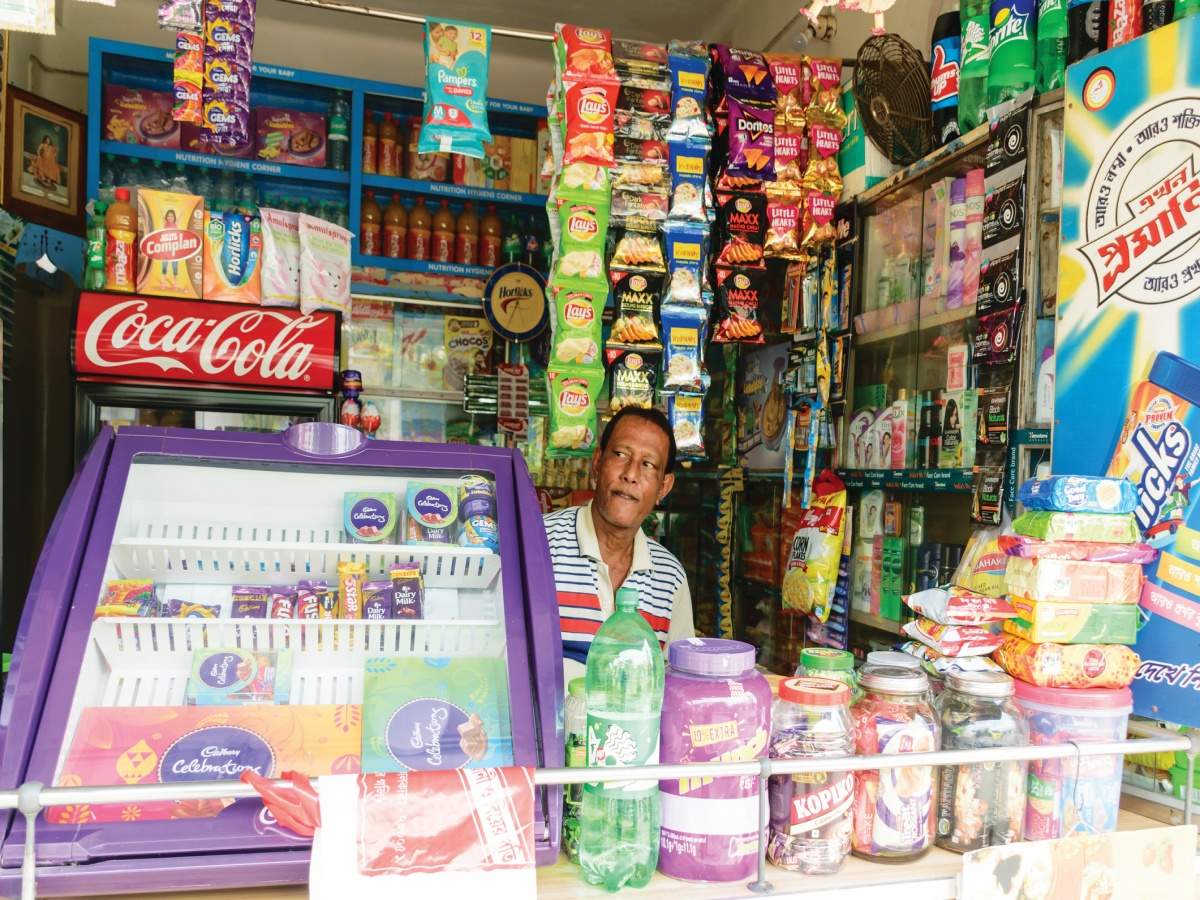
Tom Abraham, who runs a grocery retail outlet at HSR Layout in Bengaluru, thought of shutting it down as his shop attendants went back to their native place in Bihar after the lockdown was first announced. Plus he was facing problems in sourcing inventory.

Samir Wagadwala, who owns a kirana shop in the Mumbai suburbs of Andheri (East), didn’t find it viable to deliver just one or two orders at the doorstep of customers even as fewer people turned up at his store. Plus getting around the locality freely was a problem.

On her part, 77-year-old Mohana Kumari, who stays alone in an apartment in Noida’s Sector 50, which has been declared a Covid hotspot, has to regularly walk at least half a km to get her vegetables and milk from the nearest Mother Dairy booth.

Let us join the dots. What if there was a platform, which not only solved the inventory issue of the hyper-local businesses, but also provided the facility of delivering the products at the customers’ doorstep like the big e-commerce firms do? Now that many areas are out of bounds for big retailers for various reasons, is there an opportunity for local kiranas?

Well, the answer is yes. A host of business-to-business (B2B) e-commerce platforms have stepped forward to solve the problems of local kirana stores by supplying products and providing manpower, besides bridging the last mile in some cases by delivering products directly to the customer.

Indeed, after the first announcement of a nationwide lockdown on March 24 in the wake of Covid-19 outbreak, the kirana stores — that control 98 per cent of India’s $360-400 bn grocery retail market — were the ones to be hit the hardest. Their distributors couldn’t reach them, while their loyal customers stayed away. Within days, some shut shop. Some smart ones turned to B2B e-commerce platforms like Near.Store, Jumbotail, ShopX, Ninjacart and MaxWholesale. Though most of these B2B players have been around for some time, they have now become the lifeline for many hyper-local business owners.

So while Bengaluru-based Jumbotail solved the problems faced by Abraham by filling up his stock and providing staff support, Wagadwala’s concerns were addressed by Mumbai-based Near.Store, which has tied up many kirana shops with residential societies.

Wagadwala thanks his stars for being approached by Near.Store — a plug-and-play hyper-local tech platform. “I couldn’t go to Vashi, from where I procure food grains. Besides, there was a limit on the amount of grocery I could purchase. Near.Store helped me out with procurement to begin with. It is even taking bulk orders from the housing societies on my behalf and helping me with the delivery,” says Wagadwala.

Aashis Kumar, founder of Near.Store — which was launched just three months back — says the lockdown forced many mom-and-pop stores to down the shutters temporarily. “So we tied up with housing societies and brands. We aggregate orders from these societies online. Say a housing society with 100 people generates Rs 20,000-Rs 40,000 worth of orders in 12 hours. We give all the orders to a nearby kirana store,” he says. His firm also offers them the option of credit like the monthly credits given to customers by local shops.

Last week, MaxWholesale launched an app, Radius The Neighborhood, that streamlines communication between retailers and consumers and ensures contactless delivery. Samarth Agrawal, founder and CEO of MaxWholesale, says the idea is to empower the retailers with technology. “Every retailer serves 100-200 families in its neighbourhood. They don’t have the wherewithal to develop their own apps. So we decided to provide them with a system that will give their customers the experience of big business-to-consumer (B2C) e-commerce platforms.”

He adds his firm was working with some 13,000 kirana stores even before the lockdown. MaxWholesale’s Radius and Near.Store also help build catalogues based on the kinds of products stocked by these stores and the catchment area. This information is stored in the cloud.

Near.Store’s Kumar says the aim is to help small stores and chemists go online. “We have a database of over 200,000 products. We attach a small dongle to the stores’ billing system, which uploads everything they sell offline automatically. This helps list the products, besides creating websites for the stores.”

In 99 per cent of the cases, local shops leverage the supply chain facility offered by these platforms. Manohar Reddy, who runs one of Jumbotail’s J24 stores at Hadosiddapura in Bengaluru, says due to the lockdown, other vendors have stopped distribution. “But I got 100 per cent of my inventory via Jumbotail.”

This unbroken chain of supply has much to thank technology. Near.Store’s Kumar says often he comes to know when a store would run out of stock even before the owner does. ShopX CEO and co-founder Amit Sharma says a lot of brands have also been approaching these platforms to reach a store if their own supply chain is broken at some point.

ShopX and MaxWholesale are in direct touch with millers and mandis. “Models like these are emerging as an alternative to the traditional supply chain,” says Sharma, adding they are also working with the local APMC and police to find a solution to the problem of spoilage of fresh produce.

Most of these small retailers who have tied up with the B2B platforms say their businesses have grown by leaps and bounds since the lockdown was announced. Abraham, who has been working with Jumbotail for the last two years, says the value of his orders grew from Rs 20,000-Rs 30,000 per day to Rs 70,000-Rs 1 lakh per day now. Mohan Baby of C K Stores in Bengaluru says his store sales have grown to Rs 4-5 lakh per day in the last month.

That said, Devangshu Dutta, chief executive of management consultant Third Eyesight, says while retailers have been able to expand their businesses with logistics support form these platforms, they should be watchful the balance of power doesn’t shift to the digital partners.

“Over time, the customer relationship may shift to the platform. If you buy a product from a particular store or brand on the platform, Amazon for instance, you are still shopping on it. Over a period of time, if the platform sees a particular product is doing well, it may promote a directly-sourced competing product.”

Pinakiranjan Mishra, partner and leader in consumer products and retail, EY, cautions it is too early to rejoice, both for the platform and the kirana owner.

The supply chain issue is temporary, so tomorrow “if the fast-moving consumer goods companies offer the products without additional cost, why would the retailers take help of the B2B firms,” he asks.

The other side of the coin is the new store and stock management knowledge that the kirana store owner is acquiring. “Now the kiranas know what it would take to ensure 50-100 per cent growth,” says Mishra.

Source: business-standard

More sellers opt for e-commerce platforms amid lockdown

admin

April 17, 2020

Written By Alnoor Peermohamed, ETtech

More sellers are signing up on e-commerce platforms such as Amazon and Snapdeal, anticipating recovery in offline demand to take longer in view of the nationwide lockdown being extended to May 3.

The government said e-commerce platforms would be allowed to sell both essential and non-essential items starting April 20.

There has been a spike in the number of signups and queries from new sellers in the run-up to and during the lockdown that began from March 24, the online retailers told ET.

“We now have 6 lakh sellers on our marketplace, up from 5.5 lakh in mid-Jan. The new seller registration run rate continues to be robust, with thousands of new sellers registering on our marketplace three weeks into the lockdown,” said an Amazon spokesperson.

Snapdeal also said it had deployed teams to assist new sellers in signing up on its platform, with large business centres such as Ludhiana, Surat and Salem seeing an increased number of signups.

“We are indeed seeing a spike in the number of seller queries with regard to the resumption of business and also new registrations. The government’s announcement of allowing business across all categories is providing independent sellers an accelerated and safe channel to resume their business operations,” said Rajnish Wahi, senior vice president – corporate affairs and communications at Snapdeal.

Walmart-owned Flipkart declined to comment.

A source in the company, however, said it was still too early to determine if there had been an increase in new seller signups.

Industry experts said this could be a stop-gap arrangement for sellers to kickstart businesses immediately.

“The fact is that small businesses are really cash-strapped and if they have to pay salaries to their employees, then they need to earn money,” said Devangshu Dutta, chief executive of retail consulting firm Third Eyesight. “The motivator for these businesses seems to be that they have inventories and e-commerce is a good way to get to the customer who is unable to get out.”

Source: economictimes

E-commerce firms seek clarity on non-essentials; gear up for MHA guidelines

admin

April 15, 2020

The MHA has come up with fresh guidelines allowing e-commerce companies to operate, ensuring strict social distancing without any restriction on their timing and closure, after April 20

Written By Peerzada Abrar, Samreen Ahmad & Neha Alawadhi

The main problems e-commerce firms are facing on the ground include absenteeism of delivery people and difficulties in getting curfew passes

E-commerce companies such as Amazon and Flipkart, and sellers, have reached out to the government seeking clarity on whether they would be allowed to sell non-essential items under the fresh guidelines.

On Wednesday, the Ministry of Home Affairs (MHA) in the fresh guidelines allowed e-commerce companies to operate without any restriction on their working hours from April 20, provided they ensure strict social distancing.

However, some said there were ambiguities that need to be addressed, because while inter-state transportation of non-essentials was allowed, it was not clear whether e-commerce companies would be allowed to sell the products.

“The ambiguity is still there. It doesn’t say that e-commerce players can sell all items including non-essential products on their platforms. A lot of firms are asking the government to provide more clarity,” said a senior official working with an e-commerce firm.

“For instance, a delivery associate might be carrying a TV (phone, laptop) and the police on the ground might seize these items.

”Industry insiders said the main problems firms faced on the ground were absenteeism of delivery personnel and hardship in getting curfew passes, issued by state governments. “You (government) told the delivery staff wages are valid even if you are not coming to work,” said a person. Additionally, passes were issued to those carrying essential services and not to firms per se, the person added. “It is the prerogative of the state to decide what is essential and what is not.

”Experts say there was also no clarity in the guidelines on the nature of non-essentials. “If companies are able to follow all the social distancing and safety protocols stringently, then the chances of getting things up and running are reasonably good. Probably some products that were not specifically listed as essentials but are essential in nature, such as grooming, stationery, home essentials like cleaning and kitchen products, will also be allowed to run now,” said Pinakiranjan Mishra, consumer leader at EY India.

Experts said there was no distinction between essential and non-essential with respect to transportation. “If that works, then all e-commerce firms should be able to work, but it depends on how the guidelines are implemented at the state level. There are red zones as well, where movement is restricted. So, firms will have to liaise at the local level to ensure delivery,” said Devangshu Dutta, chief executive at Third Eyesight, a consulting firm.

Dutta said a lot of backend work was required for companies to keep websites running for non-essentials. For example, content work, including photoshoots, text and data support, was provided by external agencies and the work couldn’t be done from home.

“How the backend work would be done is also a question that needs to be answered,” he added.

Meanwhile, online retailers are expecting huge demand for products and are reaching out to sellers to keep stock ready to fulfil pending and new orders after April 20, according to sources. Srinivas Mothey, senior vice-president at Paytm Mall, said: “We hope to open most of our categories, including electronics, small appliances, clothing, mobile phones, and accessories, among others,” said Mothey.

“The government has just come out with fresh guidelines. We believe things would be far better by the time we restart full-fledged operations,” said Mothey, when asked about the ambiguity related to the selling of non-essential items.Amazon India said it was evaluating the guidelines and had sought clarifications from the authorities on implementation.

“We are committed to the government’s efforts of ensuring social distancing and delivering products that customers need the most at their homes. The resumption of economic activity from April 20 is a welcome step that would nonetheless depend on unhindered availability of labour,” said an Amazon spokesperson.

Flipkart said it would continue to serve consumers to promote social distancing through its sanitized supply chain.“At this critical juncture, the e-commerce industry can ensure that citizens stay indoors and all their needs are met through home deliveries,” Snapdeal said.

Source: business-standard

Competitors join hands to tide over supply-chain challenges amid lockdown

admin

April 6, 2020

Towards the end of last week, at least three such tie-ups were announced

Written By Shubhomoy Sikdar

While such a strategy is not entirely unprecedented, experts see the crisis as an opportunity to focus on each other’s skills

Businesses, much like everything else, continue to reel under the impact of Covid-19 and the resultant preventive lockdown. Tie-ups among brands and corporations operating in seemingly unrelated or even competitive sectors seem to be one way of getting around the supply-chain challenges.

While such a strategy is not entirely unprecedented, experts see the crisis as an opportunity to focus on each other’s skills and customer base to not only create businesses for themselves but also to keep things moving. This is imperative, particularly when supply chain bottlenecks in a curfew-like condition threaten access.

A by-product of this strategy is enhanced brand visibility and the message that it cares for the consumer —something that is expected to linger on even after the crisis subsides.

Towards the end of last week, at least three such tie-ups were announced: Ride-hailing app Uber said that it would deliver essentials for grocery delivery firm BigBasket. Marico joined hands with delivery apps Swiggy and Zomato to enable the consumer to use the platforms of the two rival foodtech companies to access products under the FMCG player’s brand, Saffola. Similarly, ITC partnered with Jubilant FoodWorks, the master franchisee of the Domino’s brand in India, to deliver essential commodities to the consumer’s doorstep.

There are other associations also triggered by the Covid-19 crisis such as Apollo Hospitals’ partnership with budget- and mid-scale hotel chain OYO, Lemon Tree and Ginger Hotels to set up 5,000 isolation rooms.

These are temporary collaborations among players in different businesses. Rewind a little further and we have the case of direct online grocery competitors Amazon, BigBasket and Grofers, with the former’s widespread delivery business clashing with the other two, coming together to give a message of solidarity with the #TogetherForIndia film. The film was created by merging clips containing bytes from delivery executives working with these players along with one by online medicine app Medlife.

So are we waking up to a new era of co-opetition? Or are such steps more tactical in nature? In other words will this kind of cooperation among rivals wither away as the Covid-19 threat subsides? There is no one answer to this —as they say, we look at the same picture but see different things.

According to Ananth Narayanan, CEO and co-founder of Medlife, co-opetition is indeed the mantra of the moment. “When you have certain sectors with a temporary surplus of manpower and others facing a staff shortage, this is the best way to make things work as well as control expenses,” he says.

Ravi Desai, director, mass and brand marketing, Amazon India, weighs in on the larger message. “The organic reach and engagement received for this message is a testimony to the spirit in which the message is being received. There may be delays in deliveries during this time, but people are joining in to recognise the effort and commitment of the heroes on the ground,” he says.

Under normal circumstances — as chief executive officer of retail consultancy Third Eyesight Devangshu Dutta puts it — such tie-ups do not happen easily because the companies are moving in their own directions and a collaborative turn depends on a whole lot of things going right. But a crisis gives such collaboration a certain impetus.

Author and corporate advisor R Gopalakrishnan shares how a crisis led to the coming together of two competitors in the late 1920s and laid the foundation of what is one of the biggest corporations in the world — Unilever. “The British company Lever Brothers making soaps and the Dutch company Margarine Unie manufacturing margarine were not competitors in the marketplace, but were competing for raw material on the supply side. The suppliers of vegetable oils and animal fats needed by both the players saw the competition as an opportunity to drive up prices and both the companies were being exploited. The players decided to go for a co-opetition and merged. Now they could control the raw materials because the vendors found that they were now one huge buyer,” says Gopalakrishnan, who is also a former vice-chairman of Hindustan Unilever and a former director of Tata Sons.

More recently and closer home, there were reports of automobile company Mahindra and Mahindra initiating talks with Ashok Leyland, Renault and Hyundai to supply its electric powertrain to these peers given the recent policy push towards electrification.

It is also not unusual for industry bodies to talk in one voice whenever such crisis happens — be it the auto industry demanding relaxation in the wake of BS-VI compliance orders or the broadcast industry in the wake of tariff revision almost a year ago or the plastic manufacturers during talks of a ban on single-use plastics. However, in the current situation, co-opetition assumes a different significance, believes Harish Bijoor, brand guru and founder, Harish Bijoor Consults Inc.

“The instances of co-opetition we see today is a model pushed to the fore to create a positive image for the industry of doorstep delivery. Under the circumstances, the delivery-at-doorstep business itself is going to be viewed with some degree of consumer trepidation. It is important for the industry to stand together and make the right noises,” he says.

Siddharth Shekhar Singh, an associate professor of marketing at the Indian School of Business, Hyderabad and Mohali, offers a slightly different perspective as he links with this the coming together of online and offline. “The situation has presented the online players an opportunity to get rid of a villanised image for they have been accused of predatory marketing practices and artificially reducing prices. So together they are trying to balance that in the public perception conveying that online has its own uses.”

And you don’t always need a crisis for competitors to come together or take a relook at existing arrangements. Take Procter & Gamble (P&G) and Walmart. The two came together for data sharing and collaboration in 1987 to share sales data in real time, lower certain costs for both. This whole “taking up an association to the next level” is said to be the outcome of a somewhat unscheduled, canoe-trip meeting between Walmart founder, the late Sam Walton, and corporate living legend Lou Pritchett, who was then a vice-president with P&G. “In those days, we desperately needed Procter & Gamble’ products, whereas they could have gotten along just fine without us,” Walton recounted in his autobiographical Sam Walton: Made in America.

Source: business-standard