
admin
September 12, 2018
Written By Priyanka Nair
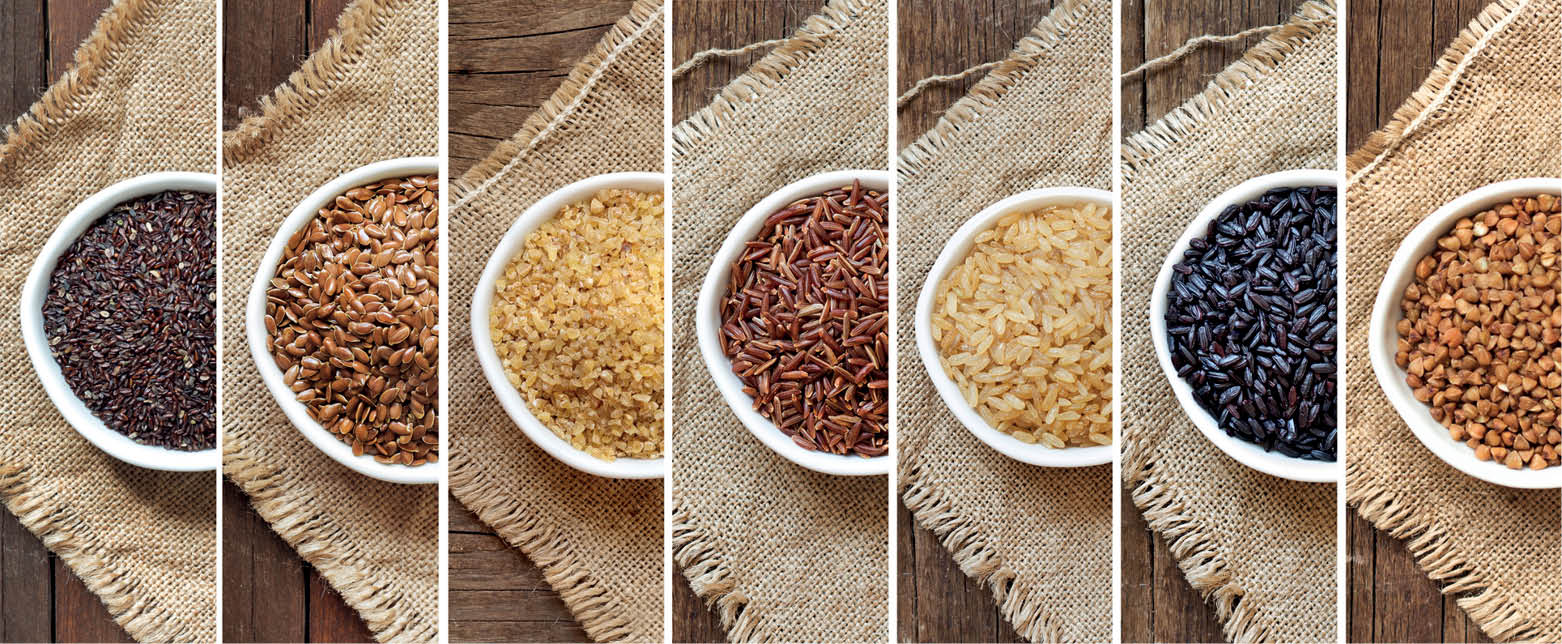
Almost a decade ago, Prashant Parameswaran left a comfortable life in the US and returned to India to go back to his roots (quite literally). Parameswaran, who comes from an agrarian background, used to work with Safeway, a popular American supermarket chain. Through the course of his stint, he came to understand the consumer pulse. It was a time when the South American grain quinoa became a rage in the western world and soon acquired superfood status. Brands began cramming quinoa into their products in various shapes and forms.
Parameswaran a keen trend observer asked himself, “If quinoa can do this, why can’t an Indian grain work the same magic?”
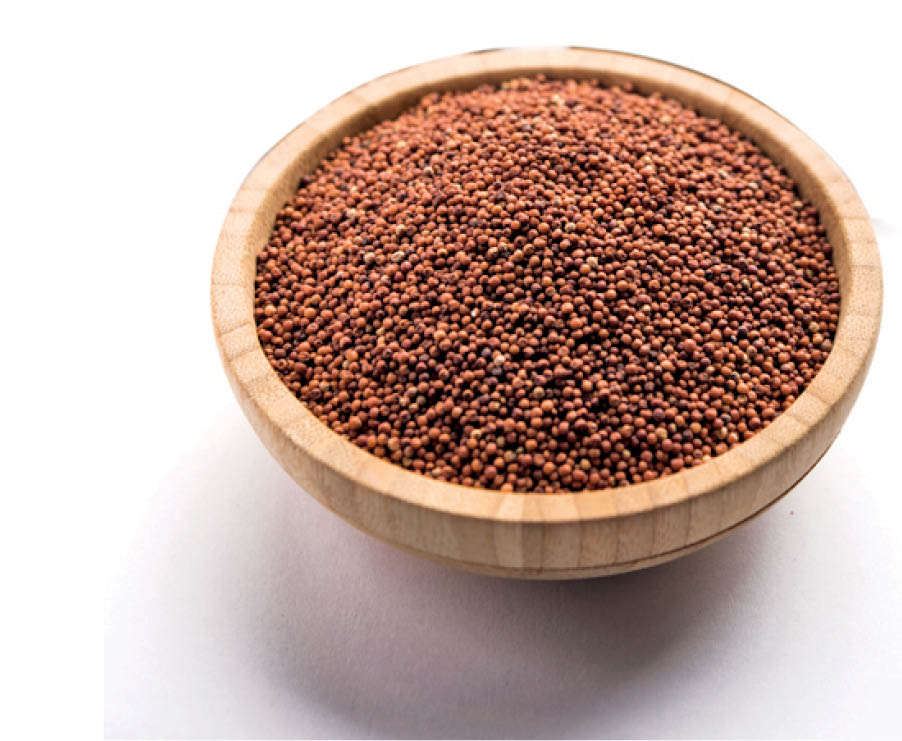
Today, he runs a company called Soulfull that makes ragi-based food products – A mainly cereals, muesli, savoury muesli, millet shake powder, and latest more. Interestingly, ragi was not his first choice. Parameswaran and his team were exploring jowar as their base, but research found its shelf life wasn’t very favourable.
“In India, most of us look at hunger satisfaction and not nutritional satisfaction. We unearthed a lot of things about ragi. Indian mothers have a huge respect for it. While the snacking world keeps experimenting, we were surprised there weren’t many healthy ragi products in supermarkets. That got us excited,” he says.

According to Euromonitor, India’s breakfast cereal market is projected to touch ₹26.1 billion by 2020, from ₹14.4 billion in 2015. Pinakiranjan Mishra, partner and national leader, consumer products and retail at EY India, believes that the breakfast cereals market will grow gradually but it cannot be compared with the success it has attracted in other parts of the world. This is mainly because Indians are accustomed to food items such as idlis, dosas, paranthas and poha among others on their breakfast plate.
“This is why ready-to-cook Indian breakfast like upma or poha is gaining wider acceptance than cereals. It gives consumers varied, healthy options that suit the palate and can be termed traditional,” he says.
Devangshu Dutta, CEO, Third Eyesight, has similar thoughts, “Breakfast cereal has been available even before Kellogg’s stepped into the market, but acceptance previously was very low. Currently, while hot cooked breakfasts still dominate, as Indians have travelled and been exposed to cold cereals, they have become more willing to experiment.”
Mishra, therefore, thinks for brands like Soulfull, the positioning and marketing has to be crafted intelligently since the Indian palate overall is still greatly focused on traditional breakfasts. Parameswaran plans to do something similar. Soulfull’s popularly known for cereals and Ragi Bites (choco fills) which technically compete with Kellogg’s and its ilk. While Parameswaran knows his competition very well, he believes Soulfull is not just a breakfast cereals brand.
 <
<“We don’t intend to replace any food item from our consumer’s diet. We are here to capture micro meal moments. We are in the world where people believe in hav- from ing small and multiple meals ’s in a day. That’s one of the reasons ad why we introduced Desi Muesli (a savoury version),” he explains.
When it comes to marketing Parameswaran is clear about his strategies: below the line (BTL) campaigns will take the largest share of the media plan for at least a couple of years.
“We are competing with brands that have been around for a long time. We are aiming to reach Indian homes in a much shorter horizon. That’s why we will be doubling up BTL. We will evaluate the response, and then plan the next phase,” says Parameswaran.
Currently, Ragi Bites is the first product from the brand’s portfolio making an appearance across all children-focused channels. Parameswaran tells us the product has been making the right impressions and needed that extra push to capture the ‘4’o clock’ meal moment.
Parameswaran hints that what his BTL budget equals what the competition is spending on television in just one quarter. “One must understand that from a cost point of view, BTL may not have big numbers but it is much needed for a brand like ours.” His inspiration to follow this route comes from an American health snack brand, KIND, that has established itself purely around on-ground consumer activities.
Source: brandequity
admin
September 10, 2018
How do we bring plants like kamranga, ambadi or kachnar in vogue?
Written By

We were visiting the sites in Kamrup district in Assam where the Centre for Microfinance and Livelihoods was implementing a project to enhance tribal livelihoods. We were in the backyard of a Rabha tribal family. Mango, Assam lemon plants and pepper creepers on areca nut trees were being promoted.
In the yard, I spotted a number of yellow-red fruits lying on the ground. When I enquired, they brought a raw, green fruit. It was very tasty, with a mild sweet-and-sour taste. I had never seen it before. Locally called kordir, this fruit is formally known as star fruit, I was told.
My erudite companion Jahar Saha, former director of IIM Ahmedabad, told me that it was known as kamranga in Kolkata and he loved it, but it was not often available. He said he paid Rs 60 a dozen when he got it. And here it was rotting in the mud in the Rabha backyard.
I asked why is it not sold and got the typical answer one hears in Assam and North East – the fruit had a short shelf life and transport was so difficult that traders thought it could not be profitably sold and so there was no market for it.
I remembered my colleague piloting a small project a few years earlier for giving saplings of bahunia plant (also called kachnar) to tribal families in Central India. It seems that this plant grows as a large trees and the tree gets new leaves in summer. Young leaves make an excellent vegetable and one day I suddenly saw the bahunia leaves (known also as kachnar) in the local market in Gumla town in Jharkhand.
Still several years earlier, roaming in tribal farms in the then Bharuch district in Gujarat, I had seen and enquired about bright red leaves of a shrub growing on its own in the cotton or tuwar plots of farmers. Upon enquiry, it turned out to be ambadi (or roselle) and it occurred to me how my mother used to make and we all relished a preparation of ambadi mixed with chickpea dough and garnished with garlic, to be eaten with jowar bhakri.
Lost treasures
All this is strictly in the past tense as the cities I subsequently lived in seldom offered leafy vegetables other than spinach or fenugreek. Thoughts of ambadi had then reminded me of tarota (cassia tora), a prolific shrub that grew in monsoon all round our home in Amravati city in Vidarbha and which was picked by our maid to go cook its leaves as a vegetable.
Thinking on these matters, my mind turned to my interaction in the late nineties with a gentleman from Ahmednagar district in Maharashtra. He came to seek my advice and help on a project about ghyapat (agave). He told me that ghyapat grew in abundance in the arid wastelands in the rain-shadow areas of central Maharashtra.
I did not follow what he meant, so he showed me photographs and I immediately recognised these broad and long leaf shrubs, which form boundaries of farms in many rural areas in central India. He said that traditionally the fibers of the leaves were used for making ropes, which were used by villages in their daily lives. Replaced now by nylon ropes, the market for these had crashed and so had the livelihoods connected with it.
Ghyapat grows wild in the arid and warm desertifying lands in much of Marathwada and adjoining Telangana and Karnataka. He wanted to cultivate it, install shredding machines and make a business out of it. He wanted to access a big grant from a foreign donor.
I later discovered that his balance sheet was small and he did not have registration to get overseas funds so getting that foreign grant was out of the question. Subsequently, the project, topic and the name of the plant dropped from my memory. I learn that sweeteners and even wine can be made from extracts of these leaves, aside from rope, for which the small industry corporation in the then Andhra Pradesh had prepared a project.
Going out of use
If a city-dwelling Anglophone like me can cite five examples of trees and plants that have great uses and applications once but have dropped out of attention, clearly there are many more. When one searches information on them, one sees that many of them, for example bahunia, has high nutrient content or have strong medicinal value. And yet they are going out of usage.
Why are they vanishing from our lives, our tables and our food basket? Can they be revived and brought to their pristine positions? I can only speculate about why such plants and their uses are falling into obscurity.
Populations of some of these plants are becoming rare perhaps because of loss of habitat. Amravati was not a thickly populated brick and mortar jungle when I was a child and there were plenty of open spaces. Things have changed now. The plant tarota has perhaps lost its habitat.
Some plants are still seen but in reduced number due to pressure on common lands from grazing, encroachment and diversification in uses. The population of other plants such as bahunia is perhaps not keeping pace with the massive growth in human population and hence the availability of their produce has declined.
In some cases, such as ambadi and kamranga, no effort has gone in to convert them from naturally occurring plants to cultivated ones. Perhaps efforts to understand their agronomy and make their planting materials available have simply not happened. Plants like agave, which occur in abundance, still have simply not been exploited in a manner that fetches good value to those who would grow or harvest them.
Not in vogue?
Perhaps these plants are becoming victims of commercialisation of certain vegetable produce like cauliflower, cabbage, tomato, capsicum, spinach, etc., considered to be appropriate by the social role models. Therefore, no one takes any interest in what we can claim to be our plants native to this country, and they slowly start going out of use and become scarce.
Is this an inevitable situation or one that needs to be and can be reversed? Aside from treating them as quaint curios and writing occasional pieces about these, what can be done about them?
My friend Late Madhukar Dhas told me once that he had organised a competition in Yeotmal in Maharashtra for uncommon vegetable preparations based on plants that occur naturally but are becoming scarce, and there were 61 distinct entries!
If organisers of events where large gathering of people come show cased and offered dishes from these food ingredients, would it create a demand? If along with Spanish, Irish or Mexican food festivals, if star hotel chains offered festivals of vanishing Indian dishes, would it boost them and lead to their larger scale production and use?
This article first appeared on Village Square.
… thank you for making Scroll.in the digital-only news organisation with the widest reach in India.
We request you to support our award-winning journalism by making a financial contribution towards the Scroll Ground Reporting Fund. The fund will ensure we can continue to ask the questions that need to be asked, investigate what needs to be uncovered, document what must not go unrecorded.
